المقاولين,قاطع الدائرة,العاكس للطاقة الشمسية,عداد كهرباء,البطاريات الشمسية

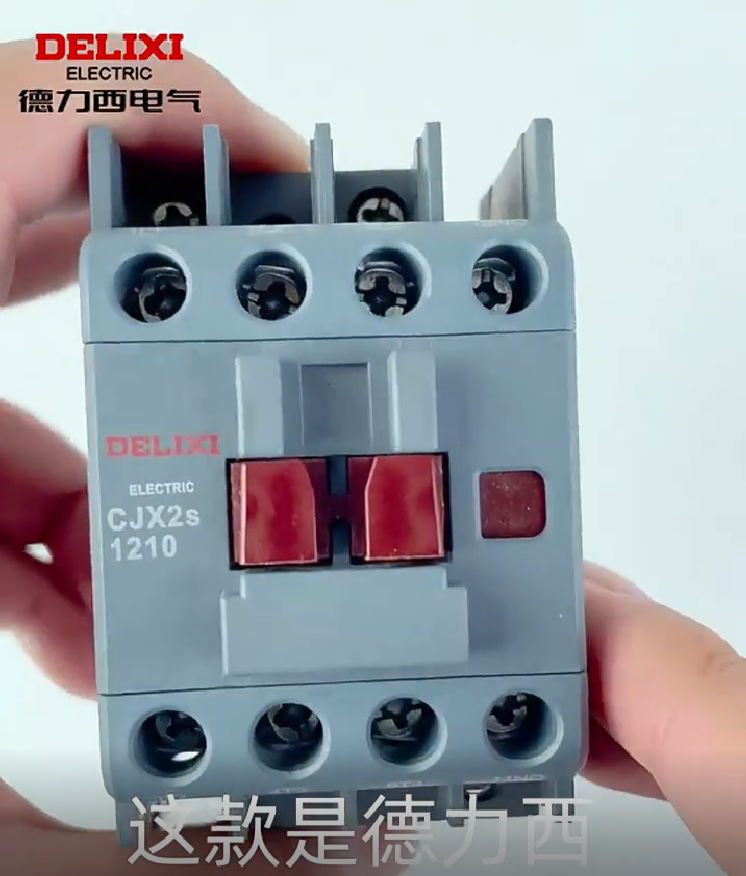

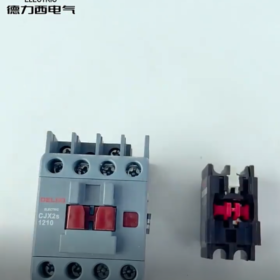
Product Overview
The Delixi CJX2s-1210 is a 3-pole AC contactor belonging to the Navigator Series, specially designed for motor control and protection. Adopting a new-generation technology platform, it is suitable for frequent operation scenarios under AC-3 duty (rated operating current of 12A at voltage below 400V), featuring high reliability, long service life and easy installation.
شرح النموذج: CJX2s (series code) 12 (rated operating current 12A) 10 (1 normally open auxiliary contact, 0 normally closed auxiliary contacts)
التطبيق الأساسي: It is used for starting, stopping and reversing control of three-phase asynchronous motors in industrial automation control systems. It can be combined with JRS1Dsp series thermal overload relays to realize motor overload and phase failure protection.
- المعلمات التقنية الأساسية (Technical Specifications)
| فئة المعلمة | المواصفات التفصيلية | ملاحظات |
| المعلمات الأساسية | ||
| رقم القطب | 3 أقطاب | Rated voltage of main circuit up to 690V |
| تصنيف التشغيل الحالي (Ie) | 12أ (ايه سي-3, 400V) | تيار التسخين التقليدي (It): 25أ |
| تصنيف جهد التشغيل (إي) | 400V/690V | Complies with GB 14048.4 معيار |
| Auxiliary Contact Configuration | 1لا (1 Normally Open) | No built-in normally closed contacts, external expansion available |
| معلمات الملف | ||
| Rated Control Voltage (جامعة كاليفورنيا) | AC 220V/380V/24V/36V/110V/240V | Universal for 50/60Hz, DC coil customizable |
| Pick-up Voltage Range | 70%-120% جامعة كاليفورنيا | Adapts to grid voltage fluctuations for more stable operation |
| Drop-out Voltage Range | 20%-75% جامعة كاليفورنيا | Ensures reliable breaking |
| Coil Power Consumption | Pick-up: تقريبا. 70فرجينيا; Holding: تقريبا. 7فرجينيا | Energy-saving design to reduce operating temperature rise |
| معلمات الأداء | ||
| تصنيف الجهد العزل (واجهة المستخدم) | 800V | Clearance and creepage distance meet insulation requirements |
| الدافع المقدر لتحمل الجهد (امب) | 8كيلو فولت | Strong surge resistance |
| عمر الخدمة الميكانيكية | ≥ 10 مليون عملية | Upgraded silver contact technology for excellent arc resistance |
| عمر الخدمة الكهربائية (ايه سي-3, 400V, 12أ) | ≥ 1 مليون عملية | 60% longer service life than industry average for frequent operations |
| تردد التشغيل المقدر | 1200 operations/hour | Suitable for frequent start-stop control scenarios |
| Duty | ايه سي-3 (squirrel-cage motor starting) | Can be used for AC-1 (حمل مقاوم) and AC-4 (motor reversing) with derating |
| Environmental Parameters | ||
| درجة حرارة التشغيل | -25℃ ~ +55℃ | Altitude ≤ 2000m, humidity ≤ 95% (لا التكثيف) |
| فئة الحماية | IP20 | Prevents finger contact with live parts; must be installed inside electrical cabinets |
| Installation Parameters | ||
| طريقة التركيب | Standard 35mm DIN rail mounting / screw fixing | Minimum spacing between contactors ≥ 50mm for heat dissipation |
| الأبعاد الشاملة | تقريبا. 50mm × 80mm × 58mm | وزن: تقريبا. 320ز |
| Terminal Blocks | الدائرة الرئيسية: مسامير M4; Auxiliary circuit: M3 screws | Main circuit wire cross-section: 1.5-4مم²; Auxiliary circuit wire cross-section: 0.5-1.5مم² |
- Structural Features and Advantages
3.1 Core Structural Innovations
Silver Alloy Contact System: Main contacts adopt large-size silver alloy materials, which are resistant to arc erosion, reduce contact resistance, decrease temperature rise and extend service life.
Optimized Arc Extinguishing System: Extended main contact barriers increase creepage distance and improve insulation strength. Optional transparent cover is available for dusty environments.
تصميم وحدات: اتصالات مساعدة, coils and arc extinguishing covers are independent components, تسهيل الصيانة والاستبدال, and the number of auxiliary contacts can be flexibly expanded.
3.2 مزايا الأداء
Wide Voltage Adaptability: The coil pick-up voltage range of 70%-120% Uc makes it suitable for industrial sites with unstable voltage.
Low Power Consumption Design: The holding power consumption is only 1/10 of the pick-up power consumption, achieving significant energy-saving effect and reducing operating costs.
Perfect Compatibility: It seamlessly matches with JRS1Dsp series thermal overload relays with matching installation dimensions, forming a complete motor protection unit.
- Application Scenarios and Selection Guide
4.1 سيناريوهات التطبيق النموذجية
Direct start and stop control of three-phase asynchronous motors (≤ 5.5kW, 400V)
Electrical control systems of general machinery such as fans, مضخات المياه, compressors and conveyors
Power control circuits of industrial automation production lines, machine tools and packaging machinery
Control of non-inductive loads such as lighting and resistance furnaces (rated current can be increased to 25A under AC-1 duty)
4.2 اختيار النقاط الرئيسية
Load Matching: Motor power ≤ 5.5kW (400V), rated current ≤ 12A; avoid overload operation.
Operating Frequency: For frequent start-stop (≥ 600 operations/hour), derating by 10%-20% is recommended.
Control Voltage: Select appropriate coil voltage according to the control system power supply (AC 220V is the most commonly used).
Protection Matching: Must be used with thermal overload relays (على سبيل المثال, JRS1Dsp-25) to achieve overload and phase failure protection.
الظروف البيئية: Additional protective measures shall be taken in high-temperature, high-humidity and dusty environments, or products with higher protection classes shall be selected.
- Installation and Maintenance Specifications
5.1 خطوات التثبيت (Professional Operation Procedure)
- التحضير قبل التثبيت
Check that the product model and specifications are consistent with the order, the appearance is intact and accessories are complete.
Verify that the coil voltage matches the control circuit power supply, and perform insulation test (500V megger, insulation resistance ≥ 10MΩ).
Ensure that the installation environment meets the requirements (temperature, humidity, no corrosive gas).
- Installation Operation
Install on standard 35mm DIN rail or fix on flat metal plate with M4 screws.
توصيلات الدائرة الرئيسية: Connect three-phase power supplies L1, L2, L3 to the input terminals of the contactor main contacts, and connect the output terminals to the motor stator windings.
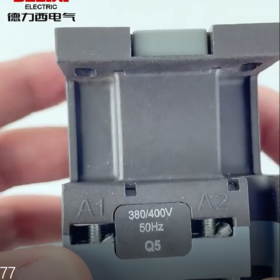
Control circuit wiring: Connect coil terminals A1 and A2 to the control power supply; auxiliary contacts are used for self-locking, interlocking or signal indication.
Terminal block tightening torque: Main circuit ≥ 2.5N·m, auxiliary circuit ≥ 1.2N·m to avoid heating caused by loose connections.
- Installation Notes
The spacing between contactors and between contactors and other components shall be ≥ 50mm to ensure good heat dissipation.
تثبيت عموديا (coil facing upwards); avoid horizontal or inverted installation which may affect performance.
It is recommended to connect a 2A fuse in series in the control circuit to protect the coil from overload damage.
5.2 صيانة (التفتيش المنتظم)
| عنصر الصيانة | Inspection Cycle | Inspection Content | Treatment Measures |
| التفتيش البصري | Once a month | Check for no cracks or deformation on the shell, no loose or overheated traces on terminal blocks | Tighten loose terminals and replace damaged parts |
| Contact Inspection | Once a quarter | Check for no severe ablation or oxidation on the surface of main contacts, and ensure flexible operation of auxiliary contacts | Slight ablation can be polished; replace contact components if severely damaged |
| Coil Inspection | Once every six months | Check for no overheating, discoloration or peculiar smell of the coil, insulation resistance ≥ 10MΩ | Replace aging or damaged coils |
| Arc Extinguishing System Inspection | Once a year | Check that the arc extinguishing cover is clean without scaling and damage | Clean the arc extinguishing cover and replace damaged parts |
Safety Warning: Installation and maintenance must be performed by professional electricians. العملية الحية ممنوع منعا باتا. Disconnect the upper-level power supply and verify no voltage before operation.
- Common Fault Troubleshooting and Solutions
| ظاهرة الخلل | الأسباب المحتملة | Troubleshooting Steps | الحلول |
| Contactor fails to pick up | 1. No voltage on the coil | 1. Measure the voltage at coil terminals A1/A2 to confirm normal control power supply | 1. Repair open circuits in the control circuit |
| 2. Coil damage | 2. Check coil resistance (تقريبا. several hundred ohms normally) | 2. Replace the coil | |
| 3. Mechanical jamming | 3. Manually operate the mechanism to check flexibility | 3. تنظيف وتشحيم الآلية, replace damaged parts | |
| Loud buzzing/chattering noise after pick-up | 1. Low power supply voltage (below 70% of rated coil voltage) | 1. Measure the coil voltage to check if it is ≥ 70% جامعة كاليفورنيا | 1. Adjust the power supply voltage to the rated range |
| 2. Oil/dust on the iron core end faces leading to incomplete pick-up | 2. Check the cleanliness of the iron core contact surfaces | 2. Disconnect the power supply, disassemble the contactor, and clean the moving and static end faces of the iron core with alcohol to remove oil and dust | |
| 3. Broken short-circuit ring of the iron core (unique to AC contactors) | 3. Observe if there is obvious wear on the iron core | 3. Replace the broken short-circuit ring (core disassembly required; core assembly replacement is recommended) | |
| 4. Iron core jamming resulting in incomplete pick-up | 4. Check the mechanical transmission components, remove foreign objects, and apply a small amount of lubricating grease | ||
| Severe contact ablation | 1. Overload current exceeding the rated current of the contactor (12أ) | 1. Verify the load current against the rated current of the contactor | 1. Replace with a contactor of larger capacity (على سبيل المثال, CJX2s-1810) in case of overload |
| 2. Excessively high operating frequency (over 1200 operations/hour) | 2. Check if the actual operating frequency exceeds the specification | 2. Reduce the operating frequency or select a special high-frequency contactor | |
| 3. Mismatched load type (على سبيل المثال, AC-4 duty without derating) | 3. Check if the arc extinguishing cover is damaged | 3. Derate by 50% for AC-4 (motor reversing) سيناريوهات; appropriately increase the current for non-inductive loads | |
| 4. Damaged/missing arc extinguishing cover leading to ineffective arc extinguishing | 4. Replace the damaged arc extinguishing cover and ensure proper installation | ||
| Coil overheating and burning with burnt smell | 1. Excessively high coil voltage (over 120% of rated voltage) | 1. Measure the coil voltage to check if it is ≤ 120% جامعة كاليفورنيا | 1. Replace with a coil of matching voltage and install a voltage stabilizer |
| 2. Continuous coil energization (defective control circuit design without power-off loop) | 2. Check if there is self-locking failure in the control circuit | 2. Optimize the control circuit by adding a power-off switch or time relay to avoid continuous coil energization | |
| 3. Excessively high ambient temperature/insufficient installation spacing leading to poor heat dissipation | 3. Check the ventilation condition of the installation environment | 3. Ensure that the contactor installation spacing is ≥ 50mm and improve the ventilation condition of the electrical cabinet | |
| 4. Iron core jamming causing continuous high-current coil pick-up | 4. Troubleshoot the cause of mechanical jamming before putting it into use again |
- Accessories and Expansion Functions
7.1 Standard Accessories
35mm DIN rail mounting clips (standard configuration)
Transparent dust cover (خياري, suitable for dusty environments)
Auxiliary contact expansion module (can add 1NO+1NC, model: F4-11)
7.2 Combined Applications
Combined with JRS1Dsp-25 thermal overload relay to realize motor overload, phase failure and locked-rotor protection
Cooperated with JZC4s contactor relay to expand the contact capacity of the control circuit
Can be equipped with a pneumatic time delay head (على سبيل المثال, ST4P) to realize time-delay control functions such as motor star-delta starting
- Certifications and Quality Assurance
الشهادات: سي سي سي, م, RoHS and other authoritative certifications; complies with GB 14048.4 واللجنة الانتخابية المستقلة 60947-4-1 المعايير
Quality Assurance: Delixi Electric provides 18-month product warranty; free repair or replacement for non-human damage within the warranty period
Production Standards: Manufactured on automated production lines with 100% factory inspection to ensure product consistency and reliability
- Ordering Information
| نموذج | الجهد لفائف | Order Number Example | ملاحظات |
| CJX2s-1210 | AC 220V | CJX2S1210M7 | Universal for 50/60Hz, RoHS compliant |
| CJX2s-1210 | AC 380V | CJX2S1210Q7 | Suitable for industrial 380V control circuits |
| CJX2s-1210 | AC 24V | CJX2S1210E | Safe voltage control, مناسبة للبيئات الرطبة |
ملحوظة: For DC coil or special configurations, please contact Delixi Electric technical support for customization.
Common Faults and Solutions of Delixi CJX2s-1210 AC Contactor
Faults of the Delixi CJX2s-1210 contactor are mainly concentrated in three categories: electromagnetic system, contact system and mechanical structure. The following lists the causes and corresponding solutions classified by fault phenomena, considering both on-site quick troubleshooting and long-term maintenance requirements:
| Fault Category | ظاهرة الخلل | Common Causes | الحلول |
| Electromagnetic System Faults | 1. Contactor fails to pick up, no coil action | 1. Control circuit power-off/fuse blown | 1. Measure the voltage at coil terminals A1/A2 with a multimeter to confirm normal control power supply; replace the blown fuse |
| 2. Disconnects immediately after power-off (no self-locking) | 2. Mismatched coil voltage and power supply voltage (على سبيل المثال, AC220V coil connected to 380V) | 2. Verify the rated coil voltage (على سبيل المثال, CJX2s-1210M7 is AC220V) and replace with a matching coil | |
| 3. Loose/oxidized coil terminal wiring | 3. Tighten the terminal blocks, polish the oxidized contacts with sandpaper and apply conductive paste | ||
| 4. Burnt coil (internal open circuit/short circuit) | 4. Measure the coil resistance (normally several hundred ohms; replace the coil if open circuit/short circuit occurs) | ||
| 5. Poor contact of auxiliary contacts in the self-locking loop | 5. Check the 1NO auxiliary contacts, clean the contact surfaces or replace the auxiliary contact module | ||
| Loud buzzing/chattering noise from the iron core after pick-up | 1. Low power supply voltage (below 70% of rated coil voltage) | 1. Adjust the power supply voltage to the rated range (70%-120% جامعة كاليفورنيا) | |
| 2. Oil/dust on the iron core end faces leading to incomplete pick-up | 2. Disconnect the power supply, disassemble the contactor, and clean the moving and static end faces of the iron core with alcohol to remove oil and dust | ||
| 3. Broken short-circuit ring of the iron core | 3. Replace the broken short-circuit ring (core disassembly required; core assembly replacement is recommended) | ||
| 4. Check the mechanical transmission components, remove foreign objects, and apply a small amount of lubricating grease | |||
| Coil overheating and burning with burnt smell | 1. Excessively high coil voltage (over 120% of rated voltage) | 1. Replace with a coil of matching voltage and install a voltage stabilizer | |
| 2. Continuous coil energization (defective control circuit design without power-off loop) | 2. Optimize the control circuit by adding a power-off switch or time relay to avoid continuous coil energization | ||
| 3. Excessively high ambient temperature/insufficient installation spacing leading to poor heat dissipation | 3. Ensure that the contactor installation spacing is ≥ 50mm and improve the ventilation condition of the electrical cabinet | ||
| 4. Iron core jamming causing continuous high-current coil pick-up | 4. Troubleshoot the cause of mechanical jamming before putting it into use again | ||
| Contact System Faults | Severe ablation of main contacts with blackening and arcing on the surface | 1. Overload current exceeding the rated current of the contactor (12أ) | 1. Verify the load power (≤ 5.5kW at 400V); replace with a contactor of larger capacity (على سبيل المثال, CJX2s-1810) in case of overload |
| 2. Excessively high operating frequency (over 1200 operations/hour) | 2. Reduce the operating frequency or select a special high-frequency contactor | ||
| 3. Mismatched load type (على سبيل المثال, AC-4 duty without derating) | 3. Derate by 50% for AC-4 (motor reversing) سيناريوهات; appropriately increase the current for non-inductive loads | ||
| 4. Damaged/missing arc extinguishing cover leading to ineffective arc extinguishing | 4. Replace the damaged arc extinguishing cover and ensure proper installation | ||
| Main contact welding (unable to disconnect after pick-up) | 1. Load short circuit causing instantaneous high-current impact on contacts | 1. Troubleshoot the load-side short-circuit fault (على سبيل المثال, motor winding short circuit), repair and replace the contactor | |
| 2. Long-term contact ablation leading to excessive contact resistance and heating welding | 2. فحص حالة الاتصال بانتظام; slight ablation can be polished with fine sandpaper; replace contact components or the whole machine if severely damaged | ||
| 3. Excessively high voltage during contactor breaking leading to ineffective arc extinguishing | 3. Install RC absorbers or surge suppressors when breaking inductive loads | ||
| Auxiliary contact failure (self-locking/signal circuit disconnection) | 1. Oxidized/dusty auxiliary contacts leading to poor contact | 1. Clean the surfaces of auxiliary contacts or replace the auxiliary contact module (F4-11 module can be expanded) | |
| 2. Auxiliary contact current overload (exceeding the rated current of 5A) | 2. Auxiliary contacts are only used for control circuits; avoid directly carrying high-power loads | ||
| 3. Loose contact wiring | 3. Tighten the M3 terminal blocks with torque ≥ 1.2N·m | ||
| Mechanical Structure Faults | Sticking or unsmooth pick-up/disconnection action of the contactor | 1. Dust or foreign objects entering the shell and jamming the transmission mechanism | 1. Disconnect the power supply, disassemble the contactor, clean internal foreign objects and keep the mechanism clean |
| 2. Fatigue or breakage of the moving iron core return spring | 2. Replace the fatigued or broken return spring | ||
| 3. Inclined installation of the contactor leading to uneven stress on the iron core | 3. Ensure vertical installation of the contactor (coil facing upwards) with flat rail or screw mounting | ||
| Slow reset of moving contacts after contactor disconnection | 1. Insufficient elasticity of the return spring | 1. Replace the return spring | |
| 2. Oil adhesion on the iron core end faces causing magnetic hysteresis | 2. Clean the iron core end faces to remove oil | ||
| 3. Failure of the contact pressure spring | 3. Adjust or replace the contact pressure spring |
General On-site Troubleshooting Steps (Safety First)
- Power-off and Voltage Verification: Disconnect the upper-level power supply of the contactor before troubleshooting, and verify no voltage with a voltage tester to avoid electric shock.
- التفتيش البصري: Observe whether the contactor shell is damaged, the wiring is loose, the contacts are ablated, and the coil is discolored.
- Multimeter Testing:
Measure coil resistance: Determine if the coil has an open circuit/short circuit.
Measure contact on-off status: Main contacts should be on when picked up and off when disconnected.
- Mechanical Testing: Manually press the moving iron core to test the smoothness of pick-up/reset and determine if there is jamming.
Preventive Maintenance Recommendations
- Regular Cleaning: Clean dust and oil inside the contactor once a quarter, focusing on the iron core end faces and contact surfaces.
- Wiring Inspection: Tighten the terminal blocks once a month; the torque of main circuit M4 terminals is ≥ 2.5N·m, and that of auxiliary circuit M3 terminals is ≥ 1.2N·m.
- Contact Maintenance: When the contact ablation area exceeds 1/3, replace the contact components or the whole machine in time to avoid fault expansion.
- Environmental Protection: Install a transparent dust cover in dusty and humid environments, or select products with higher protection classes.


NH42-63-318x560.png "مفاتيح النقل التلقائي من نوع الكمبيوتر الشخصي CHINT (المنشطات الأمفيتامينية)NH42-63/4SZ")