Contactor,întrerupător de circuit,invertor solar,contor electric,baterii solare

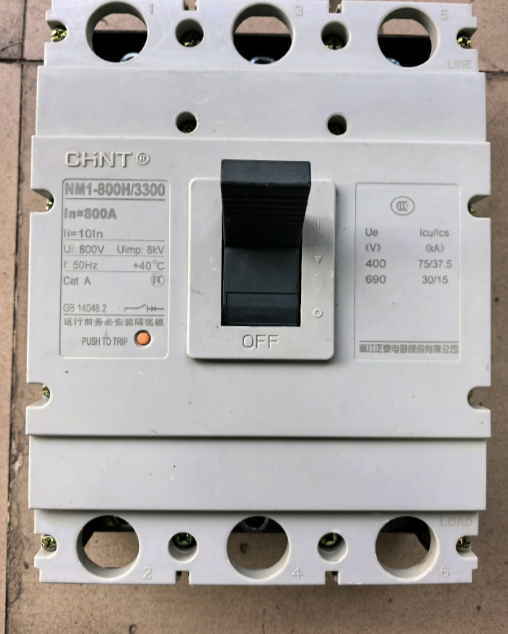

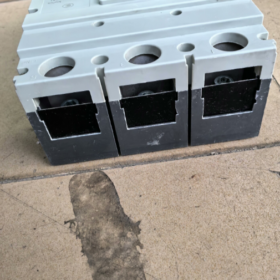
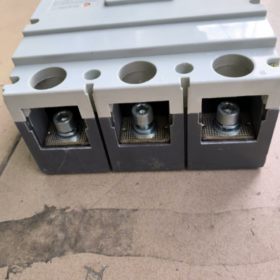
Chint NM1-800H/3300-800A is a 3-pole, 800O întrerupător cu carcasă turnată (MCCB) of the NM1 series, featuring H-grade breaking capacity and thermomagnetic tripping. It is designed for overload and short-circuit protection of power distribution lines, and suitable for industrial and large commercial power distribution trunk lines.
| Code | Sens |
| Nm1 | Chint NM1 series molded case circuit breaker |
| 800 | Frame current 800A |
| H | High breaking capacity grade (Grade H, typically 50kA at 400V AC) |
| 3300 | 3 stâlpi, combined tripper (thermomagnetic tripping), no accessories |
| 800O | Rated current 800A |
Parametrii de bază
| Parametru | Valoare |
| Rated operating voltage | AC 690V, 50Hz |
| Tensiunea nominală de izolație | 800V |
| Curent nominal | 800O |
| Capacitate de rupere | Grade H: 50cel (400V și) |
| Pole number | 3P |
| Tripper type | Thermomagnetic (overload long-time delay + short-circuit instantaneous protection) |
| Mounting method | Fixed type, vertical/horizontal mounting available |
| Metoda de cablare | Front wiring (rear wiring and plug-in type optional) |
| Operation method | Direct handle operation |
| Executive standard | GB 14048.2, IEC 60947-2, Certificare CCC |
Scenarii de aplicare
Overload and short-circuit protection for industrial power distribution trunks and power circuits in large workshops.
Protection for power distribution main trunks in commercial buildings (centre comerciale, office buildings).
Protection for large motor circuits with infrequent starting.
Installation and Operation Key Points
- Installation shall comply with specifications; both vertical and horizontal mounting are acceptable, with secure fastening and good heat dissipation ensured.
- Check the specification of wiring terminals before wiring to match cables/bus bars for 800A current.
- Regularly inspect the action accuracy of the tripper to avoid the impact of ambient temperature on protection performance.
Cross-brand Replacement Reference
Schneider: NSX 800N/3P 800A (Verify breaking capacity and tripping curve).
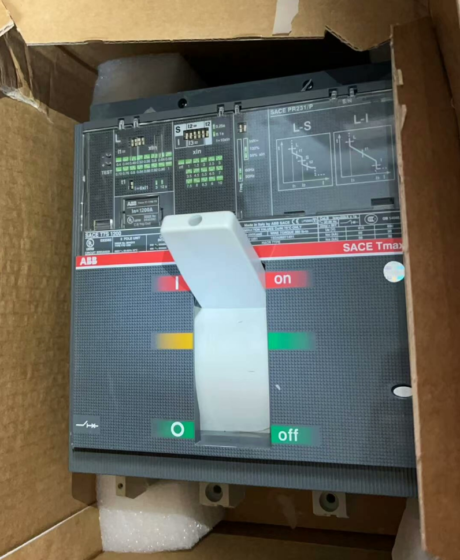
ABB: Tmax T6N 800/3P 800A (Pay attention to mounting dimensions and accessory compatibility).
The core difference between Chint NM1-800H/3300-800A and NM1-800H/3200-800A lies in the tripper type and protection function; other basic parameters (frame current, capacitatea de rupere, numărul de pol, etc.) sunt complet consistente.
- Core Difference: Meaning of “3300” şi “3200” in the Model
| Model Part | Digital Meaning | Funcția de protecție |
| 3300 | 1st digit 3 = 3 stâlpi; 2nd digit 3 = combined tripper (thermomagnetic tripping); last two digits 00 = no accessories | Protecție împotriva supraîncărcării pe termen lung + short-circuit instantaneous protection |
| 3200 | 1st digit 3 = 3 stâlpi; 2nd digit 2 = magnetic tripper (magnetic tripping only); last two digits 00 = no accessories | Short-circuit instantaneous protection only, no overload protection |
This is the fundamental difference between the two circuit breakers, which directly determines their application scenarios and protection capabilities.
- Complete Parameter Comparison Table
| Parametru | NM1-800H/3300-800A | NM1-800H/3200-800A | Observații |
| Tripper type | Thermomagnetic combined tripping | Magnetic tripping | Core difference |
| Protectie la suprasarcina | Available (long-time delay) | Unavailable | The 3300 model achieves overload delay protection through the thermal bending of bimetallic strips |
| Protecție la scurtcircuit | Available (instantaneous) | Available (instantaneous) | Both realize short-circuit instantaneous tripping through electromagnetic coils |
| Frame current | 800O | 800O | Consistent |
| Curent nominal | 800O | 800O | Consistent |
| Capacitate de rupere | Grade H (50kA@400V AC) | Grade H (50kA@400V AC) | Consistent |
| Pole number | 3P | 3P | Consistent |
| Tensiune nominală | AC 690V, 50Hz | AC 690V, 50Hz | Consistent |
| Tensiunea nominală de izolație | 800V | 800V | Consistent |
| Mounting method | Fixed type (vertical/horizontal) | Fixed type (vertical/horizontal) | Consistent |
| Metoda de cablare | Front wiring (rear wiring, plug-in type optional) | Front wiring (rear wiring, plug-in type optional) | Consistent |
| Executive standard | GB 14048.2, IEC 60947-2 | GB 14048.2, IEC 60947-2 | Consistent |
III. Application Scenario Differences
| Model | Scenarii aplicabile | Inapplicable Scenarios |
| 3300 | • Industrial/commercial power distribution trunks (requiring both overload and short-circuit protection) | • Special occasions requiring only short-circuit protection |
| • Large motor circuits (infrequent starting) | • Dedicated circuits for fire-fighting equipment (3300 model with shunt trip is usually required for fire-fighting equipment) | |
| • General lighting and power hybrid distribution systems | ||
| 3200 | • Used as an isolating switch (needing short-circuit protection but no overload protection) | • Used alone as power distribution line protection (lack of overload protection will cause line overheating and damage) |
| • Occasions matched with other overload protection devices (de ex., thermal overload relays) | • Direct protection for motors (unable to prevent motor burnout due to overload) | |
| • Special short-circuit protection for specific industrial equipment |
- Sugestii de selecție
- Prioritize the 3300 model: Most power distribution scenarios require both overload and short-circuit protection; cel 3300 model provides more comprehensive protection to avoid line overheating, equipment damage and other problems caused by overload.
- Select the 3200 model only under specific conditions: When the system is already equipped with other overload protection devices (de ex., thermal overload relays, overload alarms), cel 3200 model can be used as a dedicated short-circuit protection circuit breaker to reduce costs.
- Nota: The 3200 model cannot be used alone for power distribution lines requiring overload protection due to the lack of overload protection, otherwise potential safety hazards may be caused.
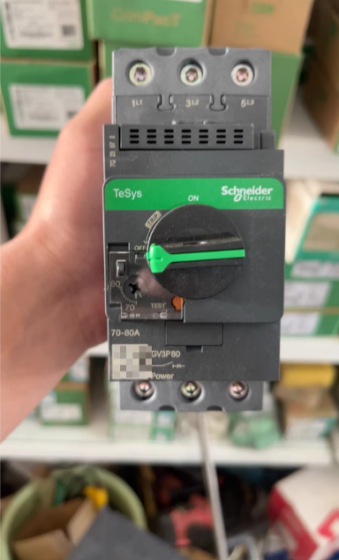
NH42-63-318x560.png "Comutatoare de transfer automat de tip PC CHINT (ATS)NH42-63/4SZ")