Contacteur,disjoncteur,onduleur solaire,compteur électrique,batteries solaires


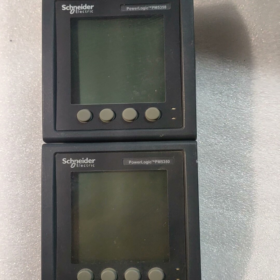
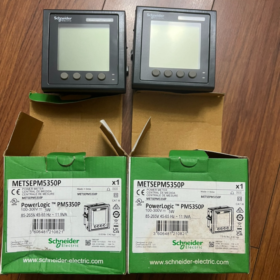
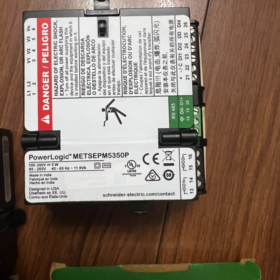
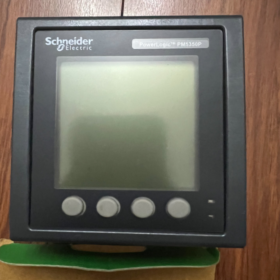
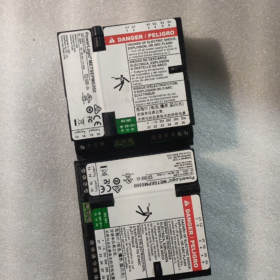
Explication du modèle
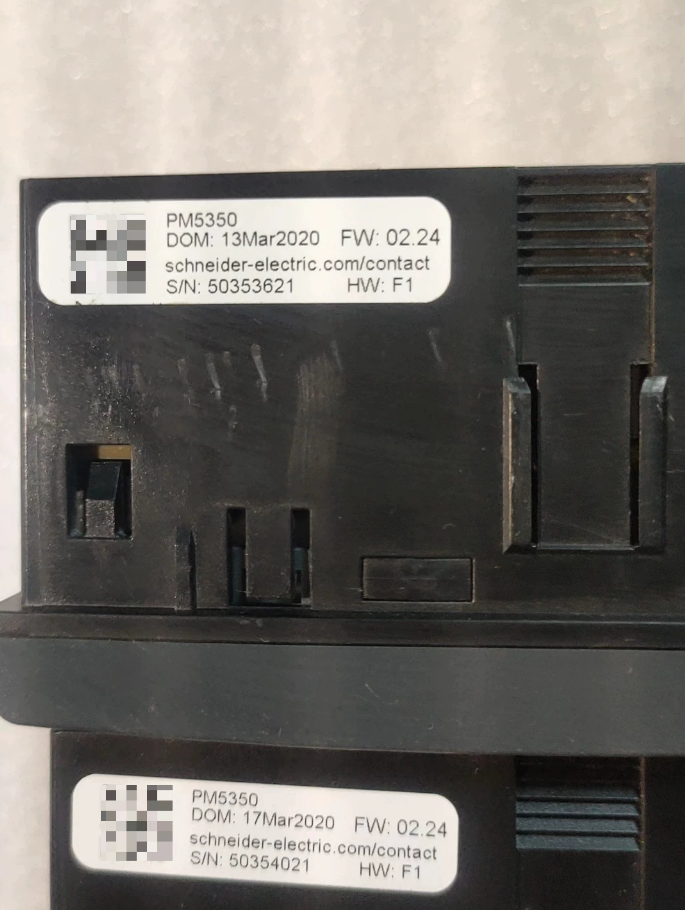
Meaning of each component in the full model METSEPM5350:
| Composant | Explication |
| METSE | Prefix for Schneider’s power monitoring product series |
| PM | Power meter of the PowerLogic series |
| 5350 | Product model number, positioned as an entry-level multifunction power meter |
| Suffixe (P/B/IB, etc.) | P=Standard Type, B=Basic Type, IB=Introductory Type with different functional configurations |
The PM5350 series includes PM5350P (Modèle standard), PM5350B (Type de base) and PM5350IB (Introductory Type). They share consistent core measurement functions, with differences in advanced functions such as harmonic analysis and the number of communication interfaces.
- Paramètres techniques de base
| Paramètre | Valeur | Remarques |
| Précision des mesures | Energy: Classe 0,5S (CEI 62053-22) | Meets requirements for high-precision energy metering and power monitoring |
| Voltage/Current: Classe 0.2 | ||
| Pouvoir: Classe 0.5 | ||
| Measurement Range | Tension: 20-690V et (phase à phase) | Adaptable to various industrial and building distribution systems |
| Actuel: 0.05-9UN (via CT input) | ||
| Fréquence: 45-70Hz | ||
| CT Input | Standard 1A or 5A, compatible with 0.1-10A range | Parameters to be set according to actual CT ratio |
| Measured Parameters | Three-phase voltage, actuel, active/reactive/apparent power, facteur de puissance, fréquence, bidirectional energy, harmonics (up to 31st order), unbalance factor, etc.. | Full electrical parameter monitoring with support for 31st-order harmonic analysis |
| Power Supply Requirements | 85-265V AC/100-300V DC, power consumption <5Virginie | Wide voltage range, adaptable to power grids worldwide |
| Digital Input/Output | 4 DI (Digital Input), 2 RO (Relay Output) | DI with built-in 24V DC power supply (no external power required); RO can directly drive circuit breaker coils |
| Interface de communication | 1 RS-485 (Modbus RTU) as standard | Supports remote data acquisition and integration with monitoring systems |
| Ethernet interface optional | ||
| Afficher | 96×96mm backlit LCD with 4-line display | Anti-glare design for clear real-time display of multiple parameters |
| Méthode de montage | Flush panel mounting, 96×96mm in size | Standard cutout compatible with DIN rail installation |
| Environnement opérationnel | Température: -25℃~+70℃ | Suitable for harsh industrial environments |
| Humidité: 5%~95% (non-condensing) | ||
| Storage Capacity | Non-volatile memory for event logs and energy data storage | Data retention after power failure |
III. Caractéristiques fonctionnelles
- Core Measurement Functions
Full Electrical Parameter Monitoring: Real-time measurement of over 30 electrical parameters including three-phase voltage, actuel, pouvoir, energy, frequency and power factor
Harmonic Analysis: The Standard Type supports measurement of harmonics up to the 31st order and calculation of Total Harmonic Distortion (THD) for power quality diagnosis
Bidirectional Energy Metering: Supports multi-tariff energy statistics to meet cost allocation requirements
Event Logging: Intégré 30 alarm types for recording abnormal events (surtension, sous-tension, overcurrent, three-phase unbalance, etc.) with time stamps
- Control and Communication Capabilities
Digital Input: 4 DI channels for monitoring circuit breaker status and switch position (no external power supply required)
Relay Output: 2 RO channels for alarm output, load control or circuit breaker tripping, with contact rating of AC 250V/5A and DC 30V/5A
Protocole de communication: Supports Modbus RTU (Modbus TCP/IP optional), enabling seamless integration with SCADA, EMS and other systems
Data Storage: Built-in non-volatile memory for storing historical data, event logs and configuration parameters
- Scénarios d'application
Energy monitoring and cost allocation in industrial distribution systems
Energy management and energy-saving analysis in commercial buildings
Substation automation and power quality monitoring
Real-time monitoring and protection of power parameters for critical equipment
Grid-connection monitoring of renewable energy systems (photovoltaic/wind power)
- Installation and Commissioning Guide
- Préparation de l'installation
Verify that the product model and specifications meet design requirements; inspect for no physical damage and complete accessories (including mounting screws and RS-485 terminal resistors)
Reserve sufficient space at the mounting location and avoid high temperature, humidity and strong electromagnetic interference
Perform all operations with power off to ensure safety
- Étapes d'installation
- Cut a 96×96mm mounting hole on the distribution cabinet panel, insert the meter and fasten with screws
- Câblage:
Power supply: Connect to 85-265V AC/100-300V DC power supply
Voltage circuit: Connect three-phase voltage (phase-to-phase or phase-to-ground) and ensure correct phase sequence
Current circuit: Connect current signal via CT and ensure correct CT polarity
Digital I/O: Connect DI to switch signals and RO to control circuits
Communication: Connect RS-485 interface to the monitoring system and install terminal resistors as required
- Inspect wiring for correctness to avoid short circuits in voltage/current circuits
- Commissioning Key Points
- After power-on, check for normal display and no error messages
- Parameter configuration:
CT ratio setting (par ex., 1000/5UN)
Voltage range selection
Communication parameters (address, baud rate, parity)
Alarm threshold setting
Energy metering direction setting
- Accuracy verification: Compare with a standard meter; error shall be within the Class 0.5S range
- Test digital I/O functions to ensure normal signal response
- Communication test: Read data via the Modbus protocol to confirm normal communication
- Common Faults and Troubleshooting
| Phénomène de défaut | Causes possibles | Méthodes de dépannage |
| No Display | 1. Unconnected or abnormal power supply voltage | 1. Inspect power wiring and voltage to ensure it is within 85-265V AC |
| 2. Damaged power module | 2. Measure power input and replace the power module if faulty | |
| 3. Defective display screen | 3. Contact the manufacturer for repair or meter replacement | |
| Abnormal Measurement Values | 1. Reverse CT polarity | 1. Inspect CT polarity and rewire if necessary |
| 2. Incorrect voltage phase sequence | 2. Verify voltage phase sequence and adjust wiring | |
| 3. Wrong CT ratio setting | 3. Correct the CT ratio in the setting interface | |
| 4. Câblage lâche | 4. Inspect all terminals and retighten loose connections | |
| Communication Failure | 1. Mismatched communication parameters | 1. Ensure consistent baud rate, address and parity |
| 2. Incorrect wiring (reversed positive/negative poles) | 2. Inspect RS-485 wiring (A/B lines) | |
| 3. Uninstalled terminal resistor | 3. Install a 120惟 terminal resistor | |
| 4. Excessively long communication line | 4. Shorten the communication distance or add a repeater | |
| Relay Malfunction (No Action) | 1. Unmet alarm conditions | 1. Check alarm thresholds against current measurement values |
| 2. Incorrect relay output configuration | 2. Reconfigure the relay output function | |
| 3. Defective relay | 3. Measure relay contacts and replace faulty components | |
| Digital Input No Response | 1. Incorrect wiring (connected to wrong terminals) | 1. Confirm DI wiring to the correct terminals (21/22) |
| 2. Wrong DI type setting (active/passive) | 2. Switch the DI type setting (active/passive) | |
| 3. Abnormal input signal | 3. Inspect the input signal voltage and status |
- Cross-Brand Alternative Models
- Schneider In-Series Alternatives
| Modèle | Function Comparison | Recommandation de remplacement |
| PM5340 | Basic functions consistent with PM5350 at a lower price | Alternative for budget constraints with identical basic measurement functions |
| PM5560 | Richer advanced functions, MID certification and higher accuracy | Upgrade option for high-precision energy metering requirements |
| PM5561 | With MID certification, suitable for trade settlement | Alternative for legal energy metering applications |
- Equivalent Models from Mainstream Brands
| Marque | Modèle correspondant | Points clés de correspondance | Compatibility Note |
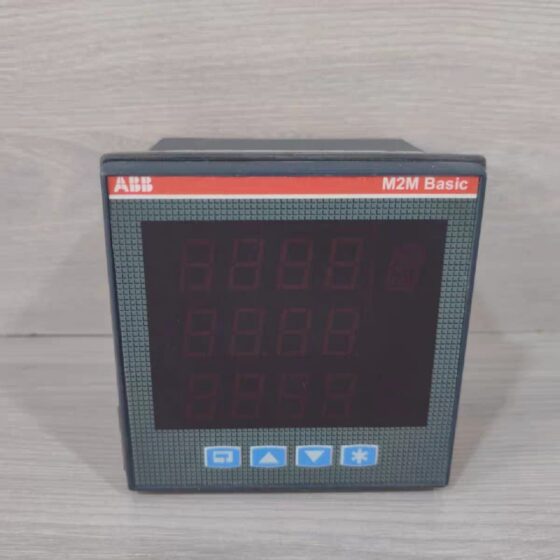
| ABB | E200/E400 Series | Class 0.5S energy accuracy, 4DI/2RO, Modbus communication | Similar functional configuration, compatible mounting size (96脳96mm) |
| par ex., E410 | |||
| Siemens | PAC3200/PAC4200 | Class 0.5S energy, harmonic analysis (up to 31st order), Ethernet communication | Consistent measurement accuracy with slight differences in advanced functions such as event logging |
| Chint | DTSU666 Series | Class 0.5S energy, 4DI/2RO, RS-485 communication | Cost-effective domestic alternative with sufficient basic functions |
| par ex., DTSU666-9S | |||
| Délicieux | CDP6000 Series | Class 0.5S energy, harmonic analysis, Modbus communication | Similar functions with significant price advantage |
| Acrel | ACR120EL/ACR220EL | Class 0.5S energy, 4DI/2RO, harmonic analysis | Well-known domestic brand with high cost performance, suitable for industrial scenarios |
| Rockwell | PowerMonitor 5000 | Class 0.5S energy, plusieurs protocoles de communication, advanced diagnostic functions | Industrial-grade quality for high-end applications |
VII. Selection and Ordering Notes
- Specify the model suffix (P/B/IB) when ordering for different functional configurations:
PM5350P: Standard Type with 31st-order harmonic analysis and complete communication functions
PM5350B: Basic Type with simplified functions and no harmonic analysis
PM5350IB: Introductory Type with basic measurement functions for simple monitoring scenarios
- Confirm the CT input specification (1A or 5A) to match on-site CTs
- Communication interface requirements: RS-485 as standard, Ethernet module optional
- Accessory requirements: Mounting screws, RS-485 terminal resistors, communication cables, etc..
- Exemple: 10 units of METSEPM5350P with 5A CT input
VIII. Précautions d'utilisation
- Short circuit is strictly prohibited in voltage circuits and open circuit in current circuits; always cut off power before wiring
- The CT ratio setting must match the actual CT to avoid proportional errors in measurement results
- Use shielded twisted pair for communication lines to reduce electromagnetic interference
- Regularly inspect wiring terminals to prevent measurement errors or communication faults caused by loose connections
- Save parameters after software configuration to avoid data loss after power failure
Precise Selection and Cross-Brand Replacement Solution for Schneider PM5350
- Selection Decision Overview (Quick Matching)
Based on four core demand dimensions, the following are priority recommendations for PM5350 series models and cross-brand alternatives to quickly identify the optimal solution:
| Scénario d'application | Recommended PM5350 Model | Core Matching Points | Preferred Cross-Brand Alternative | Budget-Friendly Alternative |
| High-precision energy metering + harmonic analysis + RS485 + 4DI/2RO | PM5350P | Class 0.5S energy, 31st-order harmonics, full DI/RO | ABB E410 | Chint DTSU666-9S |
| Siemens PAC4200 | Acrel ACR220EL | |||
| Basic energy monitoring + no harmonics + RS485 + 2DI/1RO | PM5350B | Class 0.5S energy, basic measurement, simplified I/O | Schneider PM5340 | Shanghai People’s PDM-803AC |
| Delixi CDP6000 | ||||
| Simple monitoring + low cost + RS485 + 2DI/0RO | PM5350IB | Class 0.5S energy, paramètres de base, introductory I/O | Chint DTSU666-6S | Acrel ACR120EL |
| Delixi CDP3000 | ||||
| Trade settlement + MID certification + Ethernet | PM5561 (Mise à niveau) | MID certification, Class 0.2S, Ethernet | ABB E600 | – (Certification required for trade settlement) |
| Siemens PAC5200 |
- Detailed Comparison of PM5350 Series Models (Basis for Precise Selection)
| Fonction | PM5350P (Modèle standard) | PM5350B (Type de base) | PM5350IB (Introductory Type) | Selection Recommendation |
| Energy Metering Accuracy | Classe 0,5S (CEI 62053-22) | Classe 0,5S | Classe 0,5S | Consistent across all models, meeting regular metering needs |
| Voltage/Current Accuracy | Classe 0.2 | Classe 0.2 | Classe 0.2 | High-precision measurement suitable for data acquisition |
| Power Accuracy | Classe 0.5 | Classe 0.5 | Classe 0.5 | Reliable power analysis for energy consumption evaluation |
| Harmonic Analysis | ✅ Up to 31st order + THD | ❌ No harmonic analysis | ❌ No harmonic analysis | P Type is a must for power quality diagnosis needs |
| Digital Input (DI) | 4 channels (built-in 24V power) | 2 channels | 2 channels | P Type for motor control/switch status monitoring |
| Relay Output (RO) | 2 channels (AC 250V/5A) | 1 channel | 0 channel | P/B Type for alarm/control output needs |
| Interface de communication | 1 RS-485 (Modbus RTU) | 1 RS-485 | 1 RS-485 | Mandatory for remote monitoring; Ethernet available as an upgrade |
| Ethernet optional | ||||
| Event Logging | 30 alarm types with time stamps | Basic event logging | Simple event logging | P Type for fault traceability/operation and maintenance management |
| Display Interface | 4-line backlit LCD | 4-line backlit LCD | 4-line backlit LCD | Consistent across all models for easy operation |
| Gamme de prix | Mid-High | Mid | Faible | Balance selection based on functional needs and budget |
III. Customized Recommendation Schemes Based on Core Demands
- Oriented to Energy Metering Accuracy Requirements
Classe 0,5S (Regular Metering/Cost Allocation): All PM5350 series models meet the requirement; PM5350P (full functions) or PM5350B (performance à coût élevé) is preferred
Class 0.2S (High-Precision Monitoring): Upgrade to PM5560 (Schneider in-series) or select cross-brand alternatives such as ABB E410 and Siemens PAC4200
MID Certification (Trade Settlement): PM5561 (Schneider) or ABB E600 (international brand) is a must; no domestic models with MID certification are available yet
- Oriented to Harmonic Monitoring Requirements
31st-order Harmonic Analysis Required (Power Quality Diagnosis): PM5350P (the only supported model); alternatives include ABB E410, Siemens PAC4200 and Acrel ACR220EL
No Harmonic Analysis Required (Basic Monitoring): PM5350B/IB (lower cost); alternatives include Schneider PM5340, Delixi CDP6000 and Chint DTSU666-6S
- Oriented to Communication and I/O Configuration Requirements
| Demand | Recommended Configuration | Model Selection | Cross-Brand Alternative |
| RS485 + Modbus RTU | Standard configuration | All series | Supported by all alternative models |
| Ethernet + Modbus-TCP | PM5350P + Ethernet module | PM5350P/PM5560 | ABB E410 |
| or upgrade to PM5560 | Siemens PAC4200 | ||
| 4DI/2RO (Full Control) | Standard configuration | PM5350P | ABB E410 |
| Acrel ACR220EL | |||
| 2DI/1RO (Contrôle de base) | Standard configuration | PM5350B | Delixi CDP6000 |
| Shanghai People’s PDM-803AC | |||
| 2DI/0RO (Monitoring Only) | Standard configuration | PM5350IB | Chint DTSU666-6S |
| Acrel ACR120EL |
- Scenario-Specific Recommendations
Industrial Distribution Systems
Recommendation: PM5350P + Ethernet module
Rationale: 4DI for circuit breaker status monitoring, 2RO for alarm output control, 31st-order harmonic analysis for motor load fault diagnosis, and Ethernet for SCADA system integration
Alternatives: ABB E410 (identical functions), Acrel ACR220EL (cost-effective domestic option)
Commercial Building Energy Management
Recommendation: PM5350B
Rationale: Class 0.5S energy metering for cost allocation, 2DI for air conditioning/lighting circuit monitoring, and RS485 for BMS system integration
Alternatives: Delixi CDP6000 (low-cost domestic option), Schneider PM5340 (more affordable in-series model)
Renewable Energy Grid-Connection Monitoring
Recommendation: PM5350P
Rationale: Bidirectional energy metering (generation/consumption), 31st-order harmonic analysis for grid-connection quality evaluation, and 4DI for photovoltaic inverter status monitoring
Alternatives: Siemens PAC4200 (international brand), Chint DTSU666-9S (domestic model with bidirectional metering support)
Simple Distribution Cabinet Monitoring
Recommendation: PM5350IB
Rationale: Core parameter measurement at the lowest cost, meeting basic power consumption monitoring needs
Alternatives: Chint DTSU666-6S (entry-level domestic model), Acrel ACR120EL (performance à coût élevé)
III. Detailed Comparison of Cross-Brand Alternative Models (Function Matching Degree)
- International Brand Alternatives (Performance-Oriented)
| Marque | Modèle | Paramètres clés | Matching Degree with PM5350P | Mounting Compatibility |
| ABB | E410 | Class 0.5S energy, 31st-order harmonics, 4DI/2RO, Modbus | 95% (identical functions) | 96×96mm, direct replacement |
| Siemens | PAC4200 | Class 0.5S energy, 31st-order harmonics, 4DI/2RO, Ethernet | 90% (slight differences in event logging) | 96×96mm, direct replacement |
| Schneider (Mise à niveau) | PM5560 | Class 0.2S energy, 31st-order harmonics, 4DI/2RO, Ethernet | 100% (in-series upgrade) | 96×96mm, direct replacement |
- Domestic Brand Alternatives (Cost-Oriented)
| Marque | Modèle | Paramètres clés | Matching Degree with PM5350P | Price Advantage |
| Chint | DTSU666-9S | Class 0.5S energy, 31st-order harmonics, 4DI/2RO, RS485 | 85% (no Ethernet) | Environ 1/2 the price of PM5350P |
| Délicieux | CDP6000 | Class 0.5S energy, 21st-order harmonics, 2DI/1RO, RS485 | 80% (fewer harmonic orders) | Environ 1/3 the price of PM5350P |
| Acrel | ACR220EL | Class 0.5S energy, 31st-order harmonics, 4DI/2RO, RS485 | 90% (different display interface) | Environ 2/3 the price of PM5350P |
- Key Points for Selection and Replacement Implementation
- CT Ratio Matching: All models support 1A/5A CTs; the actual CT ratio (par ex., 1000/5UN) must be accurately entered in the parameter settings to avoid measurement errors
- Spécifications de câblage:
Voltage circuit: Strictly prohibit short circuits and ensure correct phase sequence (A-B-C)
Current circuit: Strictly prohibit open circuits and ensure consistent CT polarity (P1 in, P2 out)
DI/RO: DI with built-in 24V power supply; RO contact rating of AC 250V/5A and DC 30V/5A
- Communication Settings:
Baud rate: 9600/19200/38400bps (9600 as default)
Adresse: 1-247 (1 as default)
Terminal resistor: A 120Ω resistor must be installed at the end of the RS485 bus
- Compatibilité de remplacement:
Mounting size: All recommended models are 96×96mm with an 88×88mm cutout for direct replacement
Electrical interface: Consistent voltage/current input range, enabling direct reuse of existing wiring
Functional differences: Key parameters such as harmonic order, number of DI/RO and communication protocols must be verified before replacement
- Priority of Final Recommended Schemes
- Premier choix: PM5350P (Modèle standard) – Full functions, suitable for over 90% of industrial and building application scenarios
- Second Choice: PM5350B (Type de base) – High cost performance, suitable for basic monitoring without harmonic analysis needs
- Alternative Choice: PM5350IB (Introductory Type) – Coût le plus bas, suitable for simple distribution cabinet monitoring
- Upgrade Option: PM5560/PM5561 (in-series) – Suitable for high-precision measurement or trade settlement applications
- Cross-Brand Option: ABB E410 (international) / Chint DTSU666-9S (domestic) – Functionally matched with better cost performance
NH42-63-318x560.png "Commutateurs de transfert automatiques de type PC CHINT (ATS)NH42-63/4SZ")