Contactor,circuit breaker,solar inverter,electric meter,solar batteries

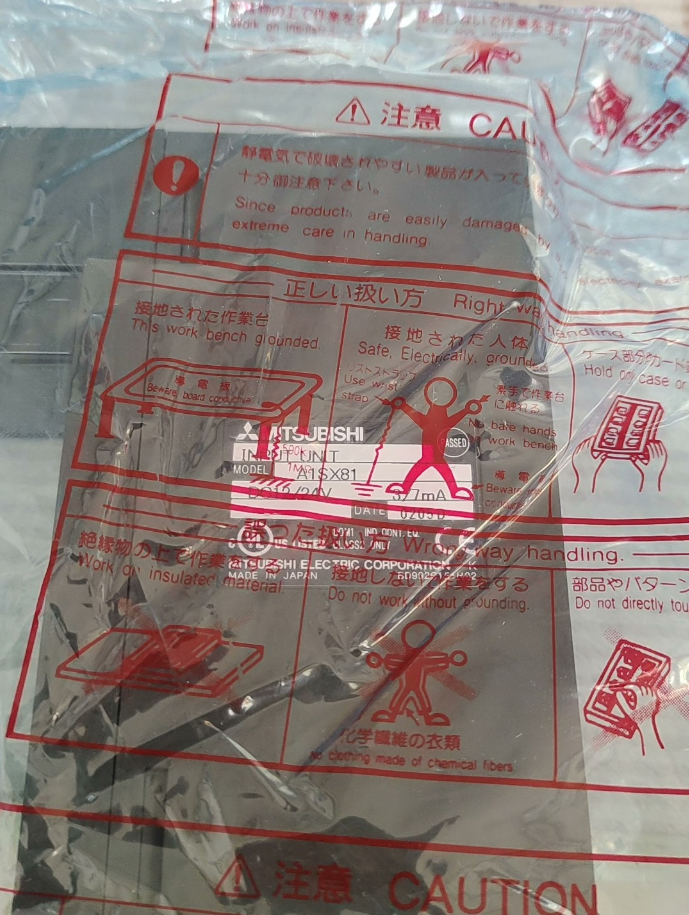

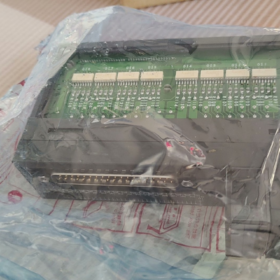
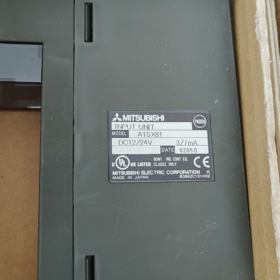
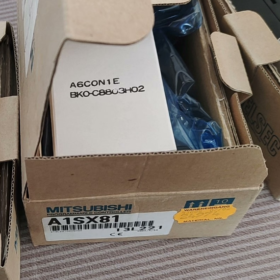
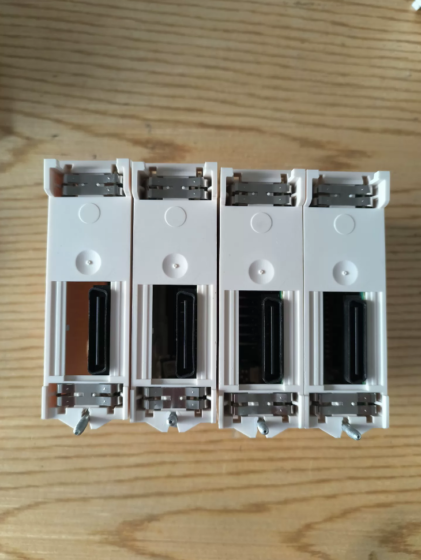
Important Note: The A1SX81 is not a CPU module, but a 32-point DC-sourcing type digital input module of the Mitsubishi MELSEC AnS/QnAS series. It belongs to the I/O expansion module of the A-series PLC and must be used with an A-series CPU (such as A1SHCPU, A2ASCPU, etc.).
- Model Explanation
| Model Segment | Meaning |
| A1S | MELSEC AnS series PLC module |
| X | Input module |
| 81 | 32-point DC-sourcing type input, compatible with DC12/24V |
- Core Technical Parameters
| Parameter Item | Specification Details |
| Module Type | Digital input module, sourcing type (A1SX80 is sinking type) |
| Number of Input Points | 32 points, 4 common terminals (8 points per group) |
| Rated Input Voltage | Compatible with DC12V/DC24V |
| Input Current | Approximately 3mA at DC12V, approximately 7mA at DC24V |
| Response Time | Standard 25ms (can be set to 1/5/10/25ms via program) |
| Isolation Method | Photoelectric coupler isolation (between input terminals and PC power supply) |
| Maximum Simultaneously Connected Points | Up to 60% (4.8 points) per common terminal group, maximum 24 points in total |
| External Connection | Quick connector type, 2-wire wiring |
| Installation Method | Can be installed in 6 directions, suitable for A-series PLC racks |
| Power Consumption | DC5V: approximately 120mA; DC24V: approximately 0.5W |
| Weight | Approximately 0.2kg |
| Operating Temperature | 0°C ~ 55°C |
| Storage Temperature | -20°C ~ 70°C |
| Relative Humidity | 35% ~ 85% (no condensation) |
- Functional Features
- Dual-voltage Compatibility: Supports both DC12V and DC24V input voltages to meet the requirements of different field devices.
- Photoelectric Isolation: Ensures reliable isolation between input signals and the internal circuit of the PLC, with strong anti-interference capability.
- Flexible Response: The response time can be set via programming software to adapt to the requirements of different signal frequencies.
- Grouped Common Terminals: 32 points are divided into 4 groups (8 points per group), each with an independent common terminal, improving system safety and flexibility.
- Quick Wiring: Adopts a quick connector design, greatly reducing installation and maintenance time.
- Wide Temperature Design: Adapts to harsh industrial field environments with a wide operating temperature range.
- High Reliability: Mitsubishi industrial-grade quality with a long MTBF (Mean Time Between Failures).
- Application Scope
The A1SX81 module is suitable for industrial automation scenarios that require collecting a large number of DC digital signals, including:
- Manufacturing Industry: Automatic production line control, such as sensor signal collection and limit switch status detection.
- Machinery Processing: Signal input of buttons, travel switches, and proximity switches for machine tools and equipment.
- Building Automation: Status monitoring of elevator control systems, air conditioning systems, and lighting systems.
- Process Control: Detection of valve positions and pump operation status in industries such as chemical engineering, electric power, and water treatment.
- Others: Any PLC control system that requires 32-point sourcing type digital input, especially suitable for occasions where DC12V and DC24V are mixed.
- Selection Recommendations
5.1 Key Selection Points
| Selection Factor | Recommended Considerations |
| Input Type | Choose A1SX81 for sourcing type input (PNP sensors); choose A1SX80 for sinking type input (NPN sensors) |
| Voltage Matching | Applicable when field devices use DC12V/DC24V; select corresponding modules for other voltages |
| Point Count Requirement | Choose A1SX81 when 32 points meet the demand exactly; expand if there are insufficient points; consider other models such as A1SX81-S2 if there are excessive points |
| Response Speed | The standard 25ms meets most scenarios; select a module with faster response speed (such as A1SX40) for high-speed signals |
| Common Terminal Grouping | A1SX81 (4 groups) is superior to A1SX80-S1 (1 group) when independent control of each group’s power supply is required |
5.2 Alternative Models and Compatibility
| Alternative Model | Difference Description | Compatibility |
| A1SX81-S2 | 32-point DC24V sourcing type input, only supports 24V with faster response time | Fully compatible with A-series PLC |
| A1SX80 | 32-point DC24V sinking type input, suitable for NPN sensors | Installation-compatible, with different input types |
| A1SX40 | 16-point high-speed input module with a response time of 0.1ms | Functional expansion, requires reconfiguration of I/O addresses |
5.3 Supporting Usage Recommendations
- CPU Module: AnS series CPUs such as A1SHCPU, A2ASCPU, A2USHCPU, etc.
- Power Supply Module: A-series power supply modules such as A1S61P, A1S62P, A1S63P, etc.
- Expansion Rack: A-series basic/expansion racks such as A1S33B, A1S35B, etc.
- Programming Software: GX Works2 (supports AnS series) or GX Developer (old version)
- Troubleshooting Guide
6.1 Common Faults and Solutions
| Fault Phenomenon | Possible Causes | Troubleshooting Steps |
| No Input Signal | 1. Wiring errors; 2. Power supply faults; 3. Loose module connection; 4. Input device faults | 1. Check wiring (+24V connected to common terminal, signal connected to input point); 2. Measure DC24V power supply; 3. Reinsert the module firmly; 4. Test the input device |
| Unstable Input Signal | 1. Poor contact; 2. Interference signals; 3. Improper response time settings | 1. Check if connectors are secure; 2. Add shielded wires; 3. Adjust response time parameters |
| PLC Cannot Recognize the Module | 1. Incompatible module model; 2. Damaged module; 3. Abnormal rack power supply | 1. Confirm that the module belongs to the AnS series; 2. Check module indicator lights; 3. Measure the DC5V voltage of the rack |
| Input Point Indicator Light Does Not Light Up but There Is Signal | 1. Damaged LED; 2. Internal module fault | 1. Replace the module for testing; 2. Contact Mitsubishi after-sales service for repair |
6.2 Explanation of Module Indicator Light Status
| Indicator Light | Status | Meaning |
| POWER | Green steady on | Module power supply is normal |
| RUN | Green steady on | Communication between the module and CPU is normal |
| ERROR | Red steady on | Internal module error |
| ERROR | Red flashing | Abnormal input signal |
| CH1~CH32 | Green steady on | The corresponding input point has a signal (ON) |
- Installation and Maintenance Precautions
- Before Installation:
Confirm that the module model matches the system requirements.
Check that the module has no external damage and connectors are not bent.
Prepare suitable quick connectors and wiring terminals.
- During Installation:
Install after cutting off the power supply of the PLC system.
Align with the rack guide rail, insert smoothly and lock securely.
Wire correctly according to the module terminal diagram, distinguishing between common terminals and signal terminals.
Ensure that the wiring is firm to avoid poor contact caused by loosening.
- During Maintenance:
Regularly check the module temperature to avoid overheating.
Clean dust on the module surface to maintain good ventilation.
Inspect connectors and wiring to prevent oxidation or loosening.
Avoid frequent plugging and unplugging of the module to extend its service life.
- Summary
The A1SX81 is a practical 32-point dual-voltage compatible sourcing type input module in the Mitsubishi MELSEC AnS series PLC. With its flexible voltage adaptation, reliable isolation design and convenient installation method, it is widely used in various industrial automation control systems. During selection, attention should be paid to distinguishing between sourcing type and sinking type inputs. For replacement, upgraded models such as A1SX81-S2 can be considered. Troubleshooting should follow the principle of “hardware first, then software” to ensure stable system operation.
Parameter Comparison Table of A1SX81 and Its Same-series Modules & Alternative Models
The following is a detailed comparison between A1SX81 and its core same-series models, as well as alternative solutions from the AnS series to the L/iQ-R series, facilitating quick selection and upgrade decisions.
- Core Parameter Comparison Table of A1SX81/A1SX80/A1SX81-S2
| Parameter Item | A1SX81 (Sourcing Type) | A1SX80 (Sinking Type) | A1SX81-S2 (Sourcing Type) |
| Module Type | 32-point DC12/24V sourcing type input | 32-point DC12/24V sinking type input | 32-point DC24V sourcing type input (24V only) |
| Number of Input Points | 32 points, 4 groups × 8 points | 32 points, 4 groups × 8 points | 32 points, 4 groups × 8 points |
| Rated Input Voltage | DC12V/DC24V compatible | DC12V/DC24V compatible | DC24V only |
| Input Current | Approximately 3mA at DC12V, approximately 7mA at DC24V | Approximately 3mA at DC12V, approximately 7mA at DC24V | Approximately 7mA at DC24V |
| Response Time | Standard 25ms (can be set to 1/5/10/25ms) | Standard 25ms (can be set to 1/5/10/25ms) | Standard 10ms (can be set to 1/5/10ms) |
| Common Terminal Grouping | 4 groups of independent common terminals (8 points per group) | 4 groups of independent common terminals (8 points per group) | 4 groups of independent common terminals (8 points per group) |
| Maximum Simultaneously Connected Points | Up to 60% (4.8 points) per group, maximum ≤ 24 points in total | Up to 60% (4.8 points) per group, maximum ≤ 24 points in total | Up to 60% (4.8 points) per group, maximum ≤ 24 points in total |
| Isolation Method | Photoelectric coupler isolation | Photoelectric coupler isolation | Photoelectric coupler isolation |
| External Connection | Quick connector (2-wire type) | Quick connector (2-wire type) | Quick connector (2-wire type) |
| Power Consumption | DC5V: approximately 120mA; DC24V: approximately 0.5W | DC5V: approximately 120mA; DC24V: approximately 0.5W | DC5V: approximately 120mA; DC24V: approximately 0.5W |
| Applicable Sensors | PNP-type sensors (sourcing type output) | NPN-type sensors (sinking type output) | PNP-type sensors (sourcing type output) |
| Main Features | Dual-voltage compatible, flexibly adapts to different devices | Dual-voltage compatible, suitable for NPN sensors | 24V only with faster response speed |
| Typical Applications | Mixed voltage environment requiring PNP input | Mixed voltage environment requiring NPN input | Pure DC24V environment with high requirements for response speed |
- Key Difference Analysis and Selection Recommendations
2.1 Core Difference Points
- Input Type: A1SX81/A1SX81-S2 are sourcing type, suitable for PNP sensors; A1SX80 is sinking type, suitable for NPN sensors. This is the most fundamental basis for selection.
- Voltage Compatibility: A1SX81/A1SX80 support DC12V/DC24V dual voltage, while A1SX81-S2 only supports DC24V but has a faster response time.
- Response Time: The standard response time of A1SX81/A1SX80 is 25ms (can be set to 1/5/10/25ms); the standard response time of A1SX81-S2 is 10ms (can be set to 1/5/10ms), which is more suitable for high-frequency signal collection.
Choose A1SX81: PNP input is required, and there are DC12V and DC24V mixed devices on site.
Choose A1SX80: NPN input is required, and there are DC12V and DC24V mixed devices on site.
Choose A1SX81-S2: PNP input is required, in a pure DC24V environment with high requirements for response speed.
- Parameter Comparison Table of Common Alternative Models
3.1 Internal Alternative Models of the AnS Series
| Alternative Model | Type | Number of Points | Voltage | Response Time | Compatibility | Replacement Description |
| A1SX81-S1 | Sourcing Type | 32 | DC24V | 25ms | Fully Compatible | Only different in voltage, a simplified version of A1SX81 |
| A1SX80-S2 | Sinking Type | 32 | DC24V | 10ms | Fully Compatible | High-speed version of A1SX80, 24V only |
| A1SX40 | Sourcing Type | 16 | DC24V | 0.1ms | Functional Expansion | High-speed input module, suitable for high-frequency signals |
| A1SX41 | Sinking Type | 32 | DC12/24V | 10ms | Installation Compatible | High-speed sinking type version with faster response |
3.2 Upgrade Alternative Solutions (AnS → L/iQ-R Series)
| Original Model | Alternative Model (L Series) | Alternative Model (iQ-R Series) | Upgrade Advantages |
| A1SX81 | LX41C4 | RX41H | 1. No rack required, saving space; 2. Built-in Ethernet; 3. Higher computing speed; 4. Better scalability |
| A1SX80 | LX40C4 | RX40H | 1. Programming software compatible (GX Works2); 2. Lower maintenance cost; 3. Support for more communication protocols |
| A1SX81-S2 | LX41C4 | RX41H | 1. Shorter response time (0.1ms); 2. Stronger diagnostic functions; 3. Longer service life |
- Replacement Precautions
- Hardware Compatibility:
Internal replacement within the AnS series: Fully compatible, the module can be directly replaced without modifying the program.
Upgrade to the L/iQ-R series: The entire system (CPU, power supply, module) needs to be replaced, but part of the programming logic can be reused.
- Software Settings:
Same-series replacement: Only need to confirm the module model in GX Works2/GX Developer.
Cross-series upgrade: Need to reconfigure I/O addresses, and some function blocks may need to be adjusted.
- Wiring Method:
AnS series: Quick connector (37-pin D-Sub).
L/iQ-R series: Terminal block or quick connector, requiring rewiring.
- Cost Considerations:
Same-series replacement: Low cost, suitable for equipment maintenance.
Cross-series upgrade: High initial investment, but significant long-term benefits (energy saving, maintenance, expansion).
- Summary
As a classic 32-point sourcing type input module of the Mitsubishi AnS series, the A1SX81 is widely used in the field of industrial automation due to its dual-voltage compatibility and flexible response characteristics. During selection, priority should be given to selecting the input type according to the sensor type (PNP/NPN), and then selecting the specific model according to the voltage requirements and response speed.
NH42-63-318x560.png "CHINT PC-type automatic transfer switches (ATS)NH42-63/4SZ")