Contactor,circuit breaker,solar inverter,electric meter,solar batteries


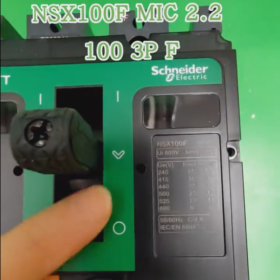
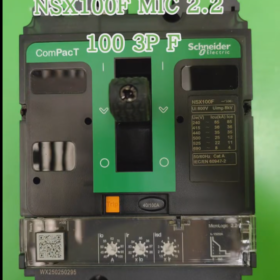
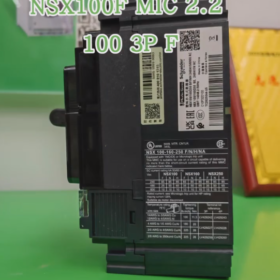
- Model Interpretation
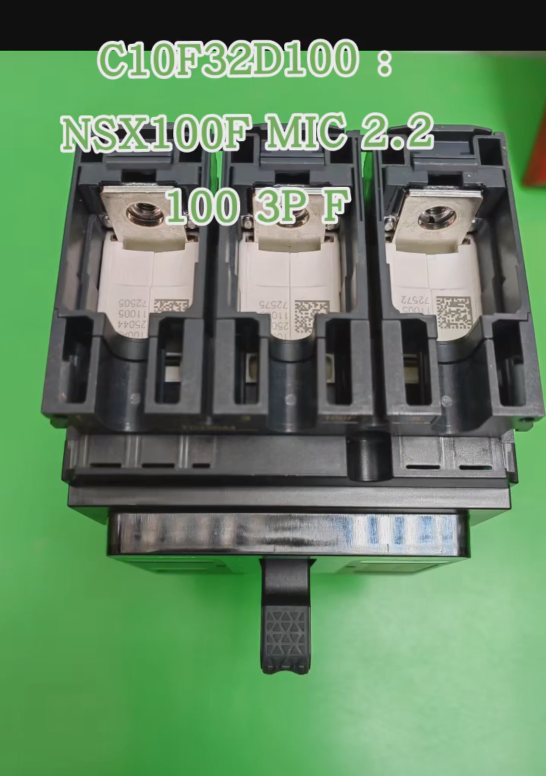
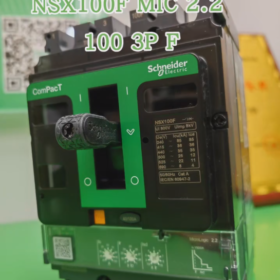
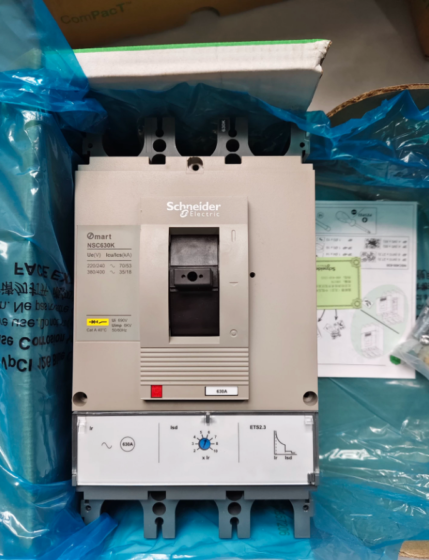
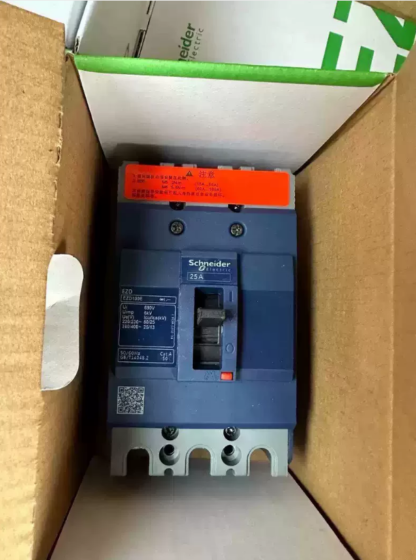
C10F32D100 is the complete order code of Schneider’s new-generation ComPacT NSX series molded case circuit breakers. The meaning of each segment is as follows:
| Code Segment | Meaning | Description |
| C10 | Frame Size and Breaking Capacity | C10 = NSX100F, frame current 100A, breaking capacity Class F (36kA@415VAC) |
| F | Breaking Capacity Class | F = 36kA@415VAC, suitable for standard industrial applications |
| 3 | Number of Poles | 3 = 3-pole (3P3D, three-phase three-wire system) |
| 2D | Trip Unit Type | 2D = MicroLogic 2.2 electronic trip unit with display function |
| 100 | Rated Current | 100A, adjustable range 90-100A |
- Core Technical Parameters
Basic Parameters
| Parameter | Value | Description |
| Product Type | Molded Case Circuit Breaker (MCCB) | New-generation ComPacT NSX100F |
| Rated Voltage | 690VAC/50-60Hz | Maximum operating voltage |
| Rated Current (Iu) | 100A | Continuous operating current |
| Ultimate Breaking Capacity (Icu) | 36kA@415VAC | Ultimate breaking capacity |
| Service Breaking Capacity (Ics) | 36kA@415VAC (100%) | Service breaking capacity |
| Mounting Type | Fixed | Standard mounting, plug-in type optional (C10F32D100P) |
| Protection Category | Category A | Complies with IEC 60947-2 standard |
MicroLogic 2.2 Trip Unit Parameters
| Protection Function | Characteristic | Adjustable Range |
| Long-time Delay Protection (L) | Overload protection, inverse time-lag | 0.8-1.0脳Iu (90-100A) |
| Short-time Delay Protection (S) | Short-circuit protection, definite time-lag | 3-6脳Iu, adjustable |
| Instantaneous Protection (I) | Short-circuit instantaneous tripping, fixed | 10脳Iu (1000A) |
| Display Function | Current measurement and status indication | Real-time display of three-phase current |
Physical and Electrical Characteristics
| Parameter | Value |
| Power Loss | 14.1W |
| Weight | Approximately 2.5kg |
| Compliance Standards | IEC 60947-2, GB 14048.2 |
| Certifications | CE, CCC, RoHS |
III. Functional Features
- Comprehensive Protection: Provides three-stage protection including long-time delay, short-time delay and instantaneous protection, effectively preventing overload and short-circuit faults.
- Precise Control: Compared with thermal-magnetic trip units (TM series), electronic trip units offer more accurate protection curves and adjustable parameters.
- Status Visualization: MicroLogic 2.2 is equipped with LED display for real-time monitoring of current and fault status.
- Modular Design: Supports a variety of accessories (auxiliary contacts, alarm contacts, undervoltage release, etc.) for flexible installation.
- Environmental Friendly: Schneider Green Signature design, reducing energy consumption and carbon footprint.
- Easy Operation: Ergonomic handle for labor-saving operation; front-mounted accessories reduce wiring time by 40%.
- Application Scenarios
- Industrial Power Distribution Systems: Used as main switch or branch switch to protect motors, transformers and distribution lines.
- Building Electrical Systems: Low-voltage distribution cabinets in commercial buildings and industrial plants.
- Motor Control Centers (MCC): Protect three-phase motors from locked rotor and overload conditions.
- Data Centers: Power protection for critical loads to ensure power supply continuity.
- New Energy Sector: DC-side protection of photovoltaic inverters and energy storage systems (additional configuration required).
- Product Comparison
Comparison with Trip Units of the Same Series
| Model | Trip Unit Type | Main Differences | Application Scenarios |
| C10F32D100 | MicroLogic 2.2 | Electronic trip unit with display, three-stage protection | Industrial applications requiring precise protection and monitoring |
| C10F3TM100 | TM100D Thermal-Magnetic Trip | Thermal-magnetic trip unit, two-stage protection, cost-effective | Simple power distribution without precise adjustment requirements |
| C10F33D100 | MicroLogic 3.2 | Added earth fault protection (30-3000mA) |
Comparison with Chint Alternative Models
| Schneider Model | Chint Alternative Model | Similarities | Differences |
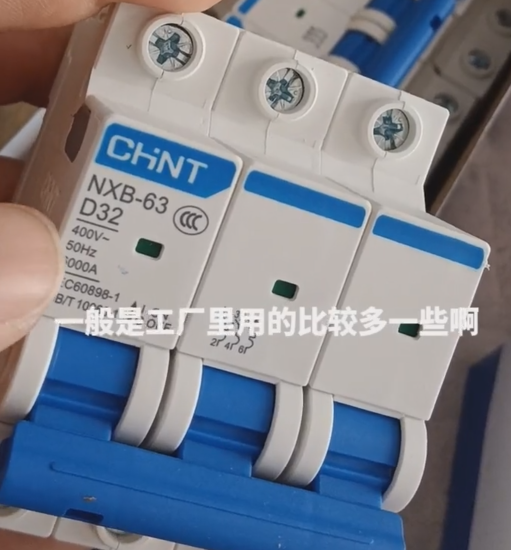
| C10F32D100 | NM1-125S/3300 100A | 3-pole, 100A, 36kA breaking capacity | Chint adopts thermal-magnetic trip unit without display; Schneider adopts electronic trip unit with display |
| NM1-125H/3340 100A | 3-pole, 100A, electronic trip unit | Chint has 50kA breaking capacity with slightly different protection functions |
- Selection and Usage Recommendations
- Selection Key Points
Select protection curves according to load types: for motor loads, it is recommended to set short-time delay to 5-6×Iu
Breaking capacity should be greater than the expected short-circuit current of the system
Consider future expansion; rated current should be slightly higher than the actual load current
- Installation Precautions
Ensure the mounting surface is flat and the tightening torque meets requirements (screw torque 25N·m)
Corresponding cable lugs must be used for terminal connections to avoid heating caused by poor contact
Leave sufficient heat dissipation space around and avoid close installation with heat-generating components
- Maintenance Recommendations
Regular inspection (at least once a year): appearance, tightness status, flexibility of operating mechanism
Check contact condition after short-circuit tripping and replace if necessary
Clean with dry compressed air to avoid moisture and dust accumulation
VII. Troubleshooting Guide
| Fault Phenomenon | Possible Causes | Troubleshooting Steps |
|---|---|---|
| Failure to Close | 1. Undervoltage release without power supply 2. Trip unit malfunction 3. Mechanical lockout | 1. Check control power supply (if equipped) 2. Measure trip unit coil resistance 3. Manually reset the trip mechanism |
| False Tripping | 1. Overload 2. Short circuit 3. Improper trip unit parameter setting | 1. Check load current 2. Check line insulation 3. Reset trip unit parameters |
| No Display After Tripping | 1. Trip unit power supply failure 2. Trip unit damage | 1. Check trip unit power supply 2. Replace the trip unit |
NH42-63-318x560.png "CHINT PC-type automatic transfer switches (ATS)NH42-63/4SZ")