Контактор,автоматический выключатель,солнечный инвертор,электрический счетчик,солнечные батареи

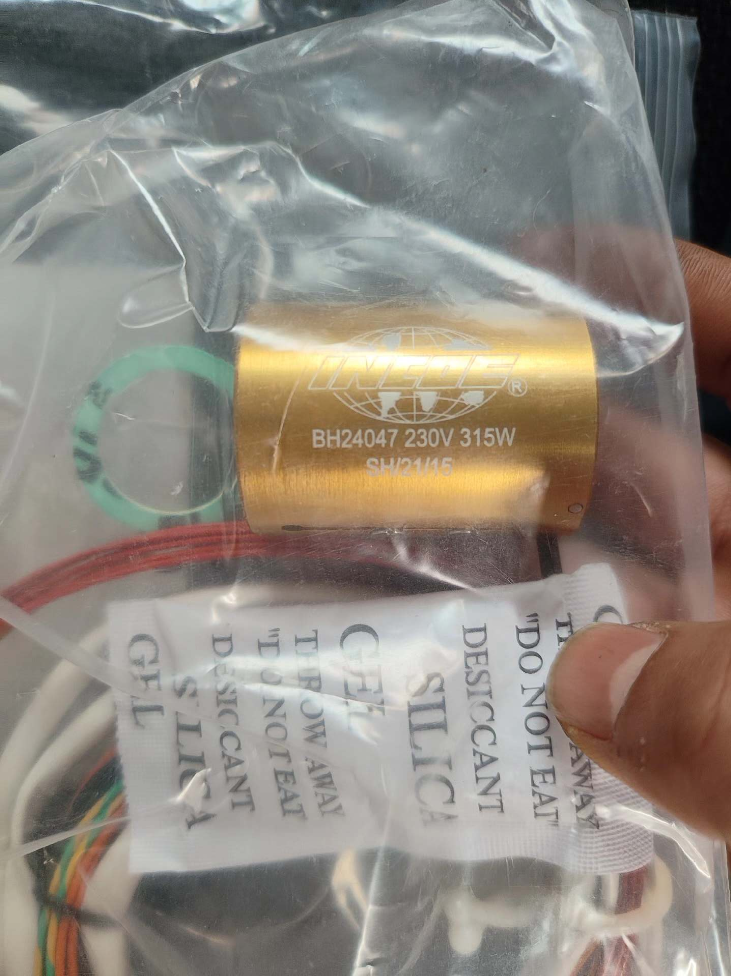

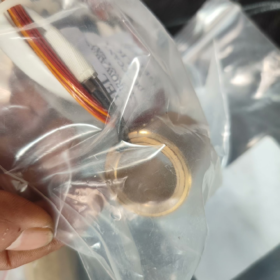
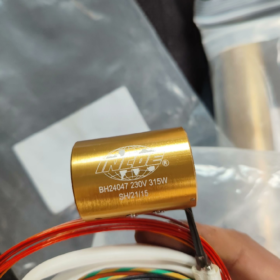
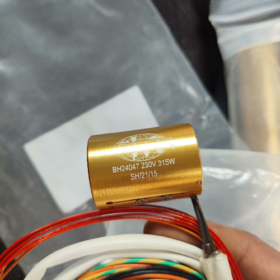
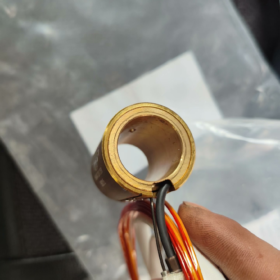
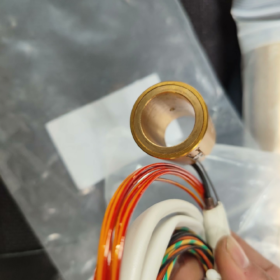
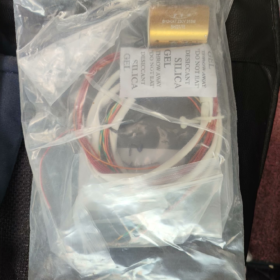
1. Обзор продукта
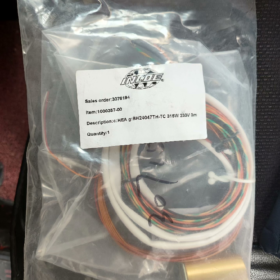
The INCOE BH24047-230V-315W is a spring-style nozzle heater coil with integrated thermocouple, specially designed for hot runner systems of injection molds. It is an original heating component matched with standard INCOE nozzles.
Constructed with nichrome heating wire, high-temperature resistant stainless steel sheath and magnesium oxide insulation filler, it delivers 360° uniform circumferential heating to maintain stable nozzle temperature and eliminate cold spots. It is applicable to injection molding of general-purpose and engineering plastics such as PP, АБС, ПК, PA66 and PPS.
Equipped with a built-in Type J thermocouple, it realizes closed-loop precise temperature control when paired with a hot runner temperature controller. Powered directly by the temperature controller and mounted on the outer wall of hot runner nozzles, it serves as a core heating part for hot runner systems of injection molds used for automotive interior & exterior parts, precision connectors, packaging products and more.
2. Технические характеристики
| Категория | Элемент | Описание |
| Основная информация | Модель | BH24047-230V-315W (INCOE Nozzle Heater Coil) |
| Бренд / Original Part No. | INCOE, BH24047 | |
| Compatible Object | Standard INCOE hot runner nozzles (straight nozzle / pointed nozzle) | |
| Электрические параметры | Номинальное напряжение | 230В и (Однофазный) |
| Номинальная мощность | 315Вт | |
| Rated Resistance | Приблизительно. 167.9Ой (230²÷315) | |
| Номинальный ток | Приблизительно. 1.37А (315÷230) | |
| Thermocouple Type | Built-in standard Type J (Fe-CuNi) термопара | |
| Структура & Материал | Структура | Spring coil type (flexible to fit closely to nozzle outer wall) |
| Sheath Material | High-temperature resistant SUS304/316 stainless steel / Inconel alloy | |
| Insulation Filler | High-density Magnesium Oxide (MgO), dielectric strength ≥ 2kV | |
| Размер провода & Измерение | Standard spring cross-section, fits nozzle outer diameter φ16~φ20mm (typical) | |
| Temperature Performance | Maximum Sheath Temperature | ≤ 650℃ |
| Long-term Operating Temperature | 400~550℃ (for conventional engineering plastics) | |
| Физический & Установка | Конфигурация проводки | 2 heating wires + 2 thermocouple wires (4-core connector) |
| Способ монтажа | Tightly fitted on nozzle outer wall, fixed with clips or high-temperature adhesive | |
| Защита от проникновения | IP40 (installed inside mold) | |
| Сертификация | Разрешения | CE, РоХС, UL (Compliant with hot runner industry standards) |
3. Cross-brand Equivalents
Interchangeable hot runner nozzle heater coils with identical specifications and performance in the market:
| Бренд | Эквивалентная модель | Rated Specification | Основные функции |
| Hotset (Германия) | HS-24047 | 230V/315W, Type J thermocouple | Spring coil, uniform heating, fits standard nozzles |
| Hotspring | HSC-24047 | 230V/315W, Type J thermocouple | Flexible coil, fast heat-up, withstands up to 550℃ |
| Hotslot | HSN-24047 | 230V/315W, Type J thermocouple | Dedicated for standard nozzles, high-temperature insulation |
| Внутренняя альтернатива (Hongtai / Leier) | HT-BH24047 | 230V/315W, Type J thermocouple | Fully compatible in dimension and interface, экономически эффективный |
4. Full Product List of the Series
INCOE BH Series Hot Runner Nozzle Heater Coils (Classified by Power & Напряжение):
1. BH24047-230V-315W: Стандартная версия, fits φ18mm nozzles for general injection molding applications (Subject model)
2. BH24048-230V-400W: High-power version, for large-diameter / long nozzles and high-melting-point engineering plastics (PPS/PEI)
3. BH24046-230V-250W: Low-power version, for small-diameter / short nozzles and thin-wall small products
4. BH24047-240V-315W: North American voltage version, compatible with 240V power systems
5. BH24047-230V-315W-K: Custom version with Type K thermocouple, matching temperature controllers of certain brands
5. Операционная среда & Поиск неисправностей
5.1 Applicable Environment
Installed inside the cavity of injection mold hot runners and on the outer wall of nozzles. Mold temperature: 80~120℃, no direct water immersion.
Standard injection workshop: Ambient temperature 10~45℃, relative humidity ≤85%, no strong acid/alkali corrosion and excessive dust accumulation.
Suitable for molding of general plastics such as PP, АБС, ПК, PA66, POM and medium-temperature engineering plastics.
Adopt closed-loop temperature control with INCOE TTC / Microcom series hot runner temperature controllers.
5.2 Restricted Environment
Long-term over-temperature operation: Continuous working above 550℃ will burn out insulation and shorten service life.
Severe corrosion, high humidity or water immersion: Areas with acid/alkali vapor, condensation water and cooling water leakage may cause electric leakage and short circuit.
Severe vibration and impact: Frequent high-speed mold opening & closing and impact vibration may lead to coil breakage and loose wiring.
Direct contact with melt or gate: For nozzle outer wall heating only; never embed the coil into the melt flow channel.
5.3 Распространенные неисправности & Решения
| Явление неисправности | Первопричина | Решения |
| Temperature controller alarm / No heating / Бесконечное сопротивление | Broken heating wire, long-term over-temperature / перегрузка, aging insulation, свободная проводка | 1. Cut off power and measure resistance (Normal value: приблизительно. 168Ой); 2. Replace with heater coil of the same specification; 3. Check controller output and avoid over-temperature |
| Короткое замыкание / Electric leakage / Residual current circuit breaker tripping | Пробой изоляции, water / melt ingress, damaged sheath, damp magnesium oxide filler | 1. Cut off power and test insulation resistance with megohmmeter (Квалифицированный: ≥1MΩ); 2. Clean residual melt and dry the cavity; 3. Replace heater coil and implement effective sealing & waterproofing |
| Out-of-control temperature / Severe temperature drift | Broken / reversed thermocouple wire, плохой контакт, aged thermocouple | 1. Check thermocouple polarity and re-tighten connection; 2. Measure millivolt value of thermocouple; 3. Replace with Type J thermocouple |
| Local overheating / Red-hot coil / Uneven temperature | Poor fitting between coil and nozzle, excessive gap, local carbon deposition | 1. Remove carbon deposits and oxide layers on nozzle surface; 2. Reinstall and fix the coil tightly; 3. Check power output of temperature controller |
| Slow heat-up / Failure to reach set temperature | Power attenuation, partial turn-to-turn short circuit, low supply voltage, excessive heat dissipation | 1. Measure actual resistance and current; 2. Check supply voltage; 3. Install new heater coil and optimize thermal insulation structure |
Supplementary Guidelines for INCOE Hot Runner Systems
Below is a complete guide covering applicable environment, restricted environment, critical operating limits, диагностика неисправностей & solutions and preventive maintenance, complying with original factory requirements and on-site operation standards for INCOE hot runners (including BH24047 series heater coils).
1. Applicable Environment
INCOE hot runners are installed inside injection molds, requiring stable temperature control, reliable heat insulation, low electromagnetic interference and no direct water exposure.
1. Workshop Environment: Ambient temperature 10~45℃, relative humidity ≤85%. Free from condensation, corrosive vapor and heavy dust. Keep away from strong electromagnetic interference sources such as high-frequency welders and high-power motors.
2. Mold & Система охлаждения: Mold temperature 80~120℃. Never let cooling water jets blow directly onto hot runner areas. Maintain a thermal clearance of no less than 15mm between cooling water channels and hot runners/nozzles. Ensure heat insulation gaskets and plates are intact with an air insulation layer ≥10mm to reduce heat loss.
3. Процесс & Raw Materials: Compatible with general and medium-to-high temperature engineering plastics including PP, АБС, ПК, PA66, POM and PPS. Raw materials shall be fully dried, free of metal impurities, and the proportion of regrind materials shall comply with regulations. Normal melt temperature ranges from 200℃ to 450℃, with a maximum limit of 550℃.
4. Электрический & Требования к установке: Stable power supply (230V AC ±5%). Standard Type J (Fe-CuNi) thermocouple shall be used and matched with the temperature controller. Junction boxes shall be well sealed and cables protected from extrusion and sharp bending. Ensure flat installation, good concentricity and reserved gaps for thermal expansion.
2. Restricted Environment (Critical Rules)
1. Extreme Temperature, Влажность & Water Ingress: Long-term operation below 5℃ or above 50℃ is prohibited. Water leakage inside molds or condensation penetrating into hot runner cavities and wiring areas will easily cause insulation breakdown, electric leakage and short circuit.
2. Severe Corrosion, Пыль & Вибрация: Avoid exposure to acid, alkali and sulfide vapor, heavy dust and metal debris. Intense impact and vibration caused by high-speed mold movement may result in coil fracture, thermocouple detachment, seal failure and melt leakage.
3. Over-temperature & Перегрузка: Continuous operation above 550℃ and long-term overload will damage heater insulation, accelerate carbonization and shorten service life drastically.
4. Improper Electrical Configuration: Mismatched Type K thermocouple, reversed polarity, inconsistent supply voltage, loose wiring and poor shielding & grounding will lead to temperature drift, signal interference and circuit tripping.
5. Non-compliant Assembly & Структура: Missing heat insulation or insufficient gaps, damaged sealing surfaces of nozzles/manifolds, improper fastening torque and inadequate thermal expansion allowance will directly cause melt leakage and component jamming.
3. Распространенные неисправности, Причины & Решения
3.1 Abnormal Temperature Control (Самый распространенный, including BH24047 Heater Coil)
(1) No heating / Slow heat-up / Abnormal resistance
Феномен: Set temperature fails to rise or rises extremely slowly; controller reports open circuit or broken thermocouple; measured resistance deviates from nominal value (приблизительно. 168Ой) or shows infinite resistance.
Причины: Broken heating wire, partial turn-to-turn short circuit, loose or detached wiring, faulty output of temperature controller, broken or poorly contacted thermocouple, excessive heat loss (poor insulation, cooling channels too close).
Решения:
1. Cut off power, measure resistance of heater coil and millivolt value of thermocouple with a multimeter.
2. Fasten terminals and inspect connectors.
3. Replace with qualified Type J thermocouple or BH24047-230V-315W heater coil.
4. Check heat insulation and adjust layout of cooling channels.
5. Test output modules of the temperature controller by cross replacement.
(2) Температурный дрейф / Large fluctuation / Over-temperature alarm
Феномен: Deviation between actual and set temperature exceeds ±5℃ with sudden jumps; over-temperature occurs without heating command.
Причины: Reversed polarity or mismatched Type K thermocouple, loose/damaged/aged thermocouple, drifted controller parameters, mismatched PID parameters, electromagnetic interference and poor grounding, partial short circuit of heater coil and uneven power output.
Решения:
1. Verify thermocouple type (INCOE standard: Type J) and polarity, then reattach firmly.
2. Calibrate temperature controller and optimize PID parameters.
3. Implement cable shielding and reliable grounding; keep cables away from power lines.
4. Replace faulty heating or temperature sensing components.
(3) Electric leakage / Circuit tripping
Феномен: Residual current circuit breaker trips, insulation alarm triggered, measured insulation resistance below 1MΩ via megohmmeter.
Причины: Damp or broken insulation (MgO filler), damaged sheath, melt or water penetrating into coil area, damaged cable insulation leading to short circuit.
Решения:
1. Cut off power and test insulation resistance (Квалифицированный: ≥1MΩ).
2. Clean residual melt and dry the cavity thoroughly.
3. Replace heater coil and reinforce sealing and waterproofing for wiring outlets.
3.2 Melt Leakage (High-risk Fault)
Феномен: Melt overflow, stringing and dripping occur at joint surfaces between nozzle and manifold, wiring holes and gates.
Причины: Insufficient allowance for thermal expansion, uneven or inadequate fastening torque, damaged sealing surfaces, deformed or missing heat insulation gaskets, excessive temperature leading to low melt viscosity, poor concentricity and misalignment during assembly.
Решения:
1. Stop production immediately, cool down the system and disassemble for inspection.
2. Clean sealing surfaces, check for damage and replace defective seals and heat insulation parts.
3. Fasten fasteners evenly in multiple steps with standard torque.
4. Lower the temperature of the corresponding zone and optimize heat insulation.
5. Correct concentricity and reassemble components.
3.3 Gate Blockage / Cold Material / No Material Discharge
Феномен: Frozen gate, material starvation, incomplete injection molding and cold material marks on products.
Причины: Low temperature at gate and nozzle tip, worn or shortened nozzle tip, undersized gate and improper contact area, impurities or moisture in raw materials, carbon deposits blocking flow channels, rapid temperature drop and insufficient heat preservation during shutdown.
Решения:
1. Appropriately increase nozzle temperature and extend holding time.
2. Remove carbon deposits and burnt material from gates and flow channels.
3. Replace worn nozzle tips.
4. Fully dry and purify raw materials.
5. Follow standard shutdown procedures for temperature holding and avoid rapid cooling.
3.4 Melt Carbonization / Carbon Deposits / Discoloration & Black Spots
Феномен: Black material strands, black spots and color difference on finished products, difficult color change.
Причины: Local long-term overheating, material stagnation in dead corners, excessive temperature, long material residence time and raw material degradation.
Решения:
1. Reduce temperature and shorten material residence time.
2. Thoroughly clean the system with dedicated purging compound.
3. Disassemble and polish flow channels to eliminate dead corners.
4. Optimize temperature curve and implement zoned temperature control.
3.5 Механический & Structural Faults
Феномен: Jammed nozzle, deformed manifold, damaged heat insulation parts and broken terminal posts.
Причины: Thermal expansion & contraction stress, assembly stress, severe vibration, temperature shock and improper fastening.
Решения: Cool down the system before disassembly, check for deformation and cracks; replace damaged heat insulation and sealing parts; fasten components symmetrically in multiple steps with specified torque; adjust heating and cooling rates to prevent sharp temperature changes.
4. Standard Preventive Maintenance (Fault Reduction)
1. Start-up Procedure: Preheat at low temperature → Raise temperature gradually (Макс. 50℃ per 30 минуты) → Maintain stable temperature before production. Direct high-temperature start-up is forbidden.
2. Shutdown Procedure: Cool down the system below 100℃ before cutting off main power. For long-term shutdown, keep proper temperature or clean the system completely to prevent cold material solidification and moisture ingress.
3. Periodic Inspection:
Еженедельно: Test insulation resistance and resistance value; inspect wiring and sealing conditions.
Ежемесячно: Remove carbon deposits; check heat insulation and sealing components.
Ежеквартальный: Conduct pressure and air tightness tests for melt leakage; recheck fastening torque.
NH42-63-318x560.png "Автоматические переключатели резерва типа PC CHINT (АТС)НХ42-63/4СЗ")