contactor,cortacircuitos,sensor,Codificador,SOCIEDAD ANÓNIMA,Convertidor

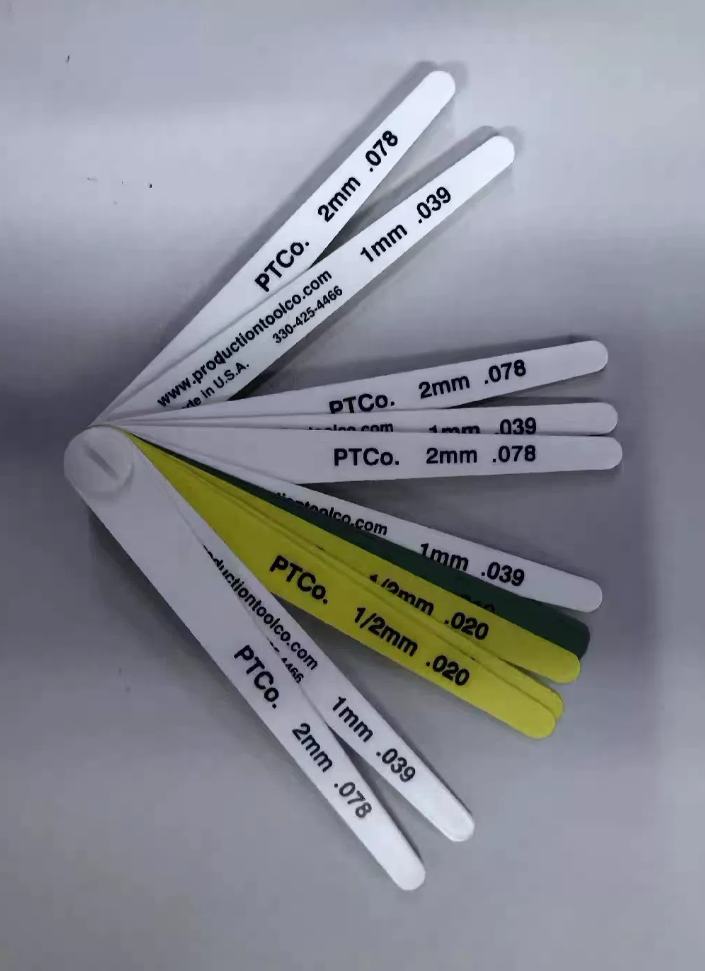
- Información básica
Nombre completo: Modelo de producción 19350 Galga de espesores de plástico para uso automotriz
Nombre en inglés estándar: Modelo de galga de espesores de plástico 19350
Especificaciones principales
- Número de cuchillas: 11 piezas por juego
- Rango de medición: 0.25milímetros ~ 5,0 mm
- Secuencia de espesor de hojas individuales (Conjunto completo de 11 Tallas)
0.25, 0.50, 1.00, 1.50, 2.00, 2.50, 3.00, 3.50, 4.00, 4.50, 5.00 milímetros
- Dimensiones generales
longitud total: 100milímetros; Ancho de punta estrecho: 6milímetros; Ancho de punta ancho: 12milímetros
- Material: Nailon de alta resistencia / Plástico ABS con codificación de colores para identificación de espesor. (Verde = 0,25 mm, Amarillo = 0,5 mm, todos los demás blancos)
- Marcas: Métrica dual (milímetros) e imperial (pulgada) escalas grabadas, resistente al desgaste y a la decoloración
- Origen: Herramienta de medición industrial original de EE. UU.
- Ventajas principales del producto
- No daña las piezas de trabajo: No metálico y sin rebabas. No rayará la pintura del coche., vaso, piezas de plastico, aleación de aluminio o adornos interiores de precisión, convirtiéndolo en una alternativa irreemplazable a las galgas de espesores metálicas.
- No magnético & No conductor: Adecuado para inspección de espacios de componentes electrónicos., moldes de inyección y conjuntos de baja tensión sin riesgos de cortocircuito o magnetización.
- Inoxidable, Aceite & Resistente al refrigerante: Especialmente diseñado para talleres de montaje y pintura de fabricantes de equipos originales (OEM) de automóviles..
- Desmontable & Cuchillas combinables: Se pueden apilar varias hojas para medir cualquier tamaño de espacio combinado.
- Escenarios de aplicación típicos
Montaje completo del vehículo: Inspección de espacios en las holguras de las puertas., costuras del capó, Paragolpes y nivelación de lámparas.
Industria del vidrio: Espacios entre el vidrio templado y las tiras de sellado de ventanas
moldes de inyección & piezas de plastico: Espacios en la línea de separación
Electrodomésticos de precisión, Medición del enrasado de molduras interiores y chapas.
Inspección en sala limpia para detectar huecos en componentes electrónicos
- Comparación de modelos de la misma serie (Referencia de selección de modelo)
| Modelo | Número de cuchillas | Rango de medición | Escenarios aplicables |
| 19350 | 11 piezas | 0.25–5,0 mm | Brechas de amplio alcance, Enrasado exterior total del vehículo. (más utilizado) |
| 15026 | 13 piezas | 0.25–2,0 mm | Medio & pequeños espacios, pequeños componentes interiores |
| 14839 | 5 piezas | 0.25–3,0 mm | Inspección de muestreo rápida y sencilla |
- Glosario de terminología de la industria
Galga de espesores de plástico
Producción 19350
calibre de brecha / medidor de espesor
Medidor de plástico que no daña
Casos de aplicación de galgas de espesores de plástico en toda la industria (Producción 19350)
- Fabricación completa de automóviles (Aplicación principal, Modelo estándar OEM 19350)
Caso 1: rubor & Inspección de espacios en chapa metálica exterior de vehículos (Línea de montaje OEM)
Puntos de medición: Pintar las costuras del capó., cuatro puertas, portón, guardabarros, faros, parachoques, Cubiertas de radar y carcasas de espejos retrovisores.
Requisitos del proceso: Espacio de puerta estándar: 3.0±0,5 mm; Enrasado entre faro y guardabarros ≤0,3 mm
Ventajas operativas: El material plástico sin rebabas evita rayones en la pintura y los adornos galvanizados.; Los calibres metálicos dañan fácilmente los recubrimientos y provocan retrabajos. & desguace
Procedimiento operativo: Llevar 3 puntos de medición (izquierda, medio, bien) en cada costura. Insertar modelo 19350 cuchillas y registrar el espesor máximo que se desliza suavemente como el valor de espacio. Los inspectores de línea realizan una inspección completa y un registro de datos para cada vehículo..
Problema resuelto: Después de reemplazar los medidores de metal, la tasa de defectos de los rayones en la pintura disminuye 90%.
Caso 2: Inspección de montaje interior para vehículos de nuevas energías
Piezas inspeccionadas: Adornos de consola central, paneles de instrumentos, paneles de plastico para puertas, protectores de asiento, rejillas de ventilación y cubiertas del puerto de carga
Características de las condiciones de trabajo: Todas las piezas de plástico o envueltas blandas; Los calibres de metal tienden a dejar hendiduras y rayones.
Estándares de inspección: Espacio de montaje de molduras interiores.: 0.5–1,5 mm; Diferencia de paso ≤0,2 mm
Escenario de aplicación: Los talleres de ensamblaje de BYD y Tesla adoptan uniformemente la producción 19350 Galgas de espesores de plástico para la inspección final fuera de línea de interiores..
Caso 3: Control de espacios entre tiras de sellado en talleres de pintura
Posiciones de medición: Espacios entre el vidrio de la ventana y las tiras selladoras de las puertas, tiras de goma impermeables para maletero
Función: Los espacios excesivamente grandes provocan fugas de agua.; los espacios demasiado estrechos deforman las tiras de goma. Los medidores de plástico resisten la corrosión de la pintura y los agentes de limpieza sin oxidarse., Adecuado para ambientes húmedos de talleres de pintura..
Caso 4: Revisión de espacios posteriores a la reparación para reparación de automóviles & Modificación
Después de la reparación de pintura en talleres 4S, Modelo 19350 se utiliza para verificar espacios uniformes de puertas y capós para evitar defectos cosméticos en el momento de la entrega del vehículo..
- Molde de inyección & Industria de componentes plásticos
Caso 1: Inspección de rutina de la línea de separación & Insertar huecos en moldes de inyección
Artículos de inspección: Cerrando huecos de frente & moldes traseros, Ajuste de espacios de insertos deslizantes., holguras de la placa eyectora
Escenarios aplicables: Moldes ópticos hechos de PC., ABS y acrílico transparente (Las cavidades pulidas a espejo deben evitar rayones metálicos.)
Estándar de proceso: Separación de moldes ópticos de alta precisión.: 0.01–0,03 mm. Se utilizan hojas de plástico delgadas durante las patrullas diarias para verificar si hay rebabas y fugas de material..
Ventajas: Sin rayones en las superficies pulidas del molde; Los medidores de acero inoxidable dañan fácilmente las cavidades y provocan productos defectuosos en masa con rayones en la superficie..
Caso 2: Inspección de espacios de ensamblaje de carcasas de plástico terminadas (Electrodomésticos / 3Electrónica C)
Productos: carcasas de TV, cubiertas para portátiles A/B, carcasas de cargador, paneles de plastico para lavadora
Demanda de inspección: Uniformidad de las uniones de cierre de la carcasa y diferencia de paso de los conjuntos de ajuste a presión. Todas las piezas de trabajo son de plástico., propenso a sufrir marcas causadas por herramientas de medición metálicas.
Aplicación de fábrica: Las estaciones de inspección de moldeo por inyección de Xiaomi y Midea utilizan galgas de espesores de plástico en lotes; el rango completo de 0,25 a 5,0 mm cubre todas las uniones de carcasas grandes y pequeñas.
- Electrónica, Electricidad de Precisión & Industrias de salas limpias
Caso 1: Inspección de espacios en placas de circuito & Componentes de bajo voltaje
Escenarios: Espacios de montaje de carcasas de PCB, carcasas de relés, Módulos de batería y espaciado de piezas aislantes.
Ventajas principales: El plástico es aislante y no magnético., eliminando los riesgos de cortocircuitos y adsorción de desechos metálicos que queman las placas de circuito. Los calibres metálicos conductores están prohibidos en las estaciones de trabajo electrónicas..
Aplicación de fábrica de baterías de nueva energía: Inspección de espacios de montaje de carcasas de módulos PACK para evitar la extrusión de celdas y fallas de los sellos impermeables.
Caso 2: Montaje en sala limpia de lentes ópticas & Lentes de cámara
Medición de espacios entre lentes de cámara., lentes y soportes de cristal para cámaras de vehículos. El material plástico no raya las películas de revestimiento y no produce polvo metálico en entornos de salas blancas..
- Mecanizado & Herramientas de automatización
Caso 1: Calibración de espacios de plantillas de aluminio de precisión & Accesorios
Aluminio de grado aeroespacial y 6061 Los accesorios de aluminio cuentan con superficies finamente mecanizadas que se rayan fácilmente con calibres metálicos.. Las galgas de espesores de plástico se utilizan para la puesta en servicio masiva de accesorios y verificaciones de rutina diarias..
Caso 2: Ajuste de espacios de transportadores & Articulaciones de robots
Huecos de protectores de cintas transportadoras y piezas plásticas anticolisión en manipuladores. Resistente al aceite y al refrigerante, libre de óxido para un servicio a largo plazo.
- Vaso, Puerta & Ventana, Industria Fotovoltaica
Caso 1: Inspección de espacios de sellado de vidrio templado para automóviles & Puertas/ventanas arquitectónicas
Espacios entre el cristal de la ventanilla del vehículo y las tiras de sellado de goma, y perfiles de ventana de puente roto de aluminio. El vidrio tiene una gran dureza, pero los bordes son frágiles y propensos a astillarse al impactar con calibres metálicos..
Caso 2: Inspección del sellado del marco de módulos fotovoltaicos
Medición de espacios entre los marcos de aluminio de los paneles solares y los selladores de silicona para controlar el rendimiento a prueba de agua. El plástico resiste la corrosión de la silicona y es fácil de limpiar..
- Casos de aplicación de industrias especializadas
- Reparación de instrumentos: Calibración de espacios para cuñas de pads de instrumentos de viento para evitar rayones metálicos en llaves de cobre plateadas y garantizar la estanqueidad & calidad del tono
- Industria de climatización: Inspección de espacios en bridas de sellado de conductos de aire y juntas de montaje de rejillas de ventilación de plástico para aire acondicionado central
- Equipo médico: Inspección de espacios de montaje de carcasas de plástico e instrumentos esterilizados.; El diseño no metálico elimina los riesgos de contaminación por residuos metálicos.
- Tránsito ferroviario: Inspección de calidad de espacios en paneles de paredes interiores de plástico del metro y molduras de ventanas para proteger las superficies interiores revestidas
- Resumen de Escenarios Aplicables Exclusivos para la Producción 19350 (0.25–5mm)
- Priorizar modelo 19350 para: Grandes superficies pintadas, piezas de plastico, aleaciones de aluminio, componentes ópticos y aisladores electrónicos. Su amplio rango de medición cubre la inspección de espacios exteriores de vehículos completos., Grandes moldes y carcasas de electrodomésticos..
- No apto para: Holguras de válvulas de microprecisión a nivel de micras (Se requieren galgas de espesores metálicas ultrafinas.) y entornos de procesamiento de alta temperatura (plástico propenso a la deformación).
- Valor fundamental general: No estropear, aislante & inoxidable, aceite & resistente a disolventes, hojas individuales desmontables y apilables para medir espacios combinados.