コンタクタ,サーキットブレーカー,ソーラーインバーター,電気メーター,太陽電池

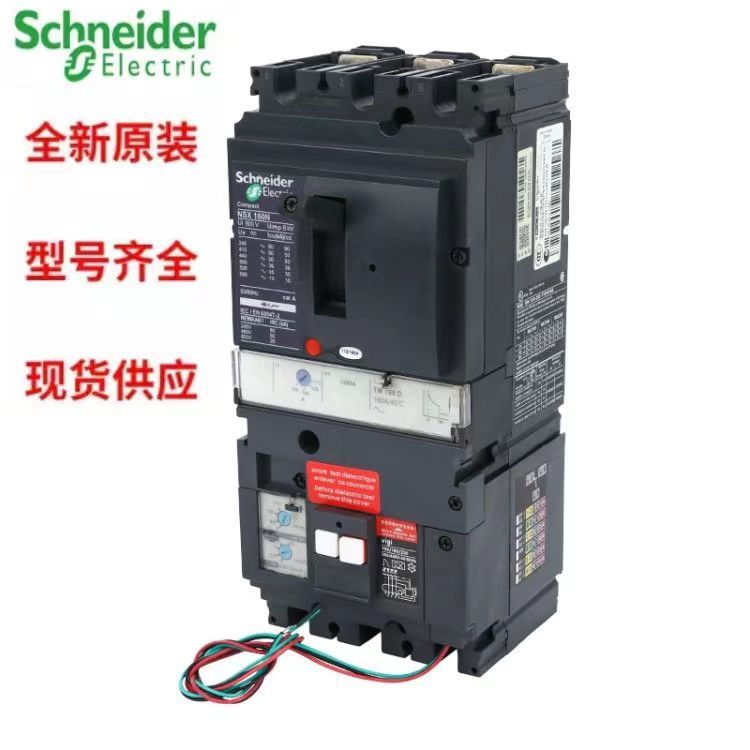

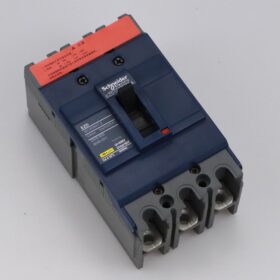
の Schneider low-voltage molded case circuit breaker EZD100B3015MAN is an economical product in Schneider Electric’s EZD series, mainly used for overload and short-circuit protection in low-voltage power distribution systems. The following is a detailed analysis based on existing information:
- Model Composition and Core Parametersシュナイダー-MCCB-NSX250F-4P-250A
- Positioning of the EZD Series
– The EZD series is an economical molded case circuit breaker from Schneider for residential, コマーシャル, and industrial scenarios, providing basic protection functions with high cost-effectiveness and reliability.
– It features a compact design and supports multiple installation methods (such as fixed and plug-in types), suitable for power distribution scenarios requiring medium breaking capacity.
- Frame Current and Trip Characteristicsシュナイダーサーキットブレーカーの価格
100: Indicates a frame current of 100A, meaning the maximum rated current of this circuit breaker is 100A, adaptable to loads with a rated current ≤100A.
B3015:
B: Possibly represents the trip curve type. According to Schneider’s naming rules, the B-type trip curve has an instantaneous trip range of 3-5 定格電流の倍, suitable for protecting loads with small short-circuit currents (such as household appliances and lighting circuits).
3015: May include breaking capacity and accessory information. Referencing the naming logic of other Schneider series (such as NSX), “30” may represent the ultimate short-circuit breaking capacity (ICU) of 30kA, while “15” may indicate an accessory code (such as auxiliary contacts, shunt trip, 等), but this needs to be confirmed with official data.
- Pole Count and Operation ModeChint の NB1-63DC シリーズ DC サーキットブレーカー Price
MAN: According to electrical symbol conventions, “MAN” stands for manual operation, meaning the circuit breaker must be switched on or off manually without electric operation functions.
– Combining common industry naming rules, “3” may represent 3 極 (3P), suitable for three-phase power distribution systems.
- Breaking Capacity and Application Scenarios
- Breaking Capacity CharacteristicsChint NXR シリーズサーマル過負荷リレーの価格
– The EZD series is economical, and its service short-circuit breaking capacity (ICS) is typically lower than the ultimate short-circuit breaking capacity (ICU). 例えば, the Icu of EZD100 may be 30kA, while the Ics is 15kA (つまり, 50% ICUの), with specific parameters subject to official data.
– This model is suitable for scenarios with low requirements for breaking capacity, such as general industrial power, small motor protection, or residential power distribution.
- 典型的なアプリケーションシナリオ
Residential and Commercial Buildings: Used as main switches or branch circuit protection in distribution boxes to prevent overloads and short circuits.
Light Industry and Small Factories: Suitable for power protection of equipment such as machine tools and fans, combined with contactors for motor control.
New Energy Sector: Can serve as low-voltage side protection equipment for photovoltaic inverters and energy storage systems, but selection should be combined with specific voltage levels and breaking requirements.
Ⅲ. Technical Features and Selection SuggestionsCHINT サージプロテクターの価格
- Technical Features
Thermomagnetic Trip Unit: Provides both overload protection (thermal trip) および短絡保護 (magnetic trip) without requiring external relays.
Modular Design: Supports expansion of accessories such as auxiliary contacts, alarm contacts, and shunt trips to achieve remote monitoring or fault alarm functions.
環境適応力: The operating temperature range is typically -5°C to +70°C, compliant with IP20 protection class, suitable for general industrial environments.
- Selection Considerations
ロードマッチング: Ensure the rated current (で) ≥ the calculated load current, and the trip curve type (例えば, B-type) matches the load characteristics (例えば, motor starting current).
Breaking Capacity Verification: Select a model with Icu ≥ the expected short-circuit current at the installation location to prevent the circuit breaker from failing to break reliably during faults.
Accessory Configuration: For remote control or monitoring, additional electric operation mechanisms (such as Smart RCA) or power monitoring modules (such as PowerTag FD) need to be selected.
The differences between the Schneider low-voltage molded case circuit breaker EZD100B3015MAN and other models in the same series mainly lie in trip curves, 遮断容量, pole count, operation mode, and application scenarios. The following is a detailed comparison based on existing information:
- Differences in Trip Curves and Protection Characteristics
- B-Type Trip Curve (EZD100B3015MAN)
瞬時トリップ範囲: 3-5 定格電流の倍, suitable for low-impact loads (such as household appliances and lighting circuits).
Characteristics: Highly sensitive to short-circuit currents, capable of quickly cutting off faults, but with weak tolerance to impact currents. 例えば, if the load starting current exceeds 5 定格電流の倍, the B-type circuit breaker may trip mistakenly.
- Other Trip Curve Models
C-Type: Instantaneous trip range of 5-10 定格電流の倍, suitable for conventional loads (such as small motors and air conditioners), able to withstand higher starting currents.
D-Type: Instantaneous trip range of 10-14 定格電流の倍, suitable for high-impact loads (such as transformers and large motors), effectively avoiding frequent tripping.
Comparison: If C-type or D-type models (such as EZD100C, EZD100D) exist in the EZD series, their trip characteristics differ significantly from the B-type, requiring selection based on load types.
- Differences in Breaking Capacity and Frame Current
- Breaking Capacity of EZD100B3015MAN
Ultimate Short-Circuit Breaking Capacity (ICU): Possibly 30kA (の “30” in “B3015” is inferred to represent this parameter).
Service Short-Circuit Breaking Capacity (ICS): Typically 50% ICUの (つまり, 15の), suitable for medium short-circuit current scenarios.
- Other Frame Current Models in the Same Series
EZD63: Frame current 63A, breaking capacity possibly 25kA (ICU), suitable for small power distribution systems.
EZD250: Frame current 250A, breaking capacity possibly 36kA (ICU), suitable for industrial scenarios with larger loads.
Comparison: Larger frame currents generally correspond to higher breaking capacities, but the EZD series is overall economical, with breaking capacities lower than high-end series (such as NSX).
Ⅲ. Differences in Pole Count and Operation Mode
- Configuration of EZD100B3015MAN
Pole Count: Presumed to be 3 極 (3P) (“3” may represent the pole count), suitable for three-phase power distribution systems.
動作モード: Manual operation (MAN), requiring manual switching on/off without electric control functions.
- Expanded Configurations of Other Models
Pole Count Options: The same series may offer 1P, 2P, 4P, 等, to meet single-phase or three-phase scenarios with neutral wires.
Electric Operation: Some models may support electric operation mechanisms (such as MCH or electric modules), suitable for remote control or automation systems.
- Accessory Compatibility and Function Expansion
- Accessories of EZD100B3015MAN
Basic Configuration: Supports accessories such as auxiliary contacts (SD) and alarm contacts (AL) for status monitoring or fault alarms.
Limitations: May not support high-end accessories (such as electronic trip units or communication modules), with limited functional expandability.
- Accessory Differences in Other Models
High-End Models: 例えば, EZD100E (presumed to be an electronic trip type) may support more complex protection functions (such as overload long delay and short-circuit short delay).
Modular Design: Some models can expand shunt trips (MX), undervoltage trips (MN), 等, to enhance control flexibility.
- Comparison of Application Scenarios
| モデル | トリップカーブ | 遮断容量 (ICU) | Pole Count | 動作モード | 代表的な用途 |
| EZD100B3015MAN | B-type | 30の | 3P | Manual | Residential lighting, small appliances, low-impact loads |
| EZD100C (hypothetical) | C-type | 30の | 3P | Manual/electric | Small motors, エアコン, conventional loads |
| EZD100D (hypothetical) | D-type | 30の | 3P | Manual/electric | Transformers, large motors, high-impact loads |
| EZD63N (hypothetical) | N-type (default) | 25の | 3P | Manual | Small distribution boxes, single/three-phase light loads |
| EZD250H (hypothetical) | H-type (default) | 36の | 3P | Manual/electric | Industrial equipment, medium motor protection |
- Selection Suggestions
- ロードマッチング:
– For lighting or household appliances, prioritize B-type (such as EZD100B3015MAN).
– For motors or transformers, select C-type or D-type and verify whether the starting current falls within the trip curve range.
- Breaking Capacity Verification:
– Select a model with Icu ≥ the expected short-circuit current at the installation location. 例えば, 30kA is suitable for residential power distribution, while industrial scenarios may require higher breaking capacity.
- Functional Requirements:
– For remote control, choose models supporting electric operation (such as EZD100C-MCH).
– For complex protection functions, consider high-end series (such as NSX) or electronic trip-type EZD.
NH42-63-318x560.png "CHINT PC型自動切替スイッチ (ATS)NH42-63/4SZ")