コンタクタ,サーキットブレーカー,ソーラーインバーター,電気メーター,太陽電池


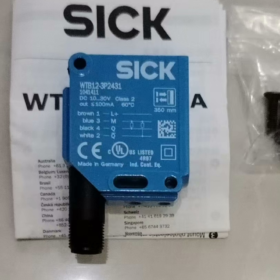
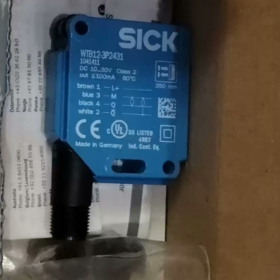
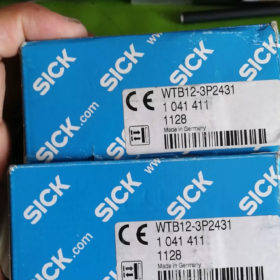
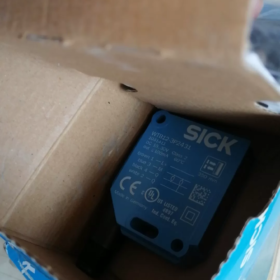
モデル & Order Code Explanation
Basic Identification
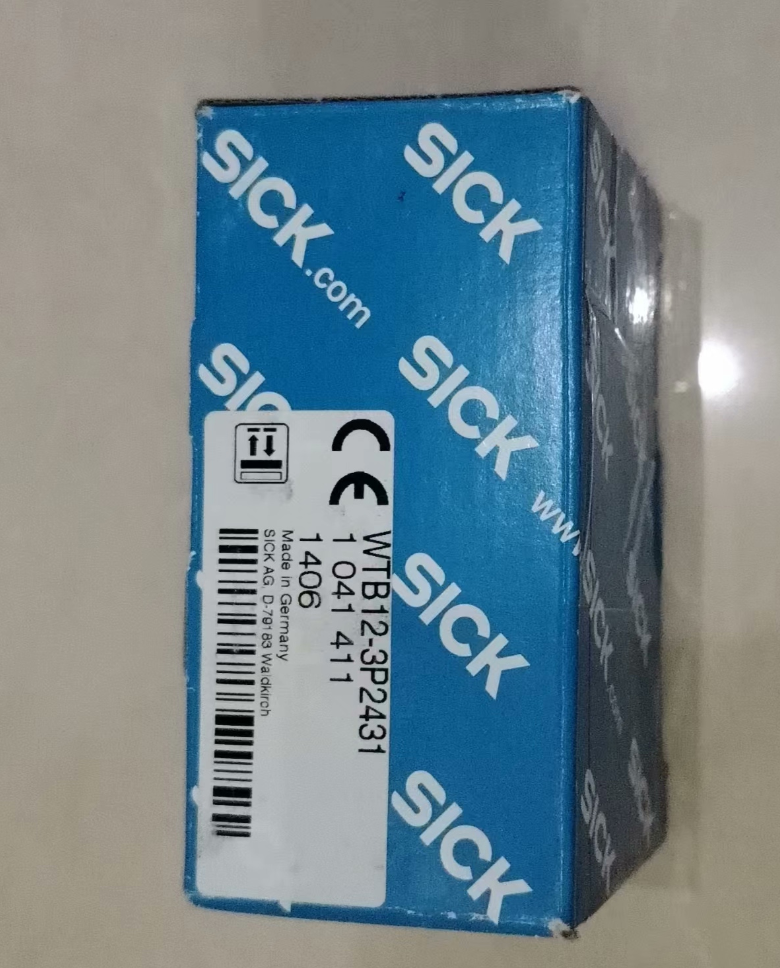
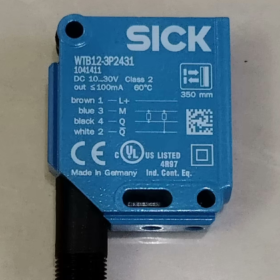
Original Order Code: 1041411
対応機種: WTB12-3P2431
製品シリーズ: W12-3 Industrial Photoelectric Sensor シリーズ
製品タイプ: Diffuse Photoelectric Sensor with Background Suppression (BGS)
モデルコードの内訳
| コード | 説明 |
| WT | Diffuse photoelectric sensor (general prefix for W series) |
| B | Built-in Background Suppression (BGS), eliminates interference from rear background |
| 12 | W12 standard square industrial housing series |
| -3 | 3rd-generation upgraded platform equipped with SIRIC intelligent optical chip |
| P | PNP出力 (sourcing output) |
| 2431 | 機能コード: 350 mm sensing range, M12 4ピンコネクタ, ポテンショメータの調整, light-on/dark-on switchable |
- 主要な技術仕様
| アイテム | 仕様 |
| センシング原理 | Diffuse photoelectric sensor (Background Suppression type) |
| 光源 | 可視赤色LED, 波長: 640 nm |
| Standard Sensing Range | 20 mm ~ 350 mm (based on standard white card with 90% 反射率) |
| 供給電圧 | 直流 10 V〜 30 V |
| 出力タイプ | Single-channel PNP digital output, ライトオン / dark-on selectable |
| Max Output Current | 100 ミリアンペア |
| 応答時間 | ≤ 0.33 MS |
| スイッチング周波数 | マックス. 1500 Hz |
| Adjustment Mode | 5-turn potentiometer for threshold setting |
| 接続タイプ | M12 4-pin male connector |
| ハウジング材質 | Metal body + PMMA optical lens |
| 保護クラス | IP66 / IP67 / IP69K |
| 動作温度 | -40 ℃~ +60 ℃ |
| 寸法 (幅×高さ×奥行き) | 15.6 mm× 48.5 mm× 42 mm |
| 重さ | 約. 120 g |
| 認証 | CE, RoHS |
- アプリケーション環境
推奨アプリケーション
- 自動車製造: Presence detection and type identification of seat frames and stamped parts; resistant to interference from metallic tooling backgrounds.
- 食べ物 & 飲料充填ライン: Position detection of bottles and packaging boxes. IP69K rating withstands high-pressure hot water washing and sanitization.
- 包装機械: Product positioning and label detection, unaffected by discoloration or wear on conveyor belts.
- 物流仕分け: Presence and posture detection of parcels, free from interference from wall or conveyor backgrounds.
- 3C Electronic Production Lines: Feeding position detection for PCBs and small components; reliable detection of dark-colored workpieces.
推奨されないアプリケーション
- Detection of fully transparent objects such as ultra-thin transparent glass and films (no dedicated algorithm for transparent object detection).
- Long-distance detection beyond 350 mm.
- Extreme corrosive environments with prolonged exposure to corrosive gas or liquid.
- Areas with high voltage and strong electromagnetic interference (no enhanced EMC shielding).
- 全シリーズ一覧 (W12-3 Background Suppression Diffuse Series)
| 注文コード | モデル | 出力タイプ | 検出範囲 | 繋がり |
| 1041411 | WTB12-3P2431 | PNP | 20~350mm | M12 4ピンコネクタ |
| 1041412 | WTB12-3N2431 | NPN | 20~350mm | M12 4ピンコネクタ |
| 1041409 | WTB12-3P2411 | PNP | 20~350mm | 2m固定ケーブル |
| 1041410 | WTB12-3N2411 | NPN | 20~350mm | 2m固定ケーブル |
| 1041404 | WTF12-3P2431 | PNP | 30~175mm (Foreground Suppression) | M12 4ピンコネクタ |
| 1041408 | WTF12-3N2431 | NPN | 30~175mm (Foreground Suppression) | M12 4ピンコネクタ |
- クロスブランド交換リスト
Original Manufacturer Replacement
Models with identical specifications in the same series are fully interchangeable mechanically and electrically. 例えば, WTB12-3P2411 (cable type) can replace the connector version, with only different wiring methods.
Equivalent International Brands
| ブランド | 同等モデル | Matching Rate | 備考 |
| オムロン | E3Z-LS63 | 95% | PNP, バックグラウンド抑制, 300 mm範囲, M12コネクタ, slightly smaller size |
| ペッパール+フックス (P+F) | OBT350-R100-2EP-IO-V31 | 92% | 350 mm範囲, PNP, with IO-Link, より豊富な機能 |
| シュナイダーエレクトリック | XUM9APSBM8 | 90% | Same range, PNP出力, M12コネクタ, compatible mounting holes |
Domestic Compatible Replacements
Hugong E3Z-D63 (PNP): Compatible basic detection functions and similar mounting dimensions. Cost is approx. 1/3 of the original model, ideal for cost-sensitive general applications.
Xinje PSB350-MNDT: Background suppression type, PNP出力, 350 mm範囲. Cost-effective domestic industrial solution.
- 一般的な障害 & トラブルシューティング手順
- No output and indicator light off
Check if supply voltage is within DC 10~30 V; verify wiring polarity (Brown = Positive, Blue = Negative); inspect M12 pins for oxidation or looseness; check cables for open circuits.
- Failure to detect objects, no trigger signal
Confirm the target is within the effective sensing range; turn the potentiometer clockwise to increase sensitivity; clean dust and oil on the optical lens; check reflectivity of the target (effective range decreases for dark or light-absorbing objects).
- 誤ったトリガー, output signal without target
Adjust mounting angle to avoid highly reflective backgrounds; shield intense ambient light (sunlight, high-power lamps); keep sufficient spacing between multiple sensors to prevent optical crosstalk; turn the potentiometer counterclockwise to reduce sensitivity.
- Actual sensing range shorter than rated value
Wipe dirt off the lens; recalibrate the potentiometer for maximum range; note that dark and matte objects will reduce the effective sensing distance.
- 代表的な応用例
- Position Detection of Automotive Seat Base Components
Installed on rotary workstations of automotive assembly lines to verify proper assembly of seat frame parts. Background suppression eliminates interference from metallic rotary fixtures, ensuring stable detection of stamped parts in black, grey and metallic finishes. Long-term false detection rate is lower than 0.01%.
- Bottle Detection for Beverage Filling Lines
Mounted at the end of bottled beverage lines to detect PET bottles for inkjet marking. IP69K protection withstands regular high-pressure hot water cleaning. Background suppression is immune to color wear and fading on conveyors, supporting the maximum 1500 Hz switching frequency for high-speed production.
- Component Reel Detection for SMT Lines
Used on rack stations of electronic assembly lines to check installation of component reels. Accurately detects small plastic reels and blocks interference from metal rack backplates. Compact size suits densely arranged production layouts.
補足事項
This model is a mass-production standard product of SICK with no obsolescence notice. Regular stock is available via standard distributors for procurement and technical support.
Troubleshooting Manual for SICK W12-3 Series Diffuse Photoelectric Sensors
The SICK W12-3 series includes three sub-types: WT (Standard Diffuse), WTB (バックグラウンド抑制) and WTF (Foreground Suppression). Adopting the 3rd-generation SIRIC intelligent optical chip, it features IP66/IP67/IP69K high protection. Its faults follow general rules for photoelectric sensors while having series-specific causes. Below is classified troubleshooting covering over 95% of on-site abnormal conditions.
- 力 & 配線障害 (No Response at All)
症状
電源インジケーターがオフ, no signal output, sensor completely out of operation.
Root Causes
- Reversed wiring polarity or mismatched M12 pin definition
- Supply voltage out of DC 10~30 V rated range (不足電圧 / 過電圧)
- Broken internal cable, loose or oxidized connector pins leading to poor contact
- Short-circuited output triggering built-in overcurrent protection and latch-up
トラブルシューティングの手順
- Confirm wiring standard: Brown = DC Positive, Blue = DC Negative, Black = Signal Output. M12 4-pin definition: ピン 1 = Positive, ピン 3 = Negative, ピン 4 = Output, ピン 2 = Spare.
- Measure supply voltage with a multimeter to eliminate undervoltage/overvoltage caused by line voltage drop or power supply failure.
- Check loose or corroded M12 connectors. Replace with a spare cable to rule out intermittent open circuits.
- In case of output short circuit, disconnect the load and restart power. The self-recovering overcurrent protection generally will not cause permanent damage.
- Detection Failure (No Output with Target Present)
症状
No signal output and no indicator change when the target passes the sensing area.
Root Causes
- Target beyond effective range or with extremely low reflectivity
- Potentiometer threshold set too low
- ほこり, oil or condensation on optical lens blocking light path
- Excessive mounting angle deviation; reflected light fails to reach receiver
- Exclusive for WTB (バックグラウンド抑制): Too small distance between target and background, which is filtered out by algorithm
トラブルシューティングの手順
- Verify range matching: Rated range is based on 90% reflectivity white card. Effective distance decreases by 30%~50% for black, matte or curved objects; reserve sufficient margin.
- Clean the lens gently with lint-free cloth and anhydrous alcohol to remove dust, oil and condensation — the most common on-site cause.
- Turn the sensitivity potentiometer clockwise gradually until stable triggering is achieved.
- Adjust mounting angle to keep the optical axis perpendicular to the target surface and avoid reflected light deviation caused by oblique incidence.
- For WTB models: If the target is close to the background, recalibrate the potentiometer and ensure the distance between target and background is ≥ 20 mm for reliable distinction.
- 誤ったトリガー & 異常動作 (Output without Target)
症状
Unintended output when no target exists, or unstable flickering signals during detection.
Root Causes
- Intense ambient light interference: Direct sunlight or high-power halogen/LED lights shining on the receiver
- High-reflective background objects (metal fixtures, mirror belts, white walls) misread as targets
- Optical crosstalk between multiple sensors installed side by side
- Excessively high sensitivity detecting airborne dust, lint or mist
- Severe electromagnetic interference near inverters, servo motors or parallel layout of power cables and signal cables
- Loose mounting bracket causing optical axis offset due to vibration
トラブルシューティングの手順
- Block direct strong light or adjust installation angle away from incident light.
- Replace standard diffuse sensors with WTB background suppression models if troubled by background interference. For WTB units, slightly turn the potentiometer counterclockwise to narrow sensing range and shield high-reflective backgrounds.
- Maintain horizontal spacing ≥ 50 mm between adjacent sensors or stagger optical axes to avoid mutual irradiation.
- Lower sensitivity appropriately to eliminate false triggers from fine particles and mist.
- Use shielded cables with single-point grounding in high-EMI environments. Separate signal cables and power cables into different conduits with spacing ≥ 20 cm.
- Fasten brackets and screws to eliminate vibration.
- Unstable Performance (Intermittent Operation)
症状
Same target is detected intermittently; sensing distance fluctuates randomly.
Root Causes
- Periodic dust/condensation on lens leading to variable light transmittance
- Excessive power supply ripple or poor contact causing unstable voltage
- Partially broken cable conductors with intermittent open circuit under bending or vibration
- Parameter drift of optical components due to sharp temperature changes
- Unfixed posture or orientation of targets leading to fluctuating reflected light intensity
トラブルシューティングの手順
- Increase lens cleaning frequency in high-humidity and dusty environments; install dust covers if necessary.
- Measure power ripple to ensure stable power supply. Add filter power supplies for extreme working conditions to suppress surge.
- Replace with spare cables to exclude intermittent circuit and connector faults.
- Reserve over 20% extra sensing range under extreme high/low temperature to offset component drift.
- Optimize tooling positioning to keep consistent posture and orientation of passing targets.
- Hardware Damage & Aging Faults
症状
Function cannot be restored after conventional troubleshooting, indicating permanent hardware failure.
Root Causes
- Cracked, scratched lens or damaged coating leading to light path failure
- Failed housing seal; water/dust ingress causing internal PCB corrosion
- Worn potentiometer from frequent adjustment with no response
- Internal circuit breakdown caused by overvoltage or surge (mostly from lightning strike or power failure)
- LED light source aging and power attenuation under long-term high temperature, resulting in reduced sensing distance
トラブルシューティングの手順
- 目視検査: Check lens cracks, housing fractures and seal failure. Note that IP69K protection is only valid for intact housings. Protection performance fails immediately once the lens is damaged.
- Replace the whole sensor if the potentiometer has no response throughout adjustment travel.
- Replace the sensor directly if power is normal but indicator stays off (internal circuit breakdown, non-repairable).
- Replace the sensor if the actual sensing distance remains below 70% of rated value after lens cleaning (light source aging).
On-site Quick Diagnosis (5-Step Troubleshooting Method)
- Check Power: 電圧を測定する, verify wiring and check power indicator
- 目視検査: Clean lens, check mounting tightness and housing integrity
- Adjust Threshold: Turn potentiometer from low to high and test triggering performance
- Eliminate Interference: Block strong light, isolate background and test with independent power supply
- Replacement Test: Swap with a confirmed good unit to distinguish between sensor failure and peripheral system faults
NH42-63-318x560.png "CHINT PC型自動切替スイッチ (ATS)NH42-63/4SZ")