Contactor,circuit breaker,sensor,Encoder,PLC,Converter

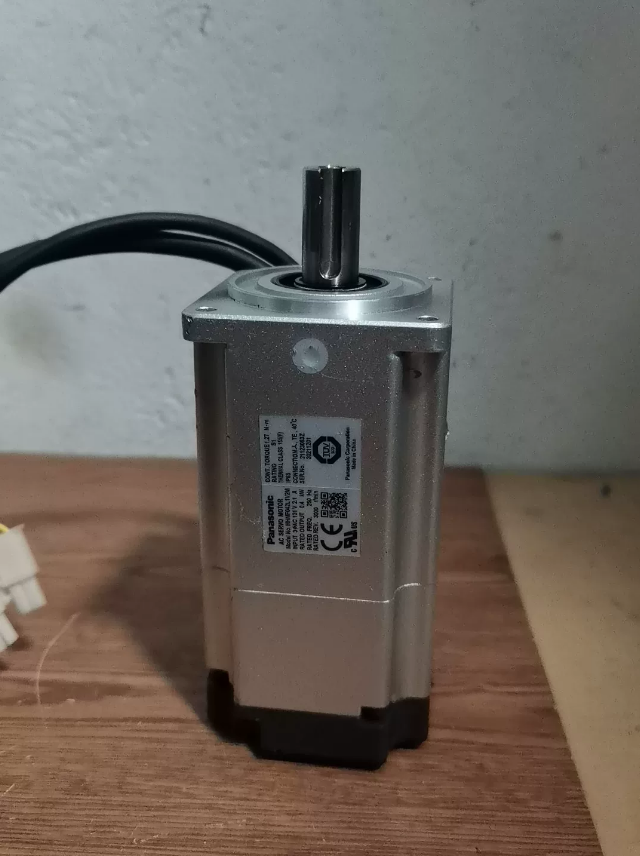

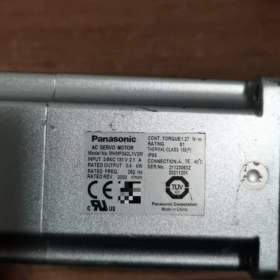
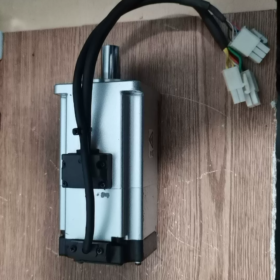
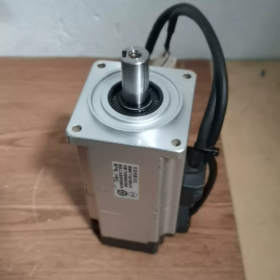
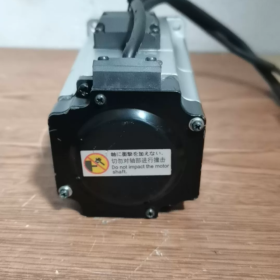
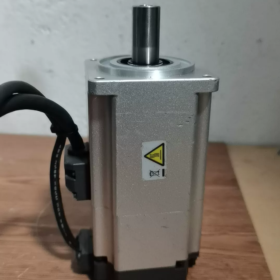
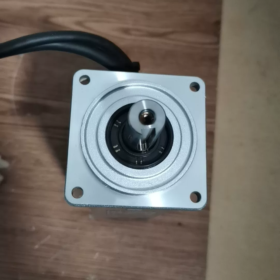
Model Code Breakdown (MINAS A6 Series Coding Rule)
MHMF 04 2 L 1 V 2 M
- MHMF: A6 high-inertia AC servo motor series (MSMF = low inertia)
- 04: Rated power 400W
- 2: 200V single/three-phase AC voltage specification
- L: Lead wire outlet type (non-circular military connector)
- 1: Standard flange, keyed shaft with shaft-end thread
- V: Built-in 24V electromagnetic holding brake
- 2: 23-bit battery-free absolute encoder
- M: Standard specification model
- Core Electrical Performance Parameters
| Item | Specification |
| Series | Panasonic MINAS A6 |
| Rated Power | 400W |
| Input Voltage | AC 200V (single/three-phase compatible) |
| Rated Speed | 3000 r/min |
| Max Speed | 6500 r/min |
| Rated Torque | 1.27 N·m |
| Instant Peak Torque | 4.46 N·m (3.5x overload capacity) |
| Rated Current | 2.1 A |
| Max Current | 10.4 A |
| Encoder | 23-bit battery-free absolute, single-turn resolution 8388608 |
| Servo Response Bandwidth | 3.2 kHz |
| Rotor Moment of Inertia | 0.58×10⁻⁴ kg·m² (high inertia with brake) |
| Recommended Load Inertia Ratio | ≤30× motor inertia |
Holding Brake Specifications
Excitation Voltage: DC24V ±10%
Excitation Current: 0.36 A
Static Holding Torque: ≥1.6 N·m
Pull-in Time ≤50 ms, Release Time ≤20 ms
- Mechanical Dimensions & Protection
- Mounting Flange: 60×60 mm square flange
- Shaft Spec: φ14 mm with keyway and shaft end thread
- Total Weight: 0.78 kg
- Protection Class: IP65 (excluding rotary shaft surface and wire outlet)
- Ambient Temperature: Operating 0~55℃; Storage -20~65℃
- Humidity: 20%~85% RH, no condensation
- Applicable Altitude: ≤1000 m
- Matching A6 Servo Drives (400W General B Frame)
This motor is only compatible with Panasonic MINAS A6 200V 400W drives:
- Pulse Type: MBDLN25SE (step pulse + analog input)
- RTEX High-Speed Fieldbus: MBDLN25NE (multi-axis bus control)
- Multi-Function Modbus: MBDLT25SF (pulse/analog/RS485)
- Simplified Communication Type: MBDLN25SG
- External Regenerative Resistor Option: DV0P4283 (mandatory for frequent braking cycles)
- Product Advantages
- High-Inertia Rotor: Ideal for heavy loads, constant-speed continuous operation, conveyor/roller driving; strong anti-load fluctuation capability
- Battery-Free Absolute Encoder: No battery required to retain home position after power loss; direct positioning upon power-on, eliminating homing procedures
- Built-in Holding Brake: Self-locking upon shutdown/power cut; prevents vertical axis and lifting mechanism falling
- Lead Wire Outlet Structure: Convenient internal equipment wiring with larger bending space
- Full Certifications: CE/UL/TUV/UKCA; widely used in machine tools, 3C electronics and packaging machinery
- Cross-Series Alternative Model Comparison
| Model | Inertia | Brake | Encoder | Wire Outlet |
| MHMF042L1U2M | High inertia | No brake | 23-bit absolute | Lead wire |
| MHMF042L1V2M | High inertia | With 24V holding brake | 23-bit absolute | Lead wire (this model) |
| MSMF042L1V2M | Low inertia | With brake | 23-bit absolute | Lead wire |
- Typical Application Scenarios
Vertical lifting modules, vertical slides, gantry Z-axis (anti-fall with brake)
Conveyor rollers, winding machines, take-up equipment (high inertia matches continuous loads)
Small CNC milling machines, engraving machines, labeling machines, dispensing machines
Lithium-ion battery equipment, small automatic loading/unloading manipulators
- Usage Restrictions & Fault Warnings
- Vertical axis applications must adopt V brake-equipped models; vertical installation of non-brake models is prohibited
- Do not sharply bend or crush encoder cables to avoid home position loss
- An external regenerative resistor must be installed under frequent braking conditions to prevent drive overvoltage alarms
- Install an extra motor protective cover if the environment contains water mist or dust (IP65 limited protection)
- The holding brake must be powered by an independent 24V DC power supply; powering the brake via internal drive power is forbidden
Practical Application Cases of MHMF042L1V2M (Panasonic A6 400W High-Inertia Servo with Brake & Battery-Free Absolute Encoder)
Core matching strengths: high rotor inertia + 24V power-off holding brake + 23-bit battery-free absolute encoder + lead wire outlet. It is primarily applied to scenarios requiring vertical anti-fall protection, continuous constant-speed loads, power-off homing exemption and stable start/stop for large inertia loads. Complete industry-specific practical cases are listed below.
- 3C Electronics Automation (Most Mass-Produced Application)
Case 1: Z Lifting Axis of Small Vertical Dispenser
Machine Structure: Vertical ball screw slide; load: 3–6 kg dispensing valve + glue bucket; stroke: 150 mm
Selection Reasons:
- Built-in V holding brake: Locks Z-axis when powered off/shutdown to stop the dispensing valve from dropping and colliding with workpieces
- MHMF high inertia: Uniform glue output during reciprocating screw movement; no low-speed jitter for consistent glue lines
- Battery-free absolute encoder: Direct home position reading at startup; eliminates homing after each power cycle to boost cycle efficiency
Matching Drive: MBDLN25SE pulse-type, controlled by PLC pulse commands
Performance Outcome: Repeat positioning accuracy ±0.005 mm; zero drift after 8-hour continuous operation; rejection rate reduced by 90%
Case 2: Small Take-Up & Unwind Roller for Lithium Battery Electrodes
Working Condition: Conveyance and winding of narrow lithium battery separators and electrode sheets with closed-loop constant tension control
Matching Logic: High-inertia rotor offsets tension fluctuations of rolled materials to prevent winding deviation at low speeds; vertical racks rely on the holding brake to stop material loosening and sliding
System Configuration: Multi-axis synchronous control via RTEX bus drive MBDLN25NE paired with tension sensors for closed-loop regulation
Industry Pain Point Resolution: After replacing stepping motors, winding edge tolerance narrowed from ±0.8 mm to ±0.02 mm
- Packaging & Printing Equipment
Case 3: Lifting Press Label Axis of Vertical Labeling Machine
Application: Side labeling for beverage bottles and medicine boxes; servo-driven pressing roller descends vertically for lamination
Core Requirement: The pressing head must not drop and scratch finished products during standby shutdown; steady roller compression to avoid label bubbling
Motor Advantages: 1.6 N·m static brake holding torque for power-off locking; smooth roller compression with no impact noise due to high inertia
Retrofit Case: Label factories in Jiangsu & Zhejiang replaced old non-brake servos to eliminate workpiece damage caused by overnight power cuts
Case 4: Drive for Paper Feeding Rollers of Small Paper Separators
Continuous constant-speed loads fit the high-inertia characteristics of MHMF series; minimal speed fluctuation during long-duration paper conveyance. The axis locks during equipment maintenance shutdown to prevent paper stacking misalignment.
- CNC & Small Processing Equipment
Case 5: Vertical Z Feed Axis of Small Engraving / PCB Routing Machine
Load: 2.5–5 kg high-speed spindle head driven by vertical ball screw
Mandatory Requirement: Z-axis must lock when machine power cuts off to avoid tool piercing workpieces; vibration-free start/stop during multi-layer cutting
Motor Matching Points:
- 23-bit high-resolution encoder eliminates horizontal streaks in shallow engraving patterns
- High inertia suppresses resonance induced by cutting impact
- Battery-free absolute encoder removes retooling steps after machine restart, saving material change time
Matching Drive: MBDLT25SF multi-function servo supporting dual modes of analog speed control + pulse position control
Case 6: Rotary Indexing Axis for Milling Machine Tooling Fixtures (Vertical Mounting)
Vertical rotary fixture stations with power-off holding brake locking indexing angles to avoid workpiece offset and rework.
- Automatic Loading/Unloading & Light-Duty Robotic Arms
Case 7: Z Lifting Transfer Axis of Gantry Modules
Machine: 2-axis gantry transfer machine; vertical Z-axis grips small plastic/metal workpieces with max load ≤4 kg
Core Selection Logic: Vertical axes require holding brakes; high inertia delivers smooth lifting start/stop to prevent workpiece dropping; absolute encoder directly reads home position upon power-on
Production Line Benefit: 30 minutes of homing waiting time saved per machine daily
Case 8: Joint of 4-Axis Desktop Robots (Vertical Pitch Joint)
Vertical load-bearing pitch joint at robot end effector; holding brake maintains posture after power loss. High inertia offsets jitter caused by variable workpiece weight for stable vision positioning accuracy.
- Special Inspection & Test Equipment
Case 9: Vertical Sample Lifting Table for High-Low Temperature Test Chambers
Lab equipment with frequent start-stop cycles and occasional power cuts; brake prevents sample table falling and test piece damage. Battery-free absolute encoder adapts to long-term power-off storage with no regular encoder battery replacement required.
Case 10: Vertical Focus Adjustment Axis for Camera Vision Inspection
Vertical camera module focusing with micron-level low-speed fine tuning; high inertia suppresses micro-vibration for blur-free imaging. Axis locks during shutdown to stop camera sliding out of focus.
- Textile & Wire Processing Equipment
Case 11: Spindle of Small Wire Winding Machines
Precise winding of enameled wire and earphone cables with continuous constant-speed rotation; high inertia stabilizes rotational speed for uniform wire arrangement. Axis locks during machine shutdown to prevent wire rebound and tangling.
- General Selection Pitfall Avoidance (Matching Logic Corresponding to Cases)
- MHMF042L1V2M (V brake model) is mandatory for vertical axes; U non-brake models cannot be used
- For continuous constant-speed winding, roller drive and long-stroke ball screw loads: Prioritize MHMF high-inertia series over MSMF low-inertia series
- Frequent power cycling or long-term power-off storage equipment: 23-bit battery-free absolute encoder (suffix 2 model) drastically reduces maintenance workload
- Equipment with compact internal wiring space: L lead wire outlet version offers easier routing versus circular military connector models
Common Faults, Root Causes & Complete Solutions for Panasonic A6 Servos (Including MHMF042L1V2M)
Fault categories: Drive alarm codes, mechanical motor noise & vibration, positioning inaccuracy, brake malfunction, overheating & overload, communication and home position errors. Applicable to 400W brake-equipped absolute servos.
- Overload / Over-Torque Alarms (ALM14, ALM16, ALM42)
Fault Phenomenon
Overload alarms trigger during operation or acceleration; low-speed jitter; severe motor overheating; weak machine start/stop output.
Root Causes
- Excessive load and insufficient selected power; load inertia ratio exceeds limit (>30×)
- Mechanical jamming: Insufficient ball screw lubrication, foreign matter on guide rails, overtight timing belts, damaged bearings
- Excessively high servo gain parameters triggering mechanical resonance
- Vertical axis brake fails to fully release, dragging during operation
- Missing external regenerative resistor; energy cannot be dissipated during frequent deceleration
Solutions
- Mechanical Inspection: Disconnect load manually and run the motor unloaded to isolate motor or mechanical jamming faults
No alarm at no load, alarm with load: Excessive load; upgrade motor power or add reduction ratio
Alarm persists at no load: Motor coil short circuit, encoder fault or over-high gain
- Parameter Tuning: Reduce position/speed loop proportional gain and increase filtering; appropriately raise integral gain for high-inertia motors
- Vertical Axis Troubleshooting: Measure DC24V brake voltage to confirm full release; inspect brake coil for short circuits
- Install external regenerative resistor (DV0P4283) for high-frequency braking cycles
- Recalculate load inertia; MHMF high-inertia models allow up to 30× ratio; replace reduction mechanisms if exceeded
- Encoder Faults (ALM21, ALM22, ALM23, ALM24; Absolute Home Position Loss)
Fault Phenomenon
Encoder abnormality alarm at power-on; lost home position after startup; positioning drift; unstable motor speed; homing failure.
Unique Issues for MHMF042L1V2M (23-bit Battery-Free Absolute Encoder)
Causes
- Damaged encoder cables, poor shielding grounding, cable tension or sharp bending
- Loose connectors, oxidized pins, crosstalk from parallel routing of power and encoder cables
- Damaged internal encoder chip or displaced rotor magnetic ring inside the motor
- Strong electrical interference: Unfiltered inverters and contactors, chaotic grounding system
Solutions
- Replace original double-shielded encoder cables; separate routing away from power cables
- Re-seat motor-side and drive-side encoder connectors and clean oxidized pins
- Execute home position reset and rewrite mechanical home coordinates; persistent home loss after long power-off periods indicates encoder damage requiring motor replacement
- Single-point reliable equipment grounding; install EMC filters inside control cabinets
- Motor Abnormal Noise, Vibration & Low-Speed Jitter
Phenomenon
Humming resonance or metal friction noise during operation; trajectory jitter at low speeds; uneven machined textures.
Causes
- Mechanical: Worn bearings, excessive ball screw backlash, eccentric loose couplings
- Electrical: Mismatched gain, pulse interference, unmatched inertia ratio
- Eccentric motor rotor or detached magnetic steel
- Partially released vertical axis brake causing continuous friction
Solutions
- Disconnect coupling and run motor standalone:
No noise when motor runs alone: Mechanical transmission fault; calibrate coaxiality and replace bearings
Abnormal noise at no load: Damaged internal motor bearing; return to factory for repair
- Parameter Tuning: Enable low-pass filtering and Notch resonance suppression; reduce speed loop gain for MHMF high-inertia motors
- Verify brake voltage to guarantee full 24V supply with no voltage drop
- Built-In Holding Brake Malfunctions (Exclusive Faults for MHMF042L1V2M V Brake Model)
Fault 1: Vertical Axis Slides Down After Power Cut
Causes: Insufficient brake holding torque; large voltage drop on brake coil power supply; worn brake friction pads; underpowered 24V brake power supply
Solutions:
Deploy an independent dedicated 24V power supply; never power the brake via auxiliary drive power
Measure static holding torque; replace motor directly if pads are heavily worn
Inspect loose brake wiring terminals
Fault 2: Motor Fails to Run After Power-On; Overload Alarm Triggers Immediately on Startup
Causes: Brake stuck closed; open-circuited coil or insufficient supply voltage
Solutions: Measure DC24V across brake terminals at power-on; check relays and wiring if voltage absent; replace motor for open coil circuits
Fault 3: Harsh Impact Noise During Brake Pull-In/Release
Causes: Fluctuating brake supply voltage; abnormal mechanical clearance; add buffer delay parameters
- Overheating Fault ALM30 (Motor Overheat)
Phenomenon
Alarm-triggered shutdown after extended operation; excessively hot motor housing
Causes
- Long-term continuous load exceeding 80% rated torque with insufficient power margin during selection
- Ambient temperature >55℃, poor cabinet heat dissipation, fully enclosed motor installation
- Clogged cooling fans (fan-equipped models); minor inter-turn short circuit of motor coils
- Frequent high-speed start-stop cycles with continuous overload operation
Solutions
- Improve ventilation, install cooling fans and avoid direct sunlight exposure
- Reduce continuous load and increase servo power margin
- Test balance of three-phase motor resistance; unbalanced resistance indicates coil damage
- Inaccurate Positioning & Large Repeat Position Deviation
Phenomenon
Variable stop positions each cycle; drifting machining dimensions; multi-axis synchronization offset
Causes
- Mechanical backlash: Clearance in ball screws, gears and couplings
- Encoder interference or failed cable shielding
- Incorrect electronic gear ratio setup
- Excessively large load inertia leading to insufficient response and position overshoot
- Incorrectly saved absolute home position
Solutions
- Eliminate mechanical backlash and enable servo backlash compensation parameters
- Replace shielded cables and standardize grounding layout
- Re-verify screw lead and reduction ratio to correct electronic gear settings
- Re-execute home position writing; battery-free absolute models retain coordinates after power loss but may drift under severe interference
- Drive Overvoltage / Undervoltage Alarms ALM11, ALM12
Overvoltage ALM11 (Triggered During Deceleration)
Causes: Excessively fast deceleration, regenerative energy feedback from high-inertia loads with no regenerative resistor; high input mains voltage
Solutions: Extend deceleration time; install external regenerative resistor; stabilize AC220V input voltage
Undervoltage ALM12 (Alarm at Power-On / Acceleration)
Causes: Thin input power cables with large voltage drop; poor contact of contactor contacts; grid voltage fluctuation
Solutions: Thicken input power cables, inspect circuit breakers and contactors; adopt regulated power supply input
- Communication Faults (RTEX Bus NE Drives)
Phenomenon: Multi-axis loss of control, servo bus disconnection alarm
Causes: Loose bus connectors, damaged Ethernet cables, missing terminal resistors, severe electromagnetic interference
Solutions: Use dedicated shielded RTEX cables with terminal resistors fitted at both ends; separate routing for high-power and signal wiring in different cable ducts
- Motor Fails to Rotate, Zero Motion Output
- Servo ON enable signal disconnected: Inspect PLC servo enable wiring
- Emergency stop circuit open forcing drive shutdown
- Missing U/V/W phases or disconnected terminals of power cable
- No position command pulse / bus signal output from upper controller
Troubleshooting Sequence: Check enable indicator light on drive panel → measure three-phase power supply voltage → verify command output from host controller
- Latent Environment-Related Faults
- Condensation & Humidity: Internal motor short circuit and encoder corrosion
Countermeasures: Preheat equipment for dehumidification, install moisture-proof cover; avoid direct water cooling air blowing onto the motor
- Dust & Metal Chips: Foreign matter entering bearings and brake friction plates causing noise and overload
Countermeasures: Add dustproof protective cover and conduct regular cleaning
- Strong Corrosive Gas: Corrosion of cable terminals and motor housing seals
Rapid Fault Troubleshooting Procedure
- Read drive alarm codes to lock fault classification
- Mechanical Isolation Test: Disconnect coupling and run motor unloaded to differentiate motor vs mechanical faults
- Electrical Measurement: Three-phase winding resistance, brake 24V voltage, encoder supply voltage, main input voltage
- Cable & Grounding Inspection (80% of servo faults originate from wiring interference)
- Parameter reset to factory defaults; re-tune gain and home position
- Long-duration loaded prototype testing to calibrate torque, temperature and vibration performance


NH42-63-318x560.png "CHINT PC-type automatic transfer switches (ATS)NH42-63/4SZ")