Contacteur,disjoncteur,capteur,Encodeur,API,Convertisseur

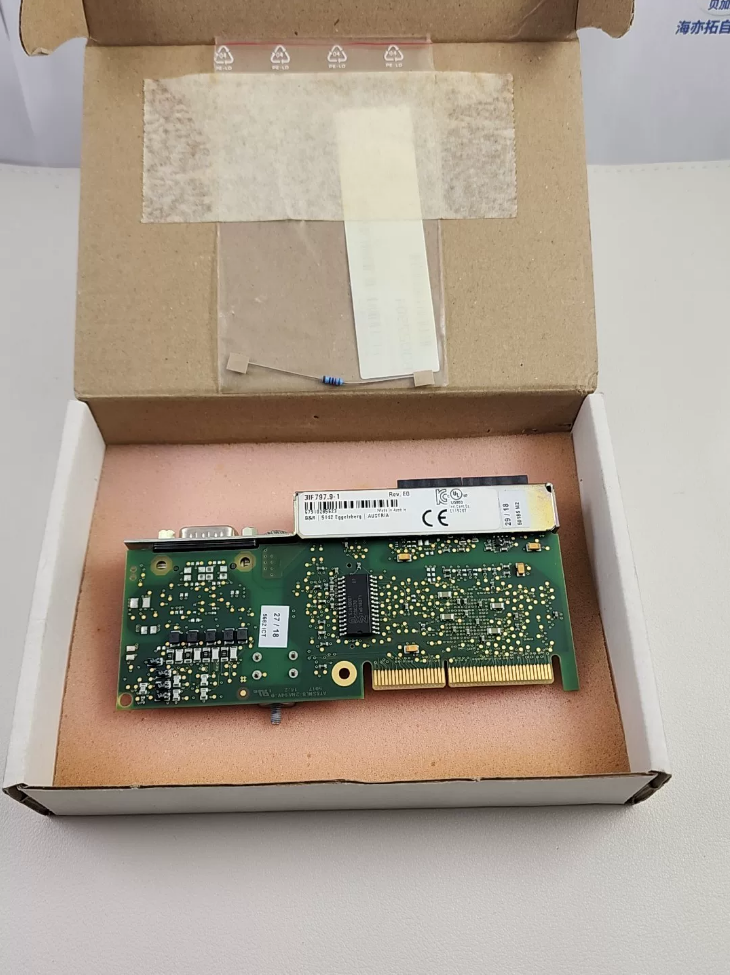

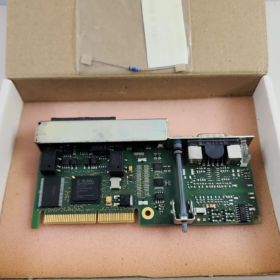
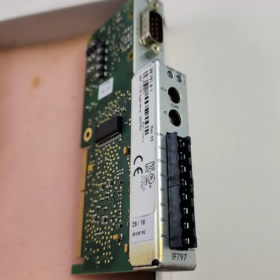
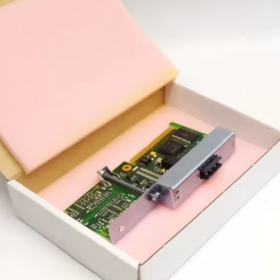
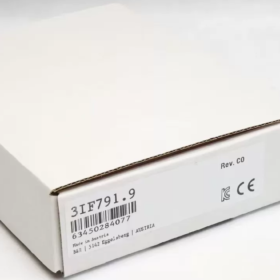
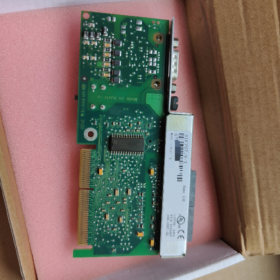
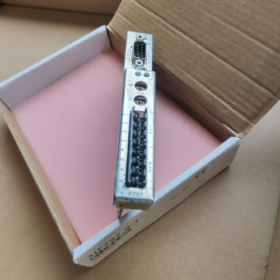
Modèle: 3IF797.9 (aPCI interface module, System2005 series, FlexIQ platformonly)
Important distinction: 3IF797.91 is a separate dualX2XLink variant with different pin assignments. Do not mix them up.
Configuration des interfaces (All Galvanically Isolated)
- Maître de liaison X2X (1canal): Master interface for System2005 series I/O module expansion
- CAN Bus (1canal): Up to 500 kbit/s, transmitreceive object buffer supported, CANopencompliant
- RS232 (1canal): Serial port for debugging and thirdparty serial device connection
Accessoires obligatoires: Two pieces of 0TB704.9 4pin screw terminal blocks. Terminals are not supplied with the module and must be ordered separately.
Principales spécifications techniques
Bus types: X2XLink, PEUT, RS232, all galvanically isolated
CAN baud rate: Max.. 500 kbit/s
Alimentation: 5 À DC (aPCI backplane powered)
Température de fonctionnement: 25℃ ~ +55℃
Température de stockage: 40℃ ~ +85℃
Humidité: Max.. 95 % noncondensing
Certifications: CE, UL/cULus, UKCA, CAE, KC
Logiciel: Configuration and programming via Automation Studio
Hardware Limitations
Official note: 3IF797.9 is exclusively for FlexIQ Automation PCs. Ordinary System2005 CPU modules cannot accept this card, due to FPGA resource constraints; it will not function on standard CPUs.
Form factor: aPCI slot (internal industrial PC board)
Famille de produits: System 2005 platform, legacy hardware, endoflife. Only newoldstock and used secondhand units are available on market.
Applications typiques
Communication expansion for legacy B&R. FlexIQ industrial PCs
Allinone communication: X2X Link remote I/O expansion + CANopen devices + RS232 peripherals
Sparepart service for legacy machinery: machines d'emballage, machines textiles, machines de moulage par injection, matériel d'impression
SpareParts & Migration Alternatives
- Original spare parts: Only NOS / secondhand units available. For used modules, verify X2X communication, CAN transmitreceive, RS232 function and isolation withstand voltage.
- Alternative solution concepts
Lien X2X: This bus is discontinued on new platforms. Adopt X20 series for new projects; legacy installations must retain the original card.
PEUT: X20IF1063 (X20CANopen module)
RS232: X20IF1091 serial module
⚠️ Software note: Migrating legacy System2005 programs to X20 requires complete reconfiguration; direct hardware replacement is not feasible.
SecondHand Inspection Checklist
- Contrôle visuel: Inspect aPCI gold fingers for oxidation / marques de brûlure; check PCB for corrosion and bulging capacitors.
- Poweron test: Install in FlexIQ IPC, confirm hardware detection within Automation Studio hardware tree for 3IF797.9.
- Separate communication tests: Read/write test with X2X I/O modules; CAN bus test with CANopen devices; RS232 sendreceive test.
- Isolation test: Measure insulation resistance between field interfaces and backplane if test equipment is available.
3IF797.9 VS 3IF797.91 Comparison Table
| Article de comparaison | 3IF797.9 | 3IF797.9‑1 |
| Platform Constraint | Flex‑IQ IPC only. Not compatible with standard System2005 CPUs | General‑purpose aPCI module, supports full System2005 aPCI IPC range, not limited to Flex‑IQ |
| Configuration des interfaces | 1×X2X‑Link Master, 1×CAN, 1×RS232, all galvanically isolated | 1×X2X‑Link Master, 1×CAN, 1×RS232, all galvanically isolated |
| Physical Termination | 2 × 0TB704.9 screw terminals, no onboard DB9 connector | RS232 via metal‑cased DB9 male connector; PEUT / X2X use 2 × 0TB704.9 terminals |
| Required Accessories | 2 × 0TB704.9 must be ordered separately | 2 × 0TB704.9 for CAN/X2X; RS232 uses DB9, no terminal block required |
| Paramètres électriques | CAN max 500 kbit/s; RS232 max 115.2 kbit/s; 5 V backplane supply; ‑25~+55℃ operating temp | CAN max 500 kbit/s; RS232 max 115.2 kbit/s; 5 V backplane supply; ‑25~+55℃ operating temp |
| Logiciel | Automation Studio for X2X master, CANopen and RS232 configuration | Automation Studio for X2X master, CANopen and RS232 configuration; RS232 configurable as on‑board debug port |
| Statut du produit | End‑of‑life, NOS / second‑hand only | End‑of‑life, NOS / second‑hand only |
| Major Risk | Non‑Flex‑IQ IPC will detect hardware but communication fails | Wide compatibility with legacy System2005 aPCI IPC hardware |
| Interchangeabilité | Not directly interchangeable. Platform restriction plus different physical connectors; always verify original part number before replacement | Not directly interchangeable. Different RS232 physical interface and wiring assignments |
Practical Replacement Guidelines
- Original host is FlexIQ IPC: Prefer 3IF797.9. Although 3IF797.91 can be detected by hardware, RS232 changes to DB9 and existing field wiring must be reworked.
- Original host is standard aPCI IPC (nonFlexIQ): Only 3IF797.91 works; 3IF797.9 will not operate.
- Usedpart procurement: Always check complete part number including suffix; ordering based only on “3IF797.9” without the suffix may result in nonfunctional hardware.
- Wiring note: All three buses on 3IF797.9 run via 0TB704.9 terminals. On 3IF797.91 RS232 uses DB9, CAN and X2X use 0TB704.9 terminals.
Additional Notes for SecondHand Testing
3IF797.9: All communication channels must be tested via terminal blocks.
3IF797.91: RS232 can be tested directly via DB9 connector; PEUT / X2X via 0TB704.9 terminals.
B&R 3IF797.9 Practical Application Cases
Hardware prerequisite: Installed in a FlexIQ IPC aPCI slot. Allinone interfaces: X2XLink Master + CANopen + RS232, all galvanically isolated.
Product positioning: Legacy OEM board widely deployed 20042012 with FlexIQ IPCs. No newproject deployment; exclusively for installedbase sparepart maintenance.
Cas 1: Blowmolding Machine (Hollow Forming Equipment)
Architecture du système: FlexIQ (PP481) IPC + 3IF797.9
X2XLink: Locale / remote System2005 I/O modules for barrel temperature acquisition, wallthickness sensors and valve outputs
CANopen: Servodrive control for blowpin movement and mold opening/closing
RS232: Connect weighing instruments and wallthickness gauges for processdata acquisition
Processus: Closedloop parison wallthickness control, cycle time ~2 ms for hollow blowmolding production
Common field failure: Aged hardware causes CAN packet loss leading to servo jitter; X2X link dropout triggers full machine stop.
Cas 2: Machines textiles (Warpknitting / Circular Knitting / Dyeing Equipment)
Architecture du système: FlexIQ IPC + 3IF797.9 + EX470 / X67 remote I/O
X2XLink: Distributed System2005 I/O for proximity switches and solenoid valves on machine frames
CANopen: Multiaxis servo synchronization for warpfeed and fabric takeup
RS232: Tension controllers and dyemachine temperature controllers
Industryspecific failure: Heavy workshop dust causes goldfinger oxidation, a common failure mode for used boards.
Cas3: Machines d'emballage (Vertical FormFillSeal, Postprint Carton Packaging)
Architecture du système: FlexIQ IPC as main controller with 3IF797.9 communication expansion
X2XLink: EX470 remote I/O distributed at feeding, sealing and cutting stations
CANopen: AC110 servo drives for film feeding, traction and cutting via electronic cam profiles
RS232: Barcode scanners and label printers for batchcode marking on finished bags
Distinction: Many packaging machines use 3IF771.9 (CANonly). 3IF797.9 is selected where X2X + PEUT + RS232 are all required.
Cas4: Legacy AllElectric InjectionMolding Machine
Architecture du système: FlexIQ IPC + 3IF797.9
X2XLink: System2005 I/O for safetydoor interlocks, temperature control and hydraulic valves
CANopen: Servodrives for injection, plasticizing and mold openclose motion
RS232: Legacy external moldtemperature controllers via ModbusRTU (RS232level) for temperature setpoint and readback
Note: Native RS232 without RS485 hardware. An external levelconverter is required for ModbusRTU485.
Cas5: Tire Machinery (Steelcord cutting & rubber extrusion lines)
Architecture du système: FlexIQ IPC + 3IF797.9
X2XLink: Longdistance X67 IP67rated field I/O mounted on machine frames
CANopen: Multiaxis servo synchronization for cutting, material feeding and webedge correction
RS232: Thicknessmeasurement gauges for realtime rubbersheet thickness data acquisition.
Typical System Topology for 3IF797.9
FlexIQ IPC (aPCI slot) → 3IF797.9
- X2XLink Master → EX470, XX436, X67 I/O modules
- PEUT (CANopen Master) → B&R AC110 servos and thirdparty CANopen devices
- RS232 → Meters, imprimantes, barcode scanners and thirdparty serial peripherals
Common OnSite Faults from InstalledBase Maintenance
- Only functional inside FlexIQ IPC; inserting into standard System2005 aPCI hardware results in communication failure.
- Aging / loose 0TB704.9 terminal blocks cause intermittent X2X / CAN communication.
- Damaged galvanicisolation circuits: external interference triggers IPC crash.
- ESDdamaged RS232 interface: serial channel fails while X2X and CAN remain operational.
ProjectSelection Guidance: 3IF797.9 vs 3IF797.91
Original hardware = FlexIQ IPC: Use 3IF797.9, all field signals routed over 0TB704.9 terminals.
Original hardware = standard aPCI IPC (nonFlexIQ): Use 3IF797.91. RS232 uses DB9 connector; 3IF797.9 will not work.
B&R 3IF797.9 Full Technical Specifications
Modèle: 3IF797.9; aPCI communication module, FlexIQ IPC exclusive. FPGA constraints prevent operation on standard System2005 CPU / aPCI hosts.
Statut du produit: Endoflife. Accessoires obligatoires: 2 × 0TB704.9 4pin screw terminals (not supplied with module)
- Spécifications des interfaces (All Galvanically Isolated)
| Interface | Description |
| X2X‑Link Master | 1‑channel master, isolé galvaniquement; expands System2005 I/O (EX470, XX436, X67). Proprietary X2X bus; incompatible with X20 series |
| CAN Bus | 1-canal, isolé galvaniquement; max 500 kbit/s. Transmit‑receive object buffering; supports CANopen master / mode esclave |
| RS232 | 1-canal, isolé galvaniquement; max baud rate 115.2 kbit/s. Debug and Modbus‑RTU (RS232‑level). No native RS485 support |
Physical termination: All three interfaces connect via two 0TB704.9 screw terminal blocks. No DB9 connector on PCB.
- Caractéristiques électriques
Backplane power: 5 À DC (aPCI backplanefed; no external 24 V supply)
Consommation électrique typique: ~2.5 W
Galvanic isolation: Isolation between X2XLink / PEUT / RS232 and IPC backplane
Bus CAN: Requires external termination resistor; no onboard 120 Ω termination
- Conditions environnementales
Température de fonctionnement: 25 ℃ ~ +55 ℃
Température de stockage: 40 ℃ ~ +85 ℃
Humidité relative: 595 %, sans condensation
Protection contre la pénétration: Bare PCB for internal IPC installation; no enclosure rating.
- Matériel & Installation mécanique
Slot form: aPCI (internal IPC addon card)
Firmware constraint: Operates only inside FlexIQ Automation PC. Other aPCI hosts detect hardware but communication fails.
LED d'état: Separate transmitreceive LED indicators for X2X, CAN and RS232 channels
Logiciel: Automation Studio for hardware configuration, CANopen setup and serialdriver assignment
Certifications: CE, UL/cULus, UKCA, CAE, KC
- Critical Engineering Limitations
- ❗Not usable with standard System2005 CPU or nonFlexIQ aPCI IPC. Hardware may be detected but communication will fail; this is a FPGA firmware limitation, not a wiring fault.
- RS232 only supports RS232 signal levels. External level converter required for ModbusRTU485.
- X2XLink works exclusively with legacy System2005 I/O; cannot connect directly to X20 I/O.
- CAN bus has no builtin termination. Fit external 120 Ω resistors at both physical bus ends.
- 0TB704.9 terminal blocks must be ordered separately; not factoryfitted to the module.
- Condensed Parameter Comparison: 3IF797.9 vs 3IF797.91
| Article | 3IF797.9 | 3IF797.9‑1 |
| Supported Host | Flex‑IQ only | All System2005 aPCI IPCs |
| RS232 Physical Port | 0TB704.9 screw terminal | DB9 male connector |
| PEUT / X2X Termination | 0TB704.9 | 0TB704.9 |
| Électrique / Baud / Température | Identique | Identique |
| Interchangeabilité | Not directly interchangeable | Not directly interchangeable |
- Diagnostic & FailureMode Notes
LED behaviour: Each communication channel features transmitreceive status LEDs. Flashing = bus traffic present; steadyoff = no message activity.
Isolationcircuit damage symptom: External interference may crash the host IPC; one field interface can fail while the remaining two channels remain functional.


NH42-63-318x560.png "Commutateurs de transfert automatiques de type PC CHINT (ATS)NH42-63/4SZ")