Contacteur,disjoncteur,capteur,Encodeur,API,Convertisseur

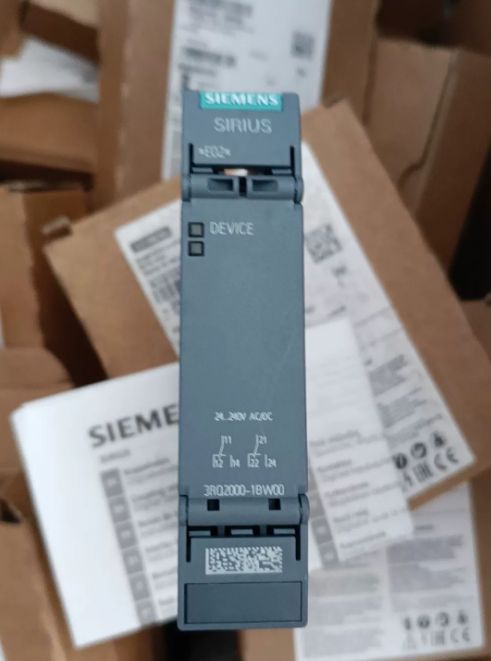

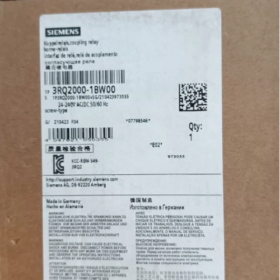
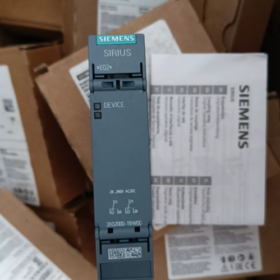
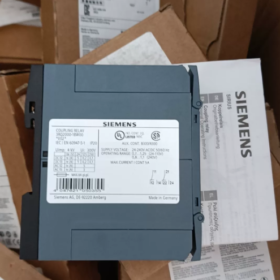
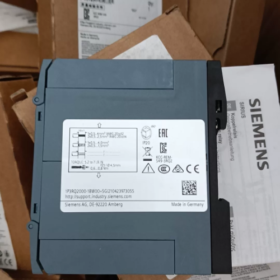
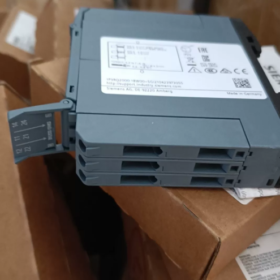
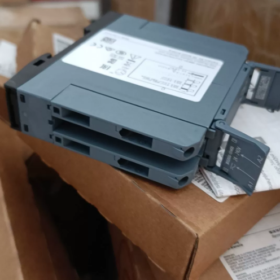
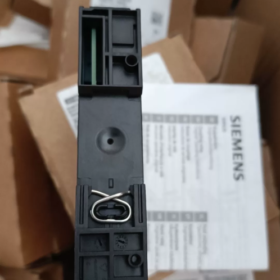
Industrial coupling relay of Siemens SIRIUS series, équipé de 2 contacts inverseurs, large plage de tension 24-240 V AC/DC et bornes à vis. Il remplace les 3TX7002-1CB00 et 3RS1800-1BW00., and is designed for API signal isolation and control circuit coupling.
- Interprétation du code modèle
| Segment de modèle | Signification |
| 3RQ | Product family code for Siemens SIRIUS coupling / interface relays |
| 2 | Generation code, distinguishing from 3RQ0, 3RQ3 and other series |
| 0 | Basic model with wide voltage range of 24-240V AC/DC |
| -1 | Code du type de borne: 1 = Screw terminal, 2 = Spring terminal |
| B | Code de configuration des contacts: B = 2 contacts inverseurs (2CO); UNE = 1 contact inverseur (1CO); C = 3 contacts inverseurs (3CO) |
| W | Matériel de contact & characteristic code: W = Standard silver tin oxide (AgSnO) contact; CW01 = Hard gold plated contact |
| 0 | Supplementary code for version & spécification, no special definition |
Nom et prénom: Enclosed industrial coupling relay, 2 contacts inverseurs, 24-240V AC/DC wide voltage, connexion par borne à vis.
- Paramètres techniques de base
| Catégorie de paramètre | Spécification | Remarques |
| Informations de base | ||
| Marque / Série | Siemens SIRIUS 3RQ2 | Industrial-grade signal coupling solution |
| Numéro de commande. | 3RQ2000-1BW00 | Standard part number |
| Type de montage | Montage sur rail DIN, largeur: 22.5mm | Conforme à la norme EN 60715 |
| Protection contre la pénétration | IP20 | Finger-proof and dust-proof |
| Paramètres électriques | ||
| Control Voltage Range | 24-240V CA/CC | Wide voltage design for high versatility |
| Puissance de contrôle nominale | 4.5W | Faible consommation d'énergie |
| Configuration des contacts | 2 contacts inverseurs (2CO) | Each contact consists of 1 NON + 1 Caroline du Nord |
| Rated Contact Current | 5A à 250 V CA | For resistive load |
| Max.. Switching Voltage | 300V CA/CC | Conforme à la CEI 60947-1 |
| Tension d'isolation | 300V (Catégorie de surtension III, Degré de pollution 3) | Excellent insulation performance |
| Tension de tenue aux impulsions | 4kV | Forte résistance aux surtensions |
| Paramètres mécaniques | ||
| Dimensions (L × H × P) | 22.5×90×65mm | Structure compacte |
| Poids | Environ. 100g | Installation facile |
| Durée de vie mécanique | 1,000,000 opérations | Haute durabilité |
| Durée de vie électrique | 100,000 opérations (à charge nominale) | Stable and reliable performance |
| Paramètres environnementaux | ||
| Température de fonctionnement | -40°C ~ +60°C | Adaptable aux environnements industriels difficiles |
| Température de stockage | -40°C ~ +85°C | Wide temperature range for storage |
| Plage d'humidité | 5%~95 % (sans condensation) | Suitable for humid conditions |
| Degré de pollution | 3 | Applicable to dusty industrial sites |
- Multimarque & Obsolete Model Replacement List
| Modèle original | Modèle de remplacement | Description du remplacement |
| Siemens 3TX7002-1CB00 | 3RQ2000-1BW00 | Remplacement recommandé par les autorités; 22.5mm width unchanged, fully function compatible |
| Siemens 3RS1800-1BW00 | 3RQ2000-1BW00 | Remplacement officiel; discontinued since Oct 1, 2022 |
| Siemens 3RQ2000-1AW00 | 3RQ2000-1BW00 | In-series upgrade from 1CO to 2 contacts inverseurs |
| Schneider RXM4AB2BD | 3RQ2000-1BW00 | Fonctionnellement équivalent; 2CO, 24-240V CA/CC, Montage sur rail DIN |
| ABB CR-M230AC2 | 3RQ2000-1BW00 | Fonctionnellement équivalent; 2CO, tension large, industrial application |
Conseils de sélection: Verify full consistency of contact quantity, type de borne, mounting dimensions and electrical parameters before replacement.
- Full Model List of 3RQ2000 Series
| Modèle | Configuration des contacts | Type de borne | Matériel de contact | Plage de tension | Remarques |
| 3RQ2000-1AW00 | 1CO | Vis | Standard | 24-240V CA/CC | Modèle de base |
| 3RQ2000-1BW00 | 2CO | Vis | Standard | 24-240V CA/CC | Modèle de sujet |
| 3RQ2000-1CW00 | 3CO | Vis | Standard | 24-240V CA/CC | Multi-contact model |
| 3RQ2000-1CW01 | 3CO | Vis | Hard gold plated | 24-240V CA/CC | Haute fiabilité, for light load |
| 3RQ2000-2AW00 | 1CO | Printemps | Standard | 24-240V CA/CC | Fast wiring model |
| 3RQ2000-2BW00 | 2CO | Printemps | Standard | 24-240V CA/CC | Spring terminal, 2 contacts inverseurs |
| 3RQ2000-2CW00 | 3CO | Printemps | Standard | 24-240V CA/CC | Spring terminal, 3 contacts inverseurs |
| 3RQ2000-2CW01 | 3CO | Printemps | Hard gold plated | 24-240V CA/CC | Spring terminal, haute fiabilité |
- Défauts courants & Dépannage
| Phénomène de défaut | Causes possibles | Solutions |
| Relay fails to operate | 1. Control voltage out of range | 1. Measure voltage and ensure it is within 24-240V |
| 2. Bornes lâches | 2. Check and tighten screw terminals | |
| 3. Bobine brûlée | 3. Remplacer le relais | |
| Mauvais contact des contacts | 1. Oxydation / contamination of contacts | 1. Clean contacts or replace the relay |
| 2. Contact welding caused by overload | 2. Reduce load or select higher-capacity model | |
| 3. Excessive vibration during operation | 3. Fasten installation and add vibration dampers | |
| Indicator light off while relay operates normally | 1. Damaged LED indicator | 1. Replace LED module |
| 2. Fault of indicator circuit | 2. Inspect wiring of indicator circuit | |
| Random operation of relay | 1. Interference on control circuit | 1. Use shielded cables and keep away from interference sources such as inverters |
| 2. Severe voltage fluctuation | 2. Install voltage stabilizer | |
| 3. Ambient temperature out of limit | 3. Improve heat dissipation or select high-temperature resistant model | |
| Bornes surchauffées | 1. Câblage lâche | 1. Resserrer les bornes |
| 2. Undersized wire cross-section | 2. Replace with wires of proper cross-section | |
| 3. Courant de charge excessif | 3. Reduce load or replace the relay |
- Champ d'application & Cas industriels
6.1 Scénarios applicables
PLC Signal Isolation: Couple signals between PLC outputs and field actuators to protect PLC modules.
Control Circuit Expansion: Increase available control signals to drive multiple loads via one signal.
Conversion de tension: Connect control circuits with different voltage levels, par exemple. 24V DC PLC output for 220V AC contactors.
Interference Suppression: Isolate signals in high-interference environments such as inverters and welding equipment to avoid false triggering.
Systèmes d'automatisation industrielle: Contrôle de la ligne de production, machines d'emballage, machines-outils, systèmes de convoyeurs, etc..
6.2 Scénarios non recommandés
High-frequency switching: Not suitable for frequent switching over 10 cycles per second.
Inductive load without protection: Surge suppressors are mandatory when driving inductive loads such as motors and solenoid valves.
Environnements corrosifs: No special anti-corrosion treatment; not for strong acid, alkali or high salt mist conditions.
Zones dangereuses explosives: Conception non antidéflagrante; prohibited for flammable and explosive locations.
6.3 Cas d'application typiques
Cas 1: Ligne de production de composants automobiles
Application: PLC controls clamps and welding torches of robotic welding stations.
Configuration: 3RQ2000-1BW00 isolates PLC output signals from 220V AC solenoid coils.
Résultat: Resists welding current interference; failure rate reduced by 90%, coûts de maintenance réduits de 50%.
Cas 2: Nourriture & Beverage Filling Line
Application: Connect HMI touch panel and filling valve control circuits.
Configuration: Two units of 3RQ2000-1BW00 control 4 filling valves (2 NON + 2 Caroline du Nord) via one HMI signal.
Résultat: Simplified wiring, improved system reliability and fewer spare part types.
Cas 3: Intelligent Warehousing System
Application: Isolate position sensor signals of stacker cranes and PLC inputs.
Configuration: 3RQ2000-1BW00 converts 24V DC sensor signals to PLC-compatible signals.
Résultat: Eliminates interference from long-distance signal transmission; positioning accuracy improved to ±1mm.
- Lignes directrices de sélection & Règles de référence rapide
- Contact quantity by letter: A = 1CO, B = 2CO, C = 3CO
- Terminal type by digit: 1 = Screw terminal, 2 = Spring terminal
- Contact material by suffix: W = Standard contact, CW01 = Gold-plated contact
- Universal voltage: Full series supports 24-240V AC/DC
- Priority for replacement: Directly replace 3TX7 / 3RS18 series with corresponding 3RQ2000 models
Ordering Notice: Forfait standard: 1 unité par boîte; Quantité minimale de commande: 1 unité. It is recommended to prepare 2~3 units as spare parts for general industrial automation control.
Common Faults and Troubleshooting of Siemens 3RQ2000-1BW00 Coupling Relay
- Relay Fails to Operate Completely
- No power supply to coil
Measure input voltage to confirm it is within 24~240V AC/DC. Check circuit breakers, fuses and continuity of upstream control circuits, and tighten loose terminals.
- Lâche / poor terminal connection
Retighten screw terminals. Check wire crimping, broken wires and wires trapped under terminal screws.
- Bobine brûlée
Long-term overvoltage or frequent voltage surges will burn the coil. Replace the relay if burnt marks or abnormal odour are observed.
- Bourrage mécanique
Accumulated dust and continuous vibration cause internal armature sticking. Tap the housing gently for test; replace the relay if the issue persists.
- Coil Pulls In but Contacts Open / Mauvais contact
- Oxidation and dust accumulation on contacts
Commonly seen in humid and dusty environments, especially for low-power signal circuits. Clean contacts after power cut and test with repeated switching operations.
- Soudage par contact
Excessive load current or frequent inrush load leads to stuck contacts. Disconnect the load for verification. Replace the relay as welded contacts cannot be repaired.
- Fault on load side circuit
Troubleshoot downstream contactors, solenoid valves and broken wires. Confirm relay fault only after excluding external failures.
- Random Operation / Unexpected On & Désactivé
- Interférence électromagnétique
Easily affected when installed close to inverters, moteurs, high-power contactors or long control cables. Route control cables away from power cables and apply shielded wires and surge absorbers.
- Fluctuation de tension & electrical noise
Sudden voltage drop and voltage spikes cause false operation. Install voltage stabilizers and filters on the upstream side.
- Abnormal ambient temperature
Operation above +60°C or condensation under low temperature leads to internal circuit malfunction. Améliorer la ventilation, dehumidification and heat dissipation.
- Voyant anormal
- Light off, relay works normally
Only the LED bulb is damaged. The relay can remain in service or be replaced.
- Light always on / flickering, relay does not operate
Malfunction of internal voltage divider and indicator circuit, usually accompanied by coil failure. Replace the relay directly.
- Overheated Wiring Terminals
- Câblage lâche: Resserrez les bornes au couple spécifié.
- Undersized wire gauge: Replace with cables with cross-section matching the load current.
- Surcharge continue: Actual load exceeds rated 5A contact current. Apply load sharing or use higher-capacity relay.
- Frequent Failures under Inductive Load (Solenoid / Contacteur)
Symptômes: Shortened contact service life, frequent contact welding and unexpected tripping
Dépannage: The absence of surge suppressors causes reverse high voltage from inductive loads to damage contacts during power-off. Connect freewheeling diodes (pour CC) or RC snubbers (pour CA) in parallel across inductive loads.
- On-site Quick Troubleshooting Procedure
- Cut off power → Inspect appearance, wiring and terminal tightness
- Switch on power → Measure input control voltage
- Observe indicator light and listen to pull-in sound to judge coil status
- Cut off power → Test NO/NC contacts with multimeter continuity mode
- Distinguish faults among upstream control circuit, relay itself and downstream load circuit


NH42-63-318x560.png "Commutateurs de transfert automatiques de type PC CHINT (ATS)NH42-63/4SZ")