접촉기,회로 차단기,감지기,인코더,PLC,변환기

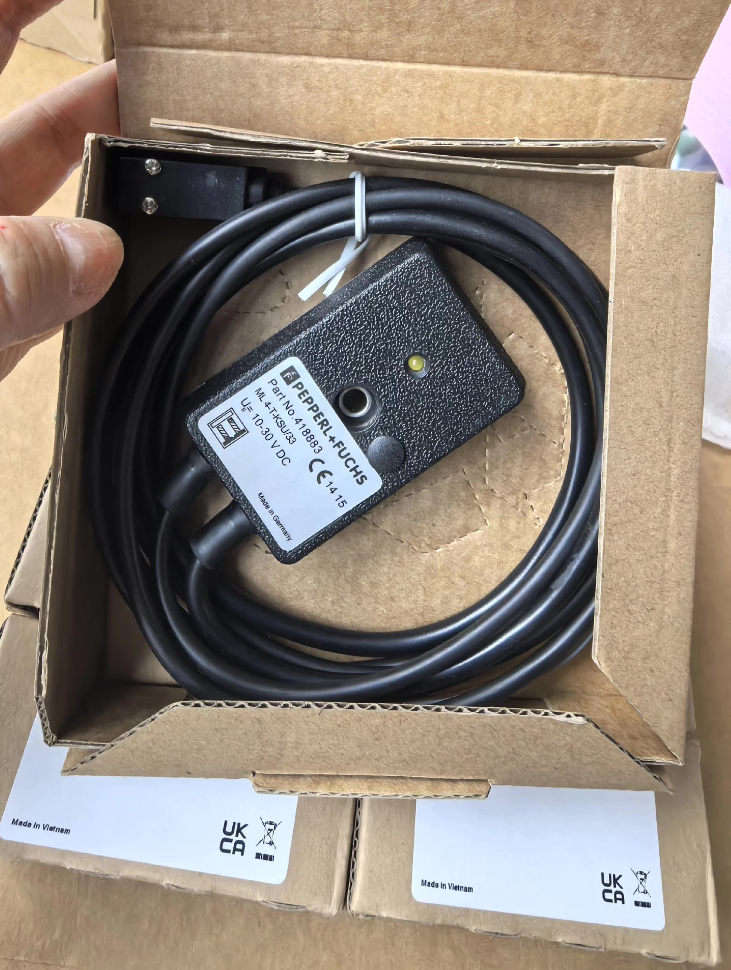

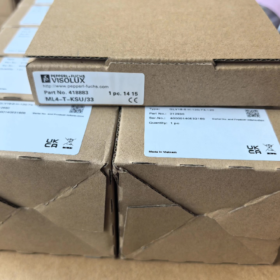
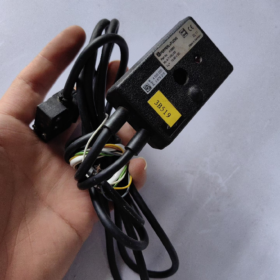
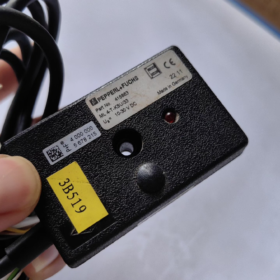
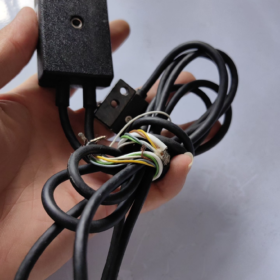
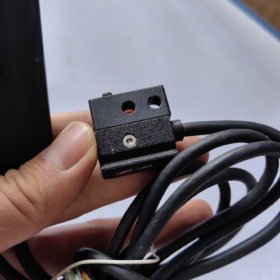
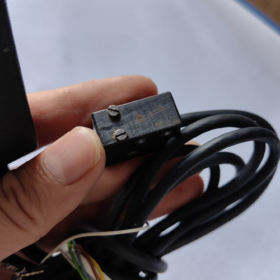
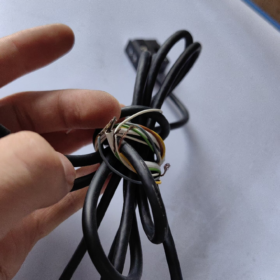
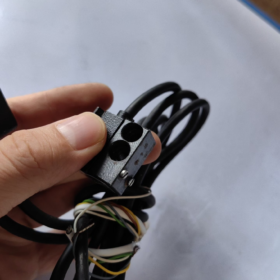
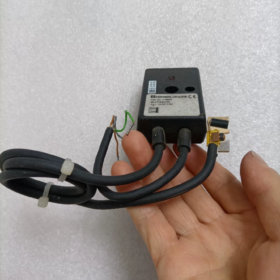
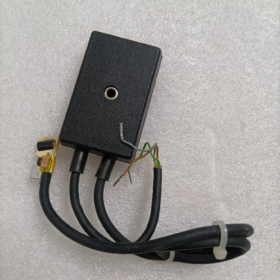
(Order No.: ML4-T-KSU/33)
상태: Discontinued by manufacturer (더 이상 사용되지 않음). No brand-new OEM supplies available; only used/refurbished units circulate in the market.
제품 유형: 확산 반사 광전 센서 (Visolux ML4 Series)
Part-No.: 418883, 전체 모델: ML4-T-KSU/33
핵심 전기 & 기계적 매개변수
| 목 | 사양 |
| 공급 전압 | 10‑30 V DC |
| 탐지 원리 | Diffuse‑reflection (direct detection) |
| 광원 | 적외선 LED |
| 출력 유형 | PNP, Push‑pull |
| 주택 | Compact square plastic housing, legacy ML4 series |
| 유입 방지 | IP67 |
| 연결 | Fixed pre‑terminated cable |
| 무게 | 대략. 150 g |
Model Code Decoding for ML4-T-KSU/33
- ML4: Legacy Visolux ML4 compact photoelectric sensor series
- 티: Diffuse-reflection detection (Direct-detect)
- KSU: Code for output, 배선 및 기능 (PNP 출력, 케이블 콘센트)
- /33: Suffix for version / sensing range specification
- 418883: Unique internal Pepperl+Fuchs part number
작동 원리
The infrared modulated LED emits light, which is reflected by the target object back to the receiver. The sensor circuit evaluates the intensity of the returning light and delivers a PNP switching signal. 배경 억제 없음, performance is heavily affected by reflection from background objects.
일반적인 응용 분야
포장 기계, object detection on conveyor lines, part counting, door control and position sensing for compact equipment.
⚠️ Selection Pitfalls & 교체 권장사항
- No direct drop-in OEM replacement. The entire legacy ML4 series is discontinued. Direct pin-to-pin replacement is not feasible. Mounting hole layout, sensing range, output type and wiring form must be verified.
- Preferred upgrade series: ML4.2 Series (new-generation compact square photoelectric sensors)
Reference alternative: ML4.2-8-KSU-R (diffuse-reflection, PNP, 케이블 콘센트). Verify sensing range and mounting dimensions.
For M8 connector version: ML4.2-8-KSU-V-R.
- Boundary Condition Reminders
ML4-T-KSU/33 has no background suppression. For sites with reflective backgrounds, select a background-suppression model during upgrade.
Legacy unit uses fixed cable outlet; new series is available in both cable and M8 connector variants. Confirm wiring form before procurement.
- Risks of used/refurbished units: Discontinued parts carry no manufacturer warranty. LED ageing and sensitivity drift are likely. Not recommended for safety-critical positions.
Original Factory Packaging Contents
Sensor main unit ×1 (with pre-fitted cable)
Hard-copy Datasheet ×1
Mounting bracket not included; bracket is an individually-ordered option.
Sensing Range of ML4-T-KSU/33 (418883)
This model is discontinued and its original datasheet has been removed from public access. Specifications below are consolidated from legacy Pepperl+Fuchs ML4 catalogues, overseas distributor archives and homologous series data:
- Standard white target (100×100 mm, 90 % reflectivity): 0-1000 mm (0-1 m) effective diffuse-reflection sensing range.
- 배경 억제 없음, fixed gain (non-adjustable sensitivity). The suffix `/33` denotes fixed sensitivity; no potentiometer fitted.
- Minimum detection blind zone: 0 mm (triggerable at close proximity).
⚠️ Critical Notes
For black / low-reflectivity targets, the practical working range decreases significantly. Black objects typically achieve only 30-40 % of the nominal range, 대략. 300-400 mm.
Without background suppression, reflective objects behind the sensor will cause false triggering.
`/33` = fixed-sensitivity version; potentiometer-adjustable variants of the same series use different suffixes.
Comparison Table for Legacy ML4 vs New-generation ML4.2 Alternatives
| 모델 | 감지 범위 | 감도 조정 | 산출 | 비고 |
| ML4‑T‑KSU/33 (418883) | 0‑1000 mm | 결정된, non‑adjustable | PNP push‑pull, 케이블 콘센트 | 단종, no background suppression |
| ML4.2‑8‑KSU‑R | 0‑1000 mm | Potentiometer adjustable | PNP push‑pull, 케이블 콘센트 | Recommended alternative, no background suppression |
| ML4.2‑8‑H‑40‑R‑R | 10‑400 mm | 결정된 | PNP push‑pull, 케이블 콘센트 | With background suppression, for sites with reflective backgrounds |
Operating Principle of Diffuse-Reflection Photoelectric Sensors
A diffuse-reflection (direct-reflect) sensor is a variant of through-beam sensors. Emitter and receiver are integrated inside one housing. No separate reflector is required; detection relies on light reflected from the surface of the target object itself.
- Basic Optical Path
- An internal emitter LED (mostly modulated infrared light) projects a beam outwards.
- Light strikes the target surface and undergoes diffuse reflection, scattering in all directions.
- A fraction of the reflected light returns to the internal photodetector.
- The receiver converts optical signals into electrical signals. Internal circuitry evaluates whether the incoming light intensity exceeds the threshold.
- Threshold exceeded → switching output turns ON (PNP/NPN conducts). Insufficient returned light → output turns OFF.
✅ Key difference vs through-beam: Through-beam sensors detect light blockage by an object with separated emitter-receiver units. Diffuse-reflection sensors detect light bounced back by the target.
- Two Types of Diffuse-reflection Sensors: Standard vs Background-Suppression (BGS)
① Standard Diffuse-reflection (예를 들어. ML4-T-KSU/33)
Detection criterion: Total received reflected light energy.
Drawback: Cannot distinguish target object from background. Metallic surfaces or white walls behind the sensor can trigger false outputs. Dark-coloured or rough-surface targets return less light and reduce effective sensing distance.
ML4-T-KSU/33 belongs to standard diffuse-reflection: no background suppression, fixed non-adjustable sensitivity.
② Background-Suppression (BGS) 확산 반사
Adopts triangulation ranging principle. Instead of evaluating light intensity, it analyses the incident angle of returning reflected light.
Only objects within the configured distance window are detected. Even highly reflective background beyond this window is ignored to prevent false switching. Ideal for installations near reflective machine frames or metal surfaces; higher unit cost.
- Key Practical Engineering Influence Factors
- Target colour / 반사율: White paper delivers good reflection. Black rubber or matte dark surfaces produce weak reflection and shorten practical sensing range.
- Incident angle: Align the beam perpendicular to the target. Tilting reduces returned reflected light.
- Detection blind zone: Some sensors feature a close-range blind zone. ML4-T-KSU/33 has virtually no blind zone.
- 감광도: Adjustable-gain versions use a potentiometer to set trigger thresholds. Fixed-gain versions are factory-locked; no on-site modification possible.
- Wiring Definition for ML4-T-KSU/33 (PNP cable-type)
갈색: DC24V+
파란색: 0 다섯 / 접지
검은색: PNP switching signal output
Remaining wires: 연결되지 않음
- Typical Fault Phenomena & Root-cause Explanation
- No response when target is present: Target is too dark with insufficient reflection; misaligned mounting angle; LED degradation / 노화.
- Continuous ON output without target: Reflective background behind sensor (common limitation for standard diffuse-reflection); strong ambient light shining directly onto the receiver window.
- Unstable / flickering signal: Uneven target surface; mechanical vibration; dust contamination on sensor lens.
Application Fields for Diffuse-Reflection Photoelectric Sensors
Diffuse-reflection sensors integrate emitter and receiver, 반사경이 필요하지 않습니다, enabling simple installation. Two main categories exist: standard diffuse-reflection and Background-Suppression (BGS). Standard types are susceptible to target colour and background reflection; BGS delivers higher stability regardless of background reflectivity.
- 자재 취급 & 기호 논리학
Conveyor-line presence detection, material presence verification, 판지 상자 / tote counting
분류 시스템: Parcel arrival confirmation, baffle position validation, material-flow monitoring
Pallet detection, tote position sensing, conveyor jam-up alarm
메모: Use BGS models for dark cartons. Standard diffuse-reflection such as ML4-T-KSU/33 suffers range reduction on dark-coloured materials.
- 포장기계 (음식, 제약, Daily-use Goods)
포장 기계: Detect presence of pouches and cartons; pouch position confirmation
씰링 & labelling machines: Label arrival detection, bottle position sensing
Cartoning machines: Detect missing inserts or accessories inside cartons
Beverage production lines: Bottle presence and empty-bottle inspection
Operating conditions often involve dust and moisture; IP67 rating is preferred.
- 자동차 제조
Part-in-position sensing on component conveyor stations
Body-in-white and final-assembly lines: Work-piece presence detection, bin monitoring
Robot pick-and-place: Raw-part presence confirmation
Metal-rich reflective backgrounds are prevalent. BGS diffuse-reflection sensors are almost universally adopted to avoid false triggering from standard diffuse-reflection units.
- Machine-tool & 일반 자동화
Machine-tool automatic loading/unloading: Work-piece presence, bin-empty alarm
Press equipment: Work-piece position confirmation
Compact equipment position detection, end-of-stroke object sensing for cylinders
Oil mist and cutting-dust environments require regular lens cleaning.
- 창고, Automated Storage & AGV
Preliminary obstacle detection for AGVs (for general presence sensing only; NOT for safety anti-collision functions)
Automated warehouse rack-level material detection, pallet presence check at storage locations
Bin full / bin empty monitoring
- Door Control, 엘리베이터 & Light-industry Machinery
Automatic door anti-pinch detection, high-speed door object sensing
섬유기계: Cloth edge detection and fabric presence monitoring
인쇄 기계: Paper presence and paper-feed detection
- 고무 & Plastics Industry
Injection-moulding machine part-ejection detection to verify finished-part drop-off
Extrusion-line material presence monitoring
✅ Practical Selection Guide & Engineering Pitfall Avoidance
| 센서 유형 | 적합한 조건 | 부적합한 조건 |
| Standard diffuse‑reflection (예를 들어. ML4‑T‑KSU/33) | Light‑coloured targets; no reflective metal / wall behind sensor; consistent target colour and stable sensing distance | Installations near metal frames; dark‑coloured targets; mixed‑colour materials; high risk of false triggering |
| BGS Background‑Suppression diffuse‑reflection | Reflective metal backgrounds; mixed light/dark‑coloured targets; stable fixed‑range detection requirements | Extra‑long‑range detection; mirror‑finish shiny work‑pieces (prone to stray‑light interference) |
Scenarios Where Diffuse-reflection Sensors Are Not Recommended
- Transparent films or clear glass bottles (high light transmission yields insufficient reflected light; through-beam sensors are preferred).
- Multi-metre long-range detection: 재귀반사 (polarised mirror-reflect) or through-beam sensors are recommended.
Supplementary note: The discontinued ML4-T-KSU/33 standard diffuse-reflection sensor is fit for counting and position-detection applications on conveyor lines with light-coloured work-pieces and non-reflective backgrounds. It is not recommended for automotive body-in-white stations or installations adjacent to metal machine frames.
NH42-63-318x560.png "CHINT PC형 자동절환스위치 (ATS)NH42-63/4SZ")