접촉기,회로 차단기,감지기,인코더,PLC,변환기

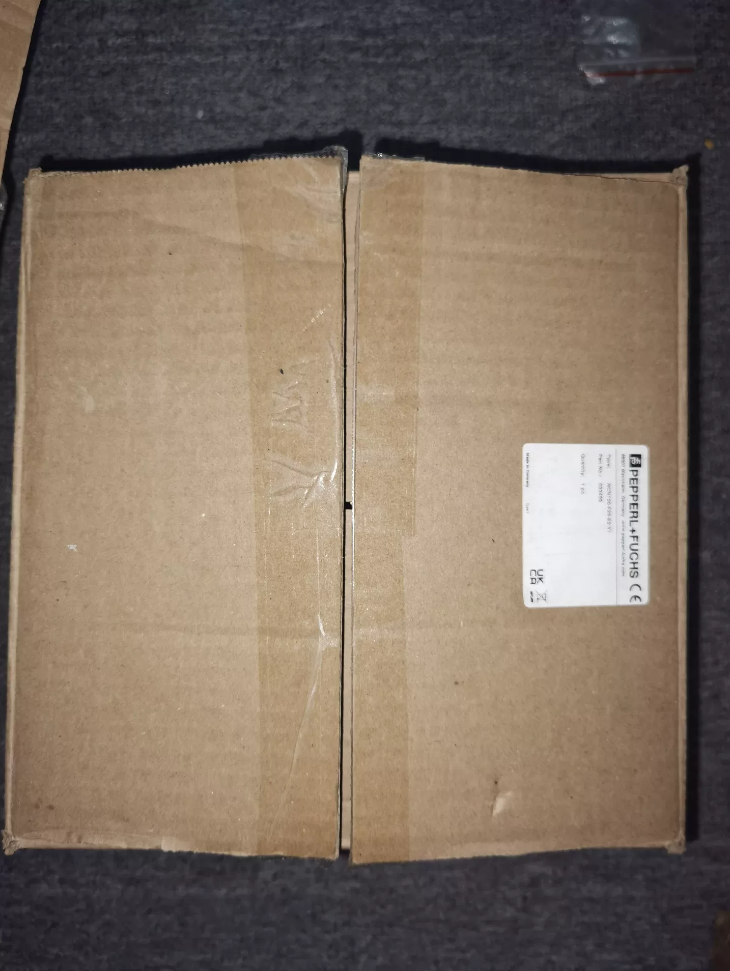

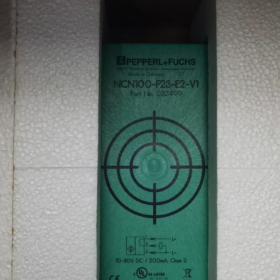
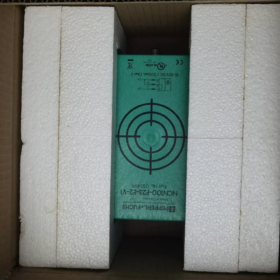
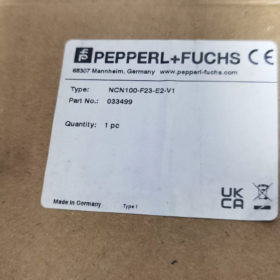
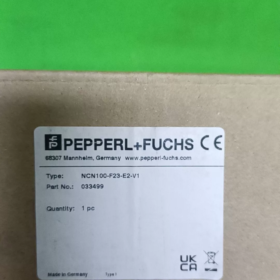
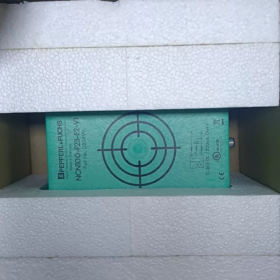
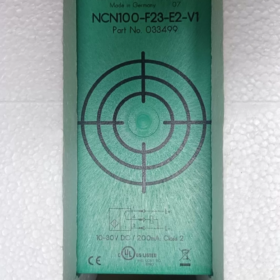
제품: F23 Series Square 유도형 근접 센서 | 품목 번호: 033499
✅ Model Code Definition
N: Inductive sensor
중국: Non-flush mounting
100: Rated sensing distance 100 mm
F23: Large square housing series
E2: 3-wire DC PNP normally open (아니요)
V1: M12 4핀 커넥터
📋 Core Electrical Specifications
| 매개변수 | 사양 |
| Rated sensing distance Sn | 100 mm (non-flush) |
| Usable operating distance Sa | 0…81 mm |
| Actual working range Sr | 90…110 mm |
| 산출 | PNP 아니요, 3-wire DC |
| 공급 전압 | DC 10 … 30 다섯 |
| 맥스. 부하 전류 | 200 엄마 |
| 스위칭 주파수 | 10 헤르츠 |
| Hysteresis | 전형적인 8% |
| 보호 | 역극성 보호, pulsed short-circuit protection |
| 전압 강하 (ON state) | ≤3 V, typical 1.9V@200mA |
| No-load current | ≤20 mA |
| Power-up ready delay | ≤90 ms |
| Indicator LEDs | Green = Power; Yellow = Switching action |
Metal Reduction Factors (Critical for Selection)
304 스테인레스 스틸: 1.0 (no reduction)
놋쇠: 0.47
알류미늄: 0.37
구리: 0.35
The effective sensing distance will decrease significantly for aluminum/copper targets. Factor calculation is mandatory during selection.
🧱 Mechanical & 환경 데이터
주택: ABS plastic, aluminum base
Shape: Square large housing, fixed by mounting holes
연결: M12×1 male 4-pin connector
1: BN Brown DC+
2: WH White
3: BU Blue DC-
4: BK Black Signal output
작동 온도: -25 ~ +70 ℃
보관온도: -40 ~ +85 ℃
인증: cULus, CE
⚙️ Typical Applications
Long-range metal detection for:
Position limit of overhead cranes
Large material presence detection
Trolley positioning in warehousing logistics
Metal target detection for heavy machinery
메모: Switching frequency only 10Hz, not suitable for high-speed moving targets.
🛠️ Installation Guidelines
- Non-flush mounting. Sensing face shall NOT be embedded in metal; sufficient metal clearance must be reserved around the sensing surface.
- Stainless steel target plate is recommended. For aluminum/copper targets, use larger target size or reduce installation distance.
- Power-up initialization delay up to 90ms. PLC program shall account for this to avoid false triggering at startup.
- Use matched M12 connector. Shielded cable is recommended to reduce interference from frequency converters.
🔁 Replacement & 예비 부품
같은 시리즈: NCN100-F23-E0-V1 (NPN NO version)
Domestic replacement guideline: Square long-range inductive sensor, PNP 아니요, 100mm 플러시되지 않은, M12 커넥터. 메모: Reduction factors vary widely for domestic long-distance sensors, on-site testing required.
📌 Customs HS Code
85365019 (Other switching devices)
⚠️ Troubleshooting Checklist
- 녹색 LED 꺼짐: 전원 공급 장치가 없거나 극성이 반대임
- Green LED on, yellow LED never triggers: Target too far / aluminum/copper target with heavy reduction / insufficient target area
- Yellow LED flickering: 단락, overload or cable insulation damage
- 잘못된 트리거링: Large nearby metal mass or electromagnetic interference (VFD)
Typical Application Cases of 페펄+푹스 NCN100-F23-E2-V1
Core selection premise: 100mm ultra-long sensing distance, non-flush, PNP 아니요, switching frequency only 10Hz. Suitable for low-speed position limit / presence detection, not for high-speed counting. IP67 등급, -25~70℃, suitable for dusty, humid heavy-duty environments.
사례 1: End Limit for Bridge Crane / Overhead Crane Trolley (가장 일반적인)
산업: 야금, steel warehouse, heavy-duty workshop cranes
해결책:
The sensor is mounted on the side of the crane rail. A stainless steel target plate is fitted at the end of the trolley. When the trolley approaches the rail end within the 81mm reliable operating distance, the sensor sends a PNP signal to PLC to trigger deceleration and emergency stop protection, preventing rail overtravel.
장점: Long sensing distance allows flexible installation space. M12 connector enables quick replacement under heavy vibration; IP67 withstands dust and cooling water splashes.
메모:
- Low trolley travel speed matches 10Hz switching frequency.
- Stainless steel target plate preferred. For aluminum targets, calculate distance using reduction factor.
- Keep large steel structures away from the sensing face to prevent false triggering.
사례 2: Horizontal Rough Positioning for AS/RS Stacker Cranes in Automated Warehouses
산업: 지능형 창고, cold storage
해결책:
NCN100-F23-E2-V1 sensors are installed in segments along the stacker travel rail. When the stacker’s metal baffle passes the sensor, it provides a rough position presence signal, working together with encoders for position calibration.
기능: Confirm the stacker arrives at the storage location and trigger deceleration. Avoid failure of photoelectric sensors caused by dust and moisture.
한정: Only rough positioning, not high-precision positioning; provides digital presence signal only, no distance measurement.
사례 3: Station Presence Detection for Heavy-Duty AGVs
산업: Factory heavy-load AGVs, mining material transfer vehicles
해결책:
Sensors are mounted at ground stations, and metal target blocks are fitted on AGV side panels. When AGV enters the station and the target enters sensing range, the sensor outputs a presence signal for PLC to lock wheels and start loading/unloading.
장점: Long sensing distance permits larger docking tolerance and lowers navigation accuracy requirements. Resists workshop dust and oil contamination, more stable than photoelectric sensors.
제한: Not for high-speed AGVs. 10Hz switching frequency may cause missed detection for fast-moving targets.
사례 4: Presence Detection for Heavy Transfer Trolleys in Steel & Cement Plants
산업: 야금, 시멘트, sintering plants
해결책:
Sensors are mounted rail-side for sintering trolleys and steel billet transfer trolleys. The sensor detects when the trolley metal baffle arrives at unloading / loading station.
Operating conditions: High radiant heat, heavy dust and strong vibration. Sensor operating temperature -25~70℃ meets requirements. Large metal targets ensure stable detection.
Commissioning tip: Mass steel structures exist on site, metal clearance must be reserved to avoid constant false triggering by background metal.
사례 5: Position Monitoring for Large Hydraulic/Pneumatic Heavy-Duty Gates & Flaps
산업: 폐수 처리, mining silo gates
해결책:
One NCN100-F23-E2-V1 is fitted at fully-open and fully-closed positions of silo discharge gates respectively, to detect arrival of the metal actuator baffle. Position feedback is sent to PLC to confirm gate status and interlock upstream/downstream belt conveyors.
특징: Slow gate movement perfectly matches low switching frequency. Remote sensor installation keeps it away from sediment and material impact.
사례 6: Trolley Limit Protection for Gantry Cranes in Container & Steel Yards
산업: 포트, steel logistics yards
해결책: Sensor used for travel limit protection of gantry crane trolley. Detects trolley approaching metal end stop to trigger pre-deceleration as secondary safety limit.
주목: It is only a position switch, NOT a SIL safety rated sensor. Cannot be used as sole safety protection; mechanical limit switch is recommended as backup.
📌 General Application Notes (모든 경우에 적용 가능)
- Target material reduction: Stainless steel target factor =1.0; aluminum =0.37. Effective distance drops greatly for aluminum targets, must be calculated in selection.
- Movement speed constraint: Max switching frequency 10Hz. Only for limit and presence confirmation; strictly prohibited for high-speed counting.
- 설치: Non-flush mounting. Sensing face cannot be embedded into metal. Adequate metal clearance around sensor.
- Power-up delay: Up to 90ms initialization time. PLC logic needs power-up delay to prevent false signals on startup.
- Target plate size: Target area cannot be too small. Target must fully cover the sensor sensing face, otherwise unstable detection occurs.
🔎 Application Quick Selection Table
| 대본 | 추천 | Brief Reason |
| Overhead / gantry crane trolley limit | ✅ Highly recommended | Low speed, long distance, 심한 먼지 & 진동 |
| AS/RS stacker rough positioning | ✅ Recommended | Alternative to easily contaminated photoelectric sensors |
| Workpiece counting on high-speed conveyor | ❌ Not recommended | Insufficient switching frequency, missed detection |
| Long-range detection of aluminum workpieces | ⚠️ Use with caution | Low reduction factor reduces effective sensing distance |
| High-precision position measurement | ❌ Not recommended | Digital switch output only, no analog distance value |
Working Principle of Inductive Proximity Sensors
핵심원리: Alternating Magnetic Field + Eddy Current Effect in Metal Conductors
Inductive proximity sensors detect metal objects only. Non-metals (플라스틱, 목재, 유리, 고무) cannot be sensed.
Internal Components
- LC Oscillator Circuit (코일 + Capacitor): Generates high-frequency alternating electromagnetic field radiating outward from the sensing face after power-on.
- Demodulation & Comparator Circuit: Monitors oscillation amplitude variation
- Output Driver Circuit: 트랜지스터 출력 (NPN / PNP)
- 전원공급장치, indicator LEDs
Complete Operating Sequence
- After sensor power-up, the LC circuit starts oscillation. The coil emits high-frequency alternating magnetic field.
- No metal target present: Little energy loss in magnetic field, oscillation is maintained. Circuit judges no target, output stays in original state.
- Metal target enters magnetic sensing zone: Alternating magnetic field penetrates metal surface and induces eddy current inside metal via electromagnetic induction.
- Eddy current generates reverse magnetic field counteracting the original coil field → energy of oscillator circuit is consumed and oscillation amplitude attenuates.
- The detection circuit detects amplitude drop below threshold, confirms metal presence and toggles transistor output (NO contact closes / NC 접점 열림), meanwhile the switching LED lights up.
- Metal moves out of sensing zone: Eddy current disappears, magnetic field recovers and oscillation resumes, sensor output resets.
One-sentence summary: Coil generates alternating magnetic field; metal creates eddy current to consume magnetic energy; circuit identifies energy change and outputs switch signal.
Key Characteristics (Referencing NCN100-F23-E2-V1)
- 감지거리 & Material Reduction
Eddy current strength depends on metal conductivity and permeability:
Ferromagnetic metals (강철, 스테인레스 스틸): Strong eddy current, long sensing distance (reduction factor≈1)
알류미늄, 구리: Non-ferromagnetic, weaker eddy current, effective sensing distance greatly reduced (알:0.37, 구리:0.35, matching previous parameters)
- 플러시 / Non-Flush Mounting
플러시: Can be embedded into metal base; magnetic field concentrated on front face; shorter sensing range
Non-flush (NCN100 is this type): Cannot be embedded in metal; magnetic field diverges wider, 더 길어진 감지 거리, but side metal may cause false triggering
- 스위칭 주파수
Time is required for magnetic field build-up and eddy current decay, hence maximum response frequency. NCN100 only 10Hz, not for fast-moving workpieces.
- Hysteresis
Trigger distance on approach is larger than reset distance on departure. 목적: prevent signal chattering caused by mechanical vibration.
Simple Comparison vs Photoelectric Sensors
유도성: Metal-only detection. Immune to dust, moisture and oil. Long-range models cost higher and subject to material reduction.
Photoelectric: Detects metal and non-metal. Prone to failure when lens contaminated by dust or water mist.
보충
⚠️ Inductive proximity sensors are NOT distance measuring sensors. They only provide a binary signal indicating whether metal enters the threshold distance, no numerical distance output.
NH42-63-318x560.png "CHINT PC형 자동절환스위치 (ATS)NH42-63/4SZ")