Contactor,circuit breaker,solar inverter,electric meter,solar batteries


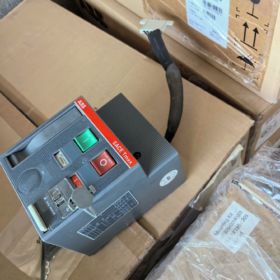
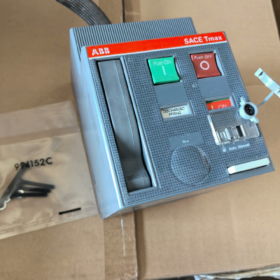
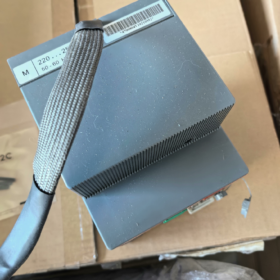
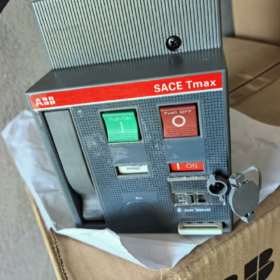
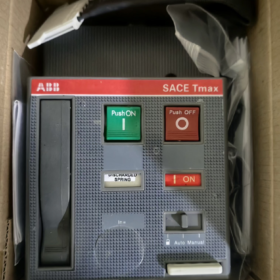
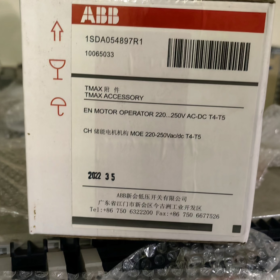
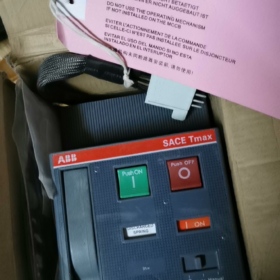
Basic Information & Model Code Explanation
Basic Profile
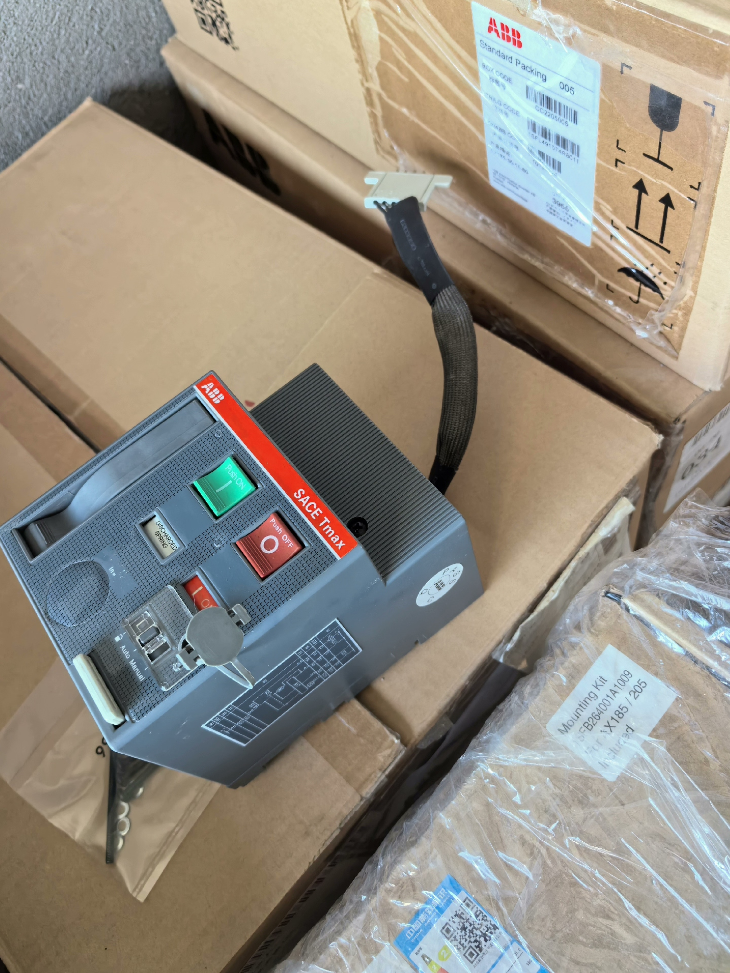
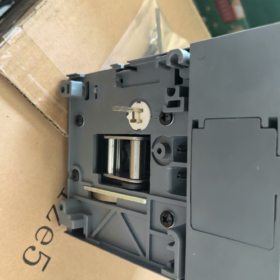
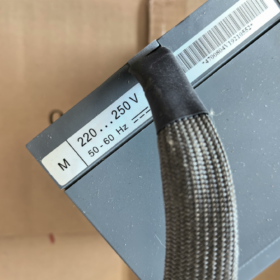
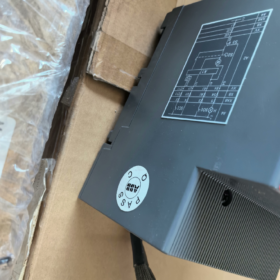
Original Part No.: 1SDA054897R1
Product Name: Shunt Release (SOR)
Product Line: Special accessory for ABB Tmax T moulded case circuit breakers (MCCB)
Applicable Devices: T1 160, T2 160 frame MCCBs (compatible with 3P/4P versions)
Main Function: Remote electric tripping under AC power. It only performs tripping without electric closing; manual closing is required.
Code Breakdown (General Rules for ABB Low-Voltage Accessories)
- `1SDA`: Global unified prefix for standard ABB circuit breaker accessories, representing low-voltage power distribution components.
- `054897`: Unique serial code indicating function, voltage rating and applicable models.
- `R1`: Hardware revision. It is the only mass-produced version with no alternative replacements.
- Detailed Technical Specifications
| Category | Item | Technical Data |
| Electrical Parameters | Rated Control Voltage | AC 230V, 50/60Hz |
| Operating Voltage Range | 0.7~1.1Un (AC 161V ~ AC 253V) | |
| Duty Cycle | Short-time duty (Max continuous energization: ≤5s) | |
| Inrush Power Consumption | Approx. 15VA | |
| Polarity | Non-polarized for AC circuits | |
| Environmental Parameters | Operating Temperature | -25℃ ~ +70℃ |
| Storage Temperature | -40℃ ~ +85℃ | |
| Relative Humidity | 5%~95% (Condensation not allowed) | |
| Applicable Altitude | ≤2000m (Derating required for higher altitudes) | |
| Mechanical & Protection | Mounting Type | Built-in snap-fit installation inside circuit breaker |
| Overall Protection Class | IP20 (after full assembly) | |
| Electrical Mechanical Life | ≥10,000 standard operations | |
| Wiring | Outlet Type | Equipped with insulated flexible leads; no external terminal block |
Important Note: Never keep the coil energized continuously for a long time. Energization over 5 seconds will easily damage the insulation and windings.
- Full Product List of the Same Series (Exclusive for T1/T2 160, Not Interchangeable with Other Frames)
This series consists of two independent categories: Shunt Release (SOR) and Undervoltage Release (UVR). Mixing usage is prohibited.
3.1 Shunt Release (Trips when energized, widely used for remote control & fire emergency cut-off)
- 1SDA054897R1: AC230V 50/60Hz (Main model)
- 1SDA054898R1: AC400V 50/60Hz
3.2 Undervoltage Release (Trips when power fails, for undervoltage protection)
- 1SDA054899R1: AC230V
- 1SDA054900R1: AC400V
Important Reminder
The above part numbers only fit T1 160 / T2 160. ABB T3/T4/T5/T6 large-frame MCCBs adopt another set of 1SDA codes and have incompatible physical structures.
- Production Status & Original Replacements
- Production Status: In regular mass production. No discontinuation, phase-out or upgrade plan.
- Version Compatibility: R1 is the universal version for the whole series. Products of new and old batches are 100% interchangeable in hardware, wiring and functions, and can be mixed on site.
- Original Replacements: No equivalent original models available. Use 1SDA054897R1 directly for procurement.
- Cross-Brand Equivalent List (AC230V Shunt Release for 160 Frame MCCB)
Domestic AC220V power grid is compatible with imported AC230V products for direct replacement.
5.1 Overseas Brands
| Brand | Applicable Circuit Breaker Model | Equivalent Accessory Model |
| Schneider | NSX100/NSX160 | LV429387 (Shunt Coil AC220/230V) |
| Siemens | 3VT8 100/160 | 3VT9100-4AM00 (Shunt Release AC230V) |
| Eaton Moeller | NZM1/NZM2 | NZM1-XA230 (Shunt Release AC230V) |
5.2 Domestic Brands (Cost-effective alternatives for distribution cabinets)
| Brand | Applicable Circuit Breaker Model | Equivalent Accessory Model |
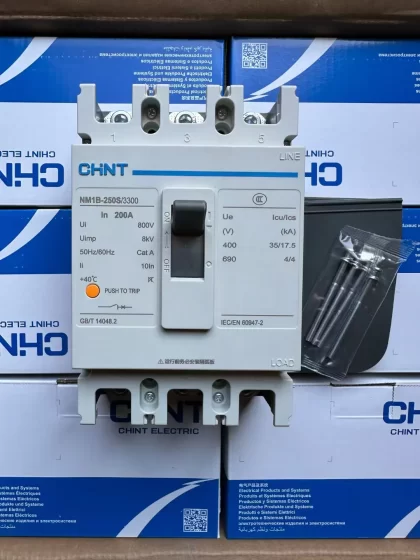
| Chint | NM1-160 | NM1-160 Shunt Release AC220V |
| Delixi | CDM1-160 | CDM1-160 Shunt Release AC220V |
| People Electric | RMM1-160 | RMM1-160 Shunt Release AC220V |
- Application Scenarios & Operating Restrictions
✅ Recommended Applications
- Fire Emergency Cut-off Circuit (Most Common): Linked with fire alarm control panel to cut off non-fire loads in buildings.
- Intelligent Power Distribution System: Remote tripping via PLC, DCS and smart meters.
- Remote Operation for Transformer Cabinets & Distribution Rooms: Power cut for unattended stations.
- Industrial Safety Circuits: Main power disconnection linked with equipment emergency stop and safety signals.
- Remote control of main power & lighting circuits in shopping malls, factories and buildings.
❌ Prohibited & Restricted Applications
- DC control circuits: This product is designed for AC only. DC supply causes malfunction and permanent damage.
- Continuous long-term energization: Violates short-time duty design and will burn out the coil.
- High-frequency repeated operation: Over 10 operations per minute will drastically shorten service life.
- Outdoor exposed areas with rain, heavy corrosion or conductive dust: IP20 provides no water or corrosion resistance. A sealed cabinet is mandatory.
- Operation above 2000m without derating: Insulation performance decreases at high altitude, leading to false tripping and creepage faults.
- Installation, Wiring & Safety Regulations
7.1 Pre-installation Requirements
Cut off the upstream main power supply completely and verify zero voltage inside the cabinet before work. Live installation and disassembly are strictly forbidden.
Snap-fit installation: Align the accessory with the dedicated slot inside the circuit breaker and press to lock. No extra screws are needed.
Post-installation test: Manually close and trip the breaker 3 to 5 times to confirm smooth mechanical movement without jamming.
7.2 Wiring Regulations
- The product is fitted with two flexible leads. The AC circuit is non-polarized; connect directly to the external control circuit.
- Install a 1A~2A miniature fuse in series in the control circuit to prevent fault spreading caused by coil short circuit.
- Separate strong and weak current wiring: Run control cables separately from main power cables to avoid electromagnetic interference.
- Control logic: Adopt pulse triggering (energization duration: 1~3s). Continuous power supply is forbidden.
7.3 Working Principle Summary
Coil energized → Trigger tripping → Circuit breaker trips. The tripping mechanism remains locked after power cut; manual closing is required for reset.
- Troubleshooting & Maintenance
Fault 1: Circuit breaker fails to trip after energization
Possible Causes: No power / low voltage in control circuit, broken leads / loose connections, open coil circuit, mechanical jamming
Troubleshooting Steps:
- Measure voltage across leads with a multimeter to ensure it is within AC161V~253V.
- Check cable continuity and terminal tightness; replace damaged leads immediately.
- Remove the accessory after power cut and clean dust and foreign objects inside the mechanism.
- Replace with new 1SDA054897R1 if voltage and wiring are normal but no operation (coil burnout).
Fault 2: Repeated coil burnout and overheated insulation
Root Causes: Continuous energization, overvoltage, surge impulse
Solutions:
- Modify control logic and add an intermediate relay for short pulse triggering.
- Install varistors or surge absorbers in the control circuit to suppress voltage spikes.
- Inspect upstream power supply to eliminate three-phase unbalance and overvoltage issues.
Fault 3: Accidental tripping without control signal
Causes: Induced voltage from mixed strong/weak current wiring, cable leakage, loose assembly
Solutions:
- Run control cables in separate conduits or use shielding for physical isolation from power cables.
- Connect a bleeder resistor in parallel with the control circuit to eliminate induced voltage.
- Re-seat the snap fastener to ensure firm assembly.
Fault 4: Slow or incomplete tripping
Cause: Dust and debris trapped in mechanical mechanism
Solution: Blow clean with dry compressed air after power cut. Do not disassemble the mechanism or add lubricant (Factory-applied grease is designed for full service life).
- Certification, Logistics & Storage Requirements
- Certifications: Approved with CCC (China Compulsory Certification) and CE (EU Certification), compliant with domestic projects and export to EU countries.
- Storage: Store in cool and dry environment; avoid moisture and heavy compression.
- Transportation: Pure electromagnetic coil component, no lithium batteries or magnetic dangerous goods. Classified as general cargo for air and sea transportation with no special restrictions.
- On-site Selection Tips
Differentiation of Similar Products (Common Confusion Points)
SOR (1SDA054897/98): Trip on energization → For remote control & fire emergency cut-off
UVR (1SDA054899/00): Trip on power loss → For power failure protection & motor undervoltage protection
NH42-63-318x560.png "CHINT PC-type automatic transfer switches (ATS)NH42-63/4SZ")