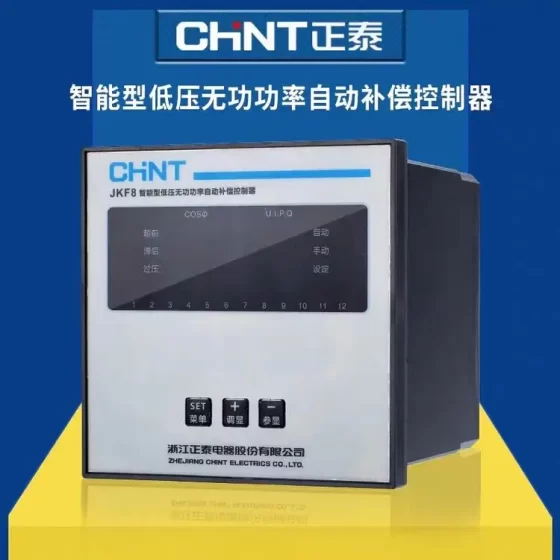
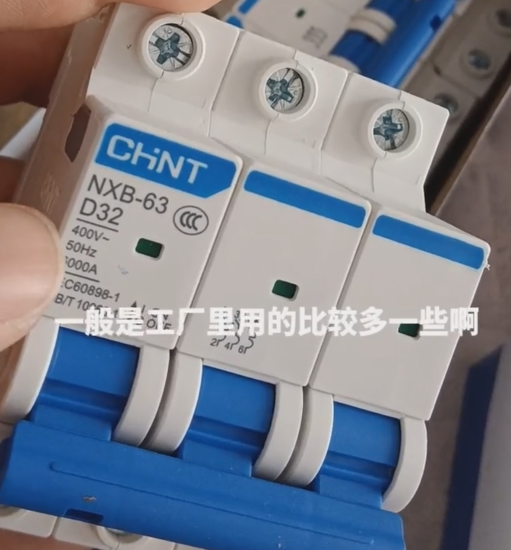
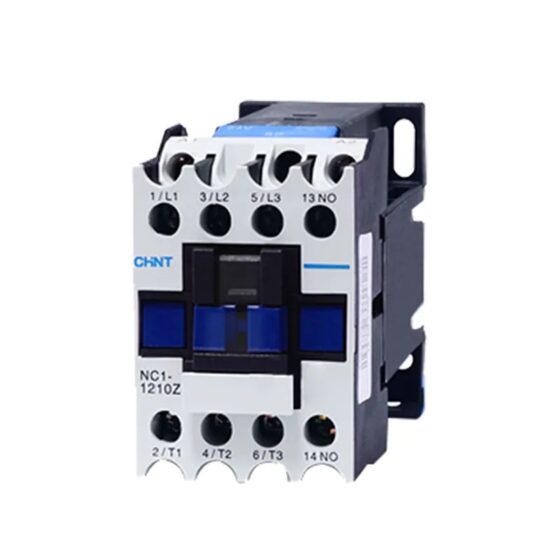
Contactor,circuit breaker,sensor,Encoder,PLC,Converter





The CM30 is ABB’s 1/4 DIN (96×96 mm) panel-mounted universal PID process controller within the ControlMaster family. It serves as the upgraded replacement for legacy C300 / C350 / C351 models. It is designed for single-loop and dual-loop control of temperature, pressure, flow and other process variables, widely deployed in heat treatment, ovens, chemical processes, HVAC, packaging machinery and other industrial applications.
- Key Specifications
Display: Full-color TFT screen; simultaneously shows PV, SP, output percentage, trend curves and alarms. Front panel protection rating: IP66 / NEMA 4X.
Sampling rate: 125 ms
Configuration: Front-panel menu + PC software ConfigPilot, supporting parameter backup, upload/download and simulation commissioning.
Tuning: Advanced auto-tune adaptive PID, with both auto and manual tuning modes.
Power supply: Standard AC 85–264 V; DC 24 V version available as an option.
- Inputs (Universal Input)
Thermocouples: K, S, B, T, E, J, R, N, etc.
RTDs: Pt100, Pt1000
Linear signals: mV, 0–20 mA / 4–20 mA, 0–10 V, resistance, frequency
Digital inputs: Dry contacts, 24 V DC level for external start/stop, setpoint switching and event triggering.
- Outputs (Modular Expandable I/O)
Standard base unit: 1 analog/digital main output + 1 relay
Optional expansion boards:
Relay boards: Additional alarm/control relays
Analog output boards: 4–20 mA transmission output
Extra universal inputs, 24 V sensor excitation power, multi-channel digital I/O
Output types: Relay, solid-state SSR, 4–20 mA, stepper output for electric valve positioning.
- Control Algorithms (Core Functions)
Basic functions: Single-loop PID, ON/OFF control, time-proportional control
Advanced functions: Cascade control, feed-forward, ratio control, adaptive PID, predictive control, dual-loop control
Profile ramp/soak temperature programming, batch bank control, math & logic calculations, flow totalization, custom linearization, local/remote setpoint switching.
- Communication Options
RS485 Modbus RTU (optional / standard)
Ethernet Modbus TCP with built-in web server for remote PV and alarm viewing
Profibus-DP available on special order (requires bus license)
Seamless connection to PLC, SCADA and host monitoring systems.
- Typical Applications
Heat treatment furnaces, industrial ovens, constant-temperature baths, extruders, chemical reactors, cooling/heating temperature control, pressure regulation, flow ratio blending, packaging machinery, industrial kilns.
- Product Family Comparison
| Model | DIN Size | Features |
| CM10 | 1/8 DIN (48×96 mm) | Compact entry-level model |
| CM30 | 1/4 DIN (96×96 mm) | Mainstream universal controller (this model) |
| CM50 | 1/2 DIN (96×192 mm) | Large color display, expanded I/O and longer profile programs |
Field-Mount Models (No Front Panel, DIN rail/wall mounting)
CMF160: Compact field controller
CMF310: Heavy-duty field PID controller with IP protection for outdoor and pipe-mounted local control.
- Selection & Ordering Rules
Full Order Code Format
`CM30/AAAAAAA/BBB OPT`
- First segment `CM30/XXXXXXX`: I/O hardware configuration
- Second segment `/XXX`: Communication + power supply
- OPT: Software license (critical; advanced functions remain locked without valid licensing)
(1) CM30 I/O Option Boards (Spare Part Order Codes)
- Base unit (standard): 2 universal analog inputs + 1 main output + 1 relay
- Expansion option boards (order separately):
CM30/0703 (Option 1a): +1 extra relay
CM30/0704 (Option 1): 1 analog output + 2 digital I/O + 3 relays
CM30/0705 (Option 2): 2 extra analog inputs + 4 digital I/O
(2) Communication Modules
CM30/0708: RS485 Modbus RTU module (most popular)
CM30/0709: Ethernet Modbus TCP module with web server
Profibus-DP: Available on request with dedicated bus license.
(3) Power Supply Selection
Standard: AC 85~264 V universal mains
DC variant: 24 V DC for cabinet power supply.
(4) Software License Packages (OPT)
Base (free built-in): Basic single-loop PID, auto-tune
Standard: Multiple setpoints, math functions, logic blocks
Extended (ED): Ramp/Soak profile programming, cascade, feed-forward, ratio, dual-loop, batch control (mandatory for furnaces and reactor applications).
- Frequently Used Complete Order Codes
Model 1: Basic single-loop temperature control (ovens, simple heating)
CM30/BASE/RS485 OPT=BASE
I/O: 2AI + 1 main output + 1 relay
Communication: Modbus RTU
License: Basic PID only
Model 2: Profile ramp/soak control (heat treatment & sintering furnaces – most common)
CM30/OPT1/RS485 OPT=EXTENDED
Fitted with Option 1 board for extra relays and digital outputs
Enabled profile programming + adaptive PID
Model 3: Cascade + feed-forward (jacketed reactor temperature control)
CM30/OPT1+OPT2/ETH OPT=EXTENDED
Dual expansion boards for multiple analog inputs
Ethernet Modbus TCP communication
Cascade + feed-forward licensed
Model 4: Dual-loop temperature & humidity control (environmental test chambers)
CM30/OPT1/RS485 OPT=DUAL LOOP
Two independent PID loops: one for temperature, one for humidity.
- Spare Part Order Codes for CM Series
- Main control display board: CM30/0700
- 24 V DC power board: CM30/0702
- RS485 communication kit: CM30/0708
- Ethernet communication kit: CM30/0709
- Panel sealing gasket: CM30/0106
- Terminal protective cover: CM30/0115
- Legacy Replacement Guide
- Old C300 / C350 / C351 → Direct replacement: CM30. Program profiles can be migrated via ConfigPilot; only terminal wiring requires re-verification.
- Small-size replacement: CM10 replaces legacy C200
- Large-screen high-performance model: CM50 replaces legacy C500.
- Troubleshooting & Commissioning Tips
- No display / garbled text: Check power supply, loose terminals and front panel latches.
- Incorrect measurement readings: Verify input type (TC/RTD/mA), cold-junction compensation, lead resistance and 24 V sensor excitation power.
- PID oscillation: Run auto-tune first; enable adaptive PID for large-lag thermal processes; add signal filtering for furnace applications.
- Communication failure: Confirm Modbus address, baud rate, parity and termination resistor; for Ethernet units, verify IP address and subnet mask.
- Migration from C350/C351: Profile programs can be imported in ConfigPilot, but terminal pinouts differ; recheck wiring diagrams before power-up.
CM30 Typical Application Cases (Control Scheme, Process Challenges & Configuration Notes)
Core strengths of CM30: Ramp/Soak profile programming, cascade, feed-forward, ratio control, dual-loop PID, adaptive control, PLC/DCS backup standby mode. Below are official ABB templates plus field-proven domestic site implementations covering heat treatment, chemical, food, boiler and environmental test industries.
Case 1: Heat Treatment / Sintering Furnace (Profile Ramp/Soak – Top Application)
Process: Metal annealing, ceramic sintering, ageing treatment; requires multi-segment ramp → hold → cool temperature profiles
Control Scheme: CM30 Profile template; K-type thermocouple input; output driving SSR solid-state relays or gas motor valves
Challenges: Large thermal inertia, long lag, overshoot; fixed batch recipes with curve recording and alarm logging required
Configuration: Extended profile license (up to 30 recipes, 140 segments); adaptive PID; Modbus RTU linked to PLC/SCADA for batch data archiving
Benefit: Direct replacement for old C350/C351; color touch panel enables one-touch recipe recall with real-time PV/SP trend viewing.
Case 2: Jacketed Chemical Reactor (Cascade Control)
Process: Batch exothermic reaction; main control = internal material temperature; secondary loop = jacket oil/cooling water temperature
Control Scheme: Cascade control template
Primary loop: Vessel internal temperature (Pt100 RTD)
Secondary loop: Jacket fluid temperature; output regulates steam/cooling water control valve
Challenges: Pure single-loop control easily oscillates and loses stability during exothermic reactions; load changes continuously throughout the reaction cycle
Configuration: Universal RTD input, 4–20 mA analog output; adaptive PID activated; ConfigPilot pre-tunes cascade parameters
Enhancement: Add feed-forward with feed flow signal to pre-adjust cooling capacity ahead of temperature deviation.
Case 3: Wastewater pH Neutralization (Feedback + Feed-forward)
Process: Stabilize pH between 6~9; automatically adjust acid/alkali dosing pump speed based on incoming water flow
Control Scheme: Single-loop PID + feed-forward template
PV: pH electrode signal
Feed-forward variable: Inlet flow (4–20 mA from electromagnetic flowmeter)
Output: 4–20 mA variable frequency drive for dosing pump
Challenges: Long dead time; large flow fluctuations; pure pH feedback responds too slowly and causes over-neutralization
Configuration: Linear mA input + mathematical function block; CM30 pre-emptively increases dosing when flow rises to minimize pH swings.
Case 4: Boiler Drum Level Control (3-Element Cascade + Feed-forward)
Process: Maintain stable boiler drum water level to prevent dry firing or overflow
Control Scheme: Primary variable = drum level; secondary variable = feedwater flow; feed-forward = steam outlet flow
Challenges: False water level phenomenon; sudden steam load changes create false level readings; single-element control cannot maintain stability
Configuration: Three-channel 4–20 mA analog inputs; cascade + feed-forward template; output to feedwater regulating valve; Modbus TCP over Ethernet to SCADA system.
This is the classic official advanced process control application for the CM30.
Case 5: Constant Temperature & Humidity Test Chamber (Dual Independent Loops)
Process: Environmental test chambers; simultaneous temperature + humidity regulation
Control Scheme: Dual-loop template – one CM30 equals two independent PID controllers
Loop 1: Temperature (Pt100), controlling heating/cooling
Loop 2: Humidity (mA humidity transmitter), controlling humidification/dehumidification
Challenges: Thermal-humidity cross-coupling requiring separate PID tuning for each loop
Configuration: Two universal analog inputs + two relay/analog outputs; front panel displays both PV, SP and output values simultaneously.
Case 6: Food & Beverage Blending (Ratio Control)
Process: Syrup mixing, beverage batching; maintain fixed mixing ratio between two raw material flows
Control Scheme: Ratio control template; primary flow sets the setpoint; secondary flow follows the fixed ratio
Challenges: Constant proportion must be maintained even when primary feed flow fluctuates
Configuration: Dual flow mA inputs; CM30 calculates actual ratio and adjusts the secondary pump output; batch totalization function records total material quantity; digital DI inputs start/stop batches and switch ratio presets.
Case 7: Heat Exchanger Temperature Control (Standard Single Loop)
Process: Hot water / thermal oil heat exchangers; steam heating to hold outlet temperature constant
Control Scheme: Standard single-loop PID; Pt100/thermocouple input; output to steam motorized control valve
Challenges: Steam pressure fluctuations create process disturbances
Basic version: No feed-forward; high-performance version adds steam pressure feed-forward to improve stability
Applications: HVAC hot water systems, oil heating, food pasteurization.
Case 8: PLC/DCS Backup Standby Controller (Auto Manual Backup)
Process: Critical control loops lose regulation if the main PLC/DCS fails; independent backup control is required for safety
Control Scheme: Auto/Manual standby template
Normal operation: CM30 follows PLC output and only monitors the process
Failure trigger (DI contact loss / output signal dropout): CM30 automatically takes over PID control to hold the process steady
Use Case: Chemical & thermal power critical flow/pressure loops as redundant safety backup, independent of host systems.
Case 9: Extruder Barrel Zonal Temperature Control (Distributed Multi-Point Control)
Process: Plastic extruder barrel with multiple heating zones requiring independent temperature regulation
Solution: One CM30 per zone; thermocouple input driving SSR heaters; all CM30 units networked via Modbus RTU to a central PLC for centralized monitoring
Advantage: Each zone runs independently; failure of one controller does not affect other zones; local panel operation is available alongside remote setpoint adjustment.
Industry Application Summary Table
| Industry | Typical Application | CM30 Control Template |
| Heat Treatment & Metallurgy | Annealing furnaces, sintering kilns, drying ovens | Profile Ramp/Soak |
| Fine Chemical & Pharma | Batch reactors, crystallization tanks | Cascade + Feed-forward |
| Water Treatment | pH neutralization, aeration control | Single-loop + Feed-forward |
| Thermal Power & Boilers | Drum level, heat exchanger stations | Cascade, 3-element Feed-forward |
| Environmental Testing | Constant temperature & humidity cabinets | Dual-loop PID |
| Food & Beverage | Ingredient batching, pasteurization | Ratio Control, Single-loop PID |
| Machinery OEM | Extruders, packaging machine temperature control | Single-loop PID, Modbus networking |
| Automation Redundancy | Critical loop safety backup | Standby Backup Mode |
Commissioning & Selection Reminders
- Profile, cascade, ratio and feed-forward functions are software license options, not built-in hardware functions. Functions remain locked without the correct Extended license ordered at the time of purchase.
- Use ConfigPilot PC software to pre-configure templates offline, run simulation and download parameter sets; batch copy settings for multiple units.
- Migration from old C350/C351: Control logic can be exported and imported, but terminal pin assignments differ so wiring schemas must be reworked.
- Communication selection: RS485 Modbus RTU for low-cost multi-drop networks; Ethernet Modbus TCP with built-in web page for remote SCADA access.
I can further deliver:
- IO wiring diagrams + parameter set sheets for any single case (e.g., reactor cascade or furnace profile control)
- Step-by-step ConfigPilot template setup procedures
- Pure English version without Chinese characters for tender documentation.


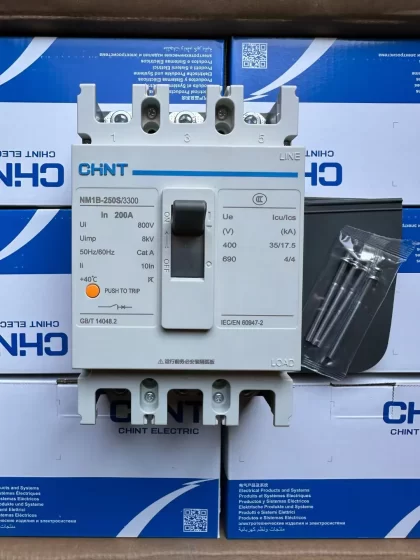
NH42-63-318x560.png "CHINT PC-type automatic transfer switches (ATS)NH42-63/4SZ")