Contactor,circuit breaker,sensor,Encoder,PLC,Converter





PSE: ABB PSE series economical soft starter (compact type, built-in bypass contactor)
210: Matched motor rated current 210 A (400 V, AC-53b duty)
600: Maximum withstand current of the main circuit: 600 A
70: Control supply voltage: AC 100…240 V
Series Positioning: The PSE model integrates a bypass contactor with no external bypass required. Compared with PSS and PSR series, it covers higher power ranges, suitable for fans, water pumps, belt conveyors and other standard loads.
Key Electrical Parameters
Rated motor power: 110 kW @ 400 V
Rated operational current Ie: 210 A
Main circuit voltage: 208~600 V AC
Control supply: AC 100~240 V (50/60 Hz)
Starting current limit: adjustable from 2×Ie to 5×Ie
Overload protection: adjustable electronic motor thermal overload protection
Built-in bypass: Yes; automatically switches to bypass operation after startup to reduce thyristor heating
Mounting type: Wall-mounted
Protection functions: Overcurrent, phase loss, overheating, phase sequence fault, motor overload, thyristor failure, control supply loss
Typical Applications
Water pumps, centrifugal fans, belt conveyors and compressors.
Not applicable to frequent forward/reverse rotation or jogging operation. It suppresses starting inrush current, reduces grid voltage drop, and protects motors and mechanical equipment.
Selection & Replacement Guidelines
- For heavy starting loads (e.g., fans started under full load), verify the starting current and select one size up if necessary.
- PSE has an integrated bypass; cabinet heat dissipation shall be designed based on continuous heat generation of the bypass contactor, not only thyristor power loss.
- Same-platform alternatives:
Same series: PSE210-600-70 (fixed model)
Upgrade series: PSTX series (PSTX210) with enhanced functions, built-in communication and advanced protection
- Communication: Basic PSE models have no native Modbus; an external communication module is required. PSTX models come with built-in Modbus RTU.
Common Troubleshooting
Overheating alarm: Insufficient cabinet ventilation, dust accumulation, high ambient temperature; burnt bypass contacts cause thyristors to remain energized continuously.
Overcurrent fault on startup: Excessively high current limit setting; mechanical jamming; short circuit in motor insulation or power cables.
Phase loss alarm: Blown incoming fuses, loose main circuit wiring, damaged internal thyristors.
Bypass switching failure: Defective bypass contactor coil or auxiliary contacts.
Mechanical Installation & Wiring
Wiring: Three-phase power input L1/L2/L3; output terminals connect directly to the motor. Control terminals connect to start/stop signals and fault relay output.
Cooling: Natural air cooling; reserve upper and lower ventilation space; maintain gaps between multiple units installed side by side.
Enclosure rating: IP20 (indoor cabinet installation only).
Selection Schedule for ABB PSE210-600-70 (400 V, Motor Rated Current 210 A)
Note: PSE210 has built-in bypass and integrated electronic motor overload protection. Upstream components only provide short-circuit protection, while motor overload protection is fully undertaken by the soft starter. System conditions: AC 400 V / 50 Hz, copper power cables, free air installation, ambient temperature 30~35 °C, standard fan/pump loads.
Soft starter rating: PSE210-600-70, Ie=210 A, maximum main circuit withstand current 600 A, built-in bypass contactor.
- Molded Case Circuit Breaker (MCCB, ABB SACE)
Function: Short-circuit protection + electrical isolation. Long-time delay setting shall be higher than motor rated current; overload protection is assigned to the soft starter.
| Item | Recommended Specification | Remarks |
| Model | T6N 630 TMA 3P | ABB OEM recommendation; frame size 630 A, TMA thermal-magnetic trip; short-circuit breaking capacity 10 kA. Upgrade to T6H (20 kA) if prospective short-circuit current exceeds 10 kA. |
| Rated current In | 630 A | Instantaneous trip: 10×In to avoid tripping during current-limited soft start. |
| Trip settings | Long delay: 250 A (adjustable range); Instantaneous: 10×In | Do not rigidly set to 210 A; retain sufficient margin for starting surge. Overload protection is undertaken by the PSE soft starter. |
| Domestic alternative | NM1-630/3P 630 A, thermal-magnetic trip | Cost-effective option for budget-limited projects. |
- Fuse Solution (Short-Circuit Protection without MCCB)
Suitable for upstream fuse protection inside the cabinet; gG general-purpose fuses. Verify I²t coordination to protect soft starter thyristors.
| ABB PSE (Built-in Bypass) | 400 V Power | Current | Schneider ATS22 | Siemens 3RW44 | Delta VSS2 | CHNT NJR2 (Bypass Version) | DELIXI CDRAK3 |
| PSE105-600-70 | 55 kW | 105 A | ATS22C11Q | 3RW4435-6BC44 | VSS2-55 | NJR2-105 | CDRAK3-55 |
| PSE142-600-70 | 75 kW | 142 A | ATS22C14Q | 3RW4442-6BC44 | VSS2-75 | NJR2-142 | CDRAK3-75 |
| PSE170-600-70 | 90 kW | 170 A | ATS22C17Q | 3RW4444-6BC44 | VSS2-90 | NJR2-170 | CDRAK3-90 |
| PSE210-600-70 | 110 kW | 210 A | ATS22C21Q | 3RW4445-6BC44 | VSS2-110 | NJR2-210 | CDRAK3-110 |
| PSE250-600-70 | 132 kW | 250 A | ATS22C25Q | 3RW4446-6BC44 | VSS2-132 | NJR2-250 | CDRAK3-132 |
| PSE300-600-70 | 160 kW | 300 A | ATS22C32Q | 3RW4447-6BC44 | VSS2-160 | NJR2-300 | CDRAK3-160 |
| PSE370-600-70 | 200 kW | 370 A | ATS22C37Q | 3RW4454-6BC44 | VSS2-200 | NJR2-370 | CDRAK3-200 |
Brand Position Comparison
- Schneider ATS22: First choice for direct replacement. It has identical positioning, built-in bypass and matching protection functions. ATS48 / ATS480 have no built-in bypass; an external contactor must be fitted, which raises total cost.
- Siemens 3RW44: Built-in bypass, direct counterpart to PSE. Basic 3RW40 models have no bypass and are prone to misselection. 3RW55 is the new generation with enhanced performance and higher price as an upgraded alternative.
- Eaton S811+: European equivalent with integrated bypass, widely adopted in overseas projects.
- Delta VSS2: Taiwanese economical model with built-in bypass, high cost-performance for retrofitting ABB PSE in domestic projects.
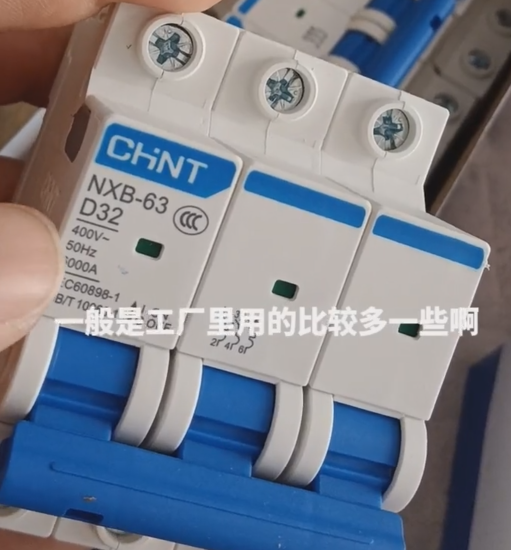
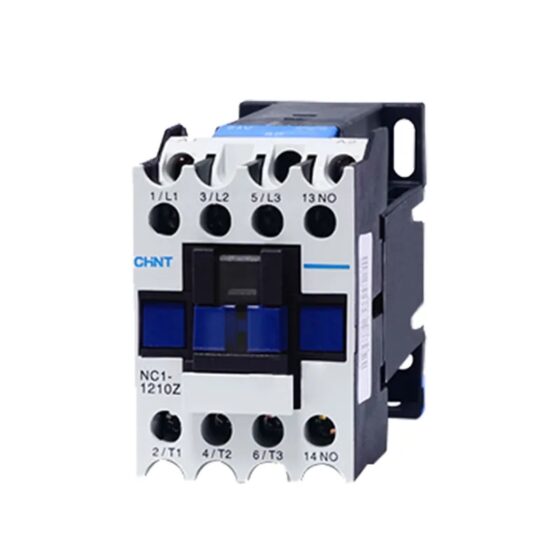
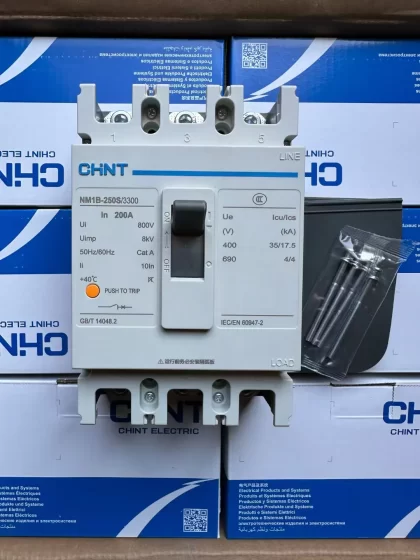
- CHNT NJR2 / DELIXI CDRAK3: Domestic economical options. Must select the built-in bypass variant; standard NJR2 requires an external bypass contactor.
Critical Notes for On-site Replacement (Engineering Compliance)
- Control Supply: PSE accepts AC 100~240 V. ATS22 / 3RW44 support AC 110~230 V, which is fully compatible. Some domestic models only support AC 220 V and cannot be used if only 110 V control power is available.
- Starting Principle: PSE adopts two-phase thyristor control; ATS22 and 3RW44 use three-phase control. The difference in starting performance is negligible for pumps and fans; adjust ramp parameters on-site for heavy inertia loads.
- Communication: Only PSE models with suffix `-1` have native Modbus. Basic ATS22 units require an extra communication module; the same applies to Siemens models.
- Cabinet Dimensions: Mounting depth and cutout dimensions differ across brands; verify mechanical dimensions before retrofitting existing cabinets.
- Protection Logic: Fault relay contact ratings and actuation logic are not identical. Rewire PLC control and fault alarm circuits accordingly.
- Heavy-duty Loads: For crushers and high-inertia belt conveyors, select one current size up instead of strictly matching the rated current in the table.
Higher-Grade Upgrade Alternatives
ABB PSE → ABB PSTX (same-brand upgrade, built-in bypass, extended protection, native Modbus)
ABB PSE → Schneider ATS480 (no built-in bypass, advanced torque control)
ABB PSE → Siemens 3RW55 (built-in bypass, advanced diagnostic functions)


NH42-63-318x560.png "CHINT PC-type automatic transfer switches (ATS)NH42-63/4SZ")