Contactor,circuit breaker,sensor,Encoder,PLC,Converter


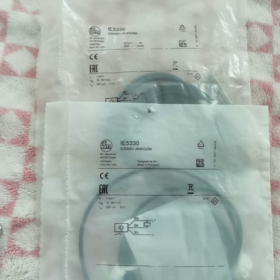
Basic Information
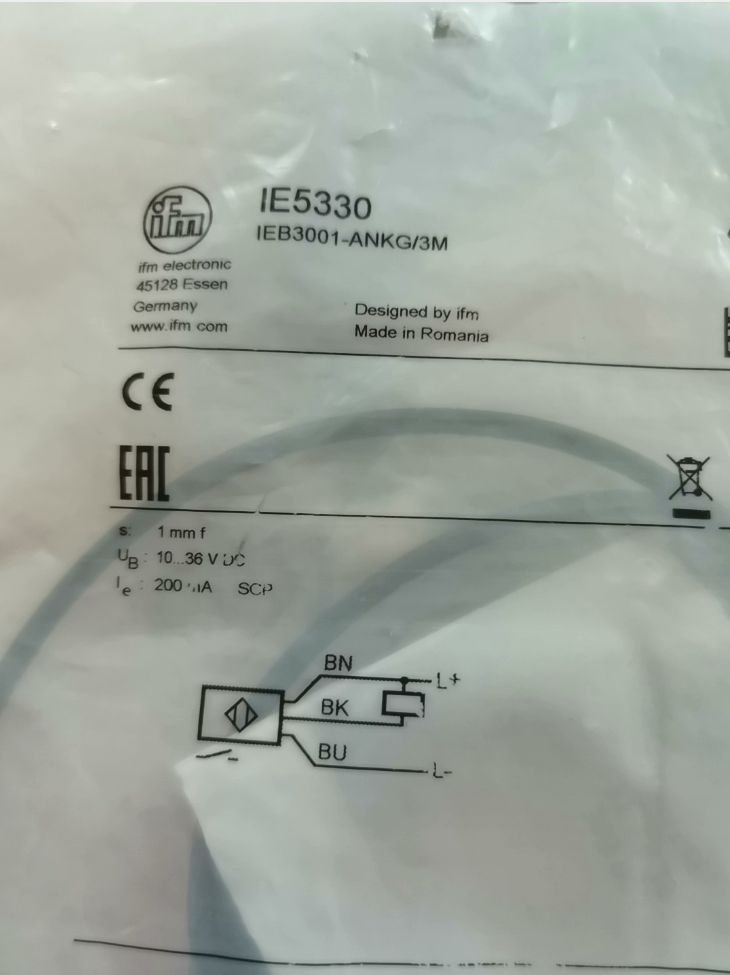
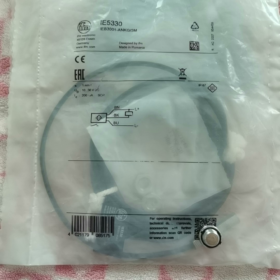
Full Model Code: IFM IEB3001-ANKG/3M (Commercial Model: IE5330)
Product Type: M8 Shielded Inductive Proximity Sensor (Flush Mountable)
End-of-Life Notice: Officially discontinued by manufacturer on Mar 31, 2026; replacement selection required.
Core Specifications
Thread Size: M8×1, Overall Length: 35 mm
Cable Outlet: 3m PVC 3-core straight cable
Output: NPN Normally Open (NO)
Sensing Distance: Standard 1 mm (shielded flush type)
- Core Electrical Parameters
Power Supply
Operating Voltage: DC 10~36 V (compatible with standard 24V industrial control systems)
Quiescent Current: 15 mA @ 24 V
Built-in Protection: Reverse polarity protection, short-circuit protection, overload protection
Output Characteristics
Output Type: NPN Open Collector (Sink Output)
Output Mode: Normally Open (conducts when metal approaches)
Max Load Current: 200 mA
Voltage Drop at Turn-On: ≤2.5 V
Switching Frequency: 750 Hz (suitable for high-speed counting)
Sensing Performance
Rated Sensing Distance Sr: 1 mm ±10%, Effective Operating Range: 0~0.8 mm
Metal Correction Factors:
Hysteresis: 1%~15% of Sr (prevents signal chattering)
- Mechanical & Environmental Parameters
- Housing Material: Bronze-plated brass; sensing face: PBT plastic
- Protection Class: IP67 (waterproof & dustproof, withstands short-time rinsing)
- Mounting Method: Flush shielded design (fully embeddable in metal brackets)
- Supplied Accessories: 2 pieces of M8 lock nuts as standard
- Operating Temperature: -25 ℃ ~ +80 ℃
- EMC Compliance: Industrial standards EN55011 Class B, EN60947-5-2
- 3-Wire Wiring Definition (3m Cable)
| Wire Color | Function | Wiring Instruction |
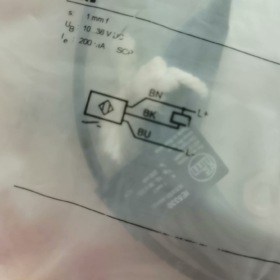
| Brown | DC+ 24V Positive | Connect to 24V terminal of PLC / power supply |
| Blue | DC- 0V Negative | Power common ground |
| Black | NPN Signal Output | Connect load between 24V+ and black wire |
PLC Wiring Notes (NPN Sink Type)
Directly compatible with Japanese PLCs (Mitsubishi / Omron);
European standard PNP source-type PLCs require an intermediate relay for signal conversion.
- Typical Application Scenarios
Position detection of small cylinders, positioning of miniature tooling fixtures
Counting metal workpieces on miniature conveying lines (750Hz high frequency)
Installation in compact equipment spaces (short slim M8 housing, L=35mm)
Metal detection for machine tools, automated assembly lines and 3C equipment
- Recommended Replacement Models After Discontinuation (Direct Drop-In Compatibility)
Identical Spec Drop-In Replacement (M8 shielded, 1mm, NPN NO, 3m cable)
- IE5331: New upgraded generation with fully identical parameters, abundant stock
- IEB3002-ANKG/3M (new series part number)
Alternate Output Versions
PNP Normally Open equivalent: IE5340
Unshielded M8 long sensing distance (2 mm): IE5090
- Common Troubleshooting Matrix
| Fault Phenomenon | Root Cause | Solutions |
| No indicator light, complete failure to operate | Brown & blue wires reversed; supply voltage below 10V | Verify wiring sequence, measure 24V power supply |
| No signal output when metal approaches | Detection gap over 0.8mm; excessive attenuation for aluminum/copper targets | Reduce mounting clearance; replace target with steel sensing plate |
| Frequent signal chattering | Loose mounting nuts; insufficient hysteresis; severe mechanical vibration | Tighten lock nuts, shorten detection distance |
| Output fails several seconds after power-on | Output short-circuit triggering built-in protection lockout | Disconnect load, power cycle to locate short circuit |
Key Distinction Points for Model Selection
- IE5330 Shielded Flush Type: 1mm sensing distance, embeddable into metal holders, strong anti-interference capability;
- Unshielded M8 model IE5070: 2mm sensing distance, non-embeddable, susceptible to interference from surrounding metal;
- Plug-in versions have no “/3M” suffix at model end; cable versions come with fixed 3-meter cable.
Complete Troubleshooting Guide for IFM IE5330 (M8 Shielded, NPN NO, 1mm)
Precondition Reference Parameters (Benchmark for Troubleshooting)
- Power supply: DC 10~36 V, 3-wire system: Brown = 24V+, Blue = 0V, Black = NPN NO signal output
- Rated sensing distance Sr = 1mm (shielded flush design, effective working gap ≤0.8mm)
- Max load 200mA, built-in reverse polarity, short-circuit and overload protection
- Indicator: Yellow LED; lit when metal approaches, off without metal target
- IP67 protection class, operating temperature: -25 ℃ ~ +80 ℃
- Standard Layered Troubleshooting Procedure (Simple First, On-Site Priority)
Layer 1: Visual Inspection & Mechanical Mounting (5-Min Preliminary Check)
- Clean sensing face: Remove iron filings, cutting fluid, oil stains and dust; adhered metal debris causes continuous false triggering / permanent ON state
- Inspect housing & cable: Check for crushed insulation, broken conductors from bending, water ingress whitening, loose lock nuts
- Mounting Specifications (IE5330 is shielded flush type)
Fully embeddable inside metal brackets; side surrounding metal generates no interference
Detection gap must be ≤0.8mm; target surface perpendicular to sensing face
Minimum spacing ≥ 3×Sr = 3mm for multiple sensors mounted side-by-side to avoid mutual interference
- Metal Target Correction Factors (Primary cause of sensing distance attenuation)
Layer 2: Multimeter Test for Power Supply & Wiring (High-Frequency Fault Source)
- Cut off power to verify wiring: Brown connected to 24V+, Blue to 0V, Black to PLC input (NPN sink)
- Power on and measure voltage across brown & blue terminals: Stable 10~36V required, ripple <5%; sensor fails to start if voltage drops below 10V
- Reverse polarity lockout: Swapped brown/blue wires activate protection lockout, yellow LED stays off; power off for 3 minutes to reset and restore function
- Cable open circuit: Test continuity segmentally for brown, blue and black wires; cable inside cable chains for machine tools is most prone to breakage
- PLC Compatibility Note: IE5330 is NPN NO; PLC input common terminal must connect to 24V+. Direct connection to European PNP-type PLCs yields no signal; an intermediate relay is required for conversion.
Layer 3. Electrical Output Functional Test (Judge Sensor Integrity via Multimeter)
Standard voltage states of NPN NO IE5330 (measure black wire against blue wire 0V):
No metal target: Black wire ≈ DC24V (high level, yellow LED off)
Steel plate close to sensing face: Black wire ≈ 0~2.5V (low level, yellow LED ON)
Test Judgment Criteria:
- Normal voltage switching synchronized with yellow LED → Sensor intact; fault lies in downstream PLC / wiring
- No voltage variation, LED unresponsive to metal movement → Sensor damaged or locked out by short-circuit protection
Layer 4. Electromagnetic Interference & Environmental Inspection (Exclusive for Signal Chattering)
- Sensor cables routed parallel with inverter / servo power cables → High-frequency noise causes random signal fluctuation
- Long-distance unshielded cables with both ends of shield grounded (shield shall only be grounded at control cabinet single end)
- Magnetic interference generated by frequent switching of nearby welders, solenoid valves and contactors
- Ambient temperature exceeding 80 ℃ causes internal circuit drift and intermittent signal loss
- Fault Phenomenon Matrix (Phenomenon + Root Cause + One-Step Solutions)
Fault 1: Yellow LED never lights up after power-on, zero output
| Root Cause | Quick Check | Remedial Action |
| Reversed power polarity (brown & blue swapped) | Multimeter detects reversed voltage polarity between brown & blue | Swap brown and blue power wires; power off and rest 3 mins for reset |
| Supply voltage <10V or missing 24V rail | Voltage between brown & blue <10V / 0V | Replace regulated 24V DC power supply; upgrade wire gauge to reduce voltage drop |
| Internal breakage of brown / blue wires in cable | Segmental continuity test | Cut damaged section and re-crimp terminals, or replace entire 3m cable |
| Internal sensor burnout from overvoltage | Voltage previously exceeded 36V, lightning surge | Directly replace IE5330 or substitute model IE5331 |
| Tripped fuse on upstream circuit | Short-circuit / overload protection triggered | Locate downstream short circuit, replace fuse then restore power |
Fault 2: Yellow LED permanently ON with no metal target nearby
- Iron filings / metal powder adhered to sensing face
Solution: Wipe sensing face with alcohol; install dust shield baffle
- Over-tight detection gap, metal base tightly attached to sensor head
Solution: Raise sensor with gaskets; control clearance at 0.4~0.8mm
- Short circuit between black output wire and 24V positive
Solution: Cut power, separate damaged cable insulation and isolate short points
- Internal breakdown of output transistor
Solution: Test with identical spare sensor; replace if faulty
Fault 3: Yellow LED lights when metal approaches, yet no PLC input signal
- PLC input common terminal connected to 0V (PNP configuration incompatible with NPN sensor)
Solution: Reconnect PLC COM terminal to 24V+
- Open circuit on black output wire; loose / oxidized terminals
Solution: Fasten terminals tightly, test black wire continuity and repair breaks
- Load current exceeds 200mA (direct drive of large solenoid valves)
Solution: Switch via intermediate relay; prohibit direct connection of high-power loads
- Burned PLC input channel
Solution: Move black wire to spare healthy input channel for verification
Fault 4: Chattering, intermittent signal, frequent false triggering / missed detection
- Detection gap near critical threshold of 0.8~1mm
Solution: Shorten clearance below 0.5mm for sufficient trigger margin
- Severe machine vibration loosens sensor nuts and shifts position
Solution: Double lock nuts with anti-loose washers
- Interference from power cables laid parallel with sensor wiring
Solution: Separate cable trays, cross wires perpendicularly; ground cable shield only at control cabinet end
- Target made of aluminum / stainless steel with heavy sensing distance attenuation
Solution: Fit steel sensing gaskets, reduce detection gap
- Excessive power supply ripple, poor filtering of switching power supply
Solution: Connect 1000μF/35V electrolytic capacitor in parallel to power output terminal
Fault 5: Yellow LED extinguishes several seconds after power-on, output disabled (intermittent protection lockout)
- Output wiring shorted to ground (black wire touching 0V)
Solution: Disconnect black wire of sensor and power on alone; LED recovery indicates downstream short circuit, inspect wiring segmentally
- Load short-circuit / instantaneous overload triggers built-in short-circuit protection
Solution: Remove downstream load, test sensor under no-load condition
- Cable insulation damaged, persistent micro-short between black and blue wires
Solution: Replace complete cable assembly
Fault 6: Abnormal operation under extreme hot / cold conditions (malfunction at high/low temperature)
- Ambient temperature over 80 ℃ exceeding rated upper limit
Solution: Install air-cooled heat shield baffle; relocate away from cylinder heating blocks and welding stations
- Cable hardening and breakage below -25 ℃ low temperature
Solution: Replace with low-temperature flexible cable; fix routing to reduce repeated bending
- On-Site Quick Self-Test Operation Steps (No Disassembly Required)
- No-load sensor test (disconnect PLC load)
Connect only brown to 24V, blue to 0V, leave black wire unconnected; place steel plate near sensing face and observe yellow LED:
Synchronous ON/OFF switching → Sensor body intact
No variation / permanently ON / permanently OFF → Sensor damaged
- Cross-Comparison Test (Most Efficient Judgment Method)
Install confirmed good IE5331 / IE5330 at faulty position with unchanged wiring:
Fault eliminated = Original sensor defective
Fault persists = Issue with power supply, wiring, PLC or mounting
- Short-Circuit Protection Reset Procedure
After short-circuit lockout: Fully disconnect brown and blue power wires, cut power for ≥3 minutes then re-energize for automatic built-in protection reset.
- Hard Rules for Mounting & Wiring (Avoid Recurring Failures)
- Do not subject cables to long-term compression or repeated 90° bending (prone to internal conductor breakage)
- Signal cables must not be laid parallel with inverter / servo power cables in the same trunking
- Shielded cable shielding shall be grounded at single end only; double-end grounding introduces circulating current interference
- Although IE5330 shielded version can be embedded into metal, avoid long-term high-temperature baking against thick steel plates
- Forbid direct drive of 24V high-power solenoid valves (loads over 200mA must be switched via relay)
- Strictly prohibit supply voltage exceeding DC 36V; add surge absorption diodes if no regulated power supply is used
- Spare Part Replacement Scheme (When IE5330 Discontinued & Unrepairable)
- Direct drop-in replacement: IE5331 (fully matching parameters, NPN NO, M8 shielded, 1mm sensing, 3m cable)
- Alternate output type: Identical-size PNP NO model IE5340
- Long-distance sensing demand: Unshielded M8 2mm IE5090
- Routine Preventive Maintenance (Reduce Failure Rate)
- Daily Inspection: Wipe iron filings and cutting fluid off sensing face; check lock nuts for tightness
- Weekly Cable Inspection: Check cables inside drag chains for insulation damage, aging and tensile strain
- Monthly Power Check: Monitor stability of 24V output voltage via multimeter
- High-interference Production Lines: Inspect shield grounding terminals quarterly for oxidation and looseness


NH42-63-318x560.png "CHINT PC-type automatic transfer switches (ATS)NH42-63/4SZ")