Contactor,circuit breaker,sensor,Encoder,PLC,Converter

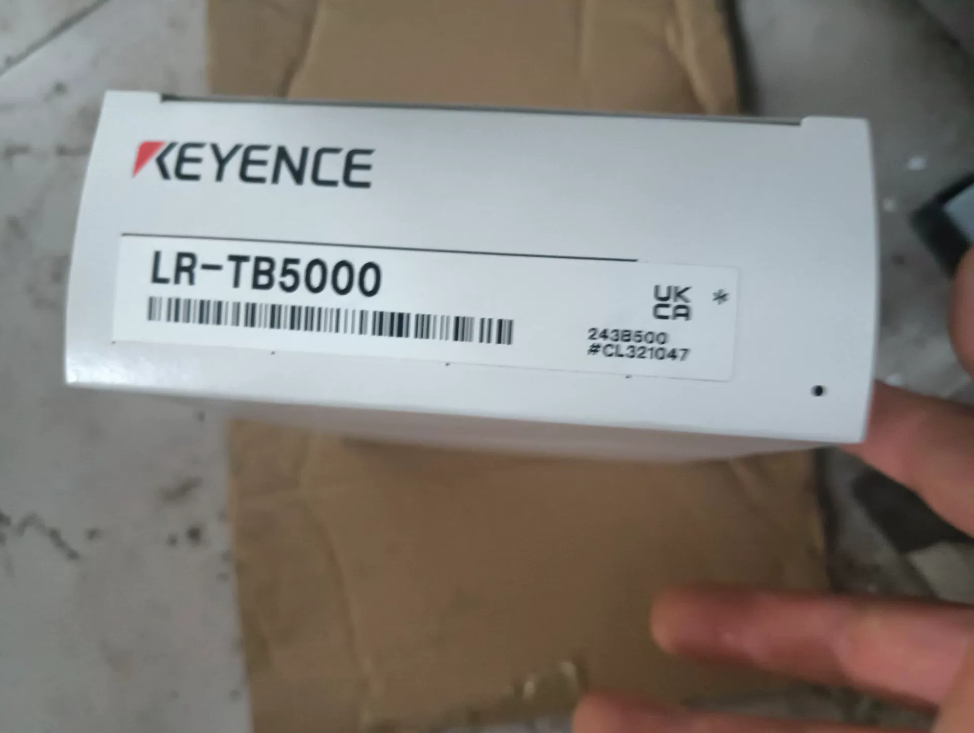


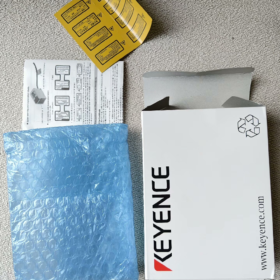
The KEYENCE LR-TB5000 is an amplifier-built-in TOF laser distance sensor of KEYENCE LR-T series. It is a diffuse-reflective model for long-range detection, equipped with a standard straight cable and classified as Laser Class 2. Adopting Time-of-Flight measurement principle, it delivers stable distance measurement and object presence detection within 60mm to 5000mm. Its performance is barely affected by the color, material or surface angle of targets. Featuring IP65/IP67 high ingress protection, it is widely applied in complex working conditions such as industrial automation production lines, logistics & warehousing and construction machinery. It is a mainstream choice for long-distance and high-reliability detection on industrial sites.
- Model Code Breakdown
Model: LR-TB5000
| Code Segment | Description |
| LR-T | Product Series: General series of amplifier-built-in TOF laser sensors |
| B | Detection Type: Diffuse-reflective type (no reflector required, directly detects target surfaces) |
| 5000 | Maximum standard detection distance: 5000mm (5m), tested with white matte paper as reference |
| No suffix | Cable outlet: Straight cable type; Laser Class: Class 2 (Compliant with IEC60825-1 and FDA(CDRH) standards) |
Supplementary rules for suffixes of the same series: Suffix `C` stands for M12 connector type; Suffix `CL` stands for M12 connector with low-power Laser Class 1.
- Core Technical Specifications
2.1 Detection Performance
| Parameter | Specification | Remarks |
| Standard Detection Range | 60 ~ 5000 mm | Display range: 50~5200mm; Tested on white matte paper |
| Light Source | Red semiconductor laser, wavelength: 660nm | Laser Class 2, Max. output power ≤1mW |
| Spot Diameter | Variable, ≤φ40mm | Spot size varies linearly with detection distance |
| Response Time | 5 selectable levels: 1ms / 10ms / 25ms / 100ms / 1000ms | Balance response speed and detection accuracy as required |
| Mutual Interference Rejection | Up to 4 units of the same model can be installed closely in a group | Function takes effect after interference prevention is enabled |
| Detection Logic | Multiple modes: Threshold judgment, window comparison, peak hold, valley hold, etc. | Visible configuration via onboard buttons |
| Timer Function | OFF / ON delay / OFF delay / One-shot pulse (optional) | Delay time can be customized via parameters |
2.2 Electrical Characteristics
| Parameter | Specification |
| Supply Voltage | 12~24 VDC (Peak-to-peak ripple ≤10%) |
| Current Consumption | ≤45mA (24VDC supply, no load) |
| Switch Output | Switchable NPN/PNP open collector; Rated below 30VDC, 50mA; NO/NC selectable |
| Analog Output | Selectable 4~20mA current / 0~10V voltage; Shared pin with external input |
| External Input | Supports remote tuning and mode switching; Shared pin with analog output |
| Communication Protocol | IO-Link v1.1 supported for remote parameter configuration and data acquisition |
2.3 Environmental & Physical Parameters
| Parameter | Specification |
| Ingress Protection | IP65 / IP67 (Compliant with IEC60529) |
| Operating Temperature | -20 ~ +55℃ (No freezing or condensation) |
| Operating Humidity | 35 ~ 85% RH |
| Ambient Light Resistance | Incandescent lamp / Daylight: ≤100000 lux |
| Vibration Resistance | 10~55Hz, double amplitude 1.5mm, 2 hours for each of X/Y/Z axes |
| Shock Resistance | 1000 m/s², 6 times for each of X/Y/Z axes |
| Main Material | Housing: Nickel-chromium plated zinc casting; Lens cover: Scratch-resistant coated PMMA; Cable: PVC |
| Weight | Approx. 125g (with standard cable) |
| Certifications | UL, CSA |
- Cross-model Comparison within the Series
| Model | Detection Range | Cable Outlet | Laser Class |
| LR-TB5000 | 60~5000mm | Straight cable | Class 2 |
| LR-TB5000C | 60~5000mm | M12 connector | Class 2 |
| LR-TB5000CL | 60~5000mm | M12 connector | Class 1 |
| LR-TB2000 | 60~2000mm | Straight cable | Class 2 |
- Pin Definition for Cable Version
The LR-TB5000 is fitted with a multi-core straight cable. Standard wire definitions are as follows:
| Wire Color | Function | Description |
| Brown | Power positive (+V) | 12~24VDC power input |
| Blue | Power negative (0V/GND) | Common ground for power and signals |
| Black | Switch control output | NPN/PNP selectable, normally open by default |
| White | Analog output / External input | Configurable: 4-20mA/0-10V analog output or external trigger input |
Note: Pin definition differs for 8-core extended cable. Analog output and external input cannot be used simultaneously; switch function via menu settings.
- Typical Applications
- Logistics & Warehousing: Occupancy detection for automated warehouse locations, obstacle ranging for AGVs, product presence confirmation on sorting lines. The long-range capability suits large-span warehousing spaces.
- Automotive Manufacturing: Workstation positioning on body conveyor lines, tooling fixture detection, position judgment for large stamping parts. Oil resistance and ambient light resistance adapt to harsh workshop conditions.
- Construction Machinery: Height limit for lifting platforms, position detection for mechanical arms, height measurement of material piles. Wide temperature tolerance and high protection level fit outdoor harsh environments.
- 3C & Packaging Industry: Production line part counting, roll material residual detection, height inspection of packaged goods. Compact body fits narrow installation spaces.
- Intelligent Equipment: Workpiece positioning on circular conveyors, stroke control for lifting devices, object detection at multi-station. Supports interference-free networking of multiple sensors.
- Troubleshooting Matrix
| Fault Phenomenon | Root Cause | Solutions |
| No indicator light and no output | 1. Wrong wiring or abnormal supply voltage | 1. Measure voltage between brown and blue wires to confirm 12~24VDC |
| 2. Excessive load pulling down voltage | 2. Check polarity to avoid reverse connection | |
| 3. Hardware failure | 3. Disconnect external load for independent test to rule out short circuit | |
| 4. Replace or return for repair if no response | ||
| Unstable detection & frequent false triggering | 1. Extreme reflectivity (pure black / mirror surface) | 1. Adjust mounting angle to avoid specular reflection |
| 2. Target out of stable detection range | 2. Ensure target is within 60~5000mm range | |
| 3. Strong light directly irradiating the lens | 3. Install hood to block direct sunlight or strong light | |
| 4. Signal interference between multiple sensors | 4. Enable interference prevention and stagger sensor positions | |
| Large detection deviation & low accuracy | 1. Benchmark tuning not completed | 1. Perform auto-tuning with reference surface |
| 2. Excessively short response time | 2. Extend response time appropriately for better stability | |
| 3. Excessive tilt angle of target surface | 3. Adjust installation to keep laser perpendicular to target | |
| Abnormal analog output | 1. Incorrect pin function configuration | 1. Enter I/O menu and confirm analog output mode |
| 2. Mismatched load impedance | 2. Follow impedance requirement: ≤500Ω for current output, ≥10kΩ for voltage output | |
| 3. Uncalibrated analog range | 3. Complete two-point calibration for analog output | |
| Error code displayed | 1. Temporary internal system fault | 1. Power cycle to eliminate temporary anomaly |
| 2. Incorrect parameter settings | 2. Restore factory default parameters | |
| 3. Laser module hardware failure | 3. Contact after-sales service if error persists |
- Prohibited Operations & Safety Rules
- Laser Safety: Never look directly into the laser emitter or aim laser beam at human eyes. Long-term exposure to Class 2 laser may cause eye damage.
- Environmental Requirements: Do not use in explosive gas atmosphere. Do not immerse the unit in liquid for long term. IP67 is only for temporary water splash and dust protection.
- Electrical Requirements: Do not apply voltage beyond 12~24VDC. Do not connect switch output directly to AC power. Avoid wiring together with power cables to prevent electromagnetic interference.
- Installation Requirements: Do not mount in areas with vibration or shock exceeding specifications. Do not block the lens or heat dissipation structure. Do not attach stickers or coverings on the lens.
Detection Principle of KEYENCE LR-TB5000 Diffuse-Reflective Sensor
The LR-TB5000 is a diffuse-reflective pulsed Time-of-Flight (TOF) laser sensor. Its detection principle consists of two core parts: the diffuse-reflective optical path structure (determines light propagation and detection mode) and the pulsed TOF ranging algorithm (core logic for distance calculation). Combined design enables long-distance stable detection without reflector, with minimal influence from target characteristics.
7.1 Working Mechanism of Diffuse-Reflective Optical Path
This integrated sensor adopts combined transmitter and receiver design. The working process is as below:
- The internal laser transmitter emits collimated red laser pulses forward through the lens.
- When laser hits the target surface, light scatters in all directions (diffuse reflection) due to the rough surface of most industrial workpieces.
- Part of the scattered light travels back along the original path, enters the receiving lens and is captured by the internal photoelectric receiver.
Essential difference from traditional diffuse photoelectric sensors:
Conventional diffuse sensors judge object presence by received light intensity. Detection fails easily for dark absorptive objects, high-gloss mirrors or long-distance targets due to insufficient or excessive returned light.
The LR-TB5000 calculates distance purely based on time signal of reflected light. It works normally as long as return light reaches the minimum threshold to trigger timing, so it is almost unaffected by target color, material and surface angle.
7.2 Core Principle of Pulsed TOF Ranging
TOF (Time of Flight) is the core technology. It calculates absolute distance by measuring the round-trip travel time of laser beam between sensor and target.
Formula:
$$ d = \frac{c \times \Delta t}{2} $$
$d$: Actual distance between sensor and target
$c$: Speed of light in air (approx. $3\times10^8\ \text{m/s}$)
$\Delta t$: Round-trip time of laser pulse from emission to reception
Divided by 2: Laser travels a round path (emission → reflection → reception)
Working procedure:
- The driving circuit controls laser diode to emit nanosecond narrow pulses, meanwhile the high-speed timing circuit starts counting.
- Reflected laser is converted into electrical signal by high-sensitivity photodiode, which stops the timing circuit.
- The built-in MCU processes time difference data with temperature compensation and ambient light correction, then converts data into real-time distance value.
- The calculated distance is compared with preset threshold and detection window. The sensor outputs corresponding switch/analog signals, and raw distance data can be transmitted via IO-Link.
7.3 Key Technical Optimizations
To realize stable 5-meter diffuse detection while complying with Class 2 laser safety standards, the sensor adopts multiple optimized designs:
- Narrow pulse & high peak power laser
Nanosecond ultra-narrow pulse driving technology delivers high instantaneous power and low average power. It meets Class 2 eye safety requirements and ensures identifiable signal from weak long-distance reflected light.
- High-SNR receiving circuit
Equipped with band-pass optical filter and dedicated signal processing chip, it only responds to matched laser pulses. It effectively suppresses interference from incandescent light and daylight, and operates stably under ambient light up to 100,000 lux.
- Temperature drift compensation algorithm
Built-in temperature sensor corrects deviation caused by temperature change on light speed and timing circuit, maintaining consistent detection accuracy within -20~55℃.
- Mutual interference suppression
When multiple sensors are installed closely, enable interference prevention function. Laser pulses will be automatically staggered to avoid cross-signal misjudgment. Up to 4 sensors can work in a group.
7.4 Application Limits of Diffuse-Reflective Detection
Restrictions based on working principle:
Stable detection: Most matte, rough and semi-gloss workpieces, regardless of color (black/white/colored) and material (metal/plastic/wood).
Limited detection: Steeply tilted full mirror surfaces (all light reflected away from receiver), thick black flocked materials (return light below threshold), transparent/translucent objects (laser penetrates or refracts).
Minimum blind zone: 60mm. Targets within 60mm cannot be detected normally.
NH42-63-318x560.png "CHINT PC-type automatic transfer switches (ATS)NH42-63/4SZ")