Contactor,circuit breaker,sensor,Encoder,PLC,Converter

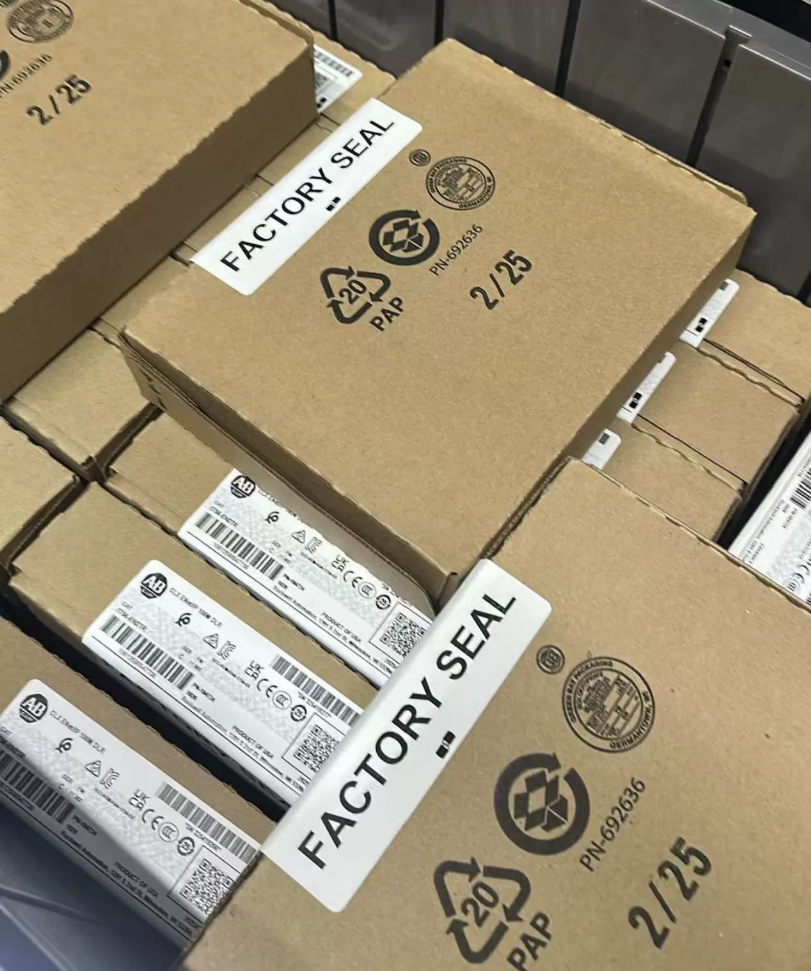

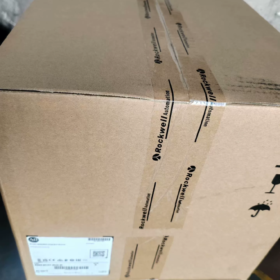
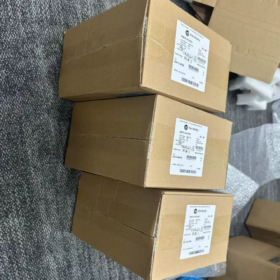
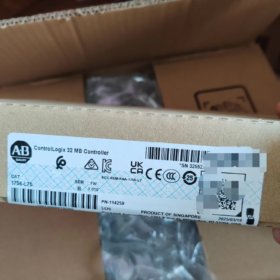
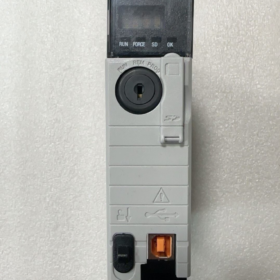
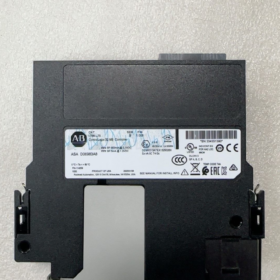
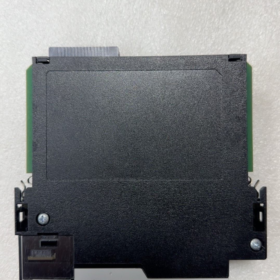
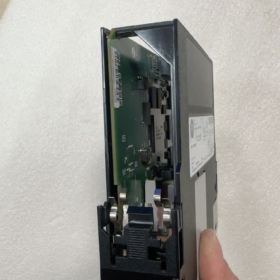
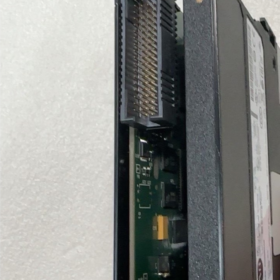
Full Catalog Number: 1756-L75
Series: ControlLogix Logix5570 Series
Positioning: Flagship standard CPU within L7x family; variant without embedded Ethernet port
Lifecycle Status: Active Mature (mature phase, continuously available; upgraded alternative models exist)
Programming Software: Minimum RSLogix 5000 V18; Recommended Studio 5000 Logix Designer V21~V34
⚠️ Distinction: 1756-L75 has no on-board Ethernet. Select 1756-L75EROM if dual embedded Ethernet ports are required.
- Core Hardware Specifications
| Parameter Item | Technical Index |
| User Memory | 32 MB |
| I/O Memory | 0.98 MB |
| Maximum Discrete I/O | 128,000 points |
| Maximum Analog I/O | 4,000 points |
| Maximum Motion Axes (CIP Motion/Kinetix) | 100 axes |
| Local Ports | USB2.0 (programming & download), SD card slot |
| Data Retention During Power Loss | Capacitive Energy Storage Module 1756-ESMCAP (battery-free, eliminates leakage risk) |
| Standard Storage Media | 1784-SD1 (1GB SD card); Optional upgrade: 1784-SD2 (2GB) |
| Power Consumption | 2.5 W; 800 mA @ 5.1 V backplane |
| Supported Chassis | Standard 1756-A4/A7/A10/A13/A17 backplanes |
Environmental Specifications
Operating Temperature: 0 ~ +60 °C
Storage Temperature: -40 ~ +85 °C
Operating Vibration: 2g (10–500Hz)
Certifications: UL, CSA, CE, ATEX, Class1 Div2
- Catalog Number Decoding
1756-L75
- `1756`: ControlLogix hardware platform
- `L`: Logix controller CPU
- `7`: 5th-generation ControlLogix processor (L7x series)
- `5`: Performance grade (L71<L72<L73<L74<L75)
Derivative Model Comparison
1756-L75: No embedded Ethernet
1756-L75EROM: Embedded dual-port EtherNet/IP switch, supports DLR ring network
- L7x Series Performance Comparison Table
| Catalog No. | User Memory | Max Motion Axes | Embedded Ethernet Port |
| 1756-L71 | 2 MB | 16 | No |
| 1756-L72 | 4 MB | 32 | No |
| 1756-L73 | 8 MB | 48 | No |
| 1756-L74 | 16 MB | 64 | No |
| 1756-L75 | 32 MB | 100 | No |
- Communication Expansion Options (Critical Note: No Embedded Ethernet)
Only USB diagnostic port available locally. Network communication requires dedicated communication modules:
- EtherNet/IP: 1756-EN2T / EN3TR
- ControlNet: 1756-CN2R
- DeviceNet: 1756-DNB
- Third-party protocols: 1756-MVI, Modbus communication modules
Selection Tip: Prioritize L75EROM for new projects to save backplane slots occupied by additional EN2T modules.
- Upgrade Replacement Solution
The L75 is a mature legacy model. Next-generation upgrade platform: 1756-L8xE Series
Recommended direct replacement: 1756-L85E (40MB memory, dual embedded Ethernet ports)
Upgrade Precautions:
- Adapt Studio5000 project to matching firmware revision;
- Backplane, power supply and I/O modules are fully compatible without replacement;
- Motion control programs and tag architecture remain compatible; minor adjustment of communication parameters required.
- Standard Package & Optional Accessories
✅ Items Included in Standard Delivery
1756-L75 CPU assembly
Key switch
1784-SD1 (1GB SD card)
❌ Items to be Ordered Separately (Not Included)
- Energy storage module: 1756-ESMCAP (mandatory for RAM data retention upon power failure)
- Communication modules: EN2T / CN2R etc.
- USB programming cable: 1756-CP3
- High-capacity SD card: 1784-SD2
- Typical Application Scenarios
Multi-axis synchronous motion control for large production lines (packaging, rubber industry, automotive welding & assembly workshops)
PlantPAx large-scale process control (chemical industry, water treatment, energy sector)
Distributed large-scale remote I/O systems
Projects requiring up to 100 axes of Kinetix motion control
- Common Faults & Maintenance Guidelines
- RUN light flashing, controller fails to run
Check installation and service life of 1756-ESMCAP; inspect SD card connection
- Program loss after power cycle
Missing 1756-ESMCAP; back up critical programs to SD card as redundancy
- Firmware update failure
Avoid power interruption during flashing; use USB instead of network for firmware download preferably
- Motion instruction scan timeout
100 axes represents theoretical maximum. Deploy multiple CPUs for high-density servo applications to share load.
- Selection Restrictions (Not Recommended Scenarios)
- Space-limited chassis with insufficient slots: Select L75EROM instead of bare L75
- Standard model cannot operate below 0°C; no XT wide-temperature variant available for L75 series
- Safety-related applications: Adopt GuardLogix family (1756-L7xS). Standard L75 cannot be used directly.
Application Fields of Rockwell Automation 1756-L75 (Logix5575)
Precondition Positioning
1756-L75: High-end ControlLogix controller with 32MB user memory, supporting maximum 100 axes of CIP Motion; no embedded Ethernet port. Ideal for large-scale logic processing, multi-axis synchronization, distributed remote I/O and multi-protocol communication for medium-to-large automated production lines and process control systems.
Limitation: Requires additional modules such as 1756-EN2T for networking. 1756-L75EROM is widely adopted in new projects as alternative.
- Discrete Manufacturing (Mainstream Applications)
- Automotive Industry
Vehicle welding workshops: Coordinated control of spot welding robots, automatic fixture switching, interlocking of conveyor rollers, multi-station synchronization
Final assembly production lines: Chassis assembly lines, interior conveying lines, tire assembly, EMS monorail for vehicle body transportation
Stamping workshops: Linkage control of large stamping units, pallet handling, press synchronization
Power battery production lines: Cell assembly, module PACK lines, pole piece cutting, multi-layer synchronous servo control
✅ Advantage: Supports up to 100 motion axes, compatible with large numbers of Kinetix servos for high-precision synchronization and electronic cam functions.
- Packaging & Rubber Machinery
High-speed food packaging lines, blow molding equipment, extrusion production lines, rubber vulcanization lines
Film stretching production lines, tire building machines, auxiliary lines for rubber mixing
Applicable scenarios: Multi-servo flying shear, electronic cam, closed-loop tension control, multi-unit linkage.
- Logistics & Warehouse Automation
Automated high-bay warehouse stacker clusters, cross-belt sorting systems, high-speed conveyor sorting lines
Auxiliary conveying for container terminals, centralized control of multiple production lines in large logistics distribution centers
Features: Massive discrete I/O points, coordinated scheduling of multiple independent production lines, communication with barcode scanners and weighing equipment.
- Metal Processing & Construction Machinery Equipment
Auxiliary lines for large CNC equipment, steel heat treatment lines, post-extrusion processing of aluminum profiles
Automated processing lines for construction machinery components, welding workstation clusters
- Process Industry (Standard Platform for PlantPAx)
ControlLogix serves as Rockwell’s mainstream hybrid control platform supporting both logic and process regulation
- Water Treatment
Municipal sewage and industrial wastewater treatment plants: Aeration systems, valve interlocking in sedimentation tanks, chemical dosing regulation, centralized control of sludge dewatering units.
- Energy Industry
Auxiliary systems of small thermal power plants, biomass energy units, auxiliary control systems for photovoltaic & energy storage facilities, auxiliary control for oil & gas surface gathering systems.
⚠️ Redundant controllers are generally adopted for main processes of large petrochemical plants (1756-L75 applicable to plant auxiliary control; redundant architecture recommended for primary control).
- Fine Chemical & Pharmaceutical Industry
Bulk production lines for raw pharmaceutical materials, batch control of mixing reactors, conveying systems in clean areas;
Note: Standard 1756-L75 is prohibited for Safety Instrumented System (SIS) applications. GuardLogix safety controller 1756-L75S shall be deployed instead.
III. Infrastructure & Special Equipment
- Ventilation, lighting and drainage pump cluster control systems for municipal tunnels
- Auxiliary control for port and terminal handling equipment, bulk material conveyor clusters
- Central control systems for large central air-conditioning and district energy stations
- Paper & Printing Industry
Auxiliary drive systems for high-speed paper machines, corrugated cardboard production lines, large commercial printing equipment;
Massive servo tension control, multi-section speed synchronization, closed-loop control for winding/unwinding reels, perfectly matching the large memory and multi-axis capability of 1756-L75.
Scenarios Not Recommended for 1756-L75 (Selection Pitfall Guide)
- Small standalone machinery (less than 10 axes, limited I/O count): High cost. CompactLogix L3 series preferred.
- Chassis with limited slots: 1756-L75 requires extra communication modules occupying slots; switch to 1756-L75EROM.
- Functional safety applications (safety interlock, SIL2/3 requirements): Adopt GuardLogix safety CPU.
- Outdoor wide-temperature low-temperature environment: No XT wide-temperature variant for L7x series.
- Primary process control requiring hot standby CPU redundancy: Deploy controllers with redundancy kits.
Quick Selection Criteria for 1756-L75
Select this model if any two or more conditions below are satisfied:
- Servo motion axes ranging from 32 to 100, requiring CIP Motion synchronization;
- Total discrete I/O >3,000 points with extensive recipe management and data logging requirements;
- Simultaneous networking of EtherNet/IP + ControlNet + Modbus multi-protocol systems;
- Centralized scheduling of multiple independent production lines within one ControlLogix chassis;
- Long-term buffering of production data, large tag arrays and complex arithmetic operations.
Standard Complete System Bill of Materials for 1756-L75 Projects
Applicable Scenario: Medium-sized multi-axis automated production line (≤100 axes Kinetix CIP Motion, distributed remote I/O, EtherNet/IP networking)
Critical Premise: 1756-L75 has no embedded Ethernet, dedicated Ethernet communication module is mandatory
Two schemes: [Standard Non-Redundant Scheme|High-Availability Redundant Scheme], directly applicable for bidding documents and technical specifications
Preconditions
- Programming Software: Studio 5000 Logix Designer V28~V34
- Recommended Stable Firmware Version: V30
- Mandatory Reminder: 1756-ESMCAP energy storage module cannot be omitted for RAM data retention upon power loss
- Standard SD card: 1784-SD1(1GB); upgrade to 1784-SD2(2GB) for mass recipe and data recording
Scheme 1: Standard Non-Redundant Scheme (Most Common, Recommended for Conventional Production Lines)
Selected Chassis: 1756-A10 (10-slot chassis with spare slots for expansion)
| No. | Catalog No. | Description | Qty | Function Description |
| 1 | 1756-L75 | Logix5575 Controller | 1 | Main CPU, 32MB memory, supports up to 100 motion axes |
| 2 | 1756-ESMCAP | CPU Energy Storage Module | 1 | Preserve tag data during power failure, alternative to lithium battery |
| 3 | 1784-SD1 | 1GB SD Memory Card | 1 | Program backup, fault log and recipe storage |
| 4 | 1756-PA72 | AC Power Supply Module 120/240VAC | 1 | Chassis power supply; for sites with 380V converted to 220V AC |
| Alternative | 1756-PB72 | DC Power Supply Module 24VDC | 1 | Replace PA72 for control cabinet DC power supply scenarios |
| 5 | 1756-EN2T | EtherNet/IP Communication Module | 1 | Networking for HMI, touchscreens, remote I/O and servos |
| ⚠️Mandatory for L75 without on-board Ethernet | ||||
| Optional Upgrade | 1756-EN3TR | Gigabit EtherNet/IP Module | 1 | Upgrade for applications with over 60 servos and high-speed motion control |
| 6 | 1756-A10 | 10-Slot ControlLogix Chassis | 1 | Mount CPU, power supply and communication modules |
| 7 | 1756-CP3 | USB Programming Cable | 1 | Local USB connection between PC and CPU for program download |
Local I/O Module Examples (Adjust Quantity on Demand)
| No. | Catalog No. | Description |
| 8 | 1756-IB16 | 16-point DC24V Digital Input Module |
| 9 | 1756-OB16E | 16-point DC24V Transistor Output Module |
| 10 | 1756-IF16 | 16-channel Analog Input Module (4~20mA) |
| 11 | 1756-OF8 | 8-channel Analog Output Module |
Distributed Remote I/O Extension (via EN2T Ethernet)
1734-AENTR POINT I/O Adapter + various POINT I/O modules (preferred for scattered field points)
Third-party Protocol Expansion (Optional)
1756-MVI: Modbus RTU/TCP Master Module (connect inverters and instruments)
1756-DNB: DeviceNet Module (for legacy equipment retrofitting projects)
Scheme 2: High-Availability Redundant Scheme (Process Industry, Zero Unplanned Shutdown Requirement)
Applicable: Water treatment, energy auxiliary control, continuous production lines
Mandatory components for ControlLogix redundancy: Redundant chassis, synchronization modules, redundant power supplies
| No. | Catalog No. | Description | Qty |
| —| —| —| —|
| 1 | 1756-L75 | Controller | 2 | Primary CPU + Standby CPU |
| 2 | 1756-ESMCAP | Energy Storage Module | 2 | One for each CPU |
| 3 | 1784-SD1 | SD Memory Card | 2 |
| 4 | 1756-PA72 | AC Power Supply Module | 2 | Dual redundant power feeding |
| 5 | 1756-A17 | 17-slot Redundant Chassis | 1 |
| 6 | 1756-RM2 | Redundancy Synchronization Module | 2 | Hot synchronization between primary and standby CPU |
| 7 | 1756-EN2T | EtherNet/IP Module | 2 | Dual communication network for primary/standby system |
Scheme3: Compact Retrofit Scheme (Legacy Chassis Upgrade, Slot Constraints Warning)
⚠️ Risk Notice: If chassis slots ≤7, strongly recommend switching to 1756-L75EROM (dual embedded Ethernet)
Eliminates requirement for 1756-EN2T and saves one chassis slot.
Typical Motion Control Configuration (1756-L75 + Kinetix Servo System)
Communication Architecture: CPU →1756-EN2T → EtherNet/IP → Kinetix 5500/5700 Servo Drives
- Kinetix 5700 Servo Drives (CIP Motion synchronization supported)
- 2198-CAB-EP0xx Ethernet servo cables
- 2198-Hxxx Servo Power Modules
Capacity Reminder: 100 axes represents theoretical maximum. Engineering practice recommends ≤80 axes per single CPU to avoid extended scan cycle and synchronization jitter.
Selection Taboos & Common Pitfalls (Directly Quotable in Technical Specifications)
- ❌ Procure only 1756-L75 without ordering 1756-ESMCAP → Loss of tag data after power cycle
- ❌ Confuse L75 and L75EROM; fail to reserve slots for EN2T leading to on-site networking failure
- ❌ Deploy over 80 servos under single CPU, resulting in motion instruction scan timeout and synchronization oscillation
- ❌ Use standard L75 for safety equipment and safety interlock logic; select 1756-L75S (GuardLogix) for safety applications
- ❌ Adopt RSLogix5000 V17 or older software which cannot recognize 1756-L75 controller
Recommended HMI & Supervisory System Matching
- HMI: PanelView Plus 7 / 5000 series touchscreen (direct EtherNet/IP communication)
- SCADA: FactoryTalk View SE / ME
- Data Acquisition: FactoryTalk Historian
Standard Technical Description (Direct Copy for Tender Documents)
The control system adopts Rockwell Automation ControlLogix platform with 1756-L75 high-performance controller. Equipped with 32MB user memory, the controller supports maximum 100 axes of CIP Motion servo synchronization control. Independent EtherNet/IP communication modules are configured to realize networking of human-machine interfaces, remote I/O and servo drives. An energy storage module is deployed to guarantee data retention upon power failure. The whole system supports distributed I/O architecture and is compatible with Modbus and other third-party protocols, meeting the demands of production line logic control, multi-axis motion synchronization and process regulation.
NH42-63-318x560.png "CHINT PC-type automatic transfer switches (ATS)NH42-63/4SZ")