Contator,disjuntor,sensor,Codificador,CLP,Conversor


Detalhamento do código do modelo
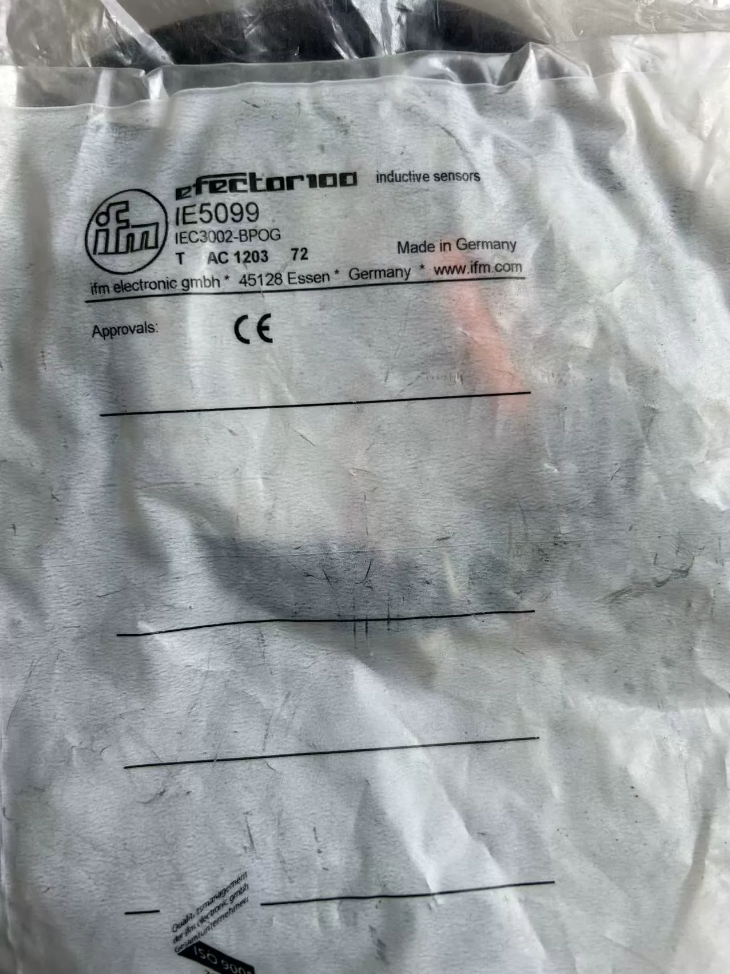
IE5099 = IEC3002-BPOG
(IE5099 é o número da peça do pedido; IEC3002-BPOG significa o modelo de especificação de série)
- CEI: Série de proximidade indutiva sensores com rosca plástica M8 IFM
- 3002: Distância de detecção nominal Sn = 2 milímetros
- B: 3-fio tipo DC
- P: Saída PNP
- Ó: Normalmente aberto (NÃO)
- G: Cabo reto de PVC (2m como comprimento padrão de fábrica; 6variante m disponível como IE5100)
- Especificações básicas de hardware
2.1 Dimensões Mecânicas
Especificação de thread: M8×1,0, Carcaça de plástico PBT
Comprimento total: 35 milímetros, Design de montagem não embutida
Acessórios padrão: 2 pedaços de porcas de travamento M8
Cabo: 3×0,14 mm² Bainha de PVC, comprimento padrão 2 eu
Peso líquido: 43.1 g
Classe de proteção: IP67 (impermeável e à prova de poeira, permite lavagem de curto prazo)
2.2 Parâmetros Elétricos (Padrões Oficiais de Fábrica IFM)
| Item | Valor do parâmetro |
| Tensão de alimentação | CC 10~36V (compatível com sistemas industriais DC24V padrão) |
| Consumo de corrente sem carga | <15 mA (no 24 V condição de operação) |
| Tipo de saída | 3-fio DC PNP normalmente aberto (NÃO) |
| Máx.. Corrente de carga | 200 mA (pode acionar diretamente entradas PLC e bobinas de relé) |
| Queda de tensão de saída | ≤2,5V |
| Frequência de comutação | 800 Hz (adequado para contagem em alta velocidade e posicionamento de transportadores) |
| Funções de proteção | Proteção contra polaridade reversa, proteção contra curto-circuito, proteção contra sobrecarga |
| Distância de detecção nominal Sn | 2 milímetros |
| Faixa operacional estável | 0~1,6mm (zona de detecção confiável) |
| Tolerância Real Sr. | 2 ±10%mm |
| Faixa de histerese | 1%~15% da distância nominal (design anti-jitter) |
| Deslocamento do ponto de comutação | ±10% Sr. |
2.3 Fatores de correção de materiais (Detecção de atenuação de distância)
Aço suave St37: 1.0 (padrão de referência)
Aço inoxidável: 0.7
Latão: 0.4
Alumínio: 0.3
Cobre: 0.2
2.4 Condições Ambientais de Operação
Temperatura operacional: -25℃ ~ +85℃
Temperatura de armazenamento: -25℃ ~ +90 ℃
Padrões EMC: EM 60947-5-2, EN55011 Classe B
- Definição de fiação padrão de 3 fios (Código de cores uniforme global)
| Cor do fio | Definição | Instrução de fiação |
| BN Marrom | Fonte de alimentação positiva DC+ | Conecte ao trilho positivo de 24 V e ao terminal comum de 24 V do módulo PLC |
| BU Azul | CC- Fonte de alimentação negativa | Conecte-se a 0V / aterramento de energia |
| BK Preto | Saída de sinal PNP | Conecte ao terminal de entrada digital PLC (alto ativo) |
Lógica de fiação PNP
Nenhum alvo de metal por perto: Fio de sinal preto = 0 V, nenhum sinal de entrada para PLC
Metal entra na zona de detecção: Fio de sinal preto ≈ 24 V, PLC recebe sinal de disparo
- Especificações de montagem (Requisitos obrigatórios para instalação não embutida)
- Espaço livre de montagem (Evite interferência mútua)
Dois sensores montados lado a lado no mesmo eixo: Distância central ≥12 mm
Montagem lateral adjacente: Folga ≥8 mm
- Controle de distância de detecção
Mantenha a distância entre o alvo de metal e a face de detecção dentro de 0~1,6 mm. A perda de sinal ocorrerá se a distância exceder 1.6 milímetros.
- Torque de aperto
Torque de aperto para porcas M8: 0.8~1,2 N·m. Não aperte demais para evitar rachaduras nos fios de plástico.
- Regras de separação de fiação
Mantenha uma folga mínima de 30 cm entre os cabos dos sensores e os cabos de potência para inversores / contatores. Passe os fios perpendicularmente ao cruzar para reduzir a interferência.
- Proteção de Cabo
Evite dobrar e esmagar a longo prazo; reserve um 5 cm de folga nas juntas dos cabos.
- Cenários de aplicação
- Detecção de presença de peças em linhas de montagem, contagem de transportadores, posicionamento de indexação de alta velocidade (800 Operação de alta frequência Hz)
- Detecção de presença de metal em máquinas-ferramentas automatizadas, feedback da posição do pistão do cilindro
- Máquinas de embalagem, triagem logística, contagem de materiais em equipamentos de transporte
- Compatível com entradas digitais de PLCs de série completa: Omron CJ/CP/NJ, Siemens S7, Mitsubishi FX/Q
- Comparação de modelos alternativos entre séries
| Modelo | Distância de detecção | Tipo de saída | Comprimento do cabo | Diferença |
| IE5099 IEC3002-BPOG | 2 milímetros | PNP NÃO | 2 eu | Modelo padrão de uso geral |
| IE5100 IEC3002-BPOG/6M | 2 milímetros | PNP NÃO | 6 eu | Cabo longo para fiação de longa distância |
| IE5098 IEC3002-BPKG | 2 milímetros | PNP NC normalmente fechado | 2 eu | Para aplicações que requerem sinal NC |
| IE5089 IEC3002-BNOG | 2 milímetros | NPN NÃO | 2 eu | Substituição para sistemas de entrada PLC tipo NPN |
- Matriz de solução de problemas
| Fenômeno de falha | Causa raiz | Solução |
| LED amarelo apagado e sem saída de sinal quando o alvo metálico se aproxima | 1. Fios de alimentação marrons/azuis invertidos; 2. Tensão de alimentação abaixo 10 V; 3. Cabo quebrado | Verifique a polaridade da fiação, medir a alimentação DC24V, inspecionar segmentos de cabo quanto a quebras |
| O LED amarelo permanece aceso mesmo sem alvo de metal | 1. Espaço de montagem excessivamente curto; 2. Interferência dos braquetes metálicos circundantes; 3. Quebra do transistor de saída interna | Ampliar folga de montagem, remover obstruções metálicas circundantes, substitua o sensor |
| Cintilante, sinal intermitente | 1. O cabo passa perto de fontes de alta potência, causando interferência; 2. A velocidade de movimento alvo excede 800 Hz; 3. Porcas soltas causando desvio de distância | Coloque o núcleo de ferrite no cabo para blindagem, reduzir a velocidade de movimento, reaperte e prenda as porcas |
| Nenhum sinal de entrada do PLC, mas o LED amarelo do sensor funciona normalmente | 1. Conexão do fio de sinal preto solto; 2. Polaridade incompatível do terminal comum de entrada do PLC; 3. Corrente de carga acima 200 mA | Aperte os terminais do fio preto, confirme o terminal comum de 24 V para módulos PNP, adicione relé intermediário para expansão de carga |
| Nenhuma luz indicadora LED no sensor | Circuito aberto no circuito da fonte de alimentação, fusível de energia queimado | Inspecione o disjuntor DC24V e a fiação do bloco terminal |
- Instalação rigorosa & Proibições de uso
- Não incorpore nivelado em suportes de metal. Este modelo foi projetado exclusivamente para montagem não embutida. A incorporação reduzirá drasticamente a distância de detecção ou causará falha completa.
- Não exceda a corrente de carga total de 200 mA; caso contrário, o transistor de saída queimará.
- Não mergulhe o cabo em óleo, ácido forte ou álcali por longos períodos; Os cabos de PVC não são resistentes a meios altamente corrosivos.
- Não conecte diretamente à rede elétrica AC220V; apenas fonte de alimentação DC 10~36V é suportada.
- Não agrupe vários cabos de sensor com cabos de alimentação para roteamento paralelo de longa distância no mesmo entroncamento.
- Lista de embalagem padrão
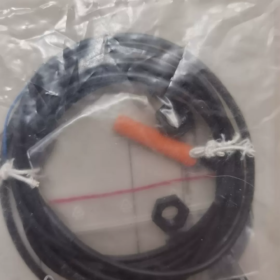
- 1 × Unidade principal do sensor IE5099 (com cabo de PVC de 3 núcleos de 2m)
- 2 × Porcas de fixação de plástico M8
- Manual de operação original do fabricante, Documentos de certificação CE
Especificação completa de frequência de comutação para IFM IE5099 (IEC3002-BPOG)
- Parâmetro avaliado oficial
Frequência de comutação padrão: 800 Hz (valor nominal sob operação DC)
Definição: O sensor pode completar no máximo 800 ciclos completos de comutação por segundo: metal entra na zona de detecção → saída LIGADA; zona de detecção de folhas de metal → saída DESLIGADA.
Conversão do Ciclo de Resposta
Ciclo de comutação completo único = 1 ÷ 800 = 1.25 EM
O sensor apresenta tempo de resposta total ultrarrápido, incluindo detecção interna e alternância de saída, ideal para aplicações de detecção dinâmica de alta velocidade.
- Principais parâmetros dinâmicos de suporte (Crítico para operação estável de alta frequência)
- Histerese: 1%~15% Sr.
Sr = 2 milímetros (distância de detecção nominal), faixa de histerese: 0.02~0,3mm
Função: Elimine o disparo frequente de sinais falsos causados por vibrações mecânicas e pequenos tremores, equilibrando resposta de alta velocidade e desempenho anti-interferência.
- Zona de detecção eficaz estável: 0~1,6mm
A sensibilidade de detecção cai drasticamente além 1.6 milímetros, levando à perda frequente de pulso sob condições de trabalho de alta frequência.
- Capacidade de condução de saída
Máx.. corrente de carga 200 mA. Pode ser conectado diretamente aos terminais de entrada de alta velocidade do CLP sem expansão de relé intermediário para contagem em alta velocidade.
- Cálculo da velocidade linear do equipamento em 800 Hz (Referência de seleção no local)
Exemplo: Defletores de metal dispostos uniformemente no transportador, cada defletor 1 mm de espessura com 1 mm de folga entre peças adjacentes
Largura total de uma peça de metal mais folga = 2 milímetros
Máx.. número de peças que passam por segundo = 800
Velocidade linear = 800 × 2 milímetros = 1600 mm/s = 1.6 EM
Atende aos requisitos para correias transportadoras, placas de indexação, posicionamento de estampagem de alta velocidade e contagem síncrona do codificador;
Velocidades lineares mais altas são possíveis com peças mais finas e folgas menores.
- Limitações de operação de alta frequência & Precauções
- A atenuação da distância de detecção por material metálico reduz o máximo. Frequência de comutação estável
Aço macio: Fator de correção 1.0, operação estável em velocidade total em 800 Hz
Aço inoxidável (0.7), Latão (0.4), Alumínio (0.3), Cobre (0.2): A distância de detecção efetiva diminui, resultando em menor frequência de comutação estável real. Reduza a folga de montagem adequadamente.
- A interferência na fiação degrada a frequência efetiva
Roteamento paralelo de cabos de sensores com inversor / cabos de alimentação do contator sem aterramento de blindagem introduzem ruído de alta frequência, causando perda de pulso e oscilação do sinal.
Contramedida: Mantenha uma folga de ≥30 cm entre os cabos de sinal e de alimentação, cruzar fios perpendicularmente, implementar aterramento de blindagem de ponto único dentro de gabinetes de controle.
- Carga excessiva é proibida
Comutações freqüentes de alta velocidade com corrente de carga se aproximando do 200 O limite superior de mA causa aquecimento de saída e redução da frequência máxima de comutação. Completo 800 O desempenho Hz pode ser mantido ao acionar entradas de CLP de baixa corrente (<10 mA).
- Restrições do regulamento de montagem
Este sensor é do tipo não embutido com rosca plástica M8. A incorporação em bases metálicas enfraquece os campos magnéticos e prejudica gravemente a resposta de alta frequência. A distância central entre dois sensores lado a lado deve ser ≥12 mm para evitar diafonia de campo magnético e queda de pulso.
- Comparação horizontal entre séries (Referência para seleção de alta frequência)
| Modelo | Frequência de comutação | Tipo de habitação | Diferença de aplicação |
| IE5099 IEC3002-BPOG | 800 Hz | Cabo reto de rosca plástica M8 | Linhas de montagem gerais de média-alta velocidade, detecção de posição do cilindro |
| IFB3002-BPKG (Metal M12) | 1400 Hz | Tipo de conector de rosca metálica | Indexação de velocidade ultra-alta, contagem em alta velocidade |
| IEK3002-BBPOG | 1000 Hz | Rosca metálica M8 | Velocidade equilibrada e resistência ao impacto mecânico |
- Cenários típicos de aplicações de alta frequência
- Contagem de peças em alta velocidade para embalagens & correias transportadoras de logística
- Feedback de posição de alta velocidade para mesas de indexação rotativas e cames
- Confirmação rápida de posição para equipamentos de estampagem e manipuladores robóticos
- Aquisição de pulso para módulos contadores de alta velocidade PLC (CJ1W-CT021, Entradas de alta velocidade Siemens 224XP)
- Diagnóstico de falhas de alta frequência (Frequência de comutação insuficiente / Perda de pulso)
| Fenómeno | Causa raiz | Solução |
| Contagem normal em baixa velocidade, perda de pulso em alta velocidade | 1. Folga de montagem acima 1.6 milímetros; 2. Atenuação severa de alvos de alumínio/cobre; 3. Interferência de cabo | Reduza a lacuna de detecção; substituir alvos por aço; fiação de sinal e alimentação separada |
| LED amarelo piscando e saída instável sob 800 Operação Hz | Carga atual se aproximando 200 limite superior de mA | Instale o relé intermediário em série para diminuir a carga de saída do sensor |
| Interferência mútua entre vários sensores executando detecção de alta frequência em uma trilha | Distância do centro de montagem menor que 12 milímetros | Aumente o espaçamento central dos sensores lado a lado |


NH42-63-318x560.png "Chaves de transferência automática tipo PC CHINT (ATS)NH42-63/4SZ")