Contator,disjuntor,sensor,Codificador,CLP,Conversor

- Informações Básicas
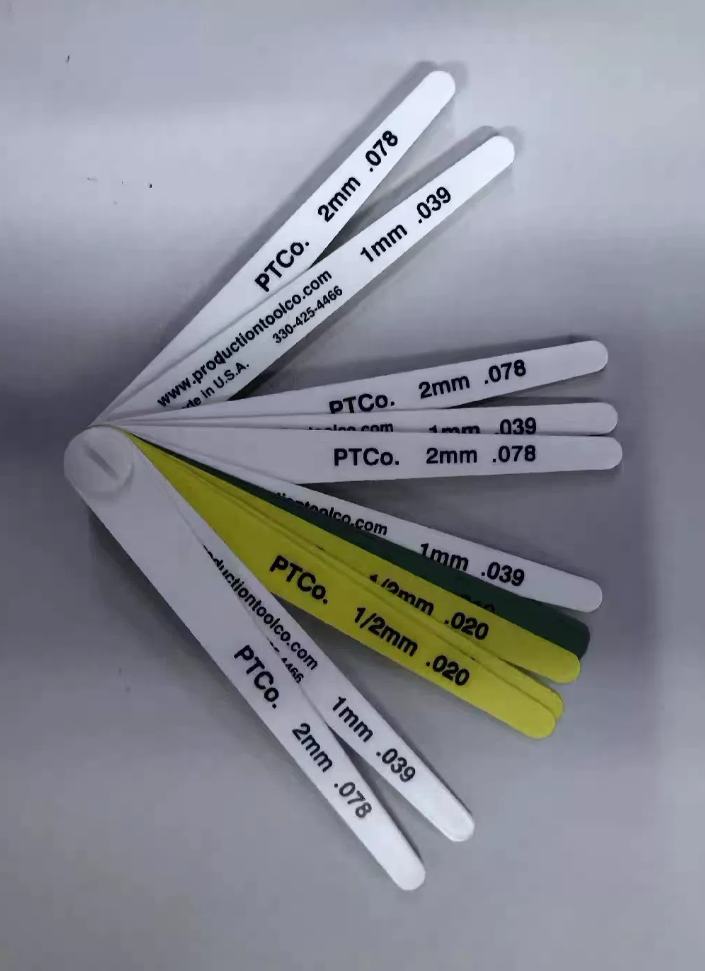
Nome completo: Modelo de Produção 19350 Plastic Feeler Gauge for Automotive Use
Standard English Name: Plastic Feeler Gauge Model 19350
Especificações principais
- Number of Blades: 11 peças por conjunto
- Faixa de medição: 0.25mm ~ 5.0mm
- Thickness Sequence of Individual Blades (Full Set of 11 Sizes)
0.25, 0.50, 1.00, 1.50, 2.00, 2.50, 3.00, 3.50, 4.00, 4.50, 5.00 milímetros
- Dimensões Gerais
Comprimento total: 100milímetros; Narrow tip width: 6milímetros; Wide tip width: 12milímetros
- Material: High-strength Nylon / ABS plastic with color coding for thickness identification (Green = 0.25mm, Yellow = 0.5mm, all others white)
- Marcações: Dual metric (milímetros) and imperial (polegada) engraved scales, wear-resistant and fade-proof
- Origem: Original US industrial measuring tool
- Principais vantagens do produto
- Non-marring to Workpieces: Non-metallic and burr-free. It will not scratch car paint, vidro, peças de plástico, aluminum alloy or precision interior trims, making it an irreplaceable alternative to metal feeler gauges.
- Non-magnetic & Non-conductive: Suitable for gap inspection of electronic components, injection molds and low-voltage assemblies without risks of short circuit or magnetization.
- Rust-proof, Óleo & Coolant Resistant: Specially designed for assembly and paint shops of automobile OEMs.
- Destacável & Combinable Blades: Multiple blades can be stacked to measure any combined gap size.
- Cenários típicos de aplicação
Complete vehicle assembly: Gap inspection of door clearances, hood seams, bumpers and lamp flushness
Glass industry: Gaps between tempered glass and window sealing strips
Injection molds & peças de plástico: Parting line gaps
Precision home appliances, interior trims and sheet metal flushness measurement
Cleanroom inspection for gaps of electronic components
- Comparação de modelos da mesma série (Referência de seleção de modelo)
| Modelo | Number of Blades | Faixa de medição | Cenários Aplicáveis |
| 19350 | 11 pedaços | 0.25–5,0 mm | Wide-range gaps, full vehicle exterior flushness (mais amplamente utilizado) |
| 15026 | 13 pedaços | 0.25–2,0 mm | Médio & pequenas lacunas, small interior components |
| 14839 | 5 pedaços | 0.25–3,0 mm | Quick simple sampling inspection |
- Industry Terminology Glossary
Plastic feeler gauge
Produção 19350
Gap gauge / thickness gauge
Non-mar plastic gauge
Full-industry Application Cases of Plastic Feeler Gauge (Produção 19350)
- Complete Automobile Manufacturing (Aplicativo principal, OEM Standard Model 19350)
Caso 1: Flushness & Gap Inspection of Vehicle Exterior Sheet Metal (OEM Assembly Line)
Measuring Points: Paint seams of hood, four doors, tailgate, fenders, headlights, pára-choques, radar covers and rearview mirror housings
Requisitos de Processo: Standard door gap: 3.0±0,5 mm; Flushness between headlight and fender ≤0.3mm
Operational Advantages: Burr-free plastic material avoids scratches on paint and electroplated trims; metal gauges easily damage coatings and lead to rework & scrapping
Operating Procedure: Take 3 measuring points (esquerda, meio, certo) on each seam. Insert Model 19350 blades and record the maximum thickness that slides smoothly as the gap value. Line inspectors conduct full inspection and data logging for every vehicle.
Problema resolvido: After replacing metal gauges, the defect rate of paint scratches drops by 90%.
Caso 2: Interior Assembly Inspection for New Energy Vehicles
Inspected Parts: Center console trims, instrument panels, door plastic panels, seat guards, air outlet vents and charging port covers
Working Condition Features: All plastic or soft-wrapped parts; metal gauges tend to leave indentations and scratches
Inspection Standards: Assembly gap of interior trims: 0.5–1.5mm; Step difference ≤0.2mm
Cenário de aplicação: BYD and Tesla assembly workshops uniformly adopt Production 19350 plastic feeler gauges for final off-line inspection of interiors.
Caso 3: Sealing Strip Gap Control in Paint Shops
Measuring Positions: Gaps between window glass and door sealing strips, trunk waterproof rubber strips
Função: Excessively large gaps cause water leakage; overly tight gaps deform rubber strips. Plastic gauges resist corrosion from paint and cleaning agents without rusting, suitable for humid paint shop environments.
Caso 4: Post-repair Gap Recheck for Auto Repair & Modification
After paint repair at 4S shops, Modelo 19350 is used to verify uniform gaps of doors and hoods to prevent cosmetic defects upon vehicle delivery.
- Molde de injeção & Plastic Component Industry
Caso 1: Routine Inspection of Parting Line & Insert Gaps on Injection Molds
Inspection Items: Closing gaps of front & rear molds, fitting gaps of slide inserts, ejector plate clearances
Cenários Aplicáveis: Optical molds made of PC, ABS and transparent acrylic (mirror-polished cavities must avoid metal scratches)
Process Standard: Parting gap of high-precision optical molds: 0.01–0.03mm. Thin plastic blades are used during daily patrols to check for flash and material leakage.
Vantagens: No scratches on polished mold surfaces; stainless steel gauges easily damage cavities and cause mass defective products with surface scratches.
Caso 2: Assembly Gap Inspection of Finished Plastic Housings (Home Appliances / 3C Eletrônica)
Produtos: TV housings, laptop A/B covers, charger casings, plastic washing machine panels
Inspection Demand: Uniformity of housing closing seams and step difference of snap-fit assemblies. All workpieces are plastic, prone to indentations from metal measuring tools.
Factory Application: Xiaomi and Midea injection molding inspection stations use plastic feeler gauges in batches; the 0.25–5.0mm full range covers all small and large housing seams.
- Eletrônica, Precision Electrical & Cleanroom Industries
Caso 1: Gap Inspection of Circuit Boards & Low-Voltage Components
Cenários: Assembly gaps of PCB housings, relay casings, battery modules and spacing of insulating parts
Principais vantagens: Plastic is insulating and non-magnetic, eliminating risks of short circuits and metal debris adsorption that burn circuit boards. Conductive metal gauges are prohibited at electronic workstations.
New Energy Battery Factory Application: Inspection of fitting gaps of PACK module housings to avoid cell extrusion and failure of waterproof seals.
Caso 2: Cleanroom Assembly of Optical Lenses & Camera Lenses
Measurement of gaps between camera lenses, vehicle camera glass lenses and holders. Plastic material will not scratch coating films and produces no metallic dust in cleanroom environments.
- Usinagem & Automation Tooling
Caso 1: Gap Calibration of Precision Aluminum Jigs & Fixtures
Aerospace-grade aluminum and 6061 aluminum fixtures feature finely machined surfaces easily scratched by metal gauges. Plastic feeler gauges are used for mass fixture commissioning and daily routine checks.
Caso 2: Gap Adjustment of Conveyors & Robot Joints
Gaps of conveyor belt guards and plastic anti-collision parts on manipulators. Oil and coolant resistant, rust-free for long-term service.
- Vidro, Porta & Janela, Indústria Fotovoltaica
Caso 1: Sealing Gap Inspection of Automotive Tempered Glass & Architectural Doors/Windows
Gaps between vehicle window glass and rubber sealing strips, and aluminum broken bridge window profiles. Glass has high hardness but fragile edges prone to chipping upon impact from metal gauges.
Caso 2: Frame Seal Inspection of PV Modules
Gap measurement between solar panel aluminum frames and silicone sealants to control waterproof performance. Plastic resists silicone corrosion and is easy to clean.
- Niche Industry Application Cases
- Instrument Repair: Calibration of gaps for wind instrument pad shims to avoid metal scratches on silver-plated copper keys and guarantee air tightness & tone quality
- Indústria de HVAC: Inspection of gaps at air duct sealing flanges and assembly seams of plastic central air conditioning vents
- Equipamento Médico: Assembly gap inspection of plastic housings and sterile instruments; non-metallic design eliminates contamination risks from metal debris
- Trânsito Ferroviário: Gap quality inspection of subway plastic interior wall panels and window trims to protect coated interior surfaces
- Summary of Exclusive Applicable Scenarios for Production 19350 (0.25–5 mm)
- Prioritize Model 19350 para: Large painted surfaces, peças de plástico, ligas de alumínio, optical components and electronic insulators. Its wide measuring range covers gap inspection of full vehicle exteriors, large molds and home appliance housings.
- Não é adequado para: Micro-precision valve clearances at micron level (ultra-thin metal feeler gauges required) and high-temperature processing environments (plastic prone to deformation).
- General Core Value: Non-marring, insulating & à prova de ferrugem, óleo & solvent resistant, detachable single blades stackable for measuring combined gaps.