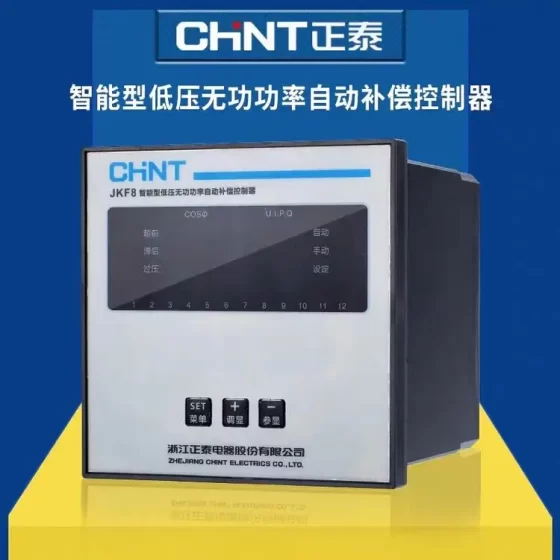
Contactor,întrerupător de circuit,senzor,Codificator,PLC,Convertor





Standard logic CPU, without CIP motion axes, part of the CompactLogix 5370 serie, lifecycle status: Matură activă (mature and available for sale)
Specificații de bază
User Memory: 2 MB
Porturi: Dual Ethernet ports supporting DLR Device Level Ring (EtherNet/IP) + USB debug port
Maximum EtherNet/IP Nodes: 32 noduri
Extindere locală: Până la 16 pcs of 1769-series I/O modules (backplane expansion)
SD Card: 1 GB supplied as standard, max support 2 GB; used for firmware, program backup and log storage
Tasks: Până la 32 tasks, max 100 routines per task
Alimentare electrică: 24 VDC (powered by 1769 backplane power supply; the CPU itself has no power supply)
Dimensiuni: Adâncime 105 mm, standard 1769 backplane mounting
Software de programare: Studio5000 (Logix Designer)
Referință document: User Manual 1769-UM021, Technical Data Sheet 1769-TD005
📌 Suffix Variations (Frequently Confused Models)
1769-L33ER: Standard logic CPU, no CIP motion axes (acest model)
1769-L33ERM: Aceleaşi 2 MB memory, 8-axis CIP motion supported with kinematics
1769-L33ERMK: L33ERM version with conformal coating
1769-L33ERMS: GuardLogix safety CPU (2 MB standard memory + 1 MB safety memory, safety PLC), planned for obsolescence
📎 Selection & Opțiuni de înlocuire
Upgrade within the same series: 1769-L36ERM (3 MB, 48 EtherNet/IP nodes, 16 motion axes)
Next-generation upgrade: 5069-L330ER (CompactLogix 5380, higher hardware performance, program portable, backplane I/O incompatible)
Alternativă în jos: 1769-L30ER (1 MB memory, 16 EtherNet/IP nodes)
⚙️ Typical Application Scenarios
Medium and small production lines, linii de transport, ambalaj, HVAC, water treatment and general equipment logic control. Ideal for projects requiring EtherNet/IP ring network, distributed remote I/O and no CIP servo motion control.
⚠️ General Notes & Defecte comune
- The battery only maintains the real-time clock. Programs and tags are stored in flash memory and SD card. A dead battery will not cause program loss, only the system time will be lost.
- Power loss while in RUN mode triggers fault code 01 upon power-up (fault for power interruption in RUN state). This alarm can be suppressed in controlor fault settings.
- Incorrect DLR ring wiring leads to intermittent network drops. The dual Ethernet ports are dedicated DLR ring ports and cannot function as a regular network switch.
- Firmware version must match the Studio5000 version. Direct download is not allowed across major firmware revisions; use ControlFlash for firmware flashing.
Communication Protocol List for 1769-L33ER (On-board Native + Backplane Expansion Modules)
Important: No serial port, DeviceNet or ControlNet port built into the CPU hardware. Only dual EtherNet/IP ports + USB debug port are available.
On-board Dual Ethernet Ports (Native, Firmware-enabled)
- EtherNet/IP (CIP) [Primary Protocol]
Supports DLR Device Level Ring, star and linear topologies; CIP explicit messages, CIP I/O and CIP messaging
Limited to a maximum of 32 EtherNet/IP I/O connections
⚠️ 1769-L33ER does not support CIP Motion; select L33ERM for CIP motion control
- TCP/IP, UDP, Raw Socket
- Modbus TCP (via native Logix MSG instruction; no extra gateway module required)
- HTTP (built-in web server, firmware dependent)
- PTP (IEEE1588 Ethernet time synchronization), DHCP
- Server OPC UA: Supported on firmware revision V33 and newer
On-board USB Port (Debug & Download Only, Not for Production Communication)
Only used for Studio5000 program upload/download, firmware flashing and troubleshooting. Not available for communication with external field devices.
Protocols Realized via 1769 Backplane Communication Modules (Not Native to CPU)
1769-SDN → DeviceNet (CIP DeviceNet)
1769-ASCII → DF1, Modbus RTU, ASCII, custom serial protocols (RS232/485)
1769-CRN → ControlNet
1769-PB4 → Profibus-DP
1769-ECR: EtherNet/IP repeater/ring terminator (not a protocol converter)
❌ Common Pitfalls
- Modbus RTU, DF1, DeviceNet and Profibus are not available natively. Corresponding backplane modules must be added.
- Modbus TCP is implemented by Logix MSG instructions rather than a dedicated hardware gateway. Concurrent polling load must be managed inside the PLC program.
- Communication with SCADA/HMI hosts: RSLinx Classic/RSLinx Enterprise over EtherNet/IP CIP.
Complete Configuration Procedure for 1769-L33ER Communication Parameters
Required Software: Studio5000 Logix Designer + RSLinx Classic; Dual Ethernet ports are dedicated DLR ring ports; USB is for commissioning only. No built-in serial port.
Implicit din fabrică: BOOTP/DHCP mode, no static IP assigned.
- IP Address Assignment (4 Common Methods; BOOTP/RSLinx Preferred)
Metodă 1: BOOTP/DHCP Server Tool (For brand-new PLC without IP)
- Connect PC directly to the L33ER Ethernet port, disable PC firewall and set PC NIC to the same subnet.
- Launch Rockwell BOOTP-DHCP Server.
- Locate the PLC MAC address in Request History (MAC printed on the front label of the controller).
- Add to Relation List and fill in IP address, masca de subrețea, poarta de acces (opțional).
- Check Disable DHCP (critic, otherwise the PLC reverts to DHCP after power cycle) → OK, IP is written into the controller.
- Power cycle the PLC for static IP to take effect permanently.
Metodă 2: RSLinx Classic (Modify IP after connecting via USB or Ethernet)
- Open RSLinx → Communications → RSWho.
- Locate 1769-L33ER under USB or EtherNet/IP driver.
- Right-click the module → Module Configuration → Port Configuration.
- Change Network Configuration Type to Static, fill in IP, subnet mask and gateway.
- Apply settings; reboot the controller if prompted.
Metodă 3: Online modification inside Studio5000 (PLC already reachable)
- Right-click the controller in project tree → Properties.
- Navigate to Port Configuration.
- Edit static IP, subnet mask and gateway. Ethernet speed/duplex can also be configured (auto-negotiation recommended; forcing full duplex requires reboot).
- Download settings to controller and reboot for changes to apply.
Metodă 4: SD Card IP Configuration (Bulk Deployment)
Prepare an SD card with network configuration file. Insert the SD card and power on the PLC; IP settings load automatically, suitable for mass identical devices.
Sfat: IP can also be entered directly via the front-panel LCD menu of L33ER.
- EtherNet/IP I/O Configuration in Studio5000 (For Remote EIP Slaves & I/O distribuite)
- Create a new project and select 1769-L33ER with matching firmware revision.
- Arborele proiectului: I/O Configuration → Right-click EtherNet/IP → New Module.
- Select the target EtherNet/IP slave (1734-AENTR, unitatea de frecvență variabilă, third-party EIP device) and input slave IP.
- RPI (Request Packet Interval): Refresh cycle. 20~100 ms is typical for standard I/O; reduce for high-speed devices with caution to avoid bandwidth overload.
- Connection tab: Unicast/Multicast; keep default topology for DLR ring.
- Download to PLC and check online status: Green = communication healthy; Red = connection timeout, IP conflict, undersized RPI or firmware mismatch.
Limit: L33ER supports max 32 EtherNet/IP I/O nodes. Exceeding this triggers connection resource faults.
III. DLR Device Level Ring Configuration (Dual-port Ring Redundancy)
- Daisy-chain the ports to close the ring (Port A ↔ Port B of next device).
- Controller Properties → Ethernet Port → Enable DLR. Default role is DLR Node (DLR Supervisor is usually assigned to managed switches such as 1783-ETAP).
- Single cable break triggers automatic network reconfiguration without production stop. Improper wiring causes continuous network flapping.
- Nota: The two ports of L33ER are dedicated DLR ports. They cannot be used as a regular switch to add extra end devices.
- Modbus TCP Configuration (Native MSG Instruction, No Additional Module)
There is no standalone Modbus TCP server configuration page for L33ER. Modbus TCP master communication is implemented via MSG message instruction to read/write third-party Modbus TCP instruments:
- Create MSG tag, set Message Type to Modbus TCP Client.
- Input slave IP, Modbus function code (03 Read Holding Register/06 Single Write/16 Multiple Write), starting address and register count.
- Set timeout (typically 500~1000 ms). Add interlock logic to prevent excessive concurrent MSG messages that overload the controller.
- OPC UA Server is available starting from V33 firmware. Enable and configure security policy & certificates on the OPC UA tab in controller properties.
- Configuration for Backplane Communication Modules (1769-SDN/1769-ASCII/1769-PB4, etc.)
- Add the corresponding 1769 communication module in I/O Configuration and assign backplane slot number.
- Double-click the module to open parameter page and set bus address, baud rate, numărul stației, parity check.
- Use MSG instructions in ladder program for target protocols (DeviceNet, Modbus RTU, ASCII, Profibus-DP).
- Parametri cheie & Capcane comune
- Ethernet speed defaults to Auto-Negotiate. Manual forced 100M full duplex requires controller reboot.
- The battery only maintains RTC clock. IP settings, communication configuration and user program are saved in flash + SD card; no loss when battery fails.
- Top 3 EtherNet/IP faults: IP conflict, DLR loopback, overly aggressive RPI and firmware mismatch.
- USB channel is only for programming upload/download. It cannot be used for field device communication in the control program.
- After modifying IP online, RSLinx will disconnect immediately if the PC is on a different subnet. Adjust PC NIC subnet before reconnecting.
VII. Communication Diagnostics
Controller Properties → Faults to view connection fault codes
RSLinx RSWho for device status and connection count
Built-in Web Server: Open PLC IP in browser to view network summary and DLR ring status (web function enabled in firmware)
Tag `Controller.DLRStatus` for reading DLR ring status inside user program
Allen-Bradley CompactLogix Full Model List
Clasificarea serii: 5370 (1769 classic series, where 1769-L33ER belongs), 5380 (5069 next-gen), 5480 (5069, Logix + Windows IoT hybrid controller). Includes standard CompactLogix, Compact GuardLogix safety variants and Armor IP67 models. Suffix glossary below:
Suffix Quick Reference:
ESTE: EtherNet/IP, no CIP motion axes
ERM: EtherNet/IP + CIP Motion
ERMS/ERS2: GuardLogix safety controller (SIL2)
K/MK: Conformal coating for corrosive environments
MO/MOS: Armor version, IP67 machine-mounted
NSE: No SD card supplied
ERP: PlantPAx process controller
- CompactLogix 5370 (Bulletin 1769, backplane for 1769 I/O)
L1 Series (On-board I/O, pentru 1734 PUNCT I/O)
1769-L16ER-BB1B
1769-L18ER-BB1B
1769-L18ERM-BB1B
1769-L19ER-BB1B
L2 Series (On-board I/O + Putere, expandable with local 1769 I/O)
1769-L24ER-QB1B
1769-L24ER-QBFC1B
1769-L27ERM-QBFC1B
L3 Standard Controllers (No on-board I/O, standalone CPU, 1769-L33ER in this group)
1769-L30ER
1769-L30ER-NSE
1769-L30ERM
1769-L33ER
1769-L33ERM
1769-L36ERM
1769-L37ERM
1769-L38ERM
Compact GuardLogix 5370 Siguranţă (SIL2)
1769-L30ERMS
1769-L33ERMS
1769-L36ERMS
1769-L37ERMS
1769-L38ERMS
Armor CompactLogix/Armor GuardLogix 5370 (IP67 machine mount, MO/MOS suffix)
1769-L33ERMO
1769-L33ERMOS
1769-L36ERMO
1769-L36ERMOS
1769-L37ERMO
1769-L37ERMOS
1769-L38ERMO
1769-L38ERMOS
Conformal Coated Versions (K/MK suffix, anti-coroziune)
1769-L30ERK/1769-L30ERMK
1769-L33ERK/1769-L33ERMK
1769-L36ERMK
- CompactLogix 5380 (Bulletin 5069, next generation, backplane for 5069 I/O, incompatible with 1769 backplane I/O)
Performanță mai mare, dual isolated Ethernet ports, larger capacity for EIP nodes and motion axes; successor for 5370.
Standard CompactLogix 5380
5069-L306ER
5069-L306ERM
5069-L310ER
5069-L310ER-NSE
5069-L310ERM
5069-L320ER
5069-L320ERM
5069-L330ER
5069-L330ERM
5069-L340ER
5069-L340ERM
5069-L350ERM
5069-L380ERM
5069-L3100ERM
PlantPAx Process Controllers (ERP suffix)
5069-L320ERP
5069-L340ERP
Compact GuardLogix 5380 SIL2 Safety (ERS2/ERMS2, K = coated)
5069-L306ERS2/5069-L306ERMS2
5069-L310ERS2/5069-L310ERMS2
5069-L320ERS2/5069-L320ERS2K/5069-L320ERMS2/5069-L320ERMS2K
5069-L330ERS2/5069-L330ERS2K/5069-L330ERMS2/5069-L330ERMS2K
5069-L340ERS2/5069-L340ERMS2
5069-L350ERS2/5069-L350ERS2K/5069-L350ERMS2/5069-L350ERMS2K
5069-L380ERS2/5069-L380ERMS2
5069-L3100ERS2/5069-L3100ERMS2
III. CompactLogix 5480 (Bulletin 5069, Logix Runtime + Windows 10 IoT Hybrid Platform)
Real-time Logix control engine paired with Windows for local data acquisition, HMI and MES integration. Uses 5069 local I/O backplane.
5069-L46ERMW
5069-L430ERMW
5069-L450ERMW
5069-L4100ERMW
5069-L4200ERMW
- Legacy CompactLogix 5360 (1768 Serie, eliminarea treptată, numai pentru referință)
1768-L43
1768-L45
1768-L43S
1768-L45S
- Note de selecție a tastelor (Critical for Spare Part Replacement)
- 5370 (1769) şi 5380 (5069) backplane I/O modules are not interchangeable physically. Programs can be migrated in Studio5000.
- ER = Logic only, no CIP motion; ERM = Integrated CIP motion axes for Kinetix servos.
- Safety suffix MS/S2: SIL2 safety control with independent safety routine space.
- Armor MO/MOS: IP67, machine direct mount without control cabinet.
- 5480 is for applications requiring on-board Windows computing plus real-time PLC control, cost mai mare.
- Matching I/O Families for Reference
5370 I/O local: 1769 Compact I/O
5380/5480 I/O local: 5069 Compact I/O
L1 controllers for distributed I/O: 1734 PUNCT I/O
Practical Application Cases for 1769-L33ER (Distincție importantă: L33ER has no CIP motion, only logic, PID, interlock and DLR ring. Select L33ERM for servo motion)
Limitele aplicației: Max 32 EtherNet/IP I/O nodes, 2 MB memory, DLR ring redundancy. Suitable for cell/machine/section control without CIP servo motion. SCADA, MES, HMI, VFD, remote I/O and instruments communicate via EtherNet/IP or Modbus TCP.
Caz 1: Mâncare & Beverage-Blow Molding/Filling Auxiliary Line Control (Classic DLR Ring Application)
Prezentare generală a proiectului
Transportor, bottle diverting, reject and rinsing section for bottled water production. Independent cell controller; servo-controlled blow molding main machine uses L33ERM.
Hardware Architecture
CPU: 1769-L33ER (DLR Supervisor)
Local Backplane: 1769-IQ, 1769-OQ, 1769-IF4 analog modules (nivel, presiune, temperatură)
DLR Ring Devices: EtherNet/IP VFDs, 1734-AENTR remote I/O, safety relay EIP adapters, EIP HMI
External Communication: Modbus TCP for online conductivity meter; Producer/Consumer tags send production data to main plant PLC
Funcții de control
Conveyor interlock, jam detection, pneumatic reject logic for defective bottles
PID control for rinse pressure and tank level, pump rotation sequencing, low-level protection, filter differential pressure alarm
Recipe storage (multiple cleaning parameters saved on SD card), shift counter and fault logging
Justificarea selecției
Daisy-chained ring wiring along machine frame; single cable break does not stop production. Node count stays within 32 limită. 2 MB memory is sufficient for PID, alarms and recipe logic. Conformal coated variant 1769-L33ERK is available for humid food-grade environments.
Puncte de durere & Atenuare
VFD EMI: Shielded EIP cable with single-point grounding; separate cable trunking for variable frequency power cables.
Intermittent ring flapping: Avoid overly small RPI; 30~50 ms recommended.
Caz 2: Manipularea materialelor & Sorting-Section Cell Controller for Conveyor Lines
Prezentare generală a proiectului
Parcel warehouse/automotive component conveyor system. The whole line is split into independent control cells with one L33ER per cell. Cells exchange data via Producer/Consumer tags while a top-level MES scheduler coordinates routing.
Hardware Architecture
1769-L33ER + 1769 local I/O
DLR Ring: EtherNet/IP motor starters, VFD-uri, 1734 remote I/O
Servo sorting shuttles excluded (controlled separately by L33ERM). L33ER manages belts, deviatoare, stoppers and barcode interlock only.
Funcții de control
Barcode reception, material destination judgment, stopper cylinder and diverter logic
Speed coordination, congestion interlock, zone E-stop, slip detection and production count
Avantaje
DLR is ideal for long linear conveyors routed along machine frames, eliminating many star-connected switches. Fault isolation limits downtime to only the affected section.
Caz 3: Tratarea apei & Pump Skids-Small-scale Sewage Treatment & Booster Pump Stations
Prezentare generală a proiectului
Municipal booster pumping stations, factory greywater reuse, integrated sewage equipment (bar screen, aeration, sedimentation and chemical dosing)
Hardware Architecture
1769-L33ER + 1769 analog I/O (AI/Lumea)
EtherNet/IP: Variable frequency pump drives, EIP instrument gateways
Modbus TCP: Online pH, turbiditate, residual chlorine and flow meters
în amonte: EtherNet/IP upload to SCADA and energy management platform; OPC UA available (V33+ firmware)
Strategia de control
Constant pressure PID for water supply, alternarea pompei, modul de repaus, high/low level interlock
DO (Oxigen dizolvat) PID for aeration tank, flow-following cascade dosing control
Tank high/low level protection, dry-run pump protection, historical alarm log (SD card storage)
Justificarea selecției
Sufficient PID resources for process control. Dual-port DLR forms a ring for distributed field instruments in pump rooms. 2 MB memory supports extensive alarms and trend buffering. 1769-ASCII can be added to interface legacy serial analyzers.
Caz 4: OEM Packaging Machinery (Case Erectors, Case Sealers-Logic-only Machines)
Distincție importantă: Packaging machines with servo positioning require L33ERM; machines with only cylinders, VFD conveyors and simple interlocks use L33ER.
Hardware Architecture
1769-L33ER + 1769 digital I/O
EtherNet/IP VFDs, EIP safety modules, HMI
Funcții de control
Box feeding, pusher and sealer cylinder sequencing, empty detection, jam alarm, batch counter, recipe switch and production statistics
OEM Benefits
Standardized machine program templates, one-click program backup/restore via SD card. DLR reduces cabinet switch count and BOM cost. Same Logix platform allows easy future upgrade to L33ERM for servo addition.
Caz 5: Legacy Retrofit Project-Replacement for SLC500/MicroLogix 1500
Prezentare generală a proiectului
End-of-life SLC5/04 and MicroLogix controllers with obsolete spare parts. Existing 1769 backplane and field wiring are retained; only the CPU is replaced.
Retrofit Scheme
Remove old CPU and install 1769-L33ER. Migrate ladder logic into Studio5000. Add EtherNet/IP networking, DLR ring and Modbus TCP instrument connection while preserving hardwired I/O wiring to minimize rework.
Beneficii
Minimal field rewiring. The upgraded system integrates into plant-wide EtherNet/IP architecture for remote diagnostics and MES data upload.
Caz 6: HVAC/Cleanroom AHU Air Handling Unit Control
Prezentare generală a proiectului
Combined air handling units for pharmaceutical and electronics cleanrooms, temperatura constanta & controlul umidității
Funcții de control
Supply air temperature PID, humidity PID, static pressure control, freeze protection interlock, fan VFD control, filter differential alarm, enthalpy switching and unoccupied standby mode
Comunicare: EtherNet/IP VFDs; Modbus TCP temperature/humidity transmitters; upload to building BMS via EtherNet/IP or OPC UA
Avantaj: Logix PIDE instruction supports bumpless transfer and feedforward control, more stable than dedicated small HVAC PLCs. Preferred for facilities adopting Rockwell automation ecosystem.
❌ Unsuitable Scenarios for L33ER (Selection Avoidance Guide)
- CIP Motion servo synchronization, electronic cam or robot coordination required → choose 1769-L33ERM
- EtherNet/IP I/O node count exceeds 32
- Isolated separate subnets required on Ethernet ports → next-gen 5069-L330ER (5380)
- Main controller for large integrated lines with dozens of slave devices → L36ERM/L38ERM or ControlLogix


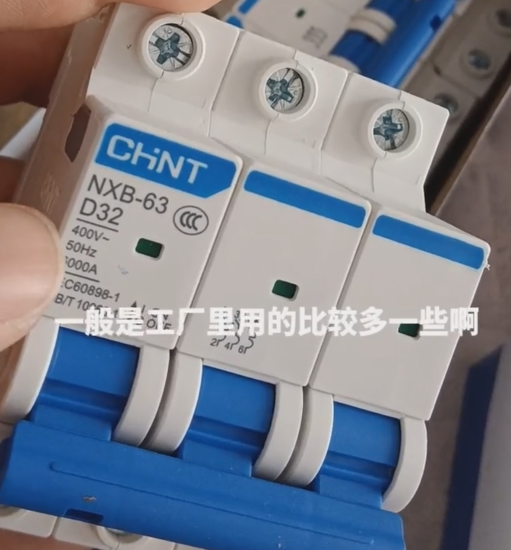
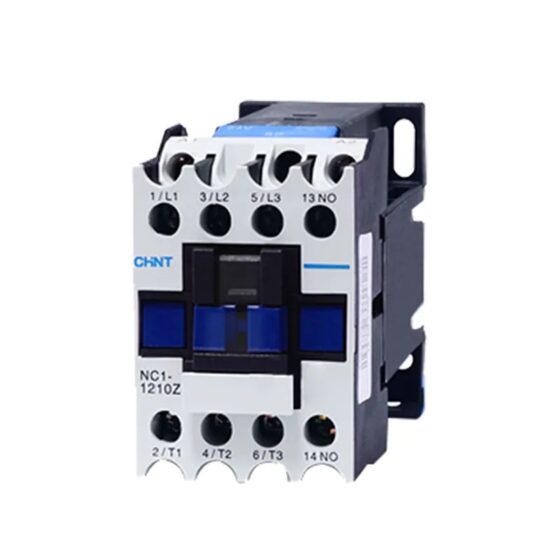
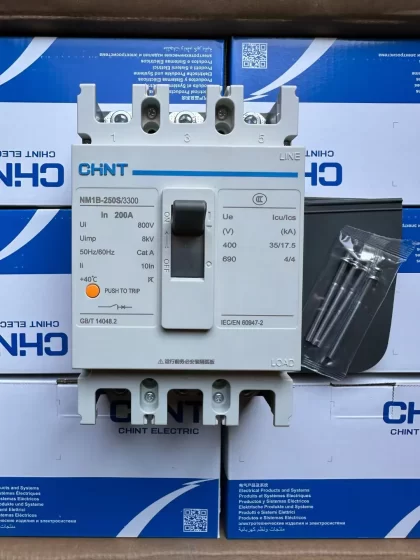
NH42-63-318x560.png "Comutatoare de transfer automat de tip PC CHINT (ATS)NH42-63/4SZ")