Schütz,Leistungsschalter,Sensor,Encoder,SPS,Konverter

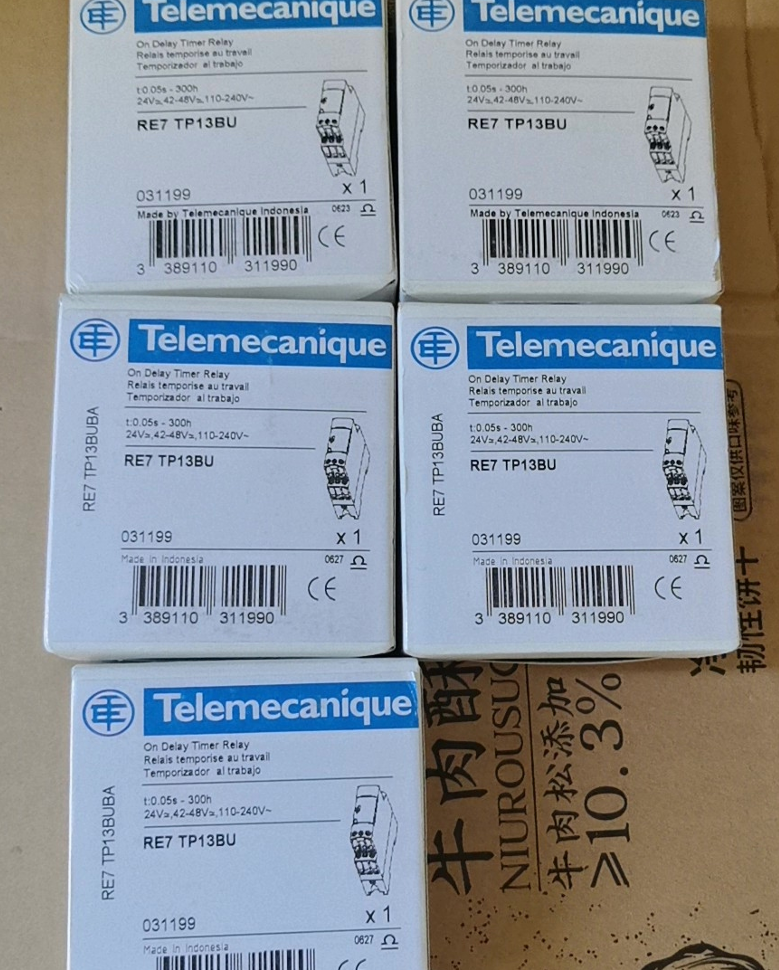

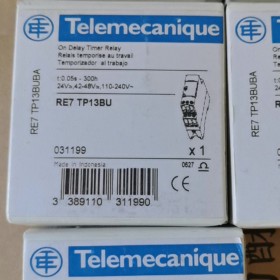
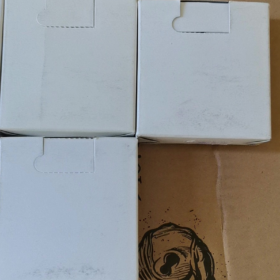
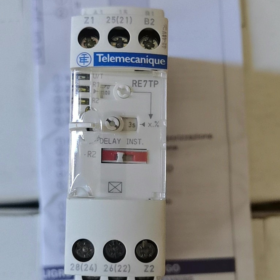
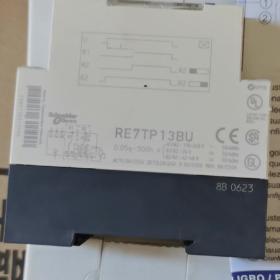
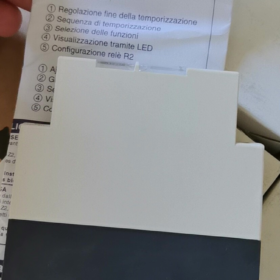
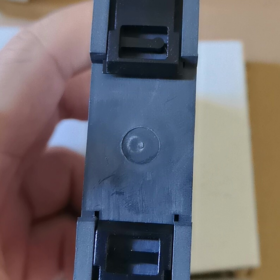
Serie: Zelio-Time RE7 On-delay Zeitrelais | Status: Auslaufmodell (Production ceased on 2021-04-02)
Kernspezifikationen
| Artikel | Parameter |
| Funktion | Einschaltverzögerung (Typ A) |
| Zeitbereich | 0.05 s … 300 H, multi‑range adjustable |
| Coil Supply | 24 V AC/DC |
| Kontakte | 2 change‑over contacts (2C/O, DPDT), silver‑nickel contacts |
| Konventioneller thermischer Strom Ith | 8 A |
| Montage | DIN-Schienenmontage, width 22.5 mm |
| Terminals | Schraubklemmen, Anzugsdrehmoment 0,6-1,1 N·m |
| Zeit zurücksetzen | 50 MS; Minimum trigger pulse 20 ms |
| Timing-Genauigkeit | ±10 % of full‑scale value; Repeat accuracy ±0.2 % |
| Mechanische Ausdauer | 20 Millionen Zyklen |
Erklärung des Modellcodes
RE7: Zelio-Time RE7 timing relay series
T: On-delay function
P: Multi-range timing
13: 2 Wechslerkontakte
DAS: 24 V AC/DC coil supply
Official Replacement Model
RE22R2AMR (Direct functional replacement, Einschaltverzögerung, 0.05s-300h, 24-240V AC/DC, 2C/O, 22.5 mm DIN-rail footprint)
Notiz: RE7TP13BU is no longer factory-supplied; only surplus stock / used units are available on the market. Für neue Projekte, use RE22R2AMR directly.
Typische Anwendungen
SPS output delay, motor start-up delay, lighting delay, equipment power-on sequence control.
Judging whether Schneider RE7TP13BU Time-Delay Relay Requires Replacement
RE7TP13BU is discontinued, genuine new factory units are unavailable; most available units are surplus stock or second-hand. As an analog electronic timing relay, its typical failures include timing deviation, contact failure and no-operation. Evaluation covers visual inspection, powered static check, functional test and contact load assessment.
- Visuelle Inspektion (Power-off status)
Replace the unit if any of the following occurs:
- Cracked housing, Brandflecken, arc scorch marks on terminals or melted plastic;
- Lose Anschlüsse, oxidiert / corroded copper conductors, arc black spots at crimp points;
- Sticky, slipping or idling timing adjustment knob that cannot switch ranges;
- Visible water intrusion, oil contamination or corrosion on internal PCB;
- Illegible or peeled-off nameplate marking, model cannot be confirmed.
- Powered Static Check (Coil energized only, no load connected)
Spulenversorgung: 24V AC/DC
- Indicator LED completely off after power-on:
Verify supply voltage and polarity. If supply is correct but LED stays off → internal power circuit damage, mandatory replacement.
- Flickering or dimming indicator LED: Degraded internal voltage-regulation components, imminent total failure; Austausch empfohlen.
- Abnormal buzzing / faint arcing noise upon power-on: Internal PCB leakage; replace immediately.
✔ Normal status: Indicator LED stable ON, kein ungewöhnliches Geräusch.
- Core Functional Test (Critical step for timing performance validation)
Funktion: Einschaltverzögerung
Logik: Coil energized → timing starts; output contacts change state only after preset time elapses.
Test procedure:
- Set a short delay e.g. 10 S;
- Apply 24 V to coil, monitor 2 change-over contacts with multimeter continuity mode;
- Contacts remain in original state immediately after coil energization; contacts shall reliably toggle after 10 s; contacts reset instantly when coil power is removed.
Replacement trigger conditions (any of below)
- Contacts toggle immediately upon coil energization (zero delay): Timing chip damage.
- Contacts never act when preset time expires: Timing circuit failure.
- Severe timing deviation: Setting 10 s but actual delay is 30 s, or inconsistent timing. Allowable tolerance for RE7 is ±10 % full-scale; deviations far beyond this indicate component aging.
- Intermittent timing failure; function temporarily restored after power-cycle: Capacitor aging, the most frequent failure mode for this model.
- Ungewöhnlicher Reset: Contacts fail to reset and remain latched after coil de-energization.
Ergänzender Hinweis: Minimum trigger pulse 20 ms. Input pulses shorter than this will not start timing — this is product characteristic, kein Fehler.
- Output Contact Load Test (Under practical load conditions)
Kontaktbewertung: 8 A resistive load for 2 Wechslerkontakte
- Timing passes no-load test, yet contacts fail to close / open with actual load connected.
- Severe terminal overheating under loaded operation.
- Obvious arcing at contact switching, intermittent load ON/OFF.
👉 Silver-nickel contact wear / erosion; cannot be repaired, direkt ersetzen.
Notiz: Damaged contacts render the unit unsafe even if timing logic works correctly; unexpected equipment sequence malfunctions may occur.
- Service-life & Environmental Assessment
- Rated mechanical endurance: 20 Millionen Zyklen. For equipment with frequent start-stop cycles over many years, consider spare-part replacement even if current performance seems normal.
- Long-term exposure to high cabinet temperature, humidity or dust accelerates electrolytic capacitor aging for this legacy series; latent random-failure risks exist.
- Replacement-after-failure Selection
Genuine replacement: RE22R2AMR
24-240VAC/DC-Versorgung, Einschaltverzögerung, 0.05s-300h, 2 Wechslerkontakte, 22.5 mm DIN-rail mounting footprint.
Quick Troubleshooting Reference Table
| Phänomen | Abschluss |
| LED off with correct supply voltage | Ersetzen |
| Large timing drift / intermittent faults | Ersetzen |
| Normal no‑load test, contact malfunction under load | Ersetzen |
| Slipping knob / burnt housing | Ersetzen |
| Accurate timing, no overheating or arcing | May remain in service |
Häufige Fehler & Remedies for Schneider RE7TP13BU Time-Delay Relay
Important notice: RE7TP13BU is discontinued. Electrolytic-capacitor aging is its dominant failure cause. PCB damage cannot be repaired; Komplette Einheit austauschen, dis-assembly for repair is not recommended. Spulenbewertung:24V AC/DC, 2 change-over contacts rated 8 A.
Fehler 1: No indicator light, no response after coil energization
Mögliche Ursachen
- Falsche Versorgungsspannung, loose / poor wiring connections;
- Blown fuse or fault in external supply circuit;
- Internal power-stage damage (electrolytic-capacitor breakdown, open-circuit coil).
Heilmittel
- Measure coil terminal voltage to confirm 24V AC/DC; verify screw-terminal torque 0.6-1.1 N·m.
- If external circuit is healthy and full voltage is present but unit remains dead → internal damage; Einheit austauschen.
Do not repeatedly apply power, risk of secondary damage to downstream equipment.
Fehler 2: LED AN, but zero delay; contacts act immediately upon power-on
Mögliche Ursachen
- Accidental dip-switch mode misconfiguration;
- Degraded / broken timing circuitry (timing IC, timing-capacitor breakdown).
Heilmittel
- Confirm mode selection is On-delay, verify no wrong-position dip-switch.
- If settings are correct yet contacts toggle instantly → component failure; Relais austauschen.
Fehler 3: Contacts never act when preset time expires
Mögliche Ursachen
- Wrong time-range selection; set delay far exceeds actual waiting period;
- Undervoltage coil supply;
- Internal timing-circuit failure;
- Mechanical contact jamming.
Heilmittel
- Test with short-time setting (e.g.10 s) to eliminate configuration error.
- Ensure coil supply voltage ≥85 % of rated voltage.
- If short-time test still yields no contact action → unit failure; replace.
Fehler 4: Unstable timing; timing drifts fast/slow intermittently (Most-common failure for this model)
Symptome: Setpoint 10 s yields actual delays ranging from 5 s to 25 s; temporary recovery after power-cycle, random fault recurrence.
Grundursache: Electrolytic-capacitor aging inside RE7 series; cabinet high temperature accelerates degradation; typical aging failure for legacy units.
Heilmittel
- Avoid continuous ambient temperature above 60 °C.
- Allowable timing tolerance: ±10 % des Skalenendwerts; deviation exceeding this threshold indicates component aging.
- Random drift cannot be repaired. Replace unit immediately; continued operation risks uncontrolled equipment sequence faults.
Fehler 5: Contacts fail to reset and stay latched after coil de-energization
Mögliche Ursachen
- Insufficient reset interval: RE7TP13BU requires minimum 50 ms reset time; rapid power-cycle prevents full reset.
- Contact welding due to overload-induced contact erosion.
- Internal mechanical jamming.
Heilmittel
- Ensure coil de-energization duration >50 ms before re-energization.
- Measure contact continuity in power-off condition. Persistent continuity confirms contact welding; mandatory replacement.
- Verify downstream-load current does not exceed 8 A resistive rating to prevent repeated damage to new relay.
Fehler 6: Good no-load timing performance, yet intermittent ON/OFF and terminal overheating under load
Mögliche Ursachen
Contact wear-erosion; actual load exceeds contact rating. Magnetventile / Schützspulen (induktive Lasten) require contact derating.
Heilmittel
- 8 A rating applies purely for resistive loads. For inductive loads such as solenoid valves and contactor coils, derate operating current to 3-4 A maximum.
- Replace unit if contacts are eroded (nicht reparierbar).
- For high-power inductive loads, install intermediate relay for isolation; avoid direct-driving via timing-relay contacts.
Fault7: Adjustment knob slips or cannot switch ranges
Mögliche Ursachen: Worn-out internal plastic gears or potentiometer.
Abhilfe: Time adjustment function lost; Einheit austauschen.
Fault8: Flickering LED, internal buzzing noise
Ursache: Degraded power-supply filter capacitor; PCB leakage risk.
Abhilfe: Potential short-circuit hazard; replace unit immediately, do not keep in service.
Quick-distinguish: External-wiring fault vs Relay-unit internal fault
Disconnect all load wiring from output contacts; energize coil only, measure relay-body contacts with multimeter continuity mode.
- Full-function performance in no-load test, failure occurs only under load → contact damage or load over-rating.
- Timing abnormality already present in no-load test → internal relay-unit failure.
Ersatzoption
Obsolete RE7TP13BU, recommended replacement RE22R2AMR
Notiz: Pin-out definitions are not identical between the two models. Cross-check wiring before replacement; direct plug-and-swap is not feasible.
Wartungsempfehlungen
- For high-temperature cabinet environments, keep spare-stock of legacy RE7 timing relays. Electrolytic-capacitor aging creates hidden faults that only surface during equipment downtime.
- Do not drive inductive-loads directly via timing-relay contacts; add intermediate-relay isolation.


NH42-63-318x560.png "Automatische Transferschalter vom Typ CHINT PC (ATS)NH42-63/4SZ")