contactor,cortacircuitos,sensor,Codificador,SOCIEDAD ANÓNIMA,Convertidor


Información básica
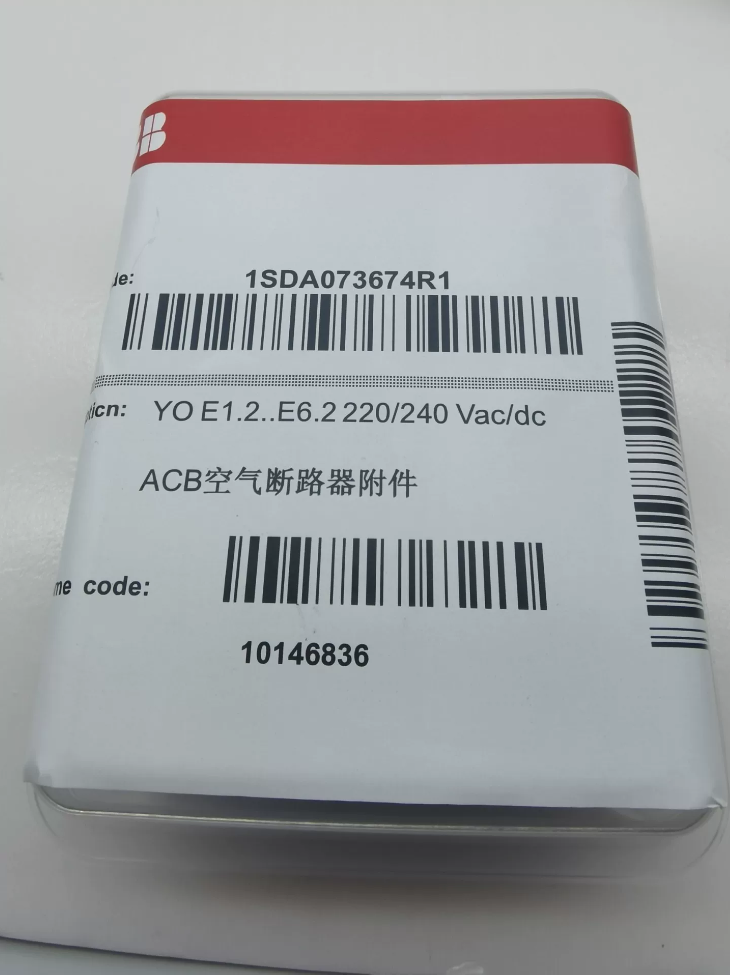
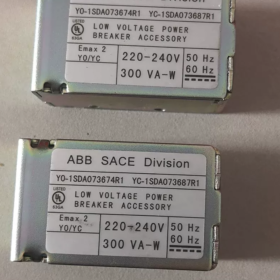
Modelo completo: 1SDA073674R1
Marca: TEJIDO
Categoría de producto: Tmax XT molded case circuit breaker accessory (MCCB accessory)
Prefix 1SDA = Material code for ABB Tmax series MCCB accessories
Material Description
1SDA073674R1: XT4 Liberación de derivación (SOR), AC220-240V
SOR = Shunt Release
Applicable Circuit Breaker: ABB Tmax XT4 molded case circuit breaker
Voltaje de funcionamiento: AC 220…240 V
Función: Remote electric tripping. Apply rated voltage to the coil to open the circuit breaker; tripping only, closing not supported.
Parámetros clave
Tipo: Shunt Release Coil (SOR)
Marco aplicable: XT4
Voltaje de control: AC220~240V
Código: 1SDA073674R1
Montaje: Internal accessory installed inside the circuit breaker, front cover disassembly required
Característica de funcionamiento: Short-time duty, continuous energization is prohibited; tripping triggered upon energization
Pareo & Notas de selección
- Only compatible with XT4. Not directly applicable to XT1/XT2/XT5/XT6 due to frame mismatch.
- Reference for other voltage variants of the same series:
1SDA073673R1: SOR XT4 AC110-120V
1SDA073675R1: SOR XT4 DC24V
- Ordering reminder: The shunt release is an optional accessory; the circuit breaker body must be ordered separately.
Escenarios de aplicación
Remote tripping of switchgear, fire linkage power cut-off, MCCB tripping controlled by PLC signals
Building power distribution, industrial low-voltage power cabinets
Puntos de solución de problemas
No tropezar: Check supply voltage and terminal wiring, verify coil integrity. Note that the coil is short-time duty and will burn out under prolonged energization.
falso tropiezo: Check for induced interference voltage in the wiring.
Referencia del código HS
85369000 (Accessories for electrical switching devices, low-voltage releases)
Soluciones alternativas
Original replacement: Only the same part 1SDA073674R1. Alternativa doméstica: XT4-compatible 220V shunt release with matching mounting dimensions. Sin embargo, mounting clips and terminal pins need verification; direct replacement for critical circuits is not recommended.
Application Scenarios of ABB 1SDA073674R1 (XT4 SOR AC220-240V Shunt Release)
Principio fundamental: External AC220~240V signal energizes the coil to remotely trip the XT4 molded case circuit breaker. Closing operation is not available.
- Conexión de alarma contra incendios (Escenario más común)
- The fire alarm control panel outputs a 220V signal to the shunt release coil. When fire alarm is triggered, non-fire loads (ordinary lighting, power sockets, aire acondicionado, non-fire fan circuits) estan desconectados.
- Aplicable a: Power distribution rooms, floor distribution boxes, low-voltage cabinets in shopping malls/hotels/office buildings.
Requisito: The fire signal shall be a short pulse. Continuous energization is forbidden to prevent SOR coil burnout.
- PLC/DCS Remote Tripping in Industrial Plants
- In factory power cabinets and production line distribution cabinets, AC220V relay contacts driven by PLC energize the shunt release.
- Escenarios: Equipment emergency stop interlock, process fault interlock power cut, remote emergency shutdown via host SCADA.
- Typical industries: Líneas de montaje, máquinas de embalaje, compresores de aire, pumps and fan power supply circuits.
- Seguridad / Access Control Linked Power Cut
For computer rooms and important warehouses: Trigger power cut for the area upon access control alarm or intrusion detection.
Power distribution protection for weak current rooms and small computer rooms.
- Power Distribution System Protection Interlock
- The host monitoring system (SCADA) remotely opens the circuit when abnormal conditions are detected.
- Busbar protection interlocks downstream MCCB tripping (complete switchgear projects).
Nota: Only for emergency tripping. Circuit breaker manual handle operation is preferred for routine switching; frequent operation via shunt release is not recommended.
- Other Application Cases
- Distribución de energía inteligente & smart buildings: Linkage with smart meters / power monitoring devices to remotely trip upon overload or leakage alarm.
- Low-voltage MCC cabinets for ships, wastewater treatment and HVAC power circuits.
❌ Inapplicable Scenarios
- Cannot perform remote closing. SOR only provides tripping function.
- Not suitable for frequent switching operations (short-time duty coil; repeated operations accelerate coil damage).
- Must not be used in continuously energized control circuits.
- Only fits ABB XT4 frame molded case circuit breakers; XT1/XT2/XT5/XT6 are not compatible.
On-site Implementation Guidelines
- Recommended signal type: Pulse signal (0.2~1s) to avoid permanent energization.
- Add intermediate relay isolation for control loops; avoid direct heavy coil current output from fire control cabinet / SOCIEDAD ANÓNIMA.
- Series the circuit breaker auxiliary contact into the wiring loop. The coil power supply will be automatically cut off after tripping to protect the coil.
Working Principle of Shunt Release (SOR, Liberación de derivación)
Resumen central
A shunt release is essentially a short-time duty electromagnet, an optional accessory for circuit breakers. Apply rated voltage externally → electromagnet pulls in → mechanical mechanism pushes the internal trip mechanism of the circuit breaker → circuit breaker trips and opens.
It only performs tripping, not closing. The coil is short-time duty and continuous energization is not allowed.
Detailed Principle Breakdown
- Standby State
La bobina está desenergizada.. The internal spring holds the armature at the released position. The armature does not contact the trip link, and the circuit breaker can be closed normally with the main circuit powered on.
- Trip Signal Received (Energization)
The external control circuit supplies rated voltage (AC220~240V for this ABB 1SDA073674R1). The coil generates electromagnetic force to overcome spring tension and pull the armature in.
The armature strikes or pushes the trip lever (free trip mechanism) inside the circuit breaker.
- Circuit Breaker Tripping & Apertura
Once the free trip mechanism is activated, it no longer locks the main contacts of the circuit breaker. Driven by the internal stored-energy spring of the breaker, the main contacts separate rapidly and cut off the main power supply.
- Power Must Be Cut After Action
✅ Recomendado: Pulse signal (0.2~1s).
después de tropezar, series the circuit breaker auxiliary contact in the shunt coil loop. The coil power supply is cut immediately after breaker opening.
Continuous power supply to the coil will cause overheating and rapid burnout.
Simple Distinction from Other Releases (fácilmente confundido)
Liberación de derivación (SOR): Trips when externally energized. Used for remote manual control such as fire linkage and PLC emergency stop; no action when de-energized.
sobrecorriente / Thermal Release: Automatically trips on excessive main circuit current, no requiere fuente de alimentación externa.
Liberación de subtensión (UVR): Trips automatically upon low voltage or power loss. Closing is only possible when power is available.
Supplementary Notes for ABB XT4 1SDA073674R1
Excitation at AC220~240V;
Installed internally within XT4 molded case circuit breaker;
Action only triggers mechanical tripping, no automatic reclosing. Manual on-site reset is required after tripping.
Common Faults of Shunt Release (SOR) (Compatible with ABB XT4 1SDA073674R1)
Falla 1: Circuit breaker fails to trip upon receiving trip signal (No tropezar, Most Common On-site Fault)
Fenómeno: Fire/PLC sends signal; AC220~240V is measured at coil terminals, but the breaker does not trip.
Causas
- Instalación incorrecta: SOR accessory is not fully clipped and locked. Insufficient armature stroke fails to actuate the trip lever (common issue during XT4 accessory fitting).
- Damaged coil: Circuito abierto de bobina (infinite resistance measured by multimeter) or inter-turn short circuit (obviously low resistance). Continuous energization is the primary cause of coil burnout.
- Agarrotamiento mecánico: Dust accumulation or corrosion on armature, jammed spring; foreign matter on internal trip lever leads to insufficient thrust when armature pulls in.
- Insufficient voltage: Voltage drop due to long wiring distance or small wire gauge; insufficient power supply capacity to drive the coil (coil is a short-time impulse load).
- Mismatched frame/model: Fitting XT1/XT2 accessory to XT4, or wrong voltage (p.ej. DC24V coil connected to AC220V).
Solución de problemas
Apagar, remove the accessory. Apply short-time rated voltage to the coil separately and check if the armature pulls in forcefully. Reinstall and lock the accessory into the circuit breaker for verification.
Falla 2: Coil burns after energization
Causas
- Permanent energization: No normally closed auxiliary contact in series. The coil remains powered after tripping and overheats within seconds to tens of seconds (SOR is short-time duty, continuous energization is strictly prohibited).
- Sobretensión: Surge in control circuit, voltage exceeding 1.1 veces el valor nominal.
- Error de cableado: Low-voltage coil connected to 220V power supply.
- Repeated triggering in short interval: Multiple actuations in quick succession without heat dissipation.
Falla 3: Circuit breaker trips unexpectedly without external signal (Falso disparo)
Causas
- Residual / Induced voltage: Control cables run in parallel with high-power cables, inducing dozens of volts and possibly triggering sensitive coils.
- Leakage in control circuit, line moisture resulting in leakage voltage.
- Too small mechanical clearance, vibration causes accidental tripping.
- Important distinction: First rule out tripping caused by overload/short circuit/earth leakage protection. Do not confuse main circuit protection faults with SOR faults.
Falla 4: Audible click of coil actuation, but breaker does not trip
Fenómeno: A “hacer clic” sound is heard upon energization, armature moves, but the switch remains closed.
Causas
- Excessive installation clearance. Armature stroke is insufficient to provide enough thrust to trigger the breaker free trip mechanism.
- Worn or deformed trip striker.
- Seizure of the free trip mechanism of the circuit breaker body (not SOR coil fault, MCCB mechanical failure).
Falla 5: Intermittent tripping, occasional failure
Causas
- Loose terminals and poor contact; circuit disconnects under vibration.
- Fatigue of armature spring with unstable tension; dust occasionally jams the armature.
- Oxidized relay contacts in control circuit leading to unstable output voltage.
- Fluctuating voltage drop in wiring; voltage may or may not reach the actuation threshold.
Recommended Step-by-step On-site Maintenance Troubleshooting
- Apagar, measure coil resistance with multimeter: Check open circuit / cortocircuito, compare resistance value with a good spare coil of the same model.
- Keep breaker closed, apply short-time rated voltage directly at SOR terminals (within 0.5s) to determine whether the fault lies in the coil itself or external circuit.
- Verify the accessory is fully seated and locked.
- Check whether the normally closed auxiliary contact of the circuit breaker is wired in series to prevent permanent coil energization.
- Inspect voltage drop and driving capacity of control cables.
Important Maintenance Remarks (For ABB XT4 SOR)
The shunt coil only accepts pulse power supply (≤1 second).
Continuous energization test is forbidden, which may burn 1SDA073674R1 instantly.
Frequent functional tests are not recommended; mechanical striking has a limited service life.
Annual sampling functional inspection is recommended for cabinets in humid and dusty environments.
Installation Procedure of ABB XT4 (1SDA073674R1) Shunt Release SOR
⚠️ Safety Precondition: Main circuit of the circuit breaker must be de-energized and verified dead by a qualified electrician. The SOR is fitted into the right accessory compartment of XT4 circuit breaker (auxiliary contacts are normally fitted on the left).
Paso 1: Preparación
- Verify materials: XT4 circuit breaker body + 1SDA073674R1 (AC220-240V SOR). Confirm frame and voltage rating; do not use XT1/XT2/XT5 accessories.
- Place the circuit breaker handle at closed position. (Must install when closed! Installation in tripped position may cause jamming and inability to close.)
- Unscrew 2 fixing screws on the front panel of the circuit breaker and remove the front cover.
Paso 2: Fit the Shunt Release
- Align with the right accessory cavity of the circuit breaker, hold the SOR clip, push the SOR into the slot and press firmly until a “hacer clic” Se escucha un sonido de bloqueo.
- Inspección visual: SOR surface is flush with the internal base of the breaker without tilting or looseness. The armature striker aligns with the internal trip lever of the circuit breaker.
❗ Critical point: Unseated SOR leads to insufficient armature stroke and no tripping upon energization. Misalignment may cause inability to close the breaker.
Paso 3: Enrutamiento de cables
- Two control wires come with SOR. Lead them out through the reserved wire hole of the breaker. Do not squeeze the wires to avoid insulation damage.
- If auxiliary contacts are also fitted (for automatic coil power cut and status feedback), mount auxiliary contacts in the left slot.
Paso 4: Refit Front Cover
- Confirm no foreign objects inside and no wires trapped in moving mechanism.
- Refit the front cover and tighten the two panel screws diagonally.
Paso 5: Mechanical Pre-check (No Power)
- Manually close and open the breaker several times. Confirm smooth closing and opening without jamming.
If the breaker trips immediately after closing: The SOR mechanically presses the trip mechanism. Disassemble and reposition.
Paso 6: Electrical Test (Short-time Energization Only!)
- Wiring of control circuit: Connect the two SOR control wires to AC220~240V control power supply. Normally closed auxiliary contact of circuit breaker is strongly recommended in series to cut coil power after tripping and prevent burnout.
- Cerrar el disyuntor, apply momentary pulse power (0.2~1s) and verify reliable tripping.
Continuous energization test is prohibited! Short-time duty coil can be damaged within seconds.
- después de tropezar, reset and close the breaker. Repeat 1~2 times to confirm stable operation.
✅ Installation Acceptance Criteria
- Smooth manual closing and opening without jamming or spontaneous tripping.
- Reliable SOR operation under pulse power supply.
- Wires not squeezed; front cover fully assembled.
- Control circuit equipped with auxiliary contact for automatic power cut.
❌ Common Installation Mistakes (Frequent On-site Errors)
- Install accessory when breaker is tripped → mechanism preloaded, trips immediately after closing.
- SOR not fully seated and floating in slot → insufficient armature stroke, no tripping upon energization.
- Wires trapped in moving mechanism → mechanism seizure and insulation abrasion.
- No normally closed auxiliary contact in series, permanent energization → coil burnout.
- Left and right slots reversed (SOR fitted on left) → cannot trigger tripping mechanism.
Brief Description of Matching Wiring
Two wires of SOR: connect to external control signal (AC220V relay output from fire control / SOCIEDAD ANÓNIMA). Series the normally closed auxiliary contact of circuit breaker in the loop. When the breaker is closed, the auxiliary contact remains closed to allow signal input. Once tripped, the normally closed contact opens and cuts the power supply of SOR coil immediately.
NH42-63-318x560.png "Interruptores de transferencia automática tipo PC CHINT (ATS)NH42-63/4SZ")