contactor,cortacircuitos,sensor,Codificador,SOCIEDAD ANÓNIMA,Convertidor

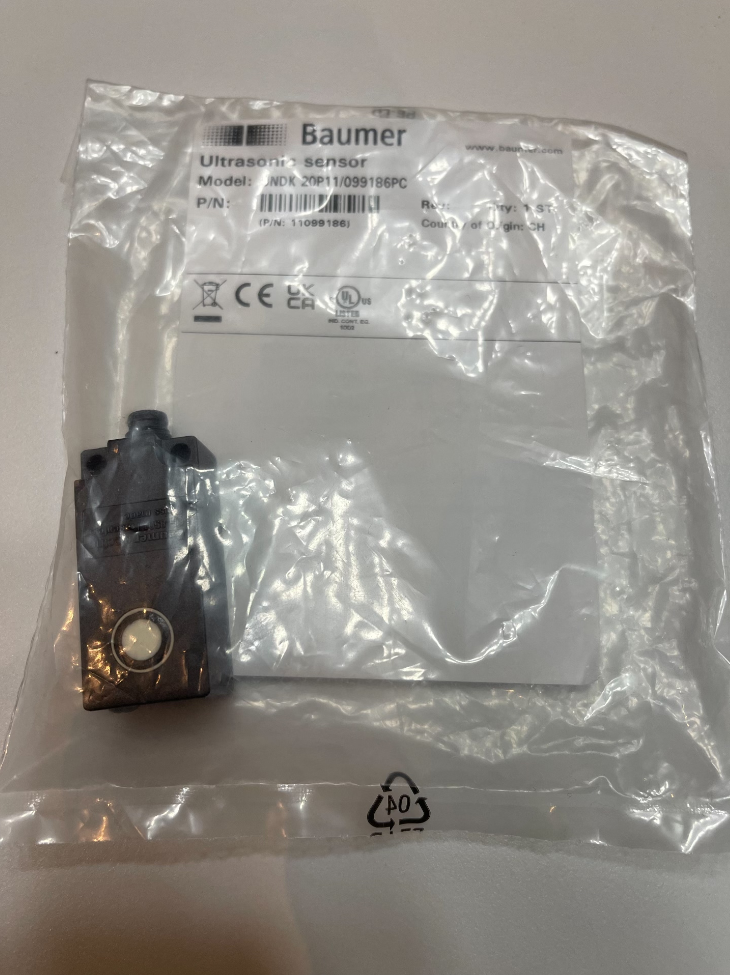

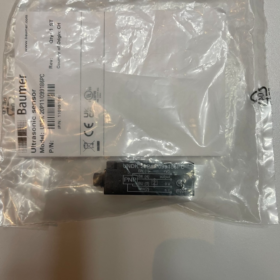
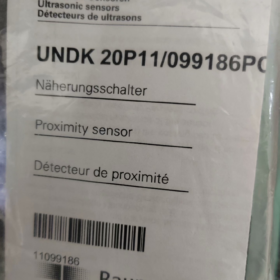
UNDK20P11
- UNDK: Integrated transmit-receive rectangular sensor ultrasónico serie
- 20: 20mm housing width, compact block housing
- PAG: Salida de transistor PNP
- 11: Standard switching type, fixed measuring range, conector m8, Normalmente abierto (NO) producción
Número de material: 099186
- Especificaciones eléctricas básicas
| Elemento de parámetro | Valor de especificación |
| Voltaje de suministro | DC 15~30V (UL Class2) |
| Static Power Consumption | ≤55mA |
| Tipo de salida | 3-wire PNP Normally Open (NO) |
| máx.. Corriente de carga | 200mamá |
| Switch Hysteresis | Típico 4% of full range |
| Respuesta / Tiempo de lanzamiento | ≤35ms |
| Ultrasonic Frequency | 380kilociclos |
| Método de ajuste | On-body Teach-in self-learning calibration |
| Indicadores | LED amarillo (estado del interruptor), LED rojo (falla / target indication) |
III. Measuring & Ranging Specifications
Rango de medición: 40mm~400mm
Dead zone Sdc: 40milímetros (unstable detection below 40mm)
Precisión de repetición: <0.5mm
Resolución: <0.3mm
Sound Beam Angle: Standard narrow beam, suitable for narrow stations and adjacent interference suppression
- Mecánico & Especificaciones de protección
- Dimensión general: Rectangular block, 42milímetros (l) × 20mm (W.) × 15mm (t)
- Material de la carcasa: PA12 engineering plastic; sound transducer head: POM
- Interfaz eléctrica: Conector macho M8 de 4 pines (S35A standard plug)
- Clase de protección: IP67, a prueba de polvo y salpicaduras
- Temperatura de funcionamiento: -10℃~+60℃
- Rendimiento antiinterferencias: Resistant to dust, moisture and mist; unaffected by target color, transparency or metal materials
- Asignación de pines (M8 4Pin)
- Pin1: Brown → DC24V Positive
- Pin2: White → Teach-in input
- Pin3: Blue → 0V GND Negative
- Pin4: Black → PNP switching output
- Escenarios de aplicación típicos
- Maquinaria de embalaje: Detección de presencia de material, carton position confirmation, transparent plastic bottle inspection
- Transporte Logístico: Workpiece counting, detección de presencia de objetos, low-level bin warning
- Batería de litio / 3C Industry: Small workpiece positioning, thin transparent material detection (for environments where photoelectric sensors fail)
- carpintería & Industria textil: Replace photoelectric sensors in dusty environments; stable detection for non-reflective materials
VII. Reference Alternative Models in the Same Series
- UNDK20N11: Mismas dimensiones & rango de medición, NPN Normally Open output
- UNDK20P6914: Analog 4–20mA ranging version (continuous distance signal output)
- UNDK20P17: Versión de largo alcance, 100–1000mm measuring range
VIII. Ventajas del producto
- Ultra-small 40mm dead zone, compact 20mm block design for limited installation space
- One-touch Teach key to set switching threshold; no tools required for commissioning
- Immune to interference from transparent, black and mirror surfaces, superior to photoelectric sensors
- IP67 industrial protection, compatible with humid and heavily dusty production lines
Baumer UNDK20P11 Ultrasonic Sensor Installation & Manual de operación
Versión del documento: V1.0 | Modelo aplicable: UNDK20P11 (Número de material. 099186)
Tabla de contenido
- Instrucciones de seguridad previas a la instalación
- Unpacking & Product Specification Verification
- Especificaciones de instalación mecánica (Dimensiones, Brackets, Spacing, Interference Prevention)
- Electrical Wiring Definition & Procedimientos de cableado
- Complete Teach-in Calibration Process
- Environmental Installation Restrictions & Forbidden Working Conditions
- Isolation Standards for Side-by-Side / Opposed Multi-sensor Installation
- Power-on Verification & Solución de problemas
- Mantenimiento de rutina & Storage Specifications
- Quick Reference Technical Parameter Table
1 Instrucciones de seguridad previas a la instalación
- Disconnect the 24V DC power supply before wiring, disassembly or assembly. Hot plugging/unplugging of M8 connectors is strictly prohibited to avoid breakdown and burnout of output transistors.
- Only DC 15~30V power supply is permitted; AC power and high-voltage power supply are forbidden.
- The maximum load current of PNP output is 200mA. A freewheeling diode must be connected in parallel across inductive loads such as solenoid valves and relays (reverse parallel on both ends of the coil).
- Do not install the sensor at close proximity to strong ultrasonic sound sources (high-pressure washers, ultrasonic welding machines, high-frequency pneumatic nozzles), which will cause false triggering.
- The housing is made of PA12 plastic. Do not strike the sound-emitting surface with sharp hard objects, and avoid direct spraying of strong acid or strong solvent onto the transducer head.
- Only suitable for standard indoor industrial environments; a rainproof protective cover is mandatory for outdoor use.
2 Unpacking & Product Verification
2.1 Standard Package List
1 × UNDK20P11 ultrasonic sensor main unit
1 × Short product instruction sheet
2.2 Visual Inspection Items
- Sin grietas en la vivienda; no scratches or oil contamination clogging the sound-emitting surface
- M8 4-pin male plug free of deformation; pins without bending or oxidation
- Intact side Teach key; transparent red/green LED windows without damage
2.3 Quick Reference Basic Parameters
Rango de medición: 40milímetros (dead zone) ~ 400mm (distancia máxima de detección)
Producción: 3-cable PNP NO (Normalmente abierto)
Ultrasonic frequency: 380kilociclos
Clase de protección: IP67
Temperatura de funcionamiento: -10℃ ~ +60℃
3 Especificaciones de instalación mecánica
3.1 Dimensiones generales (Unidad: milímetros)
longitud total 42 × width 20 × thickness 15, compact block housing.
3.2 Standard Installation Methods
Método A: Aluminum Profile Groove Bracket Mounting (Recomendado)
- Use plastic or metal snap brackets matched with standard 20mm aluminum profiles to wrap both sides of the sensor body.
- Tightening torque of fixing screws shall be controlled at 0.4~0.6N·m. Do not compress the housing with excessive force to prevent damage to internal piezoelectric crystals.
- The sound-emitting surface shall face the measured object vertically; a slight inclination of ±10° is allowed. Excessive tilt will drastically reduce detection stability.
Método B: Sheet Metal Cutout Fixing
- Dimensión de recorte: 21mm × 16mm; chamfer and deburr cutout edges.
- Non-flush mounting of the sensor: The transducer head shall protrude at least 5mm outward from the sheet metal.
- Sheet metal tightly attached to both sides of the head will reflect ultrasonic waves, resulting in enlarged dead zone and frequent false detection.
3.3 Mandatory Key Installation Distance Requirements
- Minimum dead zone: The distance between target and transducer head shall not be less than 40mm; targets within 40mm cannot be detected.
- Maximum effective detection distance: 400milímetros; no signal output beyond this range.
- No metal brackets, cables or bolts shall be fixed within the 120° sound beam in front of the head to avoid blocking ultrasonic waves.
- Minimum target width: Stable detection requires target width ≥25mm at a distance of 200mm.
3.4 Environmental Taboos for Single Sensor Installation
Continuous water dripping or direct mist spray above / beside the transducer head is forbidden.
Keep away from fans, air guns and high-pressure blow nozzles (airflow disturbs ultrasonic echoes).
Long-term operation in silicone volatile environments (silicone glue, silicone oil seals) will clog the sound diaphragm.
4 Electrical Wiring Definition & Operación
4.1 M8 4-Pin Male Connector Pinout
| Número de PIN. | Color del cable | Función | Descripción |
| Pin1 | Marrón | DC24V+ Power Positive | Supply DC 15~30V |
| Pin2 | Blanco | External Teach-in wire | Short to +24V to trigger calibration |
| Pin3 | Azul | 0V GND Power Negative | System common ground |
| Pin4 | Negro | PNP Normally Open Output | Outputs 24V when target is detected, máximo. 200mamá |
4.2 Procedimientos de cableado
- Cut off total power and confirm no voltage output from PLC / fuente de alimentación.
- Connect with standard M8 4-core female cable; cable bending radius ≥ 5 × cable outer diameter.
- Separate power cables (motor, inverter cables) from sensor signal cables with a spacing ≥100mm to avoid inverter interference.
- Secure cables with cable ties; reserve 50mm slack at connectors to eliminate long-term tensile stress on plugs.
- Install freewheeling diodes for inductive loads: Anode of diode connects to load negative terminal, cathode connects to 24V output terminal.
4.3 Requisitos de fuente de alimentación
Ripple voltage ≤10% of rated voltage
It is recommended to add a 1000μF filter capacitor to the switching power supply to suppress industrial grid interference
Do not share the same power circuit with high-power motors
5 Teach-in Calibration Process (Two Modes: Llave / External Wire)
5.1 Single Switch Threshold Setting (Operación estándar)
Método 1: On-body Key Calibration
- Encienda el sensor; green LED lights steadily for standby status.
- Press and hold the side Teach key for 2 artículos de segunda clase; green LED flashes rapidly.
- Place the workpiece at the target trigger detection distance.
- Short-press the Teach key once.
- Green LED stays lit for 2 artículos de segunda clase, indicating parameter storage complete and commissioning finished.
Metho 2: External Calibration via White Teach Wire (PLC Automatic Calibration Scenarios)
- Short the white wire to brown 24V positive terminal for 2s; green LED flashes.
- Place the workpiece at the preset detection distance.
- Disconnect then instantly re-short the white wire once.
- Green LED stays steady for 2s to save the threshold value.
5.2 Restaurar la configuración predeterminada de fábrica
- Press and hold the Teach key for over 6 artículos de segunda clase / keep the white wire connected to 24V for more than 6 artículos de segunda clase.
- Red and green LEDs flash alternately.
- Release the key / disconnect the white wire; factory default measuring range 40~400mm and default switch point are restored automatically.
5.3 LED Indicator Status Description
| Estado del LED | Equipment Status |
| Green steady on | Powered standby, no target detected |
| Yellow lit | Objetivo detectado, PNP output conducting |
| Rojo & green alternate flashing | Calibration reset in progress / parameter reset successful |
| Red steady on | Falla: cortocircuito, error de cableado, clogged sound diaphragm |
6 Multi-sensor Installation Isolation Specifications (Mutual Interference Prevention)
6.1 Side-by-Side Same-Direction Mounting (Same Detection Orientation)
Minimum center-to-center distance between two UNDK20 series sensors: ≥120mm
Insufficient spacing causes mutual ultrasonic reflection and continuous false triggering.
6.2 Opposed Face-to-Face Mounting (Heads Facing Each Other)
Vertically stagger the axes of two heads by ≥150mm; direct face-to-face installation is forbidden.
If close opposed layout is mandatory, stagger mounting heights to avoid overlapping sound beams.
6.3 Recommended Layout for Dense Multi-sensor Arrangement
- Install sensors in staggered high-low layers.
- Equip each sensor with independent aluminum profile separation baffles (ABS / metal baffles block ultrasonic waves).
- Split sensors into two groups with staggered power supply timing to avoid interference from simultaneous ultrasonic emission.
7 Power-on Inspection & Matriz de solución de problemas
7.1 No LED Illumination After Power-up
- Reversed or broken brown/blue power wires
- Supply voltage lower than 15V
- Poor crimping of M8 plug pins; re-crimp the cable.
7.2 Yellow LED Steady On Without Target (Activación falsa)
- Metal brackets or cables block the sound beam in front of the head
- Insufficient spacing between two sensors causing mutual interference
- Continuous airflow or mist disturbs ultrasonic echoes
- Excessively long calibrated distance via Teach-in; re-calibrate the threshold.
7.3 No Signal Output With Workpiece Present (Yellow LED Off)
- Workpiece distance falls within the 40mm dead zone
- Overly small workpiece or sound-absorbing material (thick sponge, sound-absorbing foam)
- Sound diaphragm clogged with dust and oil; wipe and clean thoroughly
- Overly close Teach-in threshold setting; re-perform Teach calibration.
7.4 Persistent Red Fault Indication
- Short-circuited output load; disconnect load and re-test
- Supply voltage exceeds 30V, burning internal circuits
- Damaged sound diaphragm; se requiere reemplazo del sensor.
8 Environmental Installation Restrictions & Protección
- Rango de temperatura: -10℃ ~ +60℃. Frost on the head below -10℃ leads to failure; heating shield required.
- Protección IP67: Tolerates short splashing water; long-term underwater submersion and direct high-pressure water jet flushing of the head are forbidden.
- Heavy dust conditions (carpintería, cemento, lithium powder): Blow clean the sound diaphragm with dry compressed air monthly.
- Corrosive mist environments (galvanoplastia, pickling): Use sealed protective covers to isolate acid and alkali fumes.
9 Especificaciones de mantenimiento de rutina
- Weekly visual inspection of transducer head surface to remove dust, oil and water stains.
- Tighten bracket mounting screws monthly to eliminate loosening caused by vibration.
- Inspect M8 connector cables quarterly for abrasion and cracking.
- Clean only with dust-free cloth and clean water; soaking the head in alcohol, acetone or thinner is prohibited.
10 Appendix: Parámetros técnicos básicos
| Elemento de parámetro | UNDK20P11 Specification |
| Serie de modelos | UNDK20 Compact Ultrasonic Series |
| Rango de medición | 40mm ~ 400mm |
| Dead Zone | 40milímetros |
| Tipo de salida | PNP 3-wire Normally Open (NO) |
| Voltaje de suministro | DC15~30V |
| máx.. Corriente de salida | 200mamá |
| Switch Hysteresis | 4% of full range |
| Tiempo de respuesta | ≤35ms |
| Ultrasonic Frequency | 380kilociclos |
| Material de la carcasa | PA12; transducer head POM |
| Clase de protección | IP67 |
| Interfaz | M8 4-pin Male S35A Connector |
| Dimensiones de montaje | 42×20×15mm |
11 Installation Acceptance Standards
Three acceptance items must be completed before putting equipment into production after installation:
- Mechanical Acceptance: No loose brackets, unobstructed transducer heads, compliant spacing for multi-sensor layout.
- Electrical Acceptance: Correct wiring, no short circuits, freewheeling diodes fully fitted for inductive loads.
- Functional Acceptance: Repeatedly insert and retract workpieces; stable sensor triggering without missing detection or false detection.


NH42-63-318x560.png "Interruptores de transferencia automática tipo PC CHINT (ATS)NH42-63/4SZ")