contactor,cortacircuitos,sensor,Codificador,SOCIEDAD ANÓNIMA,Convertidor

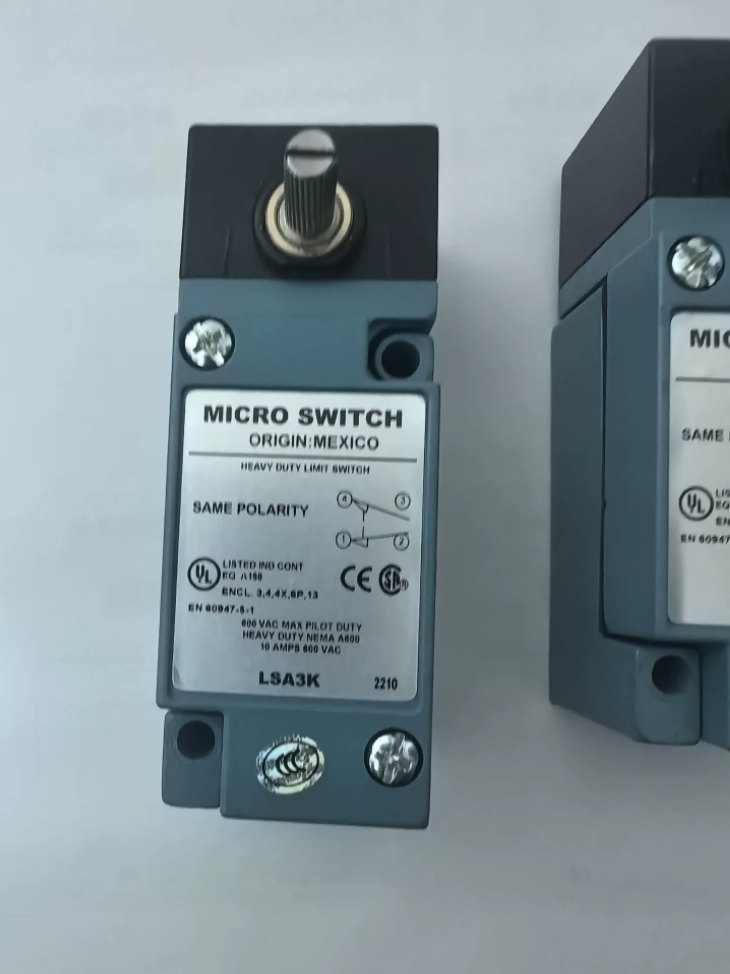

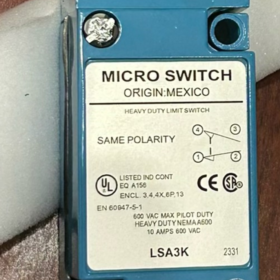
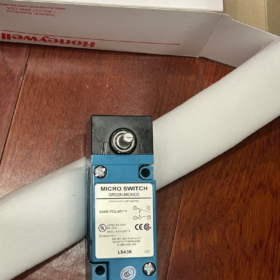
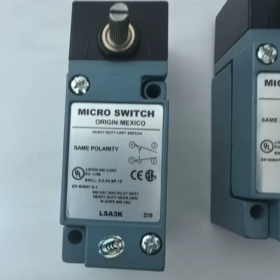
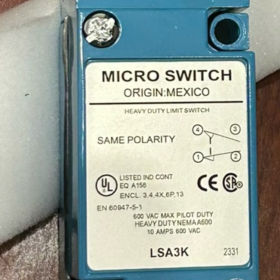
(HDLS Series Heavy-Duty Side-Rotary Interruptor de límite, also referred to as Micro LSA3K)
Interpretación del modelo
LSA3K: HDLS heavy-duty limit switch, non-plug-in body, side-rotary actuator head, SPDT (Unipolar de doble tiro), screw-terminal wiring, NPT1/2 conduit port
Marca: mielwell MICRO SWITCH, Hecho en EE.UU.
Especificaciones eléctricas básicas
| Artículo | Especificación |
| Configuración de contacto | SPDT 1NO+1NC, double‑break snap‑action contacts |
| Corriente nominal | 10 A |
| máx.. Voltaje CA | 600 VACACIONES |
| máx.. Voltaje CC | 250 VCC |
| Terminación | Terminales de tornillo (non‑plug‑in) |
| Modo de operación | Momentáneo; actuable by clockwise / counter‑clockwise rotation |
Mecánico & Especificaciones ambientales
Solenoide: Side-rotary shaft, máx.. operating torque 0.45 N·m (4 in-lb)
Pre-travel: máx.. 15°; Overtravel: mín.. 60°
Temperatura de funcionamiento: -12℃ ~ +121℃
NEMA Ratings: 1, 3, 4, 4incógnita, 6, 6PAG, 12, 13 (Exterior, dust-proof and water-resistant)
Conduit Entry: 1/2-14 TNP
Código HS: 8536509055
Aplicaciones típicas
Maquinaria de construcción, trailers, irrigation equipment, retroalimentación de posición de válvula, climatización, equipo de prueba, heavy-duty machinery position limiting, material-handling equipment travel detection.
The rotary head can be re-oriented directly without disassembling the switch body for convenient commissioning.
Quick Comparison of Similar Series Models
- LSA1A: Plug-in body, otherwise functionally similar to LSA3K
- LSA3K: Non-plug-in, screw-terminal (modelo objetivo)
- LSP3K: Plunger-type (non-rotary head), non-plug-in body
Referencia de reemplazo nacional
Replacement requirements: Side-rotary lever type, SPDT, 10 A, high-protection NEMA4X / IP67, terminales de tornillo, amplio rango de temperatura de funcionamiento
Alternativas domésticas: WL-SD (side-rotary), AZ5104, JDHK-3Y. Please verify operating torque, travel angles, conduit thread specifications.
Long lead-time for original unit (aprox. 18 weeks OEM lead-time). Used units are widely available on the second-hand market. Inspection checklist for used switches:
- Check rotary shaft for smooth rotation without binding;
- Verify NO / NC contact switching with multimeter;
- Inspect housing for cracks and intact sealing.
Honeywell MICRO-SWITCH LSA3K (HDLS Series Heavy-Duty Limit Switch) Instrucciones de instalación
Corresponding OEM document: HDLS Series Installation Instructions (Doc. No. 81116-6). LSA3K is non-plug-in with side-rotary actuator head.
⚠️WARNING: This switch shall NOT be used as an emergency-stop or safety-protection device. Failure may result in personal injury or death. Use dedicated safety switches for safety-related applications.
1 Product Information
Modelo: LSA3K, HDLS Series, non-plug-in body, terminales de tornillo, side-rotary drive shaft, SPDT (1Contactos de acción rápida NO+1NC)
Conduit port: 1/2-14 TNP
Alojamiento: Aleación de zinc fundido a presión; NEMA 1/3/4/4X/6/6P/12/13; IP67 dust-proof and water-resistant
Actuator shaft parameters: máx.. operating torque 0.45 N·m (12-16 in-lb); máx.. pre-travel 15°; mín.. overtravel 60°; actuable clockwise and counter-clockwise.
2 Instalación Mecánica
2.1 Two Mounting Methods
1) Front-mounting (Recomendado): Fasten with two 10 screws through mounting holes on front face of housing.
2) Rear-mounting: Use two 10-32 UNF screws threaded into internal tapped holes on rear of housing from equipment back-plate.
Mount onto rigid metal base. Do NOT install on thin, easily-deformed plates subject to heavy vibration.
2.2 Par de apriete
Switch mounting screws: 1.4-1.8 Nuevo Méjico (12-16 in-lb). Do NOT over-torque; housing cracking and deformation may occur.
Actuator lever locking screw: Tighten lever until the anti-rotation “Teller tab” deflects, confirming secure locking to prevent lever slippage under vibration.
2.3 Actuator Alignment Guidelines (Side-Rotary Shaft)
- Drive mechanism (cam / dog) rotates switch shaft. Ensure at least ≥60° overtravel. Do NOT stop merely within pre-travel range. Avoid exceeding mechanical end-stop to prevent shaft damage.
- No lateral radial load shall be applied; only rotational torque is permitted.
- Rotary-head orientation can be adjusted directly without opening switch housing.
- Avoid installation at low points where condensate accumulates. Do not orient conduit fitting downward at the lowest point of piping to prevent condensate ingress.
2.4 Conduit Sealing
Apply PTFE tape or pipe sealant on 1/2-14 NPT threads to maintain environmental rating. Ingress of water causes contact corrosion and premature failure.
Prevent excessive sealant from squeezing into switch interior.
3 Cableado eléctrico
Disconnect all power supply before wiring. Comply with local electrical codes. LSA3K uses screw terminals (no enchufable) with internal protective earth terminal.
- Remove cover screws and open wiring compartment.
- Identificación de terminales: COM (Común), NO (Normalmente abierto), CAROLINA DEL NORTE (Normalmente cerrado); dedicated protective-earth terminal is provided.
- Alambrado: Use stranded copper conductors. Apriete los tornillos de los terminales; limit exposed bare conductor length to avoid short-circuit. Prevent wire debris from falling inside enclosure.
- Electrical ratings: Max. 600 VAC, 10 A resistive; Max. 250 VDC.
- Después del cableado, confirm gasket integrity, refit cover and tighten cover screws evenly.
Circuito: SPDT single-pole double-throw, snap-action, momentáneo (no latching).
4 Procedimiento de puesta en servicio
- Manually cycle actuator shaft. Rotation must be smooth with no binding or sticking.
- Multimeter test: COM-NC conducts in free state; contacts snap-over to COM-NO conduction at actuation angle; automatic reset upon release.
- Simulate machine motion: Confirm mechanical dog reliably drives switch into overtravel without jamming shaft.
- Verify housing and conduit sealing are fully completed.
5 Ambiente & Mantenimiento
Temperatura de funcionamiento: -12℃ ~ +121℃
Inspección periódica: Check mounting-screw tightness, lever slippage, housing cracks and conduit sealing integrity.
Do NOT disassemble internal switch mechanism. Internal contact assembly is non-serviceable; reemplace la unidad completa en caso de falla.
6 Errores comunes de instalación
- Par de apriete excesivo: Housing cracking, loss of environmental protection.
- Insufficient overtravel: Operation remains in pre-travel region; unstable contacts and random mis-operation.
- Missing NPT thread sealing: Entrada de agua, contact oxidation and failure.
- Unlocked lever: Lever slips under vibration leading to position drift.
- Using as emergency-stop safety switch: Violates design specification, creates hazard.
7 Key Mounting Dimensions
Front-mount hole center-to-center distance: approx. 44.2 mm; hole diameter 5.1 mm.
Conduit port: Bottom-located 1/2-14 NPT.
Operating Principle of Honeywell LSA3K (HDLS Series)
LSA3K is a heavy-duty rotary snap-action limit switch (Micro-Switch). Its core mechanism converts mechanical rotary displacement into electrical on-off signals via mechanically-driven spring-loaded snap-action contact assembly; it is a momentary-reset travel switch.
1 Overall Construction
- External rotary drive shaft: Driven by external cams / dogs; supports clockwise and counter-clockwise actuation.
- Internal cam conversion mechanism: Rotary motion of external shaft drives internal cam, converting angular rotation into linear thrust to actuate spring contact assembly.
- Snap-action spring contact assembly (Centro): Double-break SPDT (COM-NO-NC). Pre-loaded springs deliver instant snap-over switching, not gradual contact make-and-break.
- Screw-terminal block and die-cast alloy housing providing dust-proof and water-resistant protection.
Característica clave: Contacts do not close gradually. Energy stored in springs triggers instant state transition once threshold angle is reached.
2 Full Operation Sequence
Un-actuated Free State
Internal springs hold assembly at rest position:
COM Common ↔ NC Normally Closed: Conducting
COM Common ↔ NO Normally Open: Abierto
Shaft sits at 0° home position.
Actuation Sequence (Shaft Rotation)
- External mechanism rotates shaft through pre-travel (max. 15°).
Internal cam compresses springs to store mechanical energy. No contact switching occurs during pre-travel.
- Shaft rotates past threshold angle; stored spring energy releases for instant snap-over:
Contacts transfer rapidly: COM-NC opens → COM-NO closes.
Snap-action property: Regardless of shaft rotational speed, contacts switch instantly to suppress contact bounce.
- Further rotation enters overtravel (minimum 60°); contacts remain in COM-NO closed state.
✅Installation must ensure machine drives switch into overtravel; staying only within pre-travel results in unstable contact performance.
⚠️Do not exceed mechanical end-stop angle to avoid shaft damage.
Reset Sequence
External driving force is removed. Internal return spring pushes shaft back to home position. Contacts snap back instantly to COM-NC conducting and COM-NO open.
👉Momentary, sin enclavamiento; automatic reset upon removal of external force.
3 Principio eléctrico (SPDT Double-Break)
COM: Terminal común
CAROLINA DEL NORTE: Normalmente cerrado (conducting in rest condition)
NO: Normalmente abierto (conducting after actuation)
Double-break design interrupts both sides of circuit simultaneously for enhanced arc suppression. Rated up to 600 VAC / 10 A resistive and 250 VDC for industrial AC and DC circuits.
4 Key Functional Principles
- Bi-directional actuation: Internal cam design permits triggering via both clockwise and counter-clockwise shaft rotation.
- Acción rápida (Snap-over) advantage:
Contact bounce and arcing are eliminated even for slow mechanical motion. Instant contact transfer reduces electrical erosion and extends contact service life.
- Environmental protection principle: Die-cast zinc housing plus sealing gaskets achieve NEMA4X / IP67 rating against dust and splash water for outdoor and construction-equipment deployment.
Environmental performance is conditional: NPT conduit threads must be sealed and cover screws evenly tightened.
5 Conceptos erróneos comunes
- ❌Not a potentiometer. Only discrete on-off switching outputs; no analog signal.
- ❌Limit switch ≠ safety switch. Must NOT be deployed in emergency-stop safety circuits. Internal mechanism seizure constitutes a failure mode.
- ❌No lateral radial loads allowed on shaft. Only rotational torque permitted. Side-loads accelerate bushing wear and premature failure.
Resumen simplificado
External mechanical dogs rotate the switch shaft. Internal mechanism compresses springs. Once threshold rotation is exceeded, springs trigger instant contact state change. Upon removal of external force, springs reset contacts back to rest condition. Switch delivers discrete position signals to PLCs or relays for position monitoring and travel limiting on machinery.


NH42-63-318x560.png "Interruptores de transferencia automática tipo PC CHINT (ATS)NH42-63/4SZ")