contactor,cortacircuitos,sensor,Codificador,SOCIEDAD ANÓNIMA,Convertidor

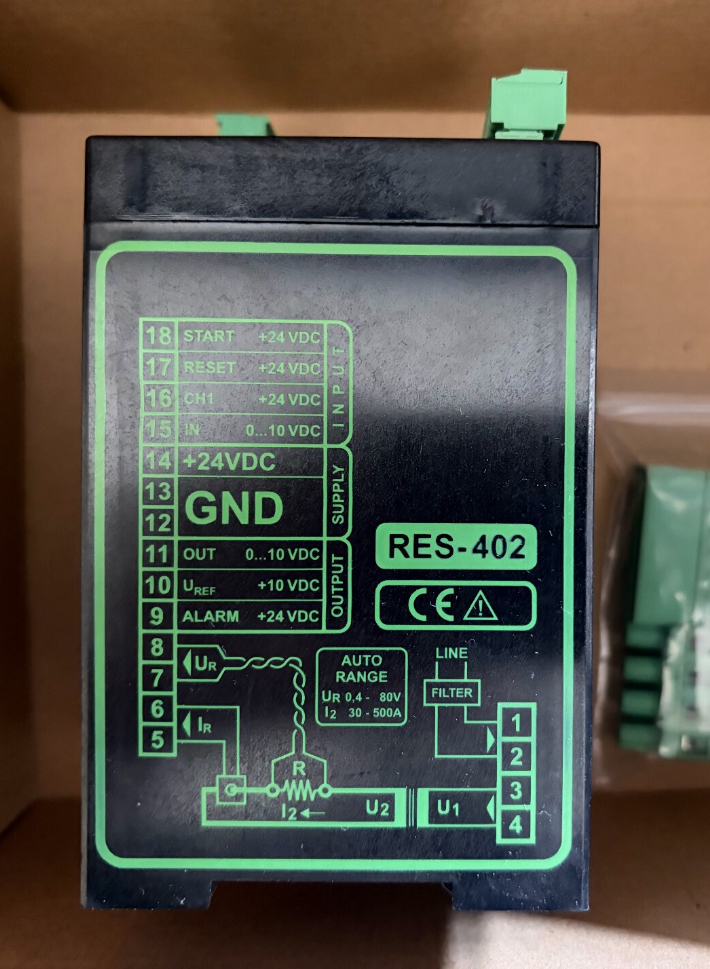

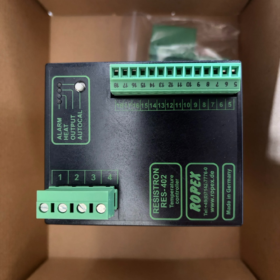
Marca: cuerdax, Alemania
Definición del producto: Sellado térmico por impulso resistivo sin sensores controlador de temperatura (No se requiere termopar! La temperatura se calcula detectando la variación de resistencia de la propia banda termoselladora.)
Solicitud: Controlar bandas termoselladoras, cuchillas de sellado, Hilos de corte en caliente y elementos de soldadura térmica., Ampliamente adoptado para procesos de termosellado por impulso en máquinas de fabricación de bolsas y equipos de embalaje..
⚠️ Aviso importante: RES-402 ha sido declarado oficialmente obsoleto. Los suministros consisten principalmente en excedentes nuevos y unidades reacondicionadas usadas.. Alternativas mejoradas recomendadas: RES-420 / RES-430 / RES-5010.
- Codificación de modelos & Desglose del número de pedido
Formato de modelo completo: RES-402/Tensión de alimentación
| Modelo completo | Número de pieza de fábrica. | Rango de potencia principal |
| RES-402/115VAC | 740201 | 94~132 VCA |
| RES-402/230VAC | 740202 | 187~264 VCA (Standard for 220V mains in China) |
| RES-402/400VAC | 740203 | 323~456 VAC (For equipment powered by 380V mains) |
- Especificaciones técnicas clave
- Temperature Measurement Principle: Passive resistance detection (thermocouple-free)
- Temperature Measuring Range: 0~300 °C (Matched with A20 alloy heat-sealing band)
- Adaptación de carga (AUTORANGE Auto-Ranging Function)
Transformer secondary voltage: 0.4~80 VAC
Secondary current: 30A~500A
- Montaje: DIN TS35 standard rail mounting
Dimensión general: W90mm × D75mm × H135mm (including terminals)
- Fuente de alimentación auxiliar: 24VCC (Terminales 13/14), máx.. 1A, reverse-polarity protection
(Must be powered independently and galvanically isolated from main power circuit)
- Comunicación & Analog Interfaces (Electrically Isolated)
Setpoint input: 0~10VDC or external PD-3 potentiometer
Actual temperature output: 0~10VDC (0–300℃ corresponds linearly to 0–10V, for PLC acquisition)
- Digital Control Signals (24VDC Isolated Input)
START (Heating enable), AUTOCAL (Automatic calibration), REINICIAR (Restablecimiento de fallas)
- Grid Frequency Adaptation: Auto detection for 47~63Hz mains frequency
- Funciones de protección: Heat-sealing band breakage detection, alarma de sobretemperatura, fault relay output with LED indicator
- Built-in Core Functions
AUTOCAL Automatic Zero Calibration: One-touch baseline resistance calibration after startup or heat band replacement
AUTOTUNE PID Self-Tuning: Automatically adapt to thermal capacity of heat-sealing bands to suppress temperature overshoot
AUTORANGE: Automatic detection of transformer secondary voltage and current; no manual DIP switch setting (Units manufactured from 2006 onwards)
Closed-loop primary-side phase-angle regulation for the transformer with low power loss
- Escenarios de aplicación típicos
Impulse heat sealing on plastic bag machines, vertical form-fill-seal machines and horizontal flow wrappers
Heat sealing for PE/PP composite films and aluminium foil pouches
Hot film cutting, Procesos de sellado térmico de bordes y termosellado de catéteres.
Estaciones de termosellado para envases flexibles de baterías de iones de litio
- Pautas de cableado (Versión condensada)
- LÍNEA del circuito principal: Conéctelo a la alimentación principal de CA como se indica en la placa de identificación del controlador. (115/230/400V)
- Terminales 13 & 14: Es obligatoria una fuente de alimentación auxiliar externa independiente de 24 VCC (alimenta todos los circuitos de señal)
- El devanado primario del transformador de impulsos es accionado por RES-402.; El devanado secundario se conecta directamente a la banda de termosellado.
- Señales analógicas: 15(+) / 12(-) entrada de punto de ajuste; 11(+) / 12(-) salida de retroalimentación de temperatura real
- 16 START, 17 AUTOCAL, 18 REINICIAR: Activado por nivel alto de 24 VCC
- Terminales de ALARMA: Salida de falla pasiva para recolección de señales de alarma de PLC
✅ Recomendación de cableado: Utilice cables de par trenzado para el cableado secundario de bandas termoselladas para reducir la interferencia electromagnética.; Conecte a tierra de manera confiable el lado secundario del transformador para evitar la deriva electrostática..
- Modelos alternativos para actualización obsoleta
- Direct functional replacement (Minimum modification required): RES-420
- Intelligent upgrade with fieldbus (Profinet/Modbus): RES-5010
- Notas de reemplazo: Verify supply voltage, transformer specifications and logic of PLC analog signals & E/S digitales.
- Solución rápida de problemas
- ALARM LED steady on, heating disabled: Broken heat-sealing band or open secondary circuit
- Temperatura persistentemente baja, unstable control: AUTOCAL not executed, insufficient transformer capacity
- Severe temperature oscillation and overshoot: Re-run AUTOTUNE self-tuning
- Controller completely unresponsive: Inspect independent 24VDC auxiliary power supply
(Common oversight! The unit cannot operate with main LINE power only.)
Detailed Explanation of AUTORANGE (Automatic Load Ranging Function) for ROPEX RES‑402
Critical Preliminary Clarification
AUTORANGE ≠ AUTOCAL
AUTORANGE: Detect transformer secondary voltage U₂ and secondary current I₂, automatically configure hardware measurement ranges (coincidencia de ganancia de hardware)
AUTOCAL: Recoger la resistencia de referencia de la banda de termosellado en frío a temperatura ambiente., establecer resistencia ↔ curva de conversión de temperatura (calibración de temperatura cero)
Las dos funciones trabajan en colaboración pero siguen siendo independientes..
Límite de la versión de producción (Información clave para adquisiciones & Mantenimiento)
- RES‑402 fabricado antes de diciembre 2005: No AUTORANGE
Los interruptores DIP internos deben ajustarse manualmente para establecer rangos de voltaje y corriente secundarios.. Los ajustes incorrectos del interruptor provocan fallos de medición y alarmas.
- RES‑402 fabricado a partir de enero 2006 onwards: AUTORANGE equipado
La configuración del interruptor DIP es anulada por el firmware. No se requiere configuración manual del rango. Los parámetros eléctricos de carga se identifican automáticamente durante el procedimiento AUTOCAL.
- Definición oficial de AUTORANGE
nombre completo: Configuración automática de rangos de tensión y corriente secundarios.
Detecta automáticamente el voltaje secundario U₂ y la corriente de salida I₂ del transformador de pulsos, Seleccione dinámicamente el circuito de muestreo de voltaje interno y la ganancia de amplificación del transformador de corriente.. Esto garantiza que los circuitos de medición funcionen dentro del rango de precisión óptimo y permite una amplia compatibilidad de carga..
Cobertura de carga nominal oficial (Nueva versión)
Circuito abierto secundario del transformador / tensión de funcionamiento U₂: 0.4 VAC ~ 80 VACACIONES
Corriente de funcionamiento secundaria del transformador I₂: 30 Un ~ 500 A
Explicación simplificada: Una sola unidad RES‑402 puede impulsar bandas de sellado estrechas de baja potencia (bajo voltaje, decenas de amperios) así como amplia, cuchillas de sellado largas de alta potencia (alto voltaje, cientos de amperios). No es necesario reemplazar el controlador ni ajustar el interruptor interno.
- Principio operativo subyacente
RES‑402 es un controlador de termosellado por impulso resistivo sin termopar. La temperatura se calcula continuamente en función de la variación de resistencia de la banda de termosellado..
Para medir con precisión la resistencia de la banda, El controlador muestrea simultáneamente dos señales.:
- Señal de tensión secundaria Ur del transformador de impulsos.
- Señal de corriente del bucle secundario Ir
La resistencia instantánea de la banda termoselladora se calcula mediante la ley de Ohm.: R = Ur / Y.
Múltiples conjuntos de divisores de voltaje de hardware y circuitos amplificadores están integrados internamente. Diferentes niveles de U₂/I₂ requieren rangos de amplificación coincidentes.
Secuencia de ejecución de AUTORANGE & Momento
- El controlador completa la autoprueba de encendido (Espere ≥10s)
- Confirme que la señal de INICIO esté APAGADA y que la banda termoselladora se enfríe a temperatura ambiente.
- El usuario activa AUTOCAL (Botón del panel frontal o pulso de 24 VCC en terminal externo)
- El escaneo de carga AUTORANGE se activa simultáneamente al iniciar AUTOCAL
El controlador envía una señal de excitación de prueba de bajo nivel al circuito secundario del transformador
Se captura la amplitud muestreada sin procesar de Ur e Ir
MCU cambia automáticamente la ganancia del front-end analógico interno para que coincida con el U₂ medido & yo₂
- Después de una coincidencia de rango exitosa, Los parámetros de muestreo están bloqueados.; El LED amarillo AUTOCAL se ilumina continuamente
- Se completa el muestreo de resistencia inicial (aprox. 10~15s). Los finales de calibración y los parámetros de rango se guardan.
- Los parámetros de rango identificados se aplican para el control de temperatura de circuito cerrado en todos los ciclos de calentamiento posteriores.
⚠️ AUTORANGE solo realiza escaneo de carga durante la calibración AUTOCAL. El cambio de rango dinámico NO ocurrirá durante el funcionamiento normal de calefacción..
Se debe volver a ejecutar AUTOCAL para actualizar la identificación de carga de AUTORANGE después de reemplazar la banda de sellado térmico, transformador de impulsos o modificación de la longitud de la tira de sellado!
- Beneficios de ingeniería de AUTORANGE (Comparación con la versión anterior con interruptores DIP manuales)
| Escenario de aplicación | Unidades más antiguas sin AUTORANGE | Unidades más nuevas con AUTORANGE |
| Rediseño de equipos / reemplazo de cuchillas térmicas | Abra la carcasa del controlador y ajuste los interruptores DIP; alto riesgo de mala configuración | Ejecute AUTOCAL sin desmontaje para adaptación automática. |
| Controlador de repuesto común para múltiples variantes de máquinas | Los repuestos no se pueden compartir.; inventario dividido por rango de voltaje/corriente | Recambio universal con modelo único RES‑402 |
| Consecuencias de un ajuste de rango incorrecto | Deriva de temperatura, unstable control, ALARMA frecuente, detección de rotura de banda falsa | Coincidencia automática; elimina el riesgo de error de configuración humana |
| Carga de trabajo de puesta en marcha in situ | Los técnicos deben memorizar las tablas de interruptores DIP. | Menos pasos de puesta en marcha eléctrica |
- Requisitos previos & Limitaciones de AUTORANGE (Conocimientos técnicos críticos para evitar fallas en el campo)
✅ Condiciones de funcionamiento admitidas
- Tensión secundaria del transformador de impulsos: Mínimo 0,4 VCA, máximo 80 VCA
- Corriente de funcionamiento secundaria en estado estacionario ≥30A; AUTORANGE falla y activa alarmas si es actual <30A (Error de señal UR/IR)
Las tiras de sellado estrechas con una corriente de funcionamiento inferior a 30 A representan el problema más frecuente en el campo.!
- Circuito secundario ininterrumpido; sin circuito abierto ni terminales sueltos en la banda termoselladora
- El número de vueltas del devanado del TC sigue estrictamente las especificaciones de ROPEX
(Se recomiendan múltiples vueltas primarias a través del CT para la corriente. <100A para aumentar la amplitud de la señal de muestreo)
❌ Parámetros AUTORANGE NO PUEDE ajustarse automáticamente; Se requiere verificación manual
- Vueltas del devanado del transformador de corriente: AUTORANGE no puede detectar giros CT; Los giros incorrectos provocan una desviación en la lectura de temperatura.
- Frecuencia de red: Aunque 47–63 Hz es autoadaptativo, esta función es independiente de AUTORANGE
- Material de banda termosellada (Aleación A20, etc.): Relacionado con las curvas características de temperatura interna, irrelevante para el rango
- Tensión de alimentación principal (115/230/400VACACIONES): Determinado por el modelo de controlador; no procesado por AUTORANGE
- Fenómenos de falla típicos arraigados en AUTORANGE y análisis
Alarma del controlador: Error de señal UR / Error de señal de infrarrojos (LED rojo de ALARMA parpadeando)
- Tensión secundaria del transformador U₂<0,4V o>80VAC, exceder los límites del rango AUTORANGE
- Corriente de funcionamiento secundaria <30A, por debajo del umbral mínimo de detección
- Banda termoselladora rota, terminales sueltos o circuito secundario abierto → No hay señal de muestreo válida durante el escaneo AUTORANGE
- Instalación incorrecta de CT, Giros de bobinado incorrectos o transformador de corriente dañado.
- AUTOCAL iniciado mientras la banda termoselladora permanece caliente; la impedancia de carga variable interrumpe el escaneo
- Hardware antiguo fabricado antes. 2005 (No AUTORANGE); Los operadores lo tratan erróneamente como una unidad actualizada sin configurar los interruptores DIP.
- Comparación de rendimiento de AUTORANGE con los modelos sucesores
- RES-420: RANGO AUTOMÁTICO mejorado, rango de voltaje secundario extendido a 0,4~120 VCA, límites de corriente idénticos
- RES‑5010: Muestreo totalmente digital, Conserva la identificación automática de la carga y la capacidad de comunicación por bus de campo.
- Procedimiento estándar de puesta en servicio in situ
- Complete todo el cableado; asegúrese de que la banda de sellado térmico se enfríe completamente a temperatura ambiente
- Desactivar señal de INICIO de calefacción
- Encienda el controlador y espere al menos 10 artículos de segunda clase
- Activar calibración AUTOCAL (Botón del panel frontal o pulso del terminal externo)
- Confirme que el LED amarillo de AUTOCAL se enciende de manera constante durante 10 a 15 segundos y luego se apaga → escaneo de AUTORANGE + calibración cero completamente completada
- Ejecutar operación de prueba; verificar lectura de temperatura estable sin alarmas
Regla de mantenimiento: Vuelva a ejecutar AUTOCAL para actualizar los parámetros de carga de AUTORANGE cada vez que se termosella la banda., Se modifica el transformador de impulsos o la estructura de sellado.!
NH42-63-318x560.png "Interruptores de transferencia automática tipo PC CHINT (ATS)NH42-63/4SZ")