Contacteur,disjoncteur,capteur,Encodeur,API,Convertisseur

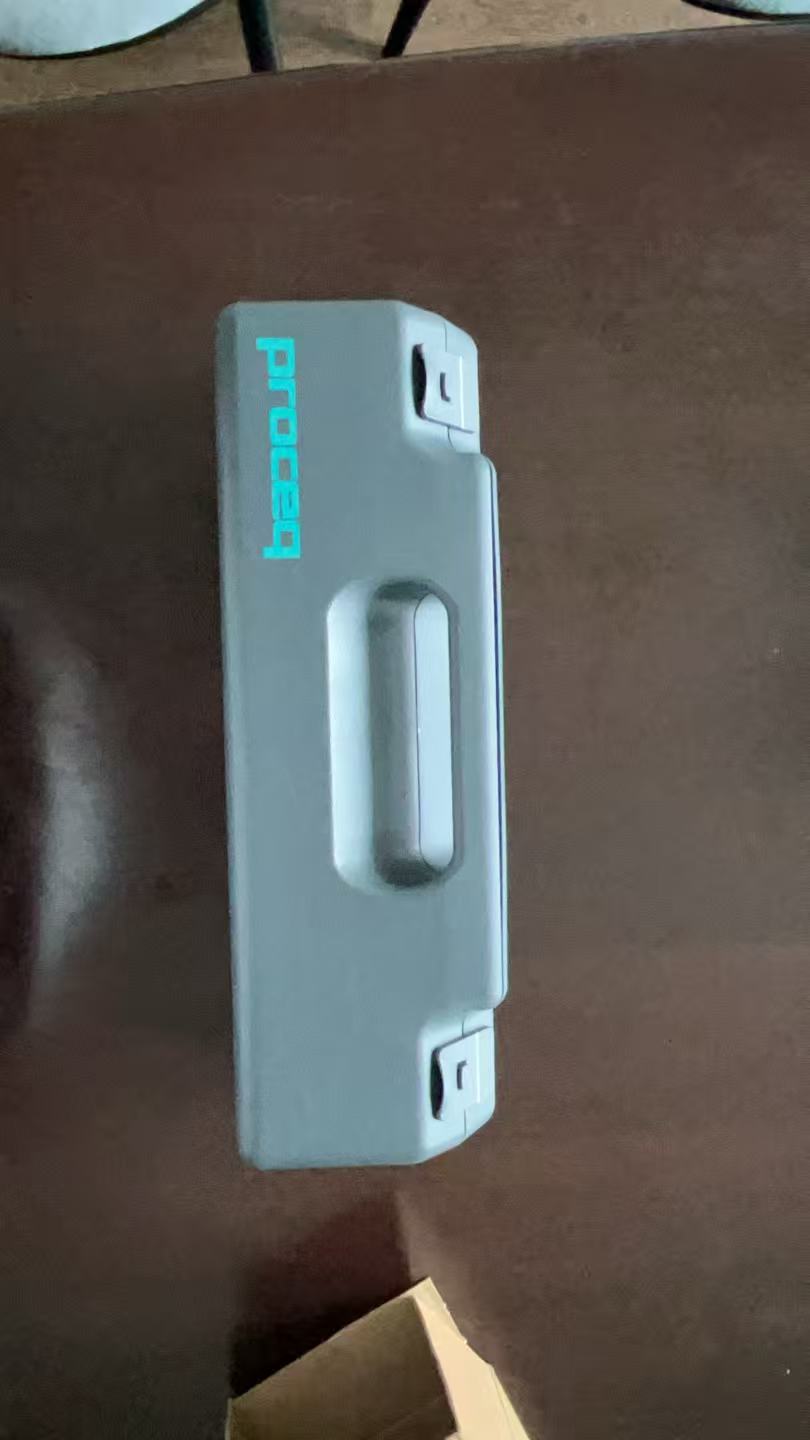

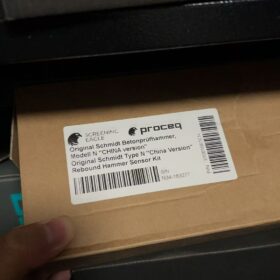
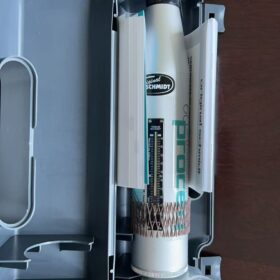
Marque: Screening Eagle (Formerly Proceq, Suisse)
Numéro de commande: 310 01 001 (31001001)
Nom complet du modèle: Original Schmidt Type N (Metric MPa Scale Version)
Distinction of similar part numbers:
31001002 = Tapez N (PSI Imperial Scale); 31002000 = Type NR with recording paper
- Spécifications techniques de base
Impact Energy: 2.207 N·m (2.207 J.), standard impact energy for Type N international specification
Applicable Concrete Compressive Strength: 10 ~ 70 MPa (1450 ~ 10152 psi)
Minimum thickness of test member: ≥100 millimètres, structure must be rigidly supported
Maximum aggregate size: ≤32 mm
Reading method: Mechanical vernier scale, manual reading of rebound number R
Poids: Environ. 1090 g
Normes conformes: JGJ/T 23, DANS 12504-2, ASTM C805, OIN 1920-7
- Portée de la livraison standard
- Original Schmidt Type N Rebound Hammer Main Unit
- Standard Reference Steel Anvil
- Heavy-duty Protective Carry Case
- Manuel d'utilisation, Factory Calibration Certificate
- Strength Conversion Graph (Printed on instrument housing)
- Champ d'application
✅ In-situ non-destructive strength survey for cast-in-place concrete beams, columns, floor slabs and precast components
✅ On-site screening of concrete homogeneity, reference for formwork stripping strength
✅ Large-area rapid testing combined with core drilling method
❌ Not suitable: Thin members with thickness<100 mm, fresh low-strength concrete (Prioritize Type L, Order No.31003002)
- Original Schmidt Series Model Comparison
| Numéro de commande. | Modèle | Impact Energy | Caractéristiques |
| 31001001 | Tapez N | 2.207 N·m | Standard mechanical model, without recording paper (Mainstream general model) |
| 31002000 | Type NR | 2.207 N·m | Type N fitted with paper recording mechanism |
| 31003002 | Tapez L | 0.735 N·m | Low energy version, for thin-walled & lightweight concrete |
| 31004000 | Type LR | 0.735 N·m | Type L with paper recording function |
- Notes complémentaires
- This is the classic original mechanical Schmidt rebound hammer, the benchmark prototype referenced by global rebound test standards;
- Pure mechanical design, battery-free, suitable for long-term field operation;
- Periodic verification on matched reference steel anvil is mandatory;
- Often compared with domestic HT225 rebound hammer in Chinese market, but impact mechanism and calibration system are non-interchangeable; strength conversion curves cannot be directly applied.
Complete Technical Document for Proceq Original Schmidt N (31001001)
- Standard Field Operation Guidelines
1.1 Pre-test Preparation
- Plage de température ambiante: -4℃ ~ +40℃, avoid direct sunlight exposure and extreme cold airflow;
- Inspection visuelle: Ensure plunger free of bending, impact damage and rust; smooth extension and retraction; indicator slider moves without jamming;
- Perform anvil verification before and after testing work every day;
- Test surface preparation: Remove laitance and loose concrete layer; grind flat with abrasive stone and keep dry.
1.2 Impact Operation Specification
- The rebound hammer must be perpendicular to the concrete test surface; record impact angle for subsequent angle correction when testing horizontally, upward or downward;
- Apply force slowly and steadily until internal mechanism trips automatically; do not strike the housing abruptly;
- Maintain contact pressure after impact before reading, avoid releasing the plunger prematurely;
- 16 test points per test area; discard 3 maximum and 3 minimum readings, calculate average value of remaining 10 points;
- Minimum spacing between test points ≥30 mm; minimum distance from component edge ≥50 mm;
- Repeated impact on the same test point is prohibited.
1.3 Daily Maintenance Prohibitions
❌ Disassembly of internal movement assembly without authorization;
❌ Do not apply lubricating oil to plunger and guide sleeve (dust adhesion causes indicator jamming);
✅ Only wipe plunger with lint-free dry cloth;
✅ Store inside original hard case during long-distance transportation to prevent heavy drop impact.
1.4 Common Operation Mistakes
Inclined impact → Systematically low rebound readings
Release immediately after impact → Distorted readings
Cement mortar adhered on plunger → High data dispersion
Thin member (<100 mm) tested without rigid backing → Underestimated strength results
- Steel Anvil Verification (Étalonnage) Specification for Original Schmidt Type N
Factory-supplied reference anvil: Hardness HRC 62±2, mass 16 kilos. Not interchangeable with steel anvils for domestic HT225
2.1 Verification Conditions
- Place the steel anvil on a stable rigid base; wooden boards or rubber mats are not allowed;
- Top surface of anvil shall be clean, rust-free and free of indentations;
- Operate rebound hammer vertically downward onto the anvil;
- Pre-impact 3~5 times before formal readings to stabilize mechanical movement.
2.2 Verification Procedures
- Conduct continuous 8 impacts;
- Rotate plunger by 90° after each impact to verify uniform contact surface;
- Eliminate maximum and minimum readings, compute average value of remaining 6 results.
2.3 Acceptance Criteria
✅ Factory standard verified rebound number: 80 ± 2
If average value <78 or >82: Instrument out of tolerance; maintenance or factory service required.
⚠️ Critical Notice: Proceq Schmidt steel anvil ≠ HT225 domestic steel anvil!
Verification data obtained using domestic anvil for Schmidt hammer has no metrological validity!
2.4 Verification Frequency
- Perform verification before start and after completion of daily testing;
- Mandatory re-verification after instrument drop or long-distance transportation;
- Annual metrological certification together with the instrument.
- Comparaison des performances: Original Schmidt N (31001001) VS Domestic HT225
Both feature nominal impact energy of 2.207 J., but movement structure, conversion curves and spare parts are fully non-interchangeable
| Article de comparaison | Proceq Original Schmidt N (31001001) | Domestic HT225 |
| Design Origin | The original Schmidt rebound hammer, benchmark instrument for EN/ISO international standards | Domestic product developed based on Schmidt principle, compliant with JGJ/T23 |
| Impact Mechanism | Precision Swiss manufacturing; tension spring with superior fatigue resistance and consistent repeatability | General domestic movement, rentable, meets domestic verification requirements |
| Steel Anvil Compatibility | Verification must use original Proceq anvil; readings from domestic anvils are invalid | Designed for domestic standard steel anvil (HRC60±2) |
| Strength Conversion Curve | Factory printed international conversion curve (MPa) on housing; JGJ/T23 regional curves cannot be directly adopted | Equipped with test strength curve adapted to Chinese domestic specifications |
| Spare Part Interchangeability | All components proprietary; cannot exchange plunger, tension spring, indicator assembly with HT225 | Widely available spare parts market, faible coût d'entretien |
| Normes applicables | JGJ/T23, EN12504-2, ASTM C805, ISO1920-7 | Mainly complies with JGJ/T23, JJG817 |
| Instrument Weight | Environ. 1090 g | Environ. 900 g |
| Construction Feature | Boîtier en aluminium, tighter mechanical tolerance, superior long-term data stability | Popular engineering model with cost advantage |
Critical Practical Reminder
Do NOT calculate concrete strength of Schmidt rebound readings directly using HT225 conversion tables!
For project acceptance within China, establish specific strength conversion curves or adopt core drilling correction in accordance with JGJ/T23.
- List of Common Wear Parts for Original Schmidt N (Official Proceq Part No.)
Applicable to 31001001 (Mechanical Type N without recording mechanism)
- 31099038 Plunger — Highest-frequency wearing part; replace if end face suffers impact dent, abrasion or deformation
- Impact Spring Assembly — Elastic degradation after hundreds of thousands of impacts (Mostly supplied as assembly for factory replacement; loose spring seldom sold separately)
- Indicator Rider Assembly — Abrasion and abnormal friction lead to unstable readings
- Front felt seal & O-ring set — Dust-proof components; aging and dust ingress cause indicator jamming
- Buffer Spring — Fatigue fracture results in impact noise and abnormal tripping action
- Catch Hook Assembly — Wear leads to failure of normal tripping and loading
- Reference Steel Anvil: Order No.31089001
- Entretien & Calibration Service Certificate No.31089000
Note complémentaire: Few qualified aftermarket alternative spare parts available domestically. Severe internal component damage generally requires service via Proceq authorized service centers; on-site component replacement like HT225 is not feasible.
Official Wear Parts List for Proceq Original Schmidt N (Numéro de commande:31001001)
Applicable to mechanical Type N without recording paper; No spare parts are interchangeable with domestic HT225; mature aftermarket alternatives for core components are unavailable in China
- High-frequency Field Serviceable Spare Parts (Available for Separate Order)
| OEM Order No. | English Name | Chinese Name | Wear Mechanism & Fault Manifestation |
| 31099038 | Piston | Piston (Impact Rod) | Most consumed component; end face dent, abrasion, déformation; rebound value drift and high test data scatter |
| 31099040 | Indicator Rider Assembly | Indicator Slider Assembly | Friction surface abrasion and dust accumulation; indicator jamming, failure to return zero, unstable readings |
| 31099041 | Front felt seal set | Front Dust Felt & Seal Kit | Aging and dust intrusion; foreign particles entering movement and increasing sliding resistance |
| 31089001 | Reference Anvil Type N | Type N Standard Reference Steel Anvil | Mandatory accessory for verification; surface impact damage renders calibration invalid |
| 31089003 | Grinding stone | Abrasive Grinding Stone | Consumable for concrete surface preparation |
- Movement Spring Components (Mainly Supplied as Assembly; Loose Parts Rarely Sold Separately)
- Impact Spring Assembly
Elastic fatigue and reduced spring force → Average anvil verification reading lower than 78, systematic low measurement results. Proceq generally does not supply loose springs; complete movement assembly replacement is common.
- Buffer Spring
Breakage or slack → Impact abnormal noise, irregular tripping.
- Catch Hook / Pawl Assembly
Long-term friction wear → Failure to lock, premature tripping, unable to complete loading stroke.
- Hammer Mass
Rarely damaged; replacement only required after severe drop-induced deformation.
- Logement & Auxiliary Accessories
- Carrying Case: Broken latches or housing damage
- Conversion chart sticker: Faded strength curve marking
- Rear cap / Front screw cap: Thread stripping and impact deformation
- Important Procurement & Directives d'entretien
- Distinction du modèle: Spare parts for 31001001 (Tapez N) are incompatible with 31003002 (Low-energy Type L); mixing parts is forbidden.
- Maintenance Policy: Authorized domestic service providers mostly offer complete instrument overhaul and calibration service for internal precision parts such as springs and hooks; loose components are generally not sold individually.
- Compatibility Restrictions:
✘ Replacement with HT225 plunger, springs or steel anvil is prohibited;
✘ Anvil verification using domestic steel anvil has no metrological validity for Schmidt hammer.
- Recommended Precautionary Spare Parts Inventory:
Piston (31099038), front felt seal kit, indicator slider assembly.
- Disposable Consumables for Field Testing
Silicon carbide abrasive grinding stone
Lint-free dry wiping cloth (Lubricant application on plunger is prohibited)
Annual factory calibration certification service (Order No.31089000)


NH42-63-318x560.png "Commutateurs de transfert automatiques de type PC CHINT (ATS)NH42-63/4SZ")