Contacteur,disjoncteur,capteur,Encodeur,API,Convertisseur


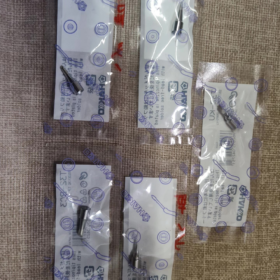
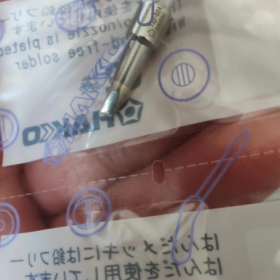
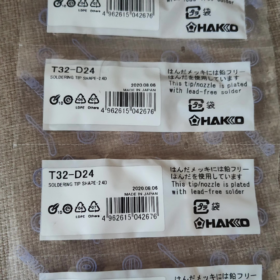
Informations de base sur le modèle
Marque: HAKKO (Marque japonaise de station à souder; l'orthographe officielle est HAKKO)
Série: Série de pannes à souder T32
Poignée de fer à souder compatible: FX-8901 (Assorti à l'unité principale FX890, 90Puissance W)
Répartition du modèle
T32: Code de série, conçu pour la station de soudage FX890 haute puissance
D: Ciseau / pointe de tournevis plat (Série D = pointes plates en forme de burin)
24: Largeur de lame de 2.4 mm
- Paramètres des dimensions principales
- Forme de la lame: Burin plat droit (Tapez D)
- Largeur de la lame: 2.4 mm
- Épaisseur de la lame: Environ. 0.6 mm
- Longueur totale: Longueur universelle standard pour toutes les pointes T32, compatible avec le noyau chauffant FX8901
- Placage: Placage de fer dédié sans plomb, résistant à la corrosion et permet une fusion uniforme de la soudure
- Scénarios d'application
- Soudure de composants CMS: 0805/1206 résistances & condensateurs, broches des petits circuits intégrés SOP
- Soudure au fil: Fils fins, câbles plats, étamage des bornes du faisceau de câbles
- Reprise des PCB & Retouche: Tampons de taille moyenne, équilibre le transfert de chaleur et la précision de fonctionnement
- Ne convient pas pour: Minuscule 0402 composants (T32-D08/D12 recommandé), grands coussinets de terre (pointes plus larges D32/D52 recommandées)
- Tableau de comparaison des sélections de toutes les pointes de burin de type D de la série T32
| Modèle | Largeur de la lame | Conditions de travail des applications |
| T32-D08 | 0.8mm | Composants micro-CMS, fils IC à broches fines |
| T32-D12 | 1.2mm | 0402 / 0605 composants de puce |
| T32-D16 | 1.6mm | Composants CMS généraux |
| T32-D24 | 2.4mm | Pièces CMS générales, soudure de faisceaux de câbles |
| T32-D32 | 3.2mm | Grands plots de soudure, fils épais |
| T32-D52 | 5.2mm | Grandes zones de cuivre moulu, connecteurs multibroches |
- Correspondance & Directives de fonctionnement
- Uniquement compatible avec l'unité principale FX890 + Poignée FX8901, ne peut pas être échangé avec FX888D / Pannes à souder série T12
- Plage de température de fonctionnement: 300~450 ℃; recommandé 360 ~ 400 ℃ pour la soudure sans plomb
- Entretien: Nettoyer régulièrement avec une éponge humide pour éviter les brûlures à sec et l'oxydation; les pointes gravement oxydées doivent être réétamées après le conditionnement de la surface
- Numéro de pièce d'origine: B5317 (Citez ce code pour les achats)
- Distinction de marque facile
HAKKO: Marque allemande de matériel de nettoyage des sols
HAKKO: Marque japonaise de matériel de soudure; Le T32-D24 appartient exclusivement aux consommables de soudage Hakko, sans rapport avec les machines de nettoyage
Comparaison complète: HAKKO T32-D12 contre T32-D24
(Pointes biseautées universelles T32 pour FX890 / Stations de soudage FX888DX)
- Tableau de comparaison des paramètres de base
| Article de comparaison | T32-D12 | T32-D24 |
| Largeur de la lame | 1.2mm | 2.4mm |
| Épaisseur de la lame | 0.7mm | 0.5mm |
| Stations de soudage compatibles | FX890 (Poignée FX8901), FX888DX (Poignée FX8806) | Identique à gauche; tous les embouts T32 sont directement interchangeables |
| Structure générale | Ciseau fin et étroit, petite surface de contact | Ciseau large et plat, zone de contact à double transfert de chaleur |
| Capacité de stockage de chaleur | Faible, récupération de chaleur lente, pour micro-joints de soudure | Rétention élevée de la chaleur, conduction thermique rapide, température stable pendant le soudage continu |
| Zone de transport de soudure | Étroit, contient un minimum de soudure | Large surface plane, contient un grand volume de soudure |
- Différences fondamentales détaillées
2.1 Dimension & Efficacité du transfert de chaleur (Différence la plus critique)
T32-D12 (1.2mm Pointe étroite)
Lame étroite avec paroi plus épaisse créant une petite zone de contact globale. Il délivre moins de chaleur à température égale, chauffe lentement les points de soudure, et la température chute facilement pendant le soudage continu.
T32-D24 (2.4mm pointe large)
La double largeur de lame et la surface plane augmentent considérablement l'efficacité de la conduction thermique. Il libère pleinement les performances de la station 90W FX890, maintenir une température constante pour le brasage continu en masse.
2.2 Scénarios d'application différenciés
T32-D12 (Dédié au micro-soudage de précision)
- Micro-CMS: 0402 / 0605 résistances, condensateurs, micro LED
- CI à broches fines: SOP à faible hauteur, mini-SOIC, fines broches de câbles plats
- PCB compacts haute densité; empêche les ponts de soudure et les dommages thermiques aux minuscules composants adjacents
- Reprise de précision pour les téléphones mobiles, Écouteurs Bluetooth, capteurs miniatures
T32-D24 (Soudure de masse générale & Articulations moyennes à grandes)
- CMS standard: 0805/1206 composants, soudure par traînée pour les broches de connecteur SOP ordinaires
- Faisceau de câbles, fil toronné et étamage des bornes; contient suffisamment de soudure en un seul passage
- Blocs d'alimentation, zones de cuivre moyennement moulues, fils de condensateur électrolytique
- Soudage en masse traversant et brasage par traînée pour embases à broches multibroches, augmentant considérablement l'efficacité du travail
- Sensation d'opération & Limites
T32-D12: Haute précision, mais faible capacité de soudure. Alimentation répétée en soudure requise pour les fils épais/grands tampons, faible efficacité, sujet aux joints de soudure à froid sur de grandes masses thermiques.
T32-D24: Haute tolérance aux pannes, soudure par traînée douce. Inconvénient: risque de court-circuit accidentel ou de dommages thermiques aux minuscules composants voisins dans des configurations de circuits imprimés ultra-denses.
2.4 Paramètres de température recommandés (Soudure Sn-Ag-Cu sans plomb)
T32-D12: 380~410℃ (La petite zone de contact nécessite une température plus élevée pour compenser un transfert de chaleur insuffisant)
T32-D24: 360~390 ℃ (Une conduction thermique importante élimine le besoin de températures extrêmement élevées, ralentir l'oxydation de la pointe)
- Guide de sélection rapide
- Micropuces à souder, CI à faible pas, mini PCB haute densité → Choisissez T32-D12
- Norme de soudure CMS, bornes de fil, pièces traversantes de masse, Blocs d'alimentation → Choisissez T32-D24
- Précision équilibrée & travail général: Préparez les deux conseils. Utilisez D24 comme astuce principale quotidienne, passer au D12 pour des retouches de précision.
- Fonctionnalités identiques partagées
- Taille de montage et longueur totale identiques, échange direct sans remplacement du noyau chauffant/poignée
- Même matériel, placage de fer sans plomb et qualité de résistance à l'oxydation
- Même limite de plage de température de fonctionnement (50–480 ℃)
- Règles de maintenance identiques: Nettoyer avec une éponge humide, interdire le brûlage à sec, ré-étamage après réparation par oxydation
Tutoriels d'opération pratiques complets pour HAKKO T32-D12 / T32-D24
Stations compatibles: FX890 (90W haute puissance), FX888DX. Deux embouts partagent la même interface de montage; uniquement les techniques de soudure, le contrôle de la température et les scènes applicables diffèrent.
- Tutoriels de base universels (Pour les deux conseils: Nouvel étamage de pointe, Entretien quotidien, Spécifications de soudure standard)
1.1 Premier didacticiel d'activation pour de toutes nouvelles astuces (Obligatoire, Évitez l'oxydation permanente & Surface non mouillable)
- Allumer la station, préchauffer à 320℃, attendez que la pointe atteigne sa pleine température
- Trempez l'éponge de nettoyage et essorez-la. (pas d'eau qui coule), essuyez l'huile antirouille sur la pointe
- Enduire uniformément toute la lame avec du fil à souder à noyau de colophane (0.6/0.8mm), couvrant entièrement le placage de fer
- Tenir pendant 10 secondes, essuyer légèrement avec une éponge, réappliquer une fine couche protectrice d'étain. N'augmentez la température pour le soudage qu'une fois terminé..
> Avertissement: La combustion à sec à haute température sans pré-étamage provoquera une oxydation noire permanente qui ne pourra pas retenir la soudure..
1.2 Guide d'entretien général (Durée de vie à triple pointe)
- Entre les cycles de soudure: Essuyez les résidus de flux/soudure tous les 3 à 5 joints., réappliquez immédiatement une fine pellicule d'étain pour isoler l'air
- Procédure d'arrêt: Refroidir à 280 ℃, nettoyer et ré-étamer la pointe avant de l'éteindre. Ne coupez jamais le courant à haute température.
- Règle de limite de température: Max 410 ℃ pour une soudure sans plomb; le taux d'oxydation double au-dessus de 470 ℃.
- Étapes de réparation de l'oxydation
① Léger noircissement: Essuyer avec une éponge + flux liquide, ré-étamer la surface
② Oxydation sévère: Tremper la pointe dans le revitalisant pour pointes 5 secondes, essuyer et replaquer la soudure. Le meulage de la lime est interdit car il endommage le placage de fer protecteur.
- Opérations interdites: Faire levier sur les cartes PCB / gratter les tampons avec la pointe, combustion prolongée à haute température au ralenti, refroidissement soudain en trempant la pointe chaude dans une éponge gorgée d'eau.
1.3 Processus de soudage standard en 5 étapes (Applicable aux deux embouts)
- Chaleur: Placer la lame à 45°, toucher simultanément le plot de soudure et la broche du composant (1~2s)
- Soudure d'alimentation: Touchez le fil de soudure à la jonction du plot et de la broche, ne pas alimenter la soudure directement sur la panne
- Mouillage: Laissez la soudure recouvrir entièrement le tampon pour former un joint lisse en forme de volcan. (2~3s)
- Rétractez d'abord le fil de soudure
- Soulevez le fer à souder en diagonale vers le haut le long de la broche, maintenir les composants stationnaires jusqu'au refroidissement naturel
> Norme commune qualifiée: Lustre brillant, montée de soudure complète, pas de bavures, pas de joints froids, pas de pont de soudure.
- Tutoriel pratique exclusif pour le T32-D12 (1.2mm Pointe biseautée étroite)
Scénarios cibles: 0402/0605 micro CMS, CI SOP à pas faible, retouche de précision pour les écouteurs/micro capteurs Bluetooth, mini PCB haute densité
2.1 Paramètres de température standard (Sn-Ag-Cu sans plomb)
Soudure de précision générale: 380~410℃
Minuscule 0402 puces: Bouchon à 390℃, chauffage à joint unique ≤ 2 secondes pour éviter le détachement des composants
2.2 Techniques de soudure spéciales
(1) Tutoriel de soudure pour 0402/0605 Résistances & Condensateurs
- Pré-étamer une petite quantité de soudure sur un plot de PCB
- Tenez le composant de la puce avec une pince à épiler et alignez-le avec les tampons; appuyez légèrement sur le tampon pré-étamé avec la lame étroite D12 pour faire fondre la soudure et fixer le composant
- Chauffer le tampon opposé avec le tranchant de la lame, alimenter une petite quantité de soudure pour un mouillage complet
- Inspecter après refroidissement. La petite surface de contact évite tout pontage accidentel avec les plots adjacents.
(2) Soudure par traînée pour broches IC à faible pas (Pas ≤0,8 mm)
- Fixer IC avec deux points d'attache diagonaux, appliquer une fine couche de flux liquide sur toutes les broches
- Utilisez le bord latéral de la lame D12 pour contacter légèrement les broches., éviter la compression sur toute la surface pour limiter la charge de soudure
- Incliner le PCB à 30°, faites glisser la pointe à vitesse lente constante; l'excès de soudure adhère à la lame étroite pour être retiré
- Si un pontage se produit: Réappliquez le flux et faites glisser à nouveau doucement, ou nettoyer avec une tresse à dessouder
> Avantage de base: La lame étroite minimise le contact accidentel avec les micro-appareils environnants, idéal pour les circuits imprimés denses.
2.3 D12 Les pièges opérationnels à éviter
- Ne convient pas aux fils épais / gros blocs d'alimentation: Un faible stockage de chaleur et une récupération de chaleur lente provoquent facilement des joints de soudure froids & mauvaise liaison
- N'appliquez pas de forte pression sur la lame: Le métal fin et étroit se déforme facilement et perd son revêtement protecteur
- Prendre des pauses de refroidissement intermittentes pendant le brasage en masse; augmenter la température de 10 ~ 20 ℃ si une baisse constante de la température se produit
- Tutoriel pratique exclusif pour T32-D24 (2.4Pointe biseautée plate de 2,5 mm de large)
Scénarios cibles: 0805/1206 CMS, fils toronnés, connecteurs à broches, blocs d'alimentation, plans de cuivre au sol, brasage par traînée de masse
3.1 Paramètres de température standard (Sn-Ag-Cu sans plomb)
CMS général / soudure de câbles plats: 360~390 ℃
Grandes zones de cuivre moulu: 390~400℃ (La lame large fournit suffisamment de chaleur sans températures extrêmes)
3.2 Tutoriel de fonctionnement du Core D24 (Conseil principal à usage général)
(1) Écouter & Bornes du faisceau de câbles à souder
- Tremper les extrémités des fils dénudés dans la colophane; charger suffisamment de soudure sur la lame plate D24 pour étamer le fil uniformément en un seul passage
- Placez la lame plate contre le tampon PCB et le fil pré-étamé pour un transfert de chaleur rapide sur une grande zone de contact.
- Rétractez le fer une fois que la soudure encapsule complètement le fil et le tampon pour plus de robustesse., joints à faible résistance.
(2) Soudure par traînée de masse pour embases multibroches & CI SOP (Compétence de base à haute efficacité)
- Sécurisez le flux IC et le revêtement sur toutes les broches
- Étalez uniformément une fine couche de soudure sur la lame plate D24 comme moyen de transfert de chaleur.
- Incliner le PCB à 40°, appuyez la lame plate contre toute la rangée de broches et faites-la glisser à une vitesse uniforme.
- La large surface de contact chauffe toutes les broches de manière synchrone, le formage en une seule étape réduit les dommages répétés causés par la chaleur aux substrats de PCB.
(3) Blocs de puissance à souder & Avions en cuivre moulu
Les grands plans de cuivre dissipent rapidement la chaleur et ne peuvent pas être entièrement soudés avec des pointes D12 étroites.. Flux de travail dédié D24:
- Régler la température à 390 ℃, fixez entièrement la lame au plan en cuivre pour 2 secondes de préchauffage
- Appliquer suffisamment de soudure et de flux; la chaleur continue provenant d'une large surface de contact élimine les joints froids et le mouillage incomplet.
3.3 D24 Les pièges opérationnels à éviter
- À utiliser avec précaution sur des planches compactes ultra-denses: La lame large crée facilement des ponts de soudure et court-circuite les micro-composants à proximité
- Contrôler le volume de soudure pendant le brasage par traînée; un excès de soudure sur la lame provoque un pontage. Nettoyer la pointe tous les 3 épingles traînées.
- Abaissez la température à 360 ℃ et raccourcissez la durée de chauffage lors du soudage de micro LED ou de composants thermiquement sensibles.
- Flux de travail de commutation à pointes mixtes pour un rendement élevé en atelier
- Soudure générale en masse (câbles plats, 0805 puces, en-têtes de broches, blocs d'alimentation): Pointe de travail principale = D24 pour une efficacité maximale
- Reprise de précision intermittente (0402 puces, CI à faible pas, mini PCB denses): Passer au D12
- Étapes de remplacement de la pointe
① Refroidir la station de soudage jusqu'à 300 ℃
② Supprimer l'ancienne astuce, nettoyer les scories de soudure résiduelles à l’intérieur de la cavité du noyau chauffant
③ Installer une nouvelle astuce, augmenter la température à 320 ℃ pour un étamage protecteur initial, puis ajustez à la température de travail
- Consommables correspondants recommandés: 0.6fil à souder mm pour D12; 0.8Fil à souder mm pour D24 pour un contrôle précis du volume de soudure
Tutoriels officiels Hakko autorisés (Techniques standards faisant autorité)
Rechercher des mots-clés:
Entretien des pannes à souder série HAKKO T32
Soudure à pas fin FX890 T32-D12
Câble FX890 T32-D24 & soudure au tampon
Section du site officiel: Zone de maintenance officielle des consommables de Hakko Japon (contient un graphique & guides vidéo pour l'étamage et l'entretien des pannes)
Mots clés de recherche Bilibili:
Hakko FX890 T32-D12 0402 tutoriel de soudure de puces
Processus de brasage par traînée complet pour SOP IC avec pointe T32-D24
Réparation complète de l'oxydation & guide de maintenance des pannes à souder T32
Mots clés de recherche Douyin:
90Comparaison de la station de soudage W Hakko à pointe étroite et à pointe large
Retravailler avec précision avec D12, brasage de masse avec démonstration pratique du D24
Tutoriels de texte professionnels sur l'ingénierie électronique (RPSC / Forum des fans électroniques)
- 《Sélection manuelle des pannes à souder par traînée SMT & Comparaison pratique: D12 contre D24》
- 《Contrôle de la température & Spécifications de fonctionnement des pannes de la série complète T32 sur la station de soudage haute puissance FX890》
- 《Compétences opérationnelles anti-court-circuit pour le soudage de micro-composants avec des pointes burinées étroites》


NH42-63-318x560.png "Commutateurs de transfert automatiques de type PC CHINT (ATS)NH42-63/4SZ")