Contacteur,disjoncteur,capteur,Encodeur,API,Convertisseur

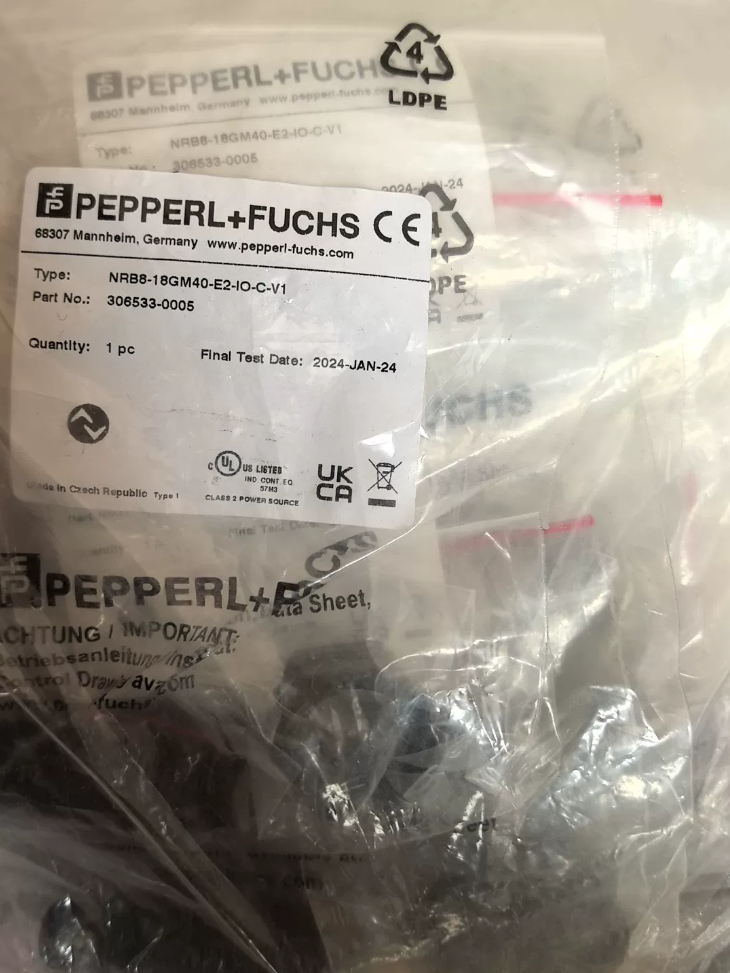

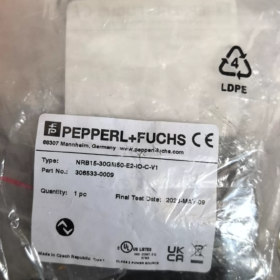
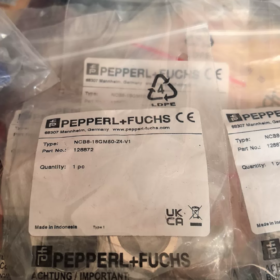
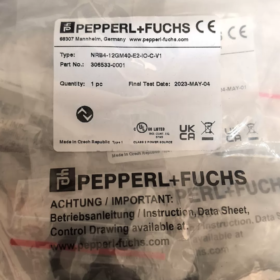
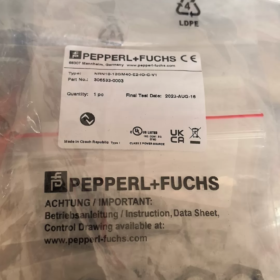
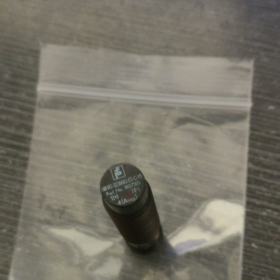
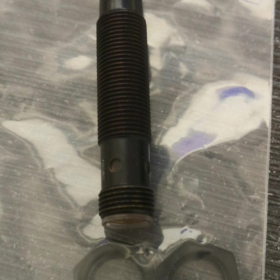
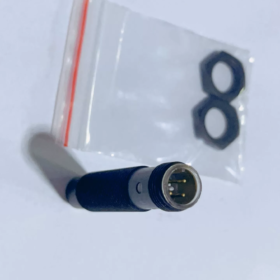
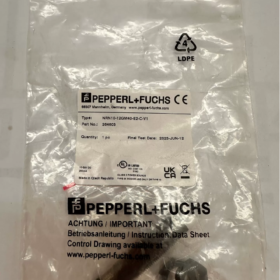
Répartition du code modèle
| Segment de modèle | Définition |
| NRN | Magnetic weld-spatter resistant inductive sensor série, Facteur 1 detection (sensing range consistent for steel, aluminium, copper and stainless steel) |
| 10 | Rated nominal sensing distance Sn = 10 mm |
| 12 | M12 cylindrical threaded outer diameter |
| GM | Brass housing with PTFE coating, standard industrial enclosure |
| 40 | Standard coil construction, montage non encastré |
| E2 | 3-wire DC, PNP Normally Open (NON) sortir |
| C | Heavy magnetic field & welding spatter resistant variant |
| V1 | M12×1 4-pin male straight connector |
- Spécifications électriques de base
Basic Sensing Performance
Rated nominal sensing distance: 10 mm
Stable operating range: 0~8.1 mm (sa)
Type de montage: Non affleurant (must not be embedded in metal)
Hystérèse: Typique 5%
Fréquence de commutation: 1000 Hz
Factor r=1: Identical sensing range for iron, aluminium, copper and 304 acier inoxydable
Alimentation & Sortir
Tension de fonctionnement: 10~30 V DC
Type de sortie: 3-wire PNP Normally Open (NON)
Max load current: 200 mA
Courant de fuite hors état: ≤0.5 mA
Voltage drop: ≤3 V
Fonctions de protection: Protection contre l'inversion de polarité, pulsed short-circuit protection
Courant à vide: ≤12 mA
Anti-Interference Features (Core Advantage of C Series)
DC constant magnetic field withstand: 200 mT
Alternating welding magnetic field withstand: 200 mT
Can be installed adjacent to spot welding and arc welding equipment without false triggering
III. Mécanique & Spécifications environnementales
- Dimensions: M12×1 thread, overall length 55 mm, diamètre 12 mm, net weight 15 g
- Matériels
Logement: Brass with PTFE coating (weld spatter & résistant à la corrosion)
Sensing face: PPS engineering plastic
- Ingress protection rating: IP67
- Plage de température
Température de fonctionnement: -25℃ ~ +70℃
Stockage & température de transport: -40℃ ~ +85℃
- Accessoires standards: 2 self-locking mounting nuts supplied with unit
- Status indicator: Side-mounted multi-hole yellow LED, illuminated when metal target is detected
- M12 4-Pin Wiring Definition (Épingle 2 unused; only Pins 1/3/4 active)
| Numéro de broche. | Signal Function | Standard Cable Color Code |
| 1 | L+ Positive Power Supply | Brun (NE) |
| 2 | Inutilisé | Blanc (WH) |
| 3 | L- Alimentation négative | Bleu (CE) |
| 4 | PNP Switching Output Signal | Noir (BK) |
Logique de câblage: When metal target approaches → Pin 4 outputs high level (connect to positive terminal of PLC input module)
- Normes & Certifications
Compliance standard: ET CEI 60947-5-2
Certifications: cULus (Classe 2 circuit), Class II insulation protection
Safety characteristic values: MTTFd = 1393 années, Mission Time TM = 20 années, DC=0 (Non-safety rated sensor)
Code SH des douanes: 8536500090
- Scénarios d'application typiques
- Target detection for welding robots and spot welding stations (core magnetic field resistance application)
- Compte & positioning of aluminum, copper and stainless steel workpieces (Facteur 1, no sensing range attenuation)
- In-position detection for automated conveying lines and machine tool fixtures
- Limit switches installed near equipment with strong electromagnetic interference
VII. Equivalent Internal Series Models
- Hardwired cable variant: NRN10-12GM40-E2-C (2m fixed cable without V1 connector)
- NPN Normally Open variant: NRN10-12GM40-A2-C-V1
- IO-Link intelligent variant: NRN10-12GM40-E2-IO-C-V1 (NO/NC remotely switchable)
- Standard Factor 1 model without magnetic resistance (Not recommended for welding stations): NBN10-12GM40-E2-V1 (r≠1, reduced sensing range on aluminum targets)
VIII. Mounting Guidelines
- Non-flush mounting requirement: The front sensing face must fully protrude from the metal mounting plate; embedding will drastically reduce effective sensing distance
- Metal clearance requirements: ≥12 mm clearance on left & côtés droits, ≥20 mm clearance behind sensor
- Welding environment maintenance: Avoid long-term accumulation of weld spatter on sensing face; regularly clean PTFE coated housing
- Matching cable specification: M12 4-pin A-coded straight female cable (Modèle: V1-G-2M-PUR, etc.)
Practical Application Cases of Pepperl+Fuchs NRN10-12GM40-E2-C-V1 Inductive Proximity Sensor
Two core characteristic advantages of this sensor: Facteur 1 full-metal detection without range attenuation, C-series anti-welding magnetic field + PTFE anti-spatter coating. All cases address two major pain points: strong magnetic interference in welding stations and mixed production lines with multi-metal workpieces, covering six industrial sectors.
- Automotive Body Welding Workshop (Scénario le plus largement utilisé)
Cas 1: Workpiece In-Position Detection for Spot Welding Robot Fixtures
- On-site Pain Points
The workstation is equipped with 12 medium-frequency spot welding robots generating alternating magnetic fields up to 200 mT during welding. Workpieces include cold-rolled steel, 304 stainless steel decorative parts and aluminum door panels. Conventional NBN sensors suffer 60% sensing range attenuation on aluminum, and constant false triggering during arc ignition leads to over 10 abnormal alarms per shift.
- Retrofit Solution
One NRN10-12GM40-E2-C-V1 installed on each side of the fixture with protruding non-flush mounting, stable effective sensing range 0~8.1 mm. M12 male connector enables quick disassembly & cleaning when covered with weld spatter.
- Logique de contrôle
Workpiece detected → PNP NO sensor outputs high level → PLC confirms clamped workpiece and enables robot welding cycle; welding program locked if no signal detected to prevent empty welding and fixture burn-through.
- Avantages opérationnels
No signal fluctuation induced by welding magnetic fields; consistent sensing distance for steel, aluminum and stainless steel without model differentiation or mounting adjustment. PTFE coating allows easy wipe-off of weld spatter, boosting overall equipment efficiency (OEE) by 7%.
Cas 2: Skid In-Position Counting on Body-in-White Conveyors
Targets: Mixed production of steel skids and lightweight aluminum skids
Interference source: Continuous magnetic field from multiple arc welding robots along the line
Fonctions: Trigger code scanning, track diverting and missing skid alarm upon skid detection
Avantage: Single sensor compatible with both skid materials, unifies spare parts and reduces inventory SKUs
- New Energy Battery & Aluminum Structural Component Welding Lines
Cas 3: Fixture Position Detection for Aluminum Battery Tray Arc Welding
- Working Conditions: Water-cooled arc welding station with 6061 aluminum trays, severe electromagnetic interference from welding equipment. Traditional inductive sensors feature drastically shortened sensing range on aluminum, frequently failing to detect workpieces and causing empty welding.
- Model Selection Advantages
NRN Factor 1 technology maintains stable 8.1 mm effective range on aluminum; 200 mT alternating magnetic field resistance eliminates signal jitter at arc ignition/extinction; IP67 rating withstands welding moisture and coolant splashes.
- Logique de contrôle
Welding torch travel program only activates after sensor confirms tray fixture full clamping; immediate machine stop upon signal loss to protect torch and tooling.
Cas 4: Workpiece Presence Detection for Copper Busbar Spot Welding
Detected materials: Pure copper and copper-plated steel busbars
Point douloureux: Conventional sensors retain only 30% nominal range on copper, requiring complex mounting calibration
Application: Verify proper busbar placement to avoid cold solder joints and missing welds
III. Stainless Steel Kitchenware & Hardware Welding Production Lines
Cas 5: Workpiece Counting on Stainless Steel Pot Spot Welding Lines
- Line Overview: Complet 304 stainless steel workpieces paired with resistance spot welding equipment, severe magnetic interference. Early standard proximity sensors suffered frequent missing counts and false alarms due to combined impact of workpiece thickness variation and magnetic noise.
- Implementation Method
NRN10-12GM40-E2-C-V1 fixed on conveyor side with non-flush mounting; sensor triggers counter when workpiece passes. M12 connector simplifies maintenance and rapid replacement.
- Avantages
Uniform sensing range for stainless steel and carbon steel tooling without segmented adjustment; stable signal throughout welding cycle with 100% counting accuracy.
- Estampillage & Sheet Metal Automation (Multi-Material Mixed Lines)
Cas 6: Residual Scrap Detection on Stamping Die Stripper Plates
- Scénario: Stamping line processing steel, aluminum and stainless steel sheets simultaneously. Sensor installed on die to detect full retraction of stripper plate and prevent die crushing from residual metal scrap. Welding rework stations nearby create persistent magnetic interference.
- Implementation Plan
Sensor mounted externally to die to detect metal stop block on stripper plate; consistent trigger distance regardless of steel/aluminum/stainless steel target material. External welding magnetic fields do not cause false signals, avoiding die damage from unintended stamping strokes.
- Construction Machinery Frame Arc Welding Workshops
Cas 7: Clamping Confirmation for Frame Tooling Fixtures
- Working Conditions: Heavy-duty loader frame arc welding station with thick steel frames and aluminum auxiliary brackets. High-power arc welding power supplies generate strong DC & alternating magnetic fields, triggering constant false signals on standard sensors.
- Description de la fonction
Dual sensors verify full clamping of left & right fixture jaws; both signals wired in series to PLC interlock circuit. Robot welding trajectory cannot start if either sensor loses detection signal.
- Adaptabilité environnementale
Large plage de température (-25℃ ~ +70℃) tolerates radiant heat from welding operations; brass PTFE coating reduces weld spatter adhesion and lowers cleaning frequency significantly.
- General Automation Conveying & Tri (Mixed Metal Component Handling)
Cas 8: In-Position Detection for Metal Component Sorting
- Matériels: Mixed conveying of iron, cuivre, aluminum and stainless steel small parts. No welding interference, but customer requires a single sensor model compatible with all metals to simplify procurement and commissioning.
- Application Flow
Sensor installed at diversion chute triggers sorting cylinder switching upon component arrival. Conventional sensors demand mounting depth adjustment for different metals; NRN10 delivers fixed 8.1 mm stable range with one-time calibration for permanent use.
Core Selection Advantages Across All Scenarios
- Exclusive Value for Welding Applications (Suffix C)
Withstands 200 mT DC & alternating welding magnetic fields to eliminate false triggering during arc ignition
PTFE non-stick coated housing enables easy weld spatter removal and extends sensor service life
IP67 dust & water resistance against welding fumes, coolant and oil contamination
- Universal Value for Multi-Material Mixed Lines (NRN Series Factor 1)
Identical sensing range for steel, aluminium, copper and 304 acier inoxydable. No sensor model replacement required for different workpiece materials, cutting spare part inventory and simplifying commissioning.
- On-Site Maintenance Advantage of M12 V1 Connector
4-pin straight pluggable connector; damaged cables can be replaced directly without terminal wiring disassembly, greatly accelerating equipment recovery in welding stations.
Scénarios non applicables
- Flush embedded mounting (This model is non-flush; embedding in metal drastically reduces sensing range)
- Explosion-proof environments and safety-rated safety circuits (Non-SIL safety sensor)
- Continuous operation above 70℃ high temperature
- Complete Pepperl+Fuchs NRN10-12GM40 Series Model Matrix (M12, Sn=10mm, Factor1, Weld-Resistant C Variant)
- Sortir & Cable Variants (Modèle de référence: NRN10-12GM40-E2-C-V1)
| Model No. | Type de sortie | Switch Logic | Terminaison de câble | Key Differentiator |
| NRN10-12GM40-E2-C-V1 | 3-wire DC PNP | Normalement ouvert | M12 4-pin Straight V1 Connector | Main standard model for welding workshops |
| NRN10-12GM40-E2-C | 3-wire DC PNP | Normalement ouvert | 2m Fixed Hardwired Cable | No connector, direct terminal wiring |
| NRN10-12GM40-A2-C-V1 | 3-wire DC NPN | Normalement ouvert | M12 4-pin Straight V1 Connector | NPN output for Japanese PLC systems |
| NRN10-12GM40-A2-C | 3-wire DC NPN | Normalement ouvert | 2m Fixed Hardwired Cable | Hardwired NPN variant |
| NRN10-12GM40-E3-C-V1 | 3-wire DC PNP | Normalement fermé | M12 4-pin Straight V1 Connector | PNP NC for safety interlock backup circuits |
| NRN10-12GM40-A3-C-V1 | 3-wire DC NPN | Normalement fermé | M12 4-pin Straight V1 Connector | NPN Normally Closed variant |
- IO-Link Intelligent Upgrade Models (Remote NO/NC Switching, Remote Parameter Access)
| Model No. | Upgrade Features | Target Applications |
| NRN10-12GM40-E2-IO-C-V1 | Communication IO-Link, Sortie PNP, software-switchable NO/NC, window detection function | Smart production lines, digital robot workstations |
| NRN10-12GM40-E2-IO-C | Communication IO-Link, 2m fixed hardwired cable | Fixed wiring inside electrical cabinets |
- Full Sensing Range of M12 Factor1 Weld-Resistant Series (Logement identique, different nominal sensing distance)
NRB Series (Montage encastré, Embeddable)
NRB2-12GM40-E2-C-V1 Sn=2mm Flush
NRB4-12GM40-E2-C-V1 Sn=4mm Flush
NRB8-12GM40-E2-C-V1 Sn=8mm Flush
NRN Series (Non-Flush Mount, Non-Embeddable, Target Model Family)
NRN4-12GM40-E2-C-V1 Sn=4mm
NRN8-12GM40-E2-C-V1 Sn=8mm
NRN10-12GM40-E2-C-V1 Sn=10mm (Modèle de référence)
- Standard Factor1 Models Without Magnetic Resistance (No C suffix, Not for Welding Stations)
NRN10-12GM40-E2-V1 (No PTFE coating, no anti-magnetic circuit; only for general multi-metal detection without welding interference)
- Cross-Brand Equivalent Replacement Comparison Table
Core Equivalence Criteria
- Mechanical form: M12 cylindrical, montage non encastré, nominal sensing distance Sn=10 mm
- Performance: Facteur 1 detection (no range attenuation on steel/aluminum/copper/stainless steel)
- Environmental capability: 200 mT alternating welding magnetic field resistance, anti-spatter coating, IP67 rating
- Spécification électrique: 10~30 V DC, 3-wire PNP Normally Open, M12×1 4-pin male straight connector
1) Turck Replacement
| Pepperl+Fuchs Model | Turck Equivalent Model | Remarques |
| NRN10-12GM40-E2-C-V1 | BI10U-M12-AP6X2-H1141 | Factor1, weld magnetic resistance, PNP NON, Connecteur M12, brass anti-spatter housing |
2) IFM Electronic Replacement
| Pepperl+Fuchs Model | IFM Equivalent Model | Remarques |
| NRN10-12GM40-E2-C-V1 | IFS290 | M12 non-flush, Sn=10mm, K=1 full-metal detection, magnetic field resistant, PNP NON, Connecteur M12, optimized for welding stations |
3) Schneider Électrique
| Pepperl+Fuchs Model | Schneider Equivalent Model | Remarques |
| NRN10-12GM40-E2-C-V1 | XS2M12MB250K | Factor1 full-metal detection, general EMI resistance, Connecteur M12; average magnetic tolerance for heavy welding, Turck/IFM preferred for high-load welding lines |
4) Omron
| Pepperl+Fuchs Model | Omron Equivalent Model | Remarques |
| NRN10-12GM40-E2-C-V1 | E2E-C10MC1-M1 | M12, Factor1 full-metal, basic magnetic resistance; NPN/PNP sélectionnable, weaker magnetic tolerance vs German brands under high-power arc welding |
5) Domestic Cost-Effective Compatible Alternatives (Dimensions de montage identiques & câblage)
Hugong: LJ12A3-10-Z/BX-F1 (Factor1 weld-resistant version)
Autonique: PRF12-10DP (M12, PNP, full-metal non-attenuation detection)
III. Risk Warnings for Model Replacement
- Internal Pepperl+Fuchs Substitution Notes
- Models without suffix C (NRN10-12GM40-E2-V1) must not replace C variants at welding stations: missing anti-magnetic circuit causes persistent false alarms during welding.
- NRB flush series cannot directly substitute NRN non-flush models; embedding in metal will drastically reduce effective sensing range.
- IO-Link variants share identical mechanical housing, but IO-Link master module is required on PLC side; incompatible with standard digital input modules without IO-Link function.
- Cross-Brand Substitution Differences
- Housing coating: Pepperl+Fuchs C series adopts PTFE non-stick layer; Schneider & Omron use standard plating with high weld spatter adhesion, requiring more frequent cleaning.
- Magnetic field resistance ceiling: Pepperl+Fuchs & Turck support 200 mT; Omron limited to ~100 mT, prone to false triggering on high-power arc welding equipment.
- Affectation des broches: All standard M12 4-pin sensors follow unified definition (Pin1 Brown+, Pin3 Blue-, Pin4 Black signal); cables fully interchangeable across brands.
- Plage de température de fonctionnement: Pepperl+Fuchs -25~+70℃; some domestic alternatives only rated 0~60℃, unsuitable for high-temperature welding environments.
- Priority Recommendation for Rapid Replacement
- Optimal OEM upgrade replacement: NRN10-12GM40-E2-IO-C-V1 (fully mechanically interchangeable, digital IO-Link upgrade)
- Same-spec spare part replacement: NRN10-12GM40-A2-C-V1 (only NPN output, dedicated for Japanese PLC systems)
- Preferred imported cross-brand alternative for heavy welding lines: Turck BI10U-M12-AP6X2-H1141
- General automation without severe welding interference: IFM IFS290 / Schneider XS2M12MB250K


NH42-63-318x560.png "Commutateurs de transfert automatiques de type PC CHINT (ATS)NH42-63/4SZ")