Contacteur,disjoncteur,capteur,Encodeur,API,Convertisseur

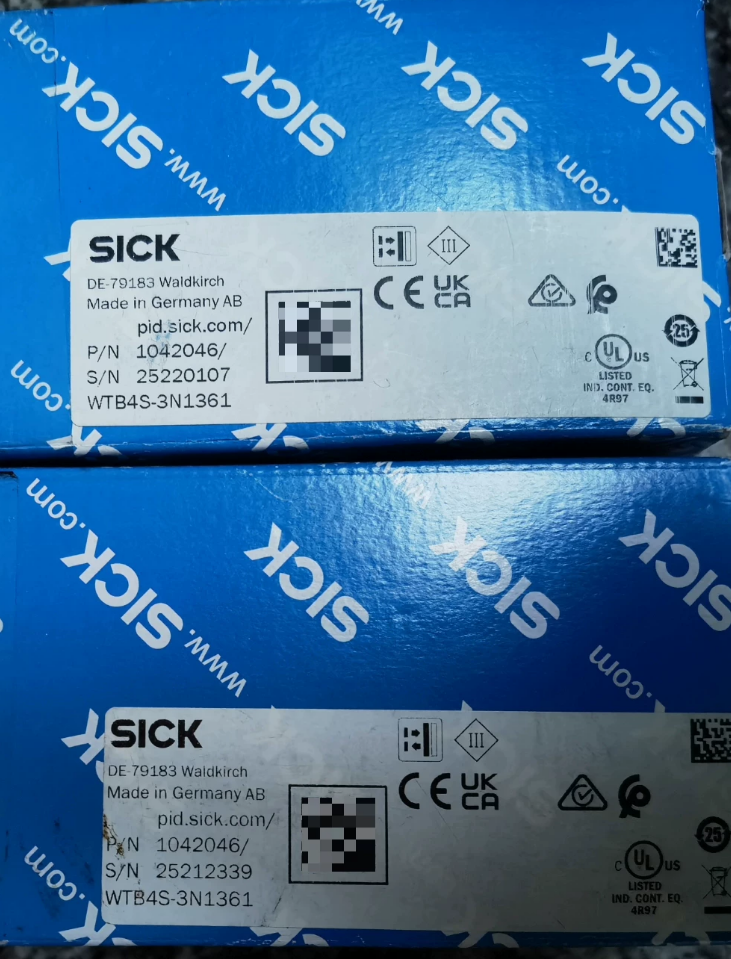

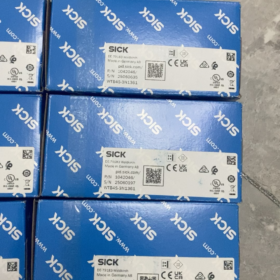

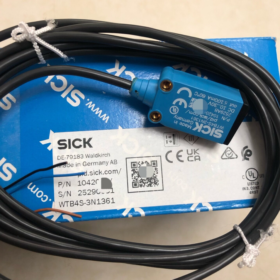
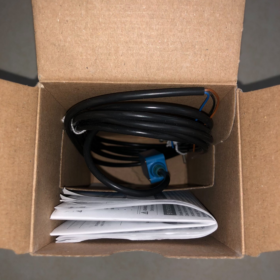
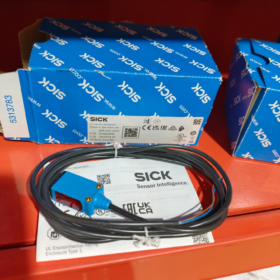
Modèle:MALADE Sensor WTB4S-3N1361
Original Manufacturer Order No.: 1042046
Série: W4S-3 Slim Miniature Capteur photoélectrique (Modèle hérité; new replacement series: WTB4SP)
Principe de détection: Diffuse reflection + Suppression d'arrière-plan BGS
Origine: Allemagne
Positionnement de base: High-precision presence detection in confined spaces, distinguishing foreground workpieces from background surfaces
- Répartition du code modèle
WTB4S 3 N 1 361
- WTB: Diffuse reflection photoelectric sensor with background suppression
- 4S: W4S slim narrow housing (12.2 mm largeur)
- 3: 3-câblage
- N: Sortie NPN
- 1: 5-turn potentiometer adjustment (no teach-in button)
- 361: Specification code → 180 mm detection range, 2 m straight cable, Light-ON operation
III. Spécifications électriques de base
| Élément de paramètre | Valeur de spécification |
| Tension d'alimentation | C.C 10 ~ 30 V, ondulation < 5 Vpp |
| Type de sortie | NPN Light ON |
| Courant de charge | Max.. 100 mA |
| Protection des circuits | Reverse polarity, court-circuit, overcurrent and EMI protection |
| No-load Power Consumption | ≤ 20 mA |
| Temps de réponse | < 0.5 MS |
| Fréquence de commutation | 1000 Hz (cycle de service 1:1) |
| Type de câblage | 3-core PVC straight cable, longueur du câble 2 m, cross-section 0.14 mm², outer cable diameter φ3.4 mm |
- Optical Detection Specifications
- Detection Range: 4~180 mm (standard white diffuse reflectance 90%), stable operating range 10~180 mm
- Source de lumière: PinPoint pinpoint red LED, longueur d'onde 650 nm
- Tache lumineuse: φ6.5 mm spot at 150 mm distance; concentrated spot to avoid false triggering
- Méthode d'ajustement: 5-turn precision potentiometer on housing for continuous fine-tuning of detection threshold
- Performance anti-interférence: Suppression de l'arrière-plan BGS, immune to interference from dark worktables, metal frames and conveyor belts; capable of detecting black, transparent and high-reflective workpieces
- Mécanique & Spécifications environnementales
- Dimensions hors tout: W 12.2 mm × H 41.8 mm × D 17.3 mm (ultra-slim housing for narrow slot mounting)
- Matériels: ABS housing, Lentille optique PMMA; built-in M3 metal threaded mounting holes
- Classe de protection: IP66 / IP67
- Température de fonctionnement: -40 ℃ ~ +60 ℃; Température de stockage: -40 ℃ ~ +75 ℃
- Poids: Environ. 30 g
- Certifications: CE, UL, RoHS Chine, ECOLAB, Photobiological Safety Certification
- Définition du câblage (3-core Cable)
Brown wire: CC 24 V Positive
Blue wire: CC 0 V Negative
Black wire: NPN signal output (Lumière allumée; output conducts when an object approaches)
VII. Scénarios d'application typiques
- Presence detection of PCBs and small parts on electronic production lines
- Counting cartons, labels and plastic parts on packaging machines
- In-position detection of workpieces on small conveyor lines
- Limit detection inside compact equipment frames and tooling fixtures
- Distinguishing dark workpieces against black conveyor belt backgrounds
VIII. Alternative Models within the Same Series
- PNP Version: WTB4S-3P1361 (Numéro de commande. 1042047), all other parameters identical
- Short-range 120 mm Model: WTB4S-3N1232
- M8 Connector Version: WTB4SC-3N1361 (M8 3-pin tail connector, no outgoing cable)
- New Upgraded Replacement: WTB4SP-3N1361 (New Generation W4S-NG, smaller light spot and enhanced performance)
- Matrice de dépannage
| Phénomène de défaut | Cause première | Solutions |
| No signal output | Reverse positive/negative supply wiring | Intervertir les fils marron et bleu; sensor has built-in reverse polarity protection, restore power after rewiring |
| Unstable long-distance detection | Potentiometer threshold set too close | Rotate potentiometer clockwise to increase detection range |
| False triggering by background objects | Low reflectivity of workpiece | Reduce detection distance, or attach high-reflective gaskets to the workpiece |
| Missing detection of high-speed workpieces | Insufficient switching frequency | Ensure workpiece speed ≤ 500 pieces/sec; shorten detection distance to improve response |
| Malfunction under strong light | Direct sunlight hitting optical window | Install shading bracket to block direct light sources |
- Notes d'approvisionnement
Portée de la livraison standard: Sensor main body + 2 m de câble; mounting bracket not included (à commander séparément)
Code SH: 85365019 (Photoelectric Proximity Switch)
Durée de vie: LED light source average 100,000 heures (à 25 ℃ température ambiante)
Operating Principle of Diffuse Reflection Photoelectric Sensors (Including Detailed Explanation of BGS Background Suppression Type such as SICK WTB4S)
- Basic General Principle (Standard Diffuse Reflection)
The sensor integrates an internal LED transmitter and a photosensitive receiver, both housed in one unit.
- Transmission: The transmitter continuously emits directional red/infrared light spots;
- Diffuse Reflection: Light hits the surface of the target object and scatters in all directions (diffuse reflection);
- Reception: Part of the scattered light reflects back to the internal receiver inside the sensor;
- Signal Judgment:
Workpiece present: Reflected light reaches receiver → Switch signal output (NPN/PNP conducts);
Aucune pièce à usiner: No reflected light returns → Output disconnects.
Key Drawback of Standard Diffuse Reflection
If high-reflective backgrounds such as worktables, metal frames or conveyor belts exist behind the workpiece, background reflection will also be captured by the receiver, leading to false detection and failure to distinguish the workpiece from the background.
- BGS Background Suppression Diffuse Reflection (Technology Adopted by WTB4S-3N1361)
Structure de base: Dual Optical Path Ranging Judgment
The transmitting spot and receiving optical path adopt optical parallax layering to separate “nearby workpieces” et “far backgrounds”:
- Emitted light spot projects onto the target area;
- The receiver is divided into two photosensitive zones: near-range reception and far-range reception;
- Internal chip compares light intensity of the two paths:
Light reflected only within the set detection range → Judged as workpiece, signal output triggered;
Light reflected from farther positions (bandes transporteuses, frames) → Directly blocked, no signal triggered.
Simple Explanation
It is equivalent to drawing a “detection boundary line” for the sensor: only objects inside the line are identified, while all backgrounds outside the line are ignored, perfectly eliminating false triggering caused by dark tables and black conveyor belts.
Adjusting the potentiometer changes the distance of this boundary line (adjustable range 4~180 mm for WTB4S).
III. Simplified Text Description of Optical Path Diagram
- Power supply energizes red LED transmitter to emit concentrated light spot;
- Light spot hits workpiece surface and generates diffuse reflection;
- Reflected light enters the receiving window of the sensor;
- Photodiode converts optical signal into weak electrical signal;
- Internal amplification and threshold comparison circuit judge whether the signal reaches standard;
- Drive NPN/PNP transistor to output switching signal to PLC.
- Brief Classification of Three Types of Diffuse Reflection Sensors
- Standard Diffuse Reflection: Only judges light intensity without distance discrimination, vulnerable to background interference;
- BGS Background Suppression Diffuse Reflection (WTB4S): Parallax ranging with limited detection range, widely used in industrial applications;
- Laser Ranging Diffuse Reflection: High-precision ranging with millimeter-level positioning, coût plus élevé.
- Principle Corresponding to Typical Wiring Logic (Take WTB4S-3N1361 NPN Light ON as Example)
Object present → Sufficient reflected light → Internal circuit conducts → Black wire outputs low level (Lumière allumée);
No object → No reflected light → Output disconnected.
- Key Factors Affecting Detection Performance
- Workpiece Color: White/light-colored surfaces reflect strongly for longer detection range; black surfaces absorb light and shorten detection range;
- Surface Material: Matte plastic and paper deliver optimal diffuse reflection; mirror metal generates directional reflection which often fails to return light to the sensor;
- Mounting Distance: Exceeding rated maximum detection range results in insufficient reflected light and sensor identification failure;
- Strong Light Interference: Direct sunlight or workshop lamp irradiation on the lens overwhelms workpiece reflected light and causes detection failure.
Application Scenarios of Diffuse Reflection Photoelectric Sensors (Including BGS Background Suppression Models such as SICK WTB4S Series)
- Conditionnement & Industrie de l'imprimerie
- Presence Detection of Materials
Detect arrival of cartons, paper boxes, sacs d'emballage, bottle caps and labels to notify PLC to trigger box sealing, inkjet marking and labeling operations.
- Compte & Tri
Count beverage bottles, medicine bottles and plastic bags on assembly lines; reject defective products with missing labels or caps.
- Packaging Height / Missing Parts Detection
Detect missing accessories inside cartons and missing contents in packaged bags; detect end of film rolls and trigger machine stop alarm when materials run out.
- Transparent Film Detection
Detect presence of transparent packaging bags, cling film and PET bottle bodies (BGS models are preferred to avoid interference from conveyor belt reflection).
- 3C Electronics Manufacturing (Main Application for Slim Mini Models like WTB4S)
- PCB Circuit Board Detection
Detect presence of PCBs, board edge positioning and arrival of small boards on production lines; suitable for installation inside compact tooling fixtures.
- Small Component Detection
Detect presence of connectors, plastic housings, battery cells and screws; distinguish black tooling fixtures from black workpieces.
- Carrier Tape / Material Tape Missing Detection
Identify missing components and empty slots during electronic component tape feeding to stop equipment for material replenishment.
- Equipment Limit & Slide Table In-position Feedback
Origin limit and arrival signal feedback for small modules and transfer slide tables.
III. Transport logistique & Automatisation des entrepôts
- Workpiece In-position Detection on Conveyors
Detect arrival of cartons, turnover boxes and pallets to trigger sorting, lifting and barcode scanning.
- Box Height Differentiation & Empty Box Identification
Empty cartons generate no reflection while full cartons produce reflection, enabling automatic sorting of light and heavy goods.
- Object Detection at Sorting Chutes
Detect packages stuck at sorting chutes on express sorting lines to prevent jamming.
- Pallet Presence Detection
Detect pallet arrival for forklifts and automated warehouses to avoid lifting without pallets.
- Automotive Component Processing
- Presence Detection of Plastic & Stamped Parts
Station detection for bumper shells, clips, gaskets and rubber seals.
- Assembly Verification of Spare Parts
Detect missing installation of screws, sealing rings and clips.
- Conveying Fixture Positioning
In-position signal of tooling trolleys; BGS is mandatory to avoid false triggering from metal fixture backgrounds.
- Nourriture & Industrie pharmaceutique
- Medicine Bottle & Blister Pack Detection
Detect missing tablets in blister packs, presence of medicine bottles and bottle cap sealing status.
- Food Packaging Detection
Detect presence of snack bags, cans and boxed food, reject missing packages.
- Material In-position for Aseptic Production Lines
Slim miniature photoelectric sensors installed at filling and sealing stations; IP67 waterproof models adapt to humid environments.
- Travail du bois, Caoutchouc & Plastiques, Textile Industry
- End Detection of Plates & Plastic Rolls
Trigger alarm when wood boards, PVC rolls and fabric rolls run out for automatic roll change.
- Fabric Presence & Breakage Detection
Stop textile machines to protect equipment against fabric deviation or breakage.
- Discharge Detection of Plastic Extrudates
Count extruded pipes and plastic strips and alarm for material breakage.
VII. General Scenarios for Machine Tools & Équipement d'automatisation
- Workpiece Presence Detection on Small Tooling Fixtures
Detect blank feeding status at loading stations of CNC lathes and injection molding machines.
- Stroke Cylinder & Manipulator In-position Confirmation
Verify whether the manipulator gripper has captured the workpiece to identify capture failure.
- Small Door & Safety Gate Closure Detection
Signal feedback for fully closed equipment safety doors and material bin doors.
VIII. Standard Diffuse Reflection vs BGS Background Suppression Type (Application Selection Guide)
- Applicable Scenarios for Standard Diffuse Reflection (No Background Suppression)
Background made of dark light-absorbing materials with non-reflective conveyor belts;
Large distance gap between workpiece and background;
Low-cost simple presence detection.
- Applicable Scenarios for BGS Background Suppression Diffuse Reflection (SICK WTB4S Series, Most Industrial Applications)
Metal frames, black belts and aluminum alloy tables behind workpieces;
Small-sized workpieces at short distances with highly reflective backgrounds;
Mixed detection of black and white workpieces, dark plastic part inspection;
Compact internal equipment and dense stations prone to background interference.
- Unsuitable Scenarios for Diffuse Reflection Sensors
- Fully mirror-polished metal (light forms directional reflection and cannot bounce back to sensor; through-beam type is recommended instead);
- Ultra-long-distance detection (sur 300 mm; through-beam photoelectric sensors preferred);
- Fully transparent non-refractive objects (eau pure, thin glass; special transparent detection photoelectric sensors required).


NH42-63-318x560.png "Commutateurs de transfert automatiques de type PC CHINT (ATS)NH42-63/4SZ")