Contactor,circuit breaker,sensor,Encoder,PLC,Converter





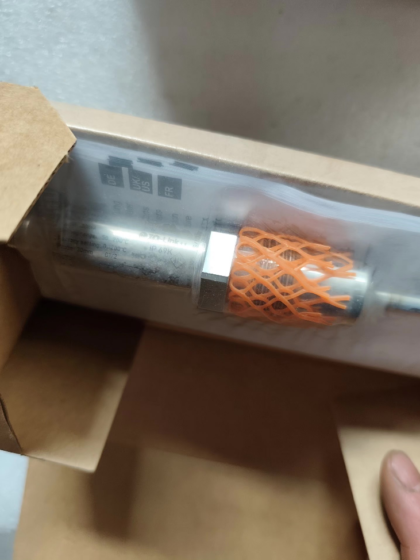
LMT102 (LMCCE-A12E-QSKG-2/US) is IFM’s hygienic capacitive point level detection sensor. It has no vibrating tuning fork structure and features foam and build-up suppression, specially designed for food and pharmaceutical CIP cleaning applications.
✅ Core Overview
Measuring principle: Capacitive (not tuning fork)
Probe length: 38 mm (measured from the cone sealing surface)
Process connection: G1/2 hygienic cone seal, dead-zone free hygienic design
Factory preset: Aqueous media (beer, beverages, cleaning solutions and other water-based liquids)
Communication: IO-Link V1.1 COM2, 38.4 kBaud. Supports parameter read/write, media teach-in and diagnostics
Application: High/low level alarm, overfill prevention, empty tank detection; capable of two-media differentiation (e.g. distinguish product from CIP cleaning fluid)
📋 Key Technical Specifications
Electrical
Supply: 18…30 VDC, reverse polarity protection, short-circuit / overload protection
Output: 2 configurable switching outputs, PNP/NPN selectable; NO/NC configurable via software
Max load per channel: 100 mA
Response time: <0.5 s
Temperature
Continuous medium temperature: -20 ~ +100 ℃
Short-term CIP resistance: up to 150 ℃ (1 hour)
Wetted Materials
Main body: 316L (1.4404) stainless steel
Probe tip: PEEK (low adhesion, resistant to material build-up)
Seals: FKM fluororubber
Hygiene certifications: EHEDG, 3-A, EC 1935/2004, compliant for food contact
Mechanical & Protection
Dimensions: Φ30, total length 125 mm, weight 202 g
Protection class: IP67
Mounting: Hygienic cone seal; requires matching hygienic adapter, no stagnant dead zones
✨ Core Advantages (Compared with Tuning Fork)
- Foam / sediment suppression: Algorithm compensation prevents false triggering caused by foam and tank wall deposits, ideal for beer, dairy and sugar liquid applications
- No mechanically vibrating components, no fatigue fracture; longer service life under frequent CIP cleaning cycles
- Dual threshold teach-in: Media calibration via IO-Link or Teach input to differentiate two media with different dielectric constants
- Full parameters remotely readable/writable: Switch point SP, reset point rP, output mode, diagnostic information
- Local LED status indicator for straightforward commissioning
🧪 Suitable Media & Industries
Suitable for: Water-based liquids, beer, fruit juice, dairy products, dilute sugar solutions, CIP acid/alkaline cleaners, viscous aqueous media
Industries: Food & beverage, pharmaceutical, biotech, hygienic fluid processes
Not recommended for pure oil or low-moisture powders (use LMT110 for these applications); prefer LMT121 for high-sugar / high-salt media
🛠 Installation & Commissioning Guidelines
- Mounting position: The probe must be immersed in medium to trigger. Top-of-tank mounting for high-level overfill protection, bottom mounting for empty tank protection
- Avoid areas with strong agitation vortices or heavy tank wall accumulation
- Calibration methods:
Local Teach button teach-in
Remote teach-in via IO-Link master (PLC) for one-click threshold setup for two media
- Do not strike the PEEK probe tip mechanically to prevent cracking
⚠️ Common Troubleshooting
- False triggering by foam: Re-run media teach-in and increase media compensation parameters
- Unstable switch point: Check supply voltage drop, confirm proper G1/2 cone sealing; avoid protruding gaskets creating dead zones
- IO-Link communication failure: Verify wiring, baud rate and sensor address; check cable shield grounding
- Drift after high-temperature CIP: Confirm FKM seal temperature limits and avoid prolonged exposure above 150 ℃
📌 LMT Series Selection Reference
| Model | Probe Length | Factory Preset Medium |
| LMT100 | 11 mm | Aqueous liquid |
| LMT102 | 38 mm | Aqueous liquid |
| LMT104 | 153 mm | Aqueous liquid |
| LMT105 | 253 mm | Aqueous liquid |
| LMT110 | 11 mm | Oil, grease, powder |
| LMT121 | 11 mm | High-sugar / high-salt medium |
📎 Alternative Options
Same principle IFM models: LMT100 / LMT104
Tuning fork alternatives: IFM LMT202 (G3/4), LMT302 (G1); E+H, Krohne hygienic tuning forks
Note: Tuning forks cannot suppress foam. Tuning forks are not recommended as replacement for LMT102 in foamy media
HS Code reference: 90261000 (liquid level measuring instruments)
IFM LMT102 IO-Link Parameter Table (SP/rP, Media Teach-in, Diagnostic Codes)
Communication specification: IO-Link V1.1, COM2, 38.4 kBaud; reference baseline: air = 0%, tap water =100%; minimum hysteresis 2%. Writing will be rejected if SP ≤ rP.
- Core Threshold Parameters (OUT1 / OUT2)
| Parameter | Name | Range | Factory Default (Aqueous Medium) | Description |
| SP1 | OUT1 Switch Point | 0~100 % | 70% | OUT1 activates when liquid level reaches this percentage |
| rP1 | OUT1 Reset Point | 0~100 % | 62% | OUT1 resets when liquid level drops to this percentage; SP1-rP1≥2% |
| SP2 | OUT2 Switch Point | 0~100 % | 70% | Second channel threshold for two-media differentiation |
| rP2 | OUT2 Reset Point | 0~100 % | 62% | Reset threshold for second channel |
- Output Configuration Parameters
| Parameter | Name | Options | Description |
| OU1 | OUT1 Output Mode | Hno / Hnc / Fno / Fnc | Hno: Hysteresis normally open; Hnc: Hysteresis normally closed; Fno: Window normally open; Fnc: Window normally closed |
| OU2 | OUT2 Output Mode | Hno / Hnc / Fno / Fnc | Two channels configurable independently; window mode suitable for level range monitoring |
| FOU1 | OUT1 State on Fault | OFF / ON | Force output off or on upon sensor fault |
| FOU2 | OUT2 State on Fault | OFF / ON | Fault behavior for second output |
| dFo | Fault Response Delay | 0~5 s, step 0.2s | Delay before fault output triggers after fault detection |
| dS1 / dr1 | OUT1 On/Off Delay | 0~10 s, step 0.2s | dS1 = switch-on delay; dr1 = switch-off delay, suppress false triggering from liquid fluctuation |
| dS2 / dr2 | OUT2 On/Off Delay | 0~10 s, step 0.2s | Independent delay for second channel |
| P-n | Output Type | PNP / NPN | Switch transistor output type |
III. Media Teach-in System Commands (IO-Link Commands, Core of Calibration)
| Command | Name | Function Description |
| tSP1 | Media 1 Teach-in | Full tank calibration, automatically calculates SP1/rP1 for product medium calibration |
| tSP2 | Media 2 Teach-in | Calibrate second medium, auto calculate SP2/rP2; typical use: distinguish product from CIP cleaning fluid |
| rES | Factory Reset | Restore all sensor parameters to factory defaults |
Teach-in logic: Fill tank with medium → send tSP1 command. Sensor learns dielectric constant and writes thresholds automatically. Dual-medium scenario: tSP1 for product, tSP2 for cleaning fluid. Two outputs identify each medium separately.
- Process Data (4-byte Input)
Byte 0: OUT1 status bit + OUT2 status bit
Byte 1: Sensor status / fault flags
Bytes 2~3: Raw capacitive measured relative value (0~100% level equivalent)
PLC reads this PD to obtain real-time level percentage + two switch states + fault information
- Device Identification Information (IODD)
Vendor ID: 310 (IFM)
Device ID: LMT series corresponding device number
Supports IO-Link Data Storage: Master automatically backs up parameters; one-click restore after sensor replacement, no on-site re-teach-in
- IO-Link Diagnostic Fault Codes
| Decimal | Hex | Fault Type | Remedy |
| 20480 | 5000h | Hardware fault | Internal hardware damage → replace sensor directly |
| 25376 | 6320h | Parameter error | Out-of-range / invalid parameters sent; verify limits and rewrite |
| 30480 | 7710h | Output short circuit | Check cable and terminals for short to ground; inspect load |
36350 / 36351 are test alarms only for factory production testing. They do not appear under normal site conditions and require no action.
VII. Commissioning Best Practices
- On-site physical media teach-in (tSP1/tSP2) is preferred over manual SP percentage entry. For foamy and build-up prone media, on-site teach-in activates the built-in media compensation algorithm.
- Parameter lock: Keypad lock available to prevent accidental parameter modification on site.
- SIO mode: When IO-Link is disabled, sensor automatically switches to standard PNP/NPN dual discrete level switch with two independent channels.
VIII. Recommended Parameter Set (Food & Beverage Overfill + Low-level Protection Example)
OUT1 (High-level overfill protection): OU1=Hno, SP1=70%, rP1=62%, dS1=0.5s
OUT2 (Low-level empty tank protection): OU2=Hnc, SP2=20%, rP2=15%, dr2=0.5s
FOU1/FOU2=OFF: Both outputs open on fault, triggering safety interlock
IFM LMT102 Hygienic Capacitive Point Level Switch – Engineering Application Cases
Consistent core benefits across all cases: foam / tank deposit suppression, no vibrating mechanical parts, dual-media identification, high-temperature CIP resistance, EHEDG/3-A hygienic certification, IO-Link digitization. 38 mm probe, G1/2 hygienic cone seal, suitable for side or top mounting on small & medium tanks.
Case 1: Brewery Fermentation Vessel (IFM Official Reference Case)
Media: Beer wort, heavy foam, CIP acid / alkaline cleaning fluid
Mounting: LMT102 installed at upper tank top for high-level overfill protection; second LMT102 on lower tank sidewall for empty tank protection
Process Pain Points: Thick foam generated during fermentation triggers constant false alarms with traditional tuning fork level switches. Yeast deposits on tank walls cause frequent false triggering. Need to distinguish beer product from CIP liquid to avoid cross-contamination.
LMT102 Solution
- OUT1 calibrated for beer, OUT2 calibrated for CIP cleaning liquid; dual-media identification. PLC distinguishes medium type to prevent mixing contamination.
- Built-in foam and deposit compensation algorithm; foam and yeast deposits do not trigger false signals.
- Rated for short-term CIP up to 150 ℃. 316L + PEEK + FKM meets hygiene certifications.
- IO-Link transmits status and fault data. Parameter auto-restore via IO-Link master after sensor replacement, no re-teach-in required on site.
Outcome: Foam false alarms eliminated. No sensor disassembly required during CIP cycles. Reduced product contamination risk. Classic IFM reference case (Skanderborg Bryghus Brewery).
Case 2: Dairy / Oat Milk Mixing Vessel (Similar Danone Projects)
Media: Milk, oat base liquid, dilute sugar solution, CIP alkaline liquid, viscous and prone to wall build-up
Process: Level interlock for mixing tank: high level stops feed pump to prevent overflow; low level stops feed pump to avoid dry running. Strong tank agitation causes heavy liquid surface fluctuation.
Pain Points: Viscous dairy media forms milk fouling on sensors. Agitation causes level fluctuation and signal chatter. Frequent hygienic CIP cycles required.
LMT102 Solution
Upper tank LMT102: OUT1 high-level pump stop interlock; lower tank LMT102: OUT2 low-level empty tank protection
On-site media teach-in enables sensor to compensate for milk fouling and maintain reliable detection with coating on probe
Hygienic cone seal dead-zone free, meets 3-A and EC1935 food contact requirements
LMT series sensors are deployed in batches on Danone oat beverage lines, IO-Link connected to AS-i network for plant-wide diagnostic visibility
Case 3: Sauce / Mayonnaise Mixing Tank (Viscous Water-based Food)
Media: Mayonnaise, salad dressing, tomato paste, high viscosity, prone to probe adhesion
Pain Points: Viscous material sticks to tuning fork prongs and locks the sensor. Strong eddy currents from tank stirring.
LMT102 Solution
- No vibrating elements; no “stuck” failure caused by material adhesion. PEEK probe with low surface adhesion
- On-site teach-in calibrates sauce dielectric constant and activates deposit suppression. Reliable liquid / no-liquid discrimination even with thin sauce coating on probe
- Sidewall mounted for high-level protection. Dual outputs can implement window detection for level range monitoring
Application Note: Works for water-based viscous media as factory preset. Use LMT121 for extremely high sugar / high salt concentrates.
Case 4: Biopharma Preparation Vessel & Buffer Storage Tank (GMP Cleanroom)
Media: WFI water for injection, phosphate buffer, dilute drug solution, CIP cleaning liquid
Process: High / low level interlock for formulation tanks, prevent overflow and pump dry run. CIP/SIP cleaning, strict cleanroom hygiene requirements
Pain Points: GMP requires zero stagnant dead zones. Frequent high-temperature CIP. Fast fault diagnosis required.
LMT102 Solution
- G1/2 hygienic cone flush mounting, dead-zone free, EHEDG certified for clean fluid service
- IO-Link real-time diagnostic data enables early prediction of seal ageing and drift, supporting preventive maintenance for pharma plants
- Dual switch outputs: high-level alarm + low-level empty tank protection. Fault state configurable for safe de-energized interlock
Note: Long-duration SIP steam sterilization (continuous 121 ℃) requires seal evaluation. Short CIP cycles up to 150 ℃ are acceptable.
Case 5: CIP Cleaning Liquid Storage Tank (Acid/Alkali Recovery Tank)
Media: Dilute alkaline cleaner, dilute acid cleaner, water for equipment in-place cleaning in food/pharma
Process: Level control for CIP tank, automatic replenishment of cleaning chemicals, low-level protection for CIP pumps
Pain Points: Corrosion risk from acid/alkaline media; foam generation; need to differentiate clean water and chemical cleaner
LMT102 Solution
316L wetted body and FKM fluororubber seals resistant to dilute acids and alkalis
Dual-media teach-in: calibrate clean water and alkaline cleaner. Two outputs distinguish residual cleaning liquid versus plain water
Foam suppression, no false triggering from foamy cleaning solutions
Case 6: Fruit Juice / Beverage Concentrate Transfer Tank
Media: Fruit juice concentrate, dilute high-fructose syrup, easy foaming and sugar fouling
Pain Points: Heavy foam generated during filling; sugar deposits coat probe and cause drift on conventional capacitive switches
LMT102 Solution
Tank top mounted LMT102 for overflow protection; sidewall low-position sensor for empty tank protection
On-site media teach-in compensates sugar fouling; foam does not trigger false signals
IO-Link remote parameter read/write, batch parameter configuration for multiple production lines
General Selection & Installation Guidelines (Reusable for Projects)
- Media boundary: Only for water-based media. Pure oil and powder applications are not suitable for LMT102; select LMT110 instead. Use LMT121 for high-sugar / high-salt concentrates.
- Mounting: Must use IFM matched hygienic welding adapter for G1/2 cone seal. Do not use standard gaskets, which create hygienic dead zones.
- Probe length selection: LMT102 with 38 mm probe recommended for sidewall installation. Use LMT104 (153 mm) for long insertion from tank top.
- Comparison with tuning fork: Prefer LMT102 for foamy or build-up prone media. Tuning fork LMT202 is better for non-foamy high-viscosity oil media.
Typical System Bill of Materials (Directly usable for proposals)
Sensor: LMT102
Hygienic welding adapter: IFM G1/2 hygienic adapter
Cable: M12 4-core shielded cable
IO-Link Master: AL1102 / AL1103, connected to Siemens S7-1200/1500 PLC
Software: moneo configure for media calibration and IO-Link parameter backup

NH42-63-318x560.png "CHINT PC-type automatic transfer switches (ATS)NH42-63/4SZ")