Contactor,circuit breaker,sensor,Encoder,PLC,Converter

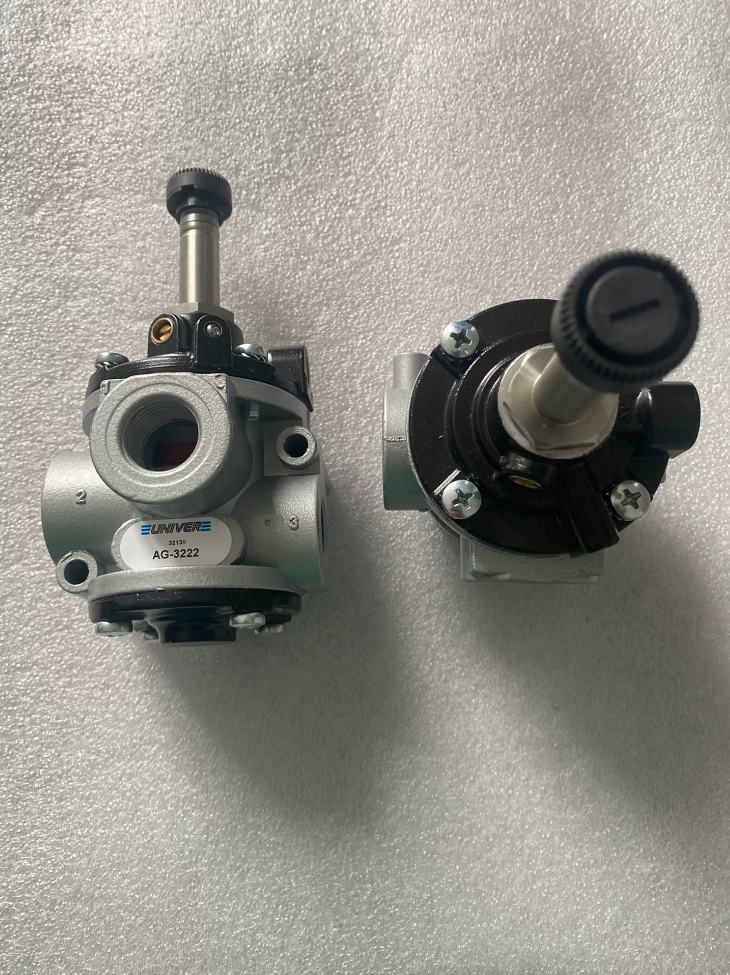

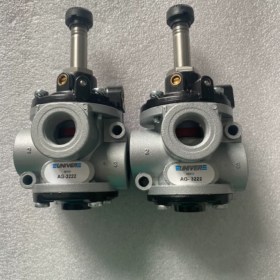
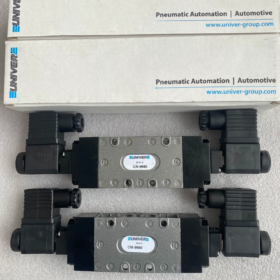
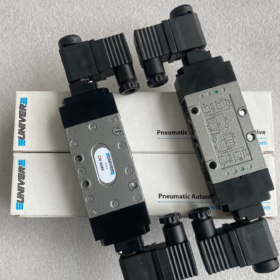
The AG-3232 is a 3/2-way normally closed vacuum poppet valve. It adopts electric solenoid control with vacuum pilot operation and features G3/4″ port size. It is ideal for vacuum systems requiring high flow rate and high cycle frequency.
- Model Code Explanation
Breakdown of the AG-3232 model code:
| Code | Meaning | Detailed Description |
| AG | Series Code | AG Series Vacuum Poppet Valve. Featuring Univer patented poppet structure, specially designed for vacuum applications. |
| 3 | Circuit Type | 3-way, 2-position valve |
| 2 | Control Mode | Electric solenoid with vacuum pilot |
| 3 | Normal Position | Normally Closed (NC) |
| 2 | Port Size | G3/4″ (DN20) threaded port |
- Main Technical Specifications
| Category | Specification | Remarks |
| Basic Characteristics | ||
| Valve Type | Poppet Valve | Excellent sealing performance for vacuum service |
| Control Mode | Electric solenoid with vacuum pilot | External vacuum pilot supply (G1/4″ port) |
| Normal Position | Normally Closed (NC) | Vacuum port closes when power off or no pilot supply |
| Circuit Configuration | 3/2-way | 1 vacuum port, 1 exhaust port, 1 working port |
| Port Dimensions | ||
| Main Port Size | G3/4″ (DN20) | Working port / Vacuum port |
| Pilot Port Size | G1/4″ | External vacuum pilot supply |
| Performance Parameters | ||
| Maximum Vacuum | 759.5 mmHg (0.5 Torr) | Approx. -0.1 MPa absolute pressure |
| Minimum Vacuum | 150 mmHg (610 Torr) | Applicable vacuum range |
| Ambient Temperature | Max. +50掳C | Keep away from high-temperature environments |
| Working Medium | Filtered air (50渭m), lubricated or non-lubricated | Clean and dry air is mandatory |
| Solenoid Voltage | 12V DC, 24V DC, 24V AC, 110V AC, 230V AC | Multiple coil options available |
| Manual Operation | 2-position screw manual override | Manual state switching available during power failure |
| Physical Parameters | ||
| Weight | Approx. 1.13-1.17 kg | Slight variations among suppliers |
| Material | Valve body: Aluminum alloy; Seals: Nitrile Butadiene Rubber (NBR) | Standard configuration; Viton seals optional |
- Cross-brand Comparison & Domestic Alternatives
| Brand | Model | Function Matching Rate | Reference Price (EUR) | Advantages |
| Univer | AG-3232 | 100% | 148-228 | Original genuine product with patented poppet structure and optimal sealing performance |
| FESTO | VUVS-L30-M32C-MD-G18-F7 | 95% | 280-350 | Well-known brand with comprehensive supporting services |
| SMC | VV5Q3-30-06 | 90% | 220-280 | Fast response and compact structure |
| AVENTICS | 5811400220 | 90% | 200-250 | Good contamination resistance, suitable for harsh working conditions |
| Domestic Alternative (E.MC) | VT307-03NC | 85% | 80-120 | Cost-effective and short delivery lead time |
| Domestic Alternative (AIRTAC) | 3V3-08-NC | 80% | 60-90 | Competitive price, ideal for budget-limited projects |
Selection Recommendations
- For precision equipment requiring stable vacuum performance, prioritize the original Univer AG-3232.
- For general industrial applications, FESTO or SMC alternatives are recommended for similar performance and extensive service networks.
- For cost-sensitive projects, choose domestic alternatives from E.MC or AIRTAC for higher cost performance.
- Full Model List of AG Series
The AG series vacuum poppet valves cover port sizes from G1/8″ to G1 1/2″. Common models are listed below:
| Model | Port Size | Control Mode | Normal Position | Remarks |
| AG-3001 | G1/8″ | Solenoid with vacuum pilot | NC | Mini size for low flow applications |
| AG-3002 | G1/8″ | Solenoid with vacuum pilot | NO | Normally open type for continuous vacuum operation |
| AG-3003 | G1/4″ | Solenoid with vacuum pilot | NC | General size for small & medium vacuum cup systems |
| AG-3004 | G1/4″ | Solenoid with vacuum pilot | NO | Normally open, G1/4″ port |
| AG-3041 | G3/4″ | Solenoid with vacuum pilot | NO | High flow normally open type, NO version of AG-3232 |
| AG-3081 | G1/2″ | Solenoid with vacuum pilot | NC | Medium flow, G1/2″ port |
| AG-3222 | G1/2″ | Solenoid with vacuum pilot | NO | Medium flow normally open type |
| AG-3232 | G3/4″ | Solenoid with vacuum pilot | NC | Subject model, high flow normally open type |
| AG-3303 | G1″ | Solenoid with vacuum pilot | NC | Extra high flow for large-scale vacuum systems |
| AG-3322 | G1″ | Solenoid with vacuum pilot | NO | Extra high flow normally open type |
| AG-3403 | G1 1/2″ | Solenoid with vacuum pilot | NC | Max size for heavy industrial vacuum applications |
- Common Faults & Troubleshooting
| Fault Phenomenon | Possible Causes | Inspection Steps | Solutions |
| Insufficient vacuum | 1. Aged/damaged seals | 1. Check seals for cracks or wear | 1. Replace seals (recommended every 12 months) |
| 2. Insufficient pilot pressure | 2. Measure pilot vacuum (≥150 mmHg required) | 2. Increase pilot vacuum supply | |
| 3. Internal valve leakage | 3. Conduct valve pressure test | 3. Repair or replace the valve | |
| Valve fails to operate | 1. Faulty solenoid coil | 1. Check coil voltage & resistance (15-25Ω for standard 24V DC coil) | 1. Replace solenoid coil |
| 2. Manual override not reset | 2. Confirm manual screw is reset | 2. Screw back the manual override | |
| 3. Blocked pilot pipeline | 3. Dismantle pipeline and check for foreign matters | 3. Clean pipeline and install filter | |
| Slow valve operation | 1. Contaminated working medium | 1. Check clogged filter | 1. Replace filter and clean the system |
| 2. Delayed solenoid response | 2. Test solenoid response time (<50ms required) | 2. Replace solenoid coil | |
| 3. Overloaded vacuum system | 3. Inspect vacuum system for leakage | 3. Fix leakage points of vacuum system | |
| Frequent failures | 1. Excessively high ambient temperature | 1. Measure ambient temperature (≤+50°C required) | 1. Add cooling devices or adopt high-temperature resistant model |
| 2. Excessive oil/water in medium | 2. Check air treatment unit | 2. Upgrade air treatment system (add dryer) | |
| 3. Incorrect installation direction | 3. Verify installation against flow arrow | 3. Reinstall the valve correctly |
Maintenance Schedule
Daily: Check vacuum level and valve operation regularly.
Quarterly: Clean filters and inspect seal condition every 3 months.
Annually: Replace seals and carry out full inspection & maintenance for the valve.
- Application Cases & Industry Guidelines
6.1 Typical Application Scenarios
Automated Production Lines: Vacuum material handling systems for metal sheets, glass, plastic parts, etc.
Packaging Machinery: Vacuum thermoforming machines for food, pharmaceutical and other products.
Semiconductor Equipment: Wafer handling systems requiring high vacuum and high cleanliness.
Woodworking Machinery: Vacuum workholding tables for wood cutting, engraving and processing.
Printing Machinery: Paper conveying systems using vacuum adsorption for stable paper feeding.
6.2 Industry Application Cases
Case 1: Automotive Component Production Line
Application: Engine block handling
Working Condition: Handling cast iron blocks up to 50 kg; Vacuum requirement ≥ -0.08 MPa
Solution: AG-3232 equipped with 4 pcs of Φ200 mm vacuum cups, matched with vacuum generator
Outcome: Stable handling without falling risks; production efficiency increased by 30%.
Case 2: Display Panel Assembly Line
Application: LCD panel handling
Working Condition: High cleanliness required; Vacuum requirement ≥ -0.09 MPa; prevent panel scratches
Solution: AG-3232 + soft silicone vacuum cups, matched with oil-free vacuum pump
Outcome: Scratch-free handling with 100% yield rate, compliant with cleanroom standards.
6.3 Selection Guidelines
Port Selection: Choose port size from G1/8″ to G1 1/2″ according to required vacuum flow.
Normal Position Selection: NC for intermittent operation; NO for continuous operation.
Control Mode Selection: Solenoid with vacuum pilot for high flow; direct solenoid for low flow.
Vacuum Matching: Ensure system vacuum stays within 150 ~ 759.5 mmHg.
Regular Maintenance: Replace seals periodically and keep air source clean.
- Installation & Operation Precautions
- Installation Direction: Install the valve strictly in line with the flow direction arrow marked on the body.
- Pilot Supply: Maintain stable pilot vacuum pressure; pressure regulator is recommended.
- Filtration: Install a 50μm filter at the air inlet to prevent foreign matters from entering the valve.
- Electrical Wiring: Wire in accordance with the rated coil voltage to avoid overload or short circuit.
- Operating Environment: Do not use in environments with temperature over +50°C, high humidity or corrosive gas.
- Manual Override: Only use manual operation in emergency situations; reset it after use.


NH42-63-318x560.png "CHINT PC-type automatic transfer switches (ATS)NH42-63/4SZ")