Contator,disjuntor,sensor,Codificador,CLP,Conversor

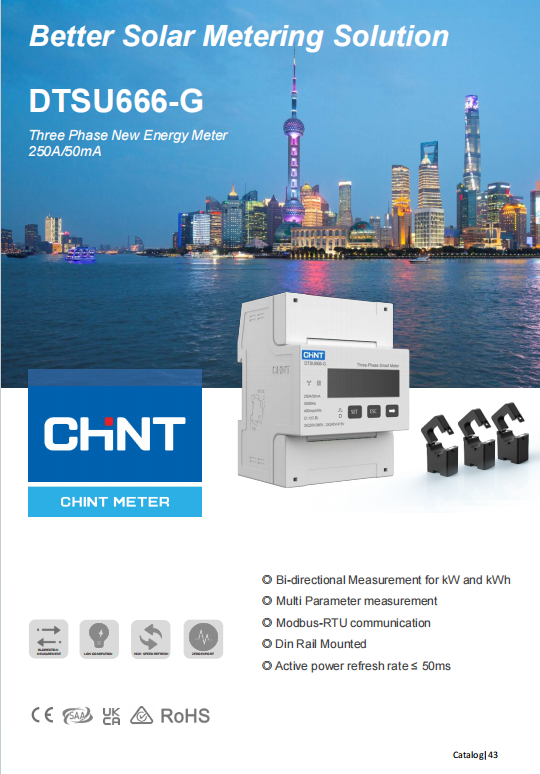


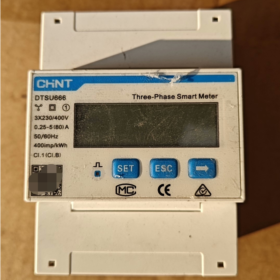
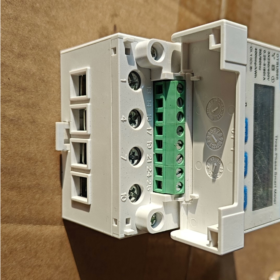
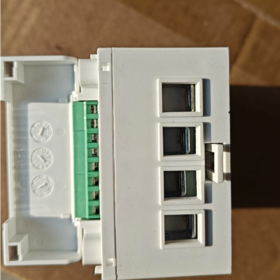
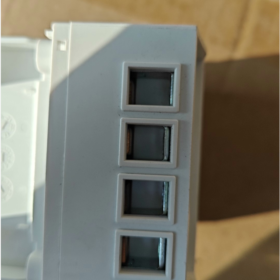
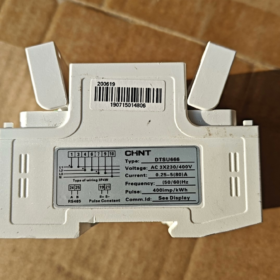
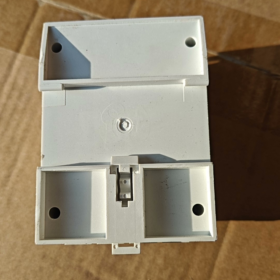
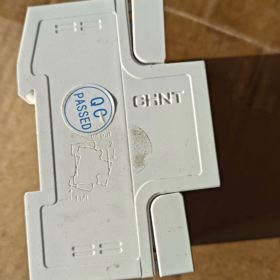
CHINT DTSU666-G PDF é um bidirecional inteligente medidor de energia especialmente projetado para novos cenários de energia, como fotovoltaica e armazenamento de energia. Ele adota montagem em trilho DIN35mm padrão e apresenta alta precisão, atualização de alta velocidade, e medição bidirecional, adequado para PV residencial, industrial & sistemas comerciais de armazenamento de energia e aplicações de microrrede.
- Guia de fiação: CHINT DTSU666G para placa de controle do inversor (Medidor-485)
| Recurso principal | Descrição |
| Medição Bidirecional | Mede com precisão para frente (entrada de grade) e reverter (nova produção de energia) Fluxo de energia kW e kWh; suporta controle anti-refluxo. |
| Atualização em alta velocidade | Taxa de atualização de energia ativa ≤ 50 ms para atender aos requisitos de resposta rápida de novos sistemas de energia. |
| Monitoramento multiparâmetro | Medição de tensão em tempo real, atual, poder, fator de potência, frequência e outros parâmetros elétricos completos. |
| Função de comunicação | Interface RS485 padrão, suporta protocolo Modbus‑RTU, conectável a sistemas de gerenciamento de energia. |
| Fácil instalação | Montagem em trilho padrão DIN35mm, 4P (4 módulos) estrutura compacta (98×72×65mm). |
| Operação em ampla temperatura | Faixa de temperatura operacional: -25°C a +55°C, adaptável a vários ambientes de caixa de distribuição externa. |
- Principais especificações técnicas
| Item | Especificação |
| Tipo de medidor | Medidor eletrônico de energia trifásico de quatro fios (Tipo de trilho DIN) |
| Classe de Precisão | Ativo: Classe 0,5S / 1; Reativo: Aula 2 |
| Tensão de referência | 3×220/380 V (trifásico a quatro fios) |
| Classificação atual | 0.015-1,5(6) UM (via transformador), compatível com 5 Um lado secundário da TC |
| Constante de pulso | 800 imp/kWh |
| Faixa de tensão | 0.8Um ~ 1,15Um |
| Consumo de energia | ≤ 2 C / 10 VA |
| Interface de comunicação | RS485, taxa de transmissão 9600/19200 bps (padrão 9600), endereço 1‑247 |
| Mostrar | Segmento LCD, suporta exibição automática de ciclo e consulta de chave |
| Classe de Proteção | IP20 (instalação interna) |
| Alimentação Auxiliar | Não é necessária fonte de alimentação externa; alimentado diretamente por sinal de tensão |
III. Diferenças do padrão DTSU666
| Item | DTSU666-G (Nova Versão Energética) | Padrão DTSU666 |
| Cenário de projeto | Medição bidirecional para PV, armazenamento de energia e outras novas energias | Industrial geral / medição de eletricidade comercial |
| Classificação atual | 0.015-1,5(6) UM (mais adequado para conexão de transformador) | Várias classificações, incluindo 0,25-5(80) UM |
| Taxa de atualização | ≤ 50 EM (resposta rápida para novos sistemas de energia) | Taxa de atualização normal |
| Otimização de Função | Precisão de medição bidirecional aprimorada, optimized for anti‑backflow control | Basic electric energy metering functions |
| Campos de aplicação | Residential PV, industrial & commercial energy storage, microgrid systems | Industrial & mining enterprises, hotéis, escolas, etc.. |
- Cenários típicos de aplicação
- Residential PV Systems: Meter bidirectional energy for self-consumption and grid-feed surplus power, working with inverters for anti-backflow control.
- Industrial & Commercial Energy Storage Systems: Monitor energy flow during charging and discharging to optimize energy efficiency.
- Microgrid Systems: Realize bidirectional metering and monitoring between distributed energy sources and main grid.
- Charging Pile Management: Accurately measure power consumption of three-phase charging piles, supporting remote meter reading and data analysis.
- Instalação & Notas de Operação
- Montagem: Standard DIN35mm rail mounting, 4P width, adequado para instalação em caixas de distribuição.
- Fiação: Sistema trifásico de quatro fios; phases A, B, C connected to terminals 1, 3, 5 respectivamente; neutro (N) para o terminal 7; secondary side of current transformers connected to corresponding current terminals.
- Configuração de parâmetros: Entre no menu de programação através da tecla SET; senha padrão 700; Relação de TC, Proporção de PT, parâmetros de comunicação, etc.. pode ser configurado.
- Configuração de comunicação: Suporta protocolo Modbus-RTU; taxa de transmissão padrão 9600 bps, sem paridade, 1 pare um pouco.
- Seleção & Informações sobre pedidos
Modelo Completo: DTSU666-G 3×220/380V 0.015-1.5(6)Um 4P
Sugestão de correspondência: Usado com transformadores de corrente CHINT (por exemplo. BH-0.66 série); selecione a proporção de acordo com a carga real.
Modelos Alternativos: Novo medidor de energia monofásico: DDSU666-G; trifásico de três fios: DSSU666-G
CHINT DTSU666-G vs DTSU666: Diferenças Fundamentais & Análise de intercambialidade
Conclusão Central: DTSU666-G é a nova versão dedicada à energia (otimizado para armazenamento fotovoltaico/energia), enquanto DTSU666 é a versão de uso geral. Eles podem ser substituídos temporariamente em cenários de medição básica, mas o DTSU666-G é fortemente recomendado para novos sistemas de energia para garantir precisão de medição bidirecional e resposta rápida.
- Visão geral das principais diferenças
| Dimensão | DTSU666-G (Nova Versão Energética) | DTSU666 (Versão Geral) | Impacto |
| Objetivo do projeto | Medição bidirecional para armazenamento fotovoltaico/energia, compatível com controle anti-refluxo | Medição básica de energia elétrica para indústria / comercial / uso residencial | Direção de otimização determinada pelo cenário de aplicação |
| Classificação atual | 0.015-1,5(6) UM (somente conexão do transformador) | 0.25-5(80) UM (conexão direta) / 0.1-1,5(6) UM (conexão do transformador) | Grande diferença no método de conexão e alcance afeta a seleção |
| Taxa de atualização de energia ativa | ≤ 50 EM (resposta de alta velocidade) | Taxa normal (aprox.. 500 EM) | Novos sistemas de energia exigem detecção rápida de mudança de energia para controle anti-refluxo |
| Precisão de medição bidirecional | Design aprimorado para atender aos novos requisitos de conexão à rede de energia | Medição bidirecional básica, concentra-se na direção para frente | O DTSU666‑G fornece medição mais precisa para cenários de excedente de alimentação da rede |
| Otimização de Função | Adaptado para controle de inversor fotovoltaico, suporta detecção de saída de potência zero | Medição de energia padrão, nenhuma nova otimização específica de energia | DTSU666‑G é mais confiável em sistemas de proteção antirrefluxo |
| Cenários de aplicação | Residential PV, industrial & commercial energy storage, microrredes | Empresas industriais, hotéis, escolas, edifícios gerais | Performance depends on scenario matching |
- Detailed Technical Parameter Differences
- Classificação atual & Método de conexão
DTSU666-G: Only available in 0.015-1.5(6) A transformer-connected version, designed specifically for 5 A CT secondary side, suitable for high-current measurement in new energy systems.
DTSU666: Offers multiple ratings including 0.25-5(80) A direct-connected and 0.1-1.5(6) A transformer-connected types for various load scenarios.
- Diferenças de desempenho
Active power refresh rate: DTSU666-G ≤ 50 EM (for fast response in new energy systems); DTSU666 uses normal refresh rate (aprox.. 500 EM).
Iniciando atual: DTSU666-G has lower starting current (0.001Em), suitable for low-power output measurement in new energy systems.
Metering accuracy: Both have active Class 0.5S/1, but DTSU666-G offers better consistency in bidirectional metering.
- Software Function Differences
DTSU666-G integrates new energy-specific algorithms optimizing bidirectional power calculation and anti-backflow control logic.
DTSU666 uses general metering algorithms, more suitable for unidirectional or balanced loads.
Both support Modbus-RTU over RS485, but some register addresses in DTSU666-G are optimized for new energy parameters.
III. Análise de intercambialidade
- Interchangeable Scenarios (Temporary Substitution)
Basic energy metering: In general industrial/commercial scenarios where only forward energy measurement is needed, they can be temporarily interchanged (current rating must match).
Parameter monitoring: Functions are consistent when only basic electrical parameters such as voltage, current and power are monitored.
Integração de comunicação: Same Modbus-RTU protocol supported, can access the same energy management system.
- Scenarios Not Recommended for Interchange (Must Match Model)
| Cenário | Modelo recomendado | Razão |
| PV Grid‑Feed Surplus | DTSU666-G | Requires high‑precision bidirectional metering; DTSU666‑G tem atualização mais rápida e melhor adaptação antirrefluxo |
| Gerenciamento de carga/descarga de armazenamento de energia | DTSU666-G | A comutação frequente de carga/descarga requer resposta rápida ≤50 ms para evitar erros de medição |
| Sistemas de controle antirrefluxo | DTSU666-G | Algoritmo dedicado garante detecção precisa de saída de energia zero e evita flutuações na rede |
| Conexão Direta de Carga Pequena | DTSU666 | DTSU666‑G não possui versão com conexão direta e não pode se adaptar a 0,25‑5(80) Uma carga |
| Medição de avaliação do departamento de energia | De acordo com os requisitos locais | Deve cumprir os padrões de medição da rede; algumas regiões exigem explicitamente novos medidores específicos para energia |
- Notas sobre intercâmbio
- Correspondência de classificação atual: Método de conexão (direto/transformador) e o alcance devem corresponder à carga real.
- Configuração de parâmetros: Após a substituição, redefinir relação CT/PT, endereço de comunicação e outros parâmetros; a senha padrão para ambos é 700.
- Function limitation: Replacing DTSU666-G with DTSU666 loses high-speed refresh and anti-backflow adaptation, which may reduce system control accuracy.
- Recomendações de seleção
- Novos sistemas de energia: Prioritize DTSU666-G to ensure bidirectional metering accuracy and system compatibility.
- General industrial/commercial use: Choose DTSU666, select direct or transformer connection based on load type.
- Projetos de retrofit: When upgrading existing DTSU666 systems to PV/energy storage, replace with DTSU666-G to avoid metering errors and control issues.


NH42-63-318x560.png "Chaves de transferência automática tipo PC CHINT (ATS)NH42-63/4SZ")