Contator,disjuntor,sensor,Codificador,CLP,Conversor

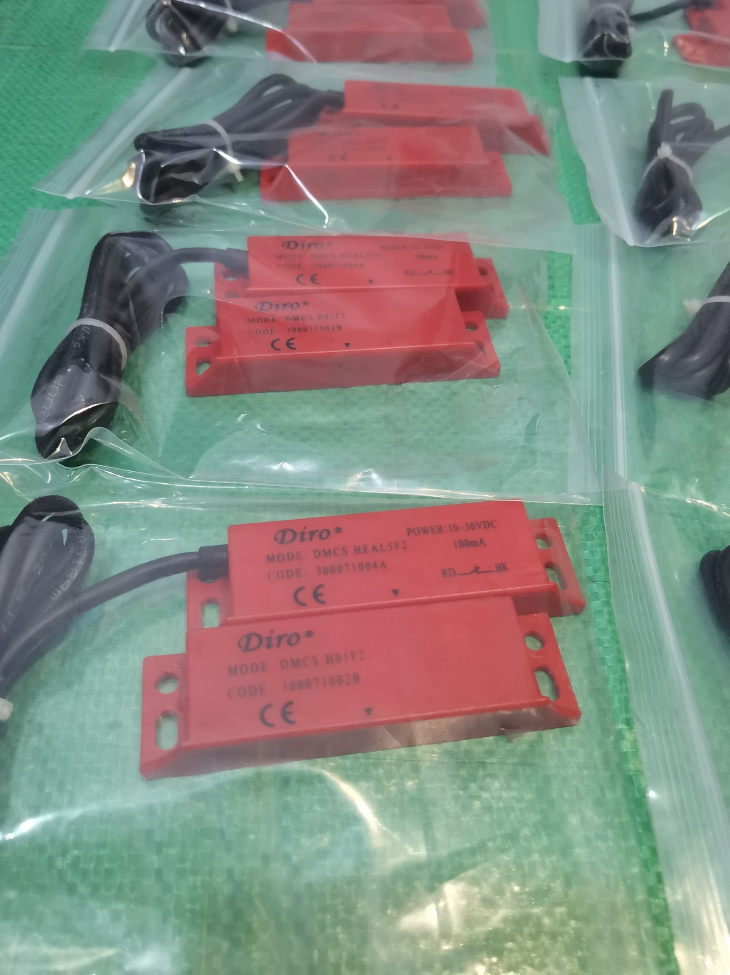

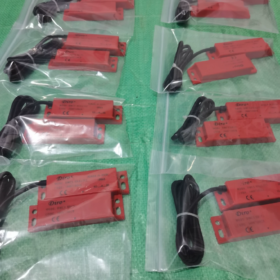
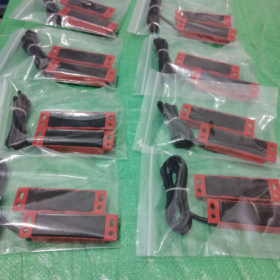
ENVIAR: Fabricante nacional de sensores de automação (Diro Automação), especializada em interruptores magnéticos cilíndricos e conjuntos magnéticos completos para portas de segurança.
Repartição do modelo DMCS H01F2:
- DMCS: Bloco magnético especial para sensores Hall eletrônicos da série D (Ímã de porta para sensor sem contato), usado para porta de segurança industrial e detecção de posição de cilindro.
- H: Base de montagem de encaixe tipo H, compatível com portas de gabinete de perfil de alumínio e ranhuras de cilindro padrão.
- 01: Especificação do ímã de detecção padrão.
- F2 / H01F2: Código internacional de classificação de materiais magnéticos IPC, denotando ímã permanente de ferrite de estrôncio. Seu campo magnético é calibrado exclusivamente para interruptores Hall sem contato, apresentando nenhuma deriva magnética residual e nenhuma distinção entre pólos N/S.
- Posicionamento do produto
Conjunto completo de correspondência DIRO: DMSH-020 / DMSH-N020 (3-wire Hall magnetic switch) + DMCS H01F2 (door magnet)
The magnet is mounted on the door leaf / sliding mechanism, while the sensor is fixed on the door frame / equipment frame.
Porta fechada: Magnet approaches the sensor, and the PLC receives a 24V level signal.
Porta aberta: Signal cuts off.
Aplicativos: Safety door interlock of machinery, machine tool protective door alarm, detecção de posição do cilindro.
- Núcleo Elétrico & Magnetic Performance Parameters
Item de parâmetro Standard Value of DIRO DMCS H01F2 Magnetic Material Type H01F2 standard hard ferrite permanent magnet Effective Sensing Distance 3~10 mm (optimal trigger gap: 5~7mm) Temperatura operacional -10℃ ~ +70 ℃ Material da Habitação Integrally molded flame-retardant PA6, oil-proof and cutting fluid resistant Método de montagem H-type snap fastener + M3 locking screw, cabe 10/15/20 perfis de alumínio Resistência à vibração No demagnetization under long-term operation at 10~50Hz with 1.5mm amplitude Surface Magnetic Field Stably compatible with all DIRO DMSH electronic switches, no missed triggering Conformidade Ambiental RoHS halogen-free, universal para equipamentos industriais Aparência & Dimensões de montagem
- Forma geral: Estrutura de encaixe alongada com núcleo magnético totalmente encapsulado, nenhum ímã exposto.
- Fixação: Prenda diretamente na lateral dos perfis de alumínio, travado por parafuso traseiro para evitar cair.
- Alocação de instalação correspondente:
Por folha: Ímã DMCS H01F2
Moldura da porta: ENVIAR DMSH-020 (NPN/PNP selecionável, DC24V 3 fios)
- Lógica de fiação do switch correspondente (DMSH-020)
Marrom: DC24V Positivo
Azul: 0V GND
Preto: Saída de sinal (NPN conduz em baixo nível / PNP conduz em alto nível)
Quando perto do ímã: Condutas de saída, A luz de entrada do PLC acende.
Quando longe: Desconexões de saída, acionando desligamento de segurança ou alarme.
- Cenários de aplicação
- Intertravamento de portas de proteção de segurança em equipamentos automatizados e portas de manutenção de máquinas injetoras / máquinas-ferramentas.
- Monitoramento de status de fornos de linha de montagem e portas de chuveiros de ar.
- Lar / feedback do sinal de posição final para pistões de cilindros pneumáticos.
- Alarme anti-roubo para armários de controle elétrico e portas de equipamentos de armazenamento.
- Diferenciação de séries & Instruções de substituição
- DIRO CMS-S: Ímã correspondente para interruptores reed (tipo de contato com vida útil curta).
- DIRO DMCS H01F2: Compatível apenas com interruptores eletrônicos DMSH Hall, não pode ser misturado com a série CMS reed.
- Substituição compatível: Os blocos magnéticos Airtac H01F2 para DMSH compartilham dimensões e campo magnético idênticos, permitindo instalação intercambiável direta.
- Proibições de montagem
- Mantenha uma distância mínima de 10cm dos inversores e válvulas solenóides de alta potência para evitar falsos disparos causados por fortes interferências magnéticas.
- Nunca permita que a folga de detecção exceda 10 mm; caso contrário ocorrerá perda de sinal.
- Não mergulhe em fluido de corte alcalino forte por longos períodos, pois irá corroer a caixa de plástico.
Especificação completa de vida útil do ímã de porta DIRO DMCS H01F2
Este ímã adota ímã permanente de ferrite de estrôncio encapsulado (H01F2) em plástico PA6 ignífugo. Sua vida útil é dividida em duas categorias: vida útil do desempenho magnético (atenuação magnética) e vida útil da carcaça mecânica (fecho de pressão / envelhecimento plástico).
- Vida útil magnética teórica sob condições padrão de trabalho
- Oficina limpa ideal (-10~+60℃, nenhum campo eletromagnético forte, nenhum impacto severo)
A ferrita tem uma taxa anual de desmagnetização natural abaixo 0.1%. A força magnética atenua apenas menos do que 1% dentro de 10 anos, retendo mais 95% do campo magnético original após 20 anos. O desempenho magnético dura mais de 20 anos.
Para aplicações comuns, como portas e cilindros de segurança industrial, a vida útil do projeto do fabricante é avaliada em 15 a 20 anos.
- Oficina comum (exposto ao fluido de corte, leve vibração, temperatura ≤70℃)
A atenuação magnética anual varia de 0.3% para 0.8%. A vida útil estável e confiável atinge 10 a 15 anos. Dentro de 15 anos, a intensidade do campo magnético atende totalmente ao limite de disparo dos interruptores DMSH Hall sem perda de sinais.
- Condições de trabalho duras (temperatura a longo prazo acima de 80 ℃, proximidade de inversores / válvulas solenóides de alta potência, impactos frequentes)
A desmagnetização acelerada reduz a vida útil efetiva para 5 a 8 anos, muitas vezes causando nenhum sinal quando a porta fecha e detecção instável.
- Vida útil da carcaça mecânica (Estrutura de encaixe de plástico)
A caixa é feita de plástico PA6 retardador de chamas. Abertura/fechamento de longo prazo e vibração levam a fechos de encaixe soltos ou rachados:
Menor que 50 ciclos de abertura/fechamento diariamente: Snaps de plástico servem 10 anos.
200~500 ciclos de abertura/fechamento diários (portas de alta frequência em linhas de produção): A vida útil da fadiga dos snaps é de 5 a 8 anos. Falhas comuns incluem parafusos desencapados e encaixes quebrados (o próprio ímã permanece magnético; apenas a habitação precisa de substituição).
- Padrão geral de substituição da indústria (Referência para Manutenção de Equipamentos)
A substituição é recomendada se ocorrer alguma das seguintes condições, sem esperar pela desmagnetização completa:
- Depois 10 anos de serviço, calibre a distância de detecção uma vez por ano.
- A lacuna de detecção diminui do padrão 5 ~ 7 mm para ≤3 mm para acionar a chave.
- Carcaça rachada, fechos de pressão soltos ou núcleo magnético exposto.
- Serviço contínuo para 8 anos sob alta temperatura ou ambiente de campo magnético forte.
- Quatro fatores críticos que encurtam bastante a vida útil
- Alta temperatura: A exposição a longo prazo acima de 75°C causa desmagnetização irreversível da ferrita.
- Campo magnético forte reverso: Distância inferior a 10 cm dos inversores e bobinas do contator.
- Impacto físico: Batidas ou quedas frequentes criam microfissuras dentro do ímã e aceleram a atenuação.
- Corrosão química: A imersão prolongada em fluido de corte alcalino forte ou agente desmoldante corrói o invólucro de plástico.
- Dicas para prolongar a vida útil
- Mantenha uma distância mínima de 10 cm entre o ímã e os componentes de controle elétrico / bobinas de alta potência.
- Controle a lacuna de detecção em 5 ~ 8 mm; não force o contato apertado.
- Evite impactos fortes na posição de montagem do ímã proveniente da folha da porta.
- Instale defletores de isolamento térmico em equipamentos de alta temperatura para limitar a temperatura da superfície ≤65℃.
Máquina-ferramenta padrão / oficina automatizada à temperatura ambiente: Vida útil confiável de 10 a 15 anos.
Equipamento limpo com temperatura constante: Nenhuma atenuação magnética óbvia por mais de 20 anos.
Abertura/fechamento de alta frequência, ambientes de alta temperatura ou forte interferência eletromagnética: Substituição preventiva recomendada a cada 5 a 8 anos.
Métodos de detecção para atenuação magnética do ímã de porta DMCS H01F2
Incluindo inspeção rápida no local sem ferramentas e calibração instrumental precisa.
- Inspeção rápida no local sem ferramentas (Operável durante o desligamento do equipamento)
1.1 Teste de detecção de lacuna (Mais intuitivo, prioridade recomendada)
Interruptor Hall DIRO DMSH padrão compatível: Gap de detecção eficaz com classificação de fábrica de 3 ~ 10 mm, ideal 5~7mm
Etapas da operação:
- Fixe o interruptor magnético estacionário, mova o ímã DMCS H01F2 lentamente em direção ao sensor.
- Registre a distância máxima onde a luz indicadora do interruptor acende.
Critérios de Julgamento:
Distância de disparo ≥4mm: Magnetismo normal, sem atenuação
Distância de disparo 2~3mm: Ligeira atenuação, utilizável temporariamente; preparar peças sobressalentes para substituição
Distância de disparo ≤1mm (a luz só acende quando bem fixada com sinais intermitentes): Desmagnetização severa, substitua imediatamente
Sinais intermitentes após contato firme: Desmagnetização parcial ou rachadura interna do núcleo magnético
1.2 Teste de estabilidade do switch (Verificação dinâmica das condições de trabalho)
- Fixe o ímã na porta de segurança do equipamento e feche a porta para fixar no sensor normalmente.
- Agite levemente a folha da porta e bata suavemente na posição de montagem do ímã.
Características de falha do magnetismo atenuado:
Estado normal: A luz indicadora permanece acesa sem piscar durante a agitação
Estado atenuado: A luz apaga sob leve vibração, sinais cortados e desligados, O PLC aciona frequentemente alarmes de porta aberta
1.3 Teste de comparação com novo ímã (Se houver peças de reposição disponíveis)
Coloque um DMCS H01F2 novo e o ímã testado perto do mesmo interruptor DMSH separadamente:
Se o novo ímã tiver uma distância de disparo significativamente maior enquanto o antigo mostra uma redução acentuada, atenuação magnética é confirmada.
1.4 Inspeção Visual Auxiliar (Apenas para referência, não é apenas uma base de julgamento)
As seguintes aparências geralmente acompanham o magnetismo enfraquecido:
- Rachado, caixa deformada com núcleo magnético exposto
- Carcaça amarelada e quebradiça após uso prolongado em zonas de alta temperatura
- Núcleo magnético interno quebrado devido a impactos repetidos (lacuna de detecção flutuante instável)
- Detecção quantitativa precisa com instrumentos (Método padrão para manutenção & inspeção de qualidade)
Esquema 1: Meça a densidade do fluxo magnético de superfície com Gaussmeter (Quantificação precisa)
- Anexe a sonda Gaussmeter verticalmente à superfície de detecção do DMCS H01F2.
- Registre a intensidade da indução magnética da superfície.
Limites de referência (Padrão de fábrica DIRO):
Novíssimo qualificado: ≥180Gs
Ligeira atenuação: 120~180Gs
Atenuação severa: <120Gs, incapaz de acionar interruptores Hall de forma estável
Esquema 2: Meça a distância crítica do gatilho com o paquímetro + juntas de espessura
Insira juntas isolantes de diferentes espessuras entre o ímã e a chave. Meça a lacuna crítica do gatilho com um paquímetro e compare com o valor padrão de novos produtos. Uma diferença superior a 3 mm confirma a atenuação magnética.
- Erro de julgamento de “Atenuação Magnética” ser excluído primeiro (Evite a substituição desnecessária do ímã)
O mau desempenho do sinal é frequentemente causado por interferência externa e não pela desmagnetização do ímã:
- Interruptor magnético danificado, fiação solta ou tensão de alimentação de 24 V insuficiente
- Placa de ferro protegendo o campo magnético entre o ímã e o interruptor
- Deslocamento reverso do campo magnético dos inversores vizinhos, válvulas solenóides e contatores
- Instalação offset onde a superfície de detecção do ímã não consegue se alinhar com a zona de detecção do interruptor
- Folha da porta deformada levando a uma folga de contato real excessiva
Sequência de solução de problemas: Ajuste a posição de montagem → Remova a blindagem metálica intermediária → Inspecione a fonte de alimentação do interruptor → Compare com o novo ímã → Avaliação final sobre a atenuação do ímã.
- Riscos de equipamentos causados por atenuação magnética
- Falha na detecção de portas fechadas de portas de segurança, perda de proteção de intertravamento do equipamento e riscos potenciais à segurança.
- Alarmes falsos frequentes durante a produção, desligamentos inesperados de equipamentos.
- Perda completa de sinal sob condições de alta temperatura e vibração, resultando em falha na inicialização do equipamento.
- Resumo do processo de julgamento rápido
- Folga do gatilho medida através de juntas >4mm → Normal
- Espaço 2~3mm → Ligeira atenuação, providenciar plano de substituição
- Folga ≤1mm / luz bruxuleante durante a agitação → Atenuação severa, substitua imediatamente
- Leitura do gaussímetro <120Gs → Substituição obrigatória


NH42-63-318x560.png "Chaves de transferência automática tipo PC CHINT (ATS)NH42-63/4SZ")