Contactor,întrerupător de circuit,senzor,Codificator,PLC,Convertor


Informații de bază
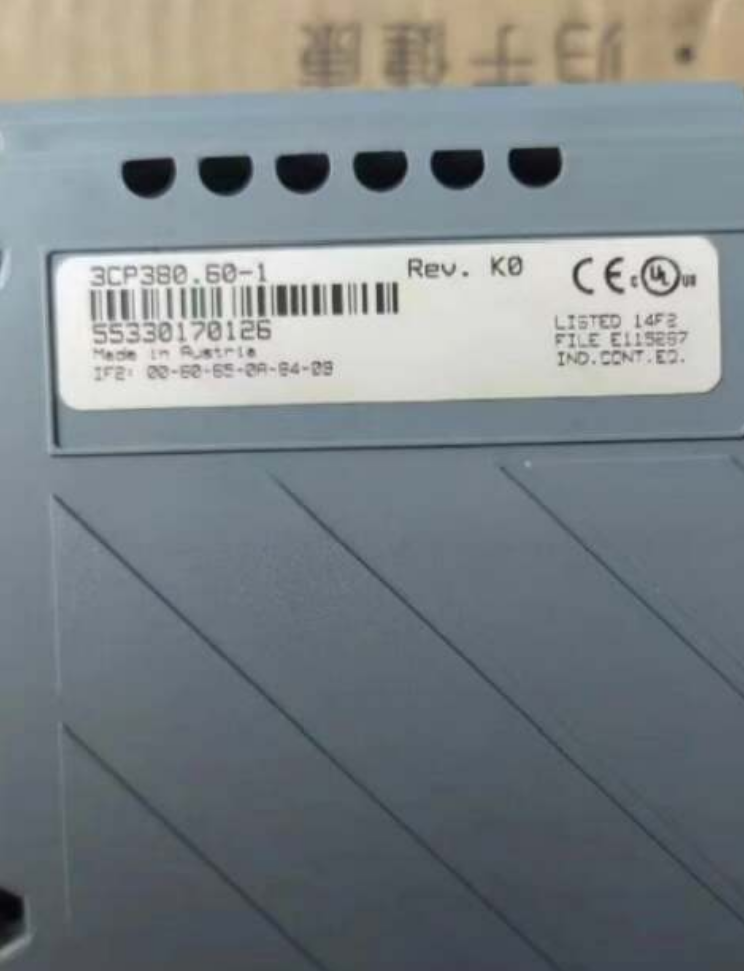
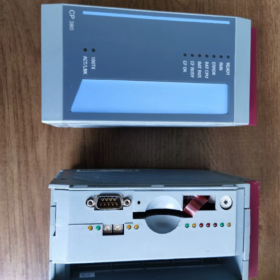
Model: 3CP38060-1
Platformă: B&Sistemul R 2005 (Sistem 2005 PCC CPU Module)
Stare produs: Obsolete by Manufacturer Only spare/used units available; no new original factory supply
Poziționare: Mid-to-high performance x86-based PCC controller, supporting logic control and ACOPOS motion control
1 Specificații hardware de bază
| Articol | Parametru |
| Procesor | Intel Pentium III 500 MHz with FPU; L1 Cache: 2×16 KB, L2 Cache: 256 KB |
| Operating DRAM | 64 MB (for program and task execution) |
| Battery-backed SRAM | 512 KB (retains process data and variables after power loss) |
| Program Storage | CompactFlash Card (comandat separat; NOT included with the module) |
| Consumul de energie | Aproximativ. 16 W (3 W @24 VDC +13 W @5 VDC, excluding aPCI expansion cards) |
| Backup Battery | Încorporat 3 V lithium battery for RTC clock and SRAM data; service life approx. 4 ani |
| Răcire | Convecție naturală; Protection Class IP20 |
| Temperatura de operare | 0 ~ +55°C (în interiorul cabinetului de comandă) |
| Software Environment | Automation Studio ≤ V4.0.95; Higher AS versions do NOT support System 2005 |
2 Interfețe native la bord
1 IF1: RS232 (9-pin Male D-SUB)
Max baud rate: 1152 kbit/s; for debug communication and third-party serial communication
2 IF2: RJ45 Ethernet 10/100 BASE-T
Supports Modbus TCP, UDP, Web Diagnostics, EGD; galvanically isolated
3 IF3: USB11 Type-A
Mainly used for program backup and peripherals; not recommended for permanent online debugging
4 1 × aPCI Expansion Slot
Compatible with IF7xx communication cards: PROFIBUS-DP, CANopen, Ethernet POWERLINK, etc
Galvanic Isolation Overview
IF1 ↔ IF2: Izolat
IF2 ↔ IF3: Izolat
IF1 ↔ IF3: Non-isolated
CPU core shares non-isolated potential with IF1 and IF3
3 Definiția LED-ului panoului frontal
READY: Power supply and hardware status OK
RUN: User tasks executing normally
ERROR: System fault or program error
SERVICE: Low backup battery / CompactFlash card abnormality
CF: CompactFlash memory card status
BAT: Backup battery warning
4 Defalcarea codului de model
3CP38060-1
3CP: Sistem 2005 CPU series
380: Hardware grade (Pentium III 500, 64 MB DRAM version)
60: Standard variant with CF card slot and aPCI expansion
-1: Revizuire hardware
> Reference sibling model: 3CP38260-1 (higher specification, larger memory)
5 Supported Functions
✅ Multi-tasking PCC real-time operating system
✅ Motion control for ACOPOS servo drives
✅ Process data acquisition, complex algorithms and floating-point computation
✅ Built-in Web server for remote monitoring and diagnostics
✅ CEX bus extension for System 2005 module I/O
❌ Incompatible with X20 I/O modules (different bus architecture)
6 Spare Part Replacement Solutions
Opţiune 1: Direct replacement within the same platform (minimal modification, priority for maintenance retrofits)
CPU compatibil: 3CP38260-1
Note: Program requires no major changes; verify CF card program image and task cycle timing Pin-to-pin plug-and-play compatible
Risc: Also obsolete; supply availability is unstable
Opţiune 2: Cross-platform upgrade (long-term project migration, System2005 → X20)
Recommended new platform: X20 CPUs (X20CP1485 / X20CP1585)
⚠️ Major Modification Risks
1 Rack and all I/O modules must be fully replaced (System2005 I/O cannot connect directly to X20)
2 CEX bus eliminated; I/O communication migrated to POWERLINK; all wiring and backplanes require rework
3 Program migration and restructuring mandatory; old System2005 projects cannot be downloaded directly to X20 CPUs
4 Communication interfaces and real-time task timing need full re-commissioning
7 Selecţie & Operation Pitfall Guide
1 CompactFlash Card Restrictions
Only industrial-grade standard CF cards are supported CFast / CFexpress are incompatible Recommended capacity: 32 MB ~ 512 MB; high-capacity cards frequently cause recognition failures
2 Battery Maintenance
Risk of SRAM variable loss and RTC clock reset if equipment remains shutdown longer than 4 years Replace internal lithium battery during major overhauls
3 Critical Software Version Limit
Automation Studio V41 and newer cannot create or download projects for System2005 Keep AS V4095 available
4 aPCI Expansion Constraints
Maximum one IF7xx card per slot High-power communication cards increase total power consumption; verify cabinet power margin
5 Acceptance Checklist for Used Module Procurement
Verify CF card read/write and program boot functionality
Inspect battery voltage and check for electrolyte leakage
Test connectivity of Ethernet and serial ports
Run long-duration full-load testing to monitor ERROR LED status
8 Aplicații tipice în industrie
Mașini de ambalare, plastic extrusion lines, utilaje textile, masini-unelte, tire production lines, legacy ACOPOS servo integrated equipment (primarily spare parts maintenance for existing installations)
Dacă este necesar, I can provide supplementary materials:
1 RS232 interface pin assignment
2 Fault phenomenon & troubleshooting matrix
3 CF card program backup/cloning procedure
4 Parameter comparison table: 3CP38060-1 VS 3CP38260-1
3CP38060-1 Fault Troubleshooting Matrix: Fenomene, Cauze fundamentale & Acțiuni de remediere
LED Indicator Related Faults
1 READY LED OFF
Simptom: No READY light after power-up; controller fails to boot
Cauze fundamentale:
1 Insufficient backplane 24 Alimentare VDC / excessive voltage drop
2 Poor contact of CPU module backplane; DIN rail latch not fully locked
3 Damaged internal power circuit of the module
4 Rack short-circuit triggering overcurrent protection
Remedial Steps:
1 Measure rack supply voltage under no-load and loaded conditions; ensure voltage ≥225 V
2 Opriți, extract CPU, clean backplane gold fingers, reinstall and lock securely
3 Remove all aPCI expansion cards and CF card; perform minimum system power-on test
4 If READY remains off under minimum system configuration → hardware failure, repair or replacement required
2 READY Steady ON, LED-ul RUN stins
Simptom: Hardware ready, but user program fails to start
Cauze fundamentale:
1 Lipsă / damaged CF card / corrupted program image
2 CF card exceeds supported capacity limit or consumer-grade CF compatibility issue
3 Incorrect Boot project configuration in the application
4 SRAM data anomaly triggers self-test failure during startup
Remedial Steps:
1 Opriți, extract CF card, verify program files via card reader
2 Use industrial CF cards of 32~512 MB; consumer memory cards prohibited
3 Clear SRAM: Power off and rest for 15 minutes to fully deplete backup battery, then re-power
4 Download Boot & Application again using Automation Studio V4095
3 ERROR Red LED Steady ON / Intermitent
Simptom: System operational fault
| Flashing Pattern | Descrierea defecțiunii | Rezoluţie |
| Pornit constant | Fatal system error, task watchdog timeout, memory fault | Stop operation; audit cyclic program tasks; minimum system test to distinguish hardware/software faults |
| Slow Flashing | CEX I/O bus fault, remote module disconnection | Check CEX bus terminator, wiring and power supply of all I/O modules |
| Fast Flashing | ACOPOS servo drive communication failure | Inspect POWERLINK servo cables and confirm drive power status |
4 SERVICE LED Illuminated
Simptom: Maintenance warning; does not trigger immediate shutdown
Cauze fundamentale:
1 Low voltage of built-in backup lithium battery (most frequent)
2 CF card read/write error or storage medium aging
Remedial Steps:
1 Schedule downtime to replace the internal 3 V lithium battery; battery leakage risks PCB corrosion
2 Back up programs and replace with new industrial CF card
> ⚠️ Equipment can continue short-term production under warning; replace components promptly to avoid permanent loss of retained variables after power failure
5 BAT LED Illuminated
Simptom: Backup battery warning
Cauza de bază: Aged internal lithium battery with voltage drop
Risc: RTC clock reset and complete loss of 512 KB SRAM retained data after power cycle
Rezoluţie: Power off and replace with equivalent 3 V lithium battery; minimize power-off duration during replacement
6 Abnormal CF LED Flashing
Continuous fast flashing: Frequent CF card access, indicative of aging media
No illumination: Mainboard fails to detect CF card
Defecte de comunicare
IF2 Ethernet Communication Failure
Cauze:
1 Defective network cable or switch port; 100 Mbps controller, incompatible with forced Gigabit negotiation
2 IP address conflict or IP configuration lost in CF card
3 Damaged galvanic isolation circuit on Ethernet port
Depanare:
1 Direct PC-to-CPU Ethernet connection, disable PC firewall, scan via Automation Studio
2 Set switch port fixed to 100 Mbps Full Duplex (System2005 CPUs cannot auto-negotiate Gigabit)
3 If Ethernet offline: Use IF1 RS232 serial port for diagnostics and restore Ethernet parameters
Unstable IF1 RS232 Serial Communication
Notă critică: IF1 and USB share non-isolated ground!
Hazard: Potential serial chip burnout caused by ground potential difference when IF1 connects to third-party equipment
Soluţie: Install active RS232 isolator; prioritize baud rates 19200/38400; avoid permanent operation at 115200 baud
Communication Dropouts of aPCI IF7xx Expansion Cards
Inducing Factors:
1 Incomplete seating of expansion card
2 Exceeded overall power budget of backplane supply
3 Communication protocol not enabled within hardware configuration
Depanare: Temporarily remove expansion card and observe system recovery; verify hardware configuration in Automation Studio
Startup & Program-Related Typical Faults
1 Repeated power-on reboot
Inducement: Damaged CF card, excessive power supply ripple on backplane, short-circuit on aPCI card
Rezoluţie: Remove peripherals and perform minimum system test
2 All process parameters cleared after power loss
Inducement: Failed backup battery; variables not mapped to SRAM in program
Distincţie: BAT LED ON → battery fault; BAT LED Normal → program variable configuration fault
3 Unable to establish online connection via Automation Studio
Hard Constraint: Only Automation Studio V4095 or older versions are supported
Versions higher than V4095 cannot recognize System2005 CPUs; do not attempt newer software
Fallback communication path: Use IF1 RS232 serial debugging if Ethernet fails
de mediu & Latent Hardware Faults
1 High cabinet temperature (>55°C)
Simptom: ERROR alarms and communication dropouts after several hours runtime; recovery after cooling
Soluţie: Îmbunătățiți ventilația cabinetului; avoid heat-generating components mounted above the CPU; never sustain operation above rated 55°C
2 High vibration operating conditions
Simptom: Random communication flicker, occasional boot failures
Cauza: Loose CF card, poor contact of backplane gold fingers
Soluţie: Install CF card retaining clip, fasten all DIN rail mounting screws
⚠️ Strictly Forbidden Operations (Hard Limits)
1 Hot-swap CPU module or aPCI expansion cards! Always cut main power supply, otherwise backplane and CPU may suffer permanent damage
2 Use consumer-grade CF memory cards (camera cards); random program loss will occur frequently
3 Connect IF1 serial port and USB to external equipment with different ground potentials simultaneously; common-mode voltage can destroy interface circuits
4 Ignore battery warning for prolonged periods; battery leakage leads to irreversible PCB corrosion
5 Force switch port Gigabit negotiation to communicate with the CPU; persistent link interruptions will occur


NH42-63-318x560.png "Comutatoare de transfer automat de tip PC CHINT (ATS)NH42-63/4SZ")