contactor,cortacircuitos,sensor,Codificador,SOCIEDAD ANÓNIMA,Convertidor

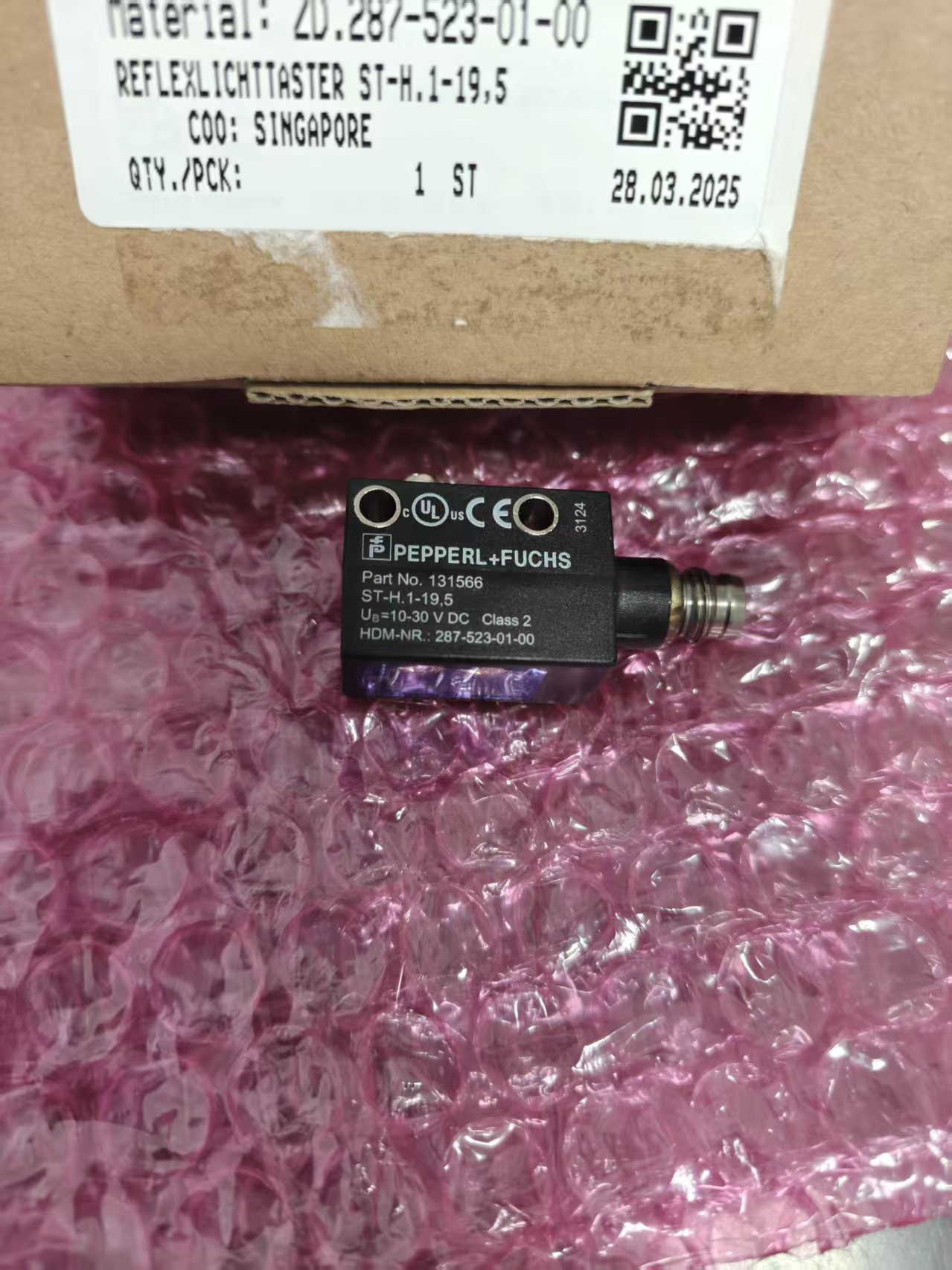

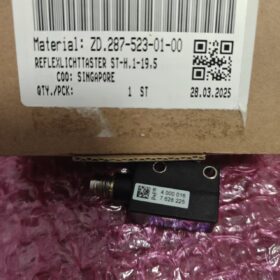
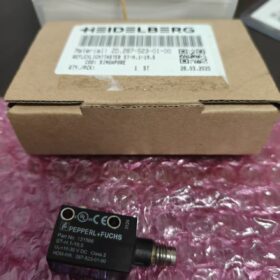
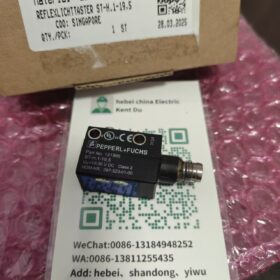
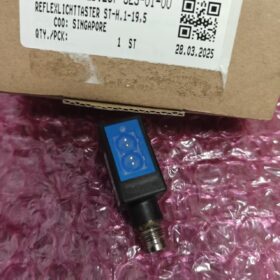
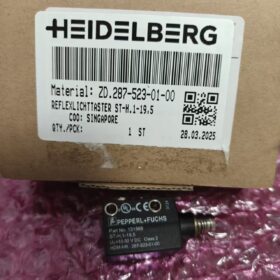
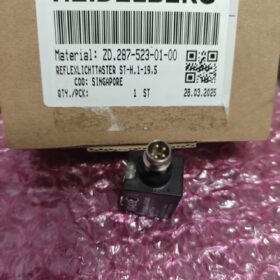
Designaciones alternativas: HDM-NR-287-523-01-00 / Pieza OEM de Heidelberg ZD.287-523-01-00
Información básica
Pepperl+Fuchs Nro. de orden: 131566
Modelo interno P+F: ST-H.1-19,5
Número de pieza de la máquina Heidelberg.: HDM-NR-287-523-01-00 (ZD.287-523-01-00)
Tipo de producto: Modo difuso sensor fotoeléctrico (fotocélula)
Aplicación de destino: Máquina plegadora Heidelberg Stahlfolder, Detección de presencia de hojas para equipos de impresión.. Variante personalizada solo OEM; no hay ninguna hoja de datos pública disponible en el sitio web oficial de Pepperl+Fuchs.
País natal: Singapur
Peso: aprox. 30 gramo
Eléctrico & Especificaciones mecánicas
- Voltaje de suministro: 10…30 VCC
- Conexión: Conector macho M12 pines
- Alojamiento: Carcasa de plástico PBT cuadrada compacta con dos orificios para tornillos de montaje
- Clase de protección: IP67
- Indicadores: LED dual (fuerza, estado de conmutación)
- Producción: PNP, protegido contra cortocircuitos
- Temperatura de funcionamiento: -25 … +55 ℃
Explicación del código del modelo
131566: Número de pieza OEM de Pepperl+Fuchs
ST-H.1-19,5: Designación de la serie del sensor interno
HDM-NR-287-523-01-00: Número de pieza específico de la máquina Heidelberg, no es un modelo de Pepperl+Fuchs; impreso en etiquetas de accesorios de máquinas de impresión.
Reparar & Notas de adquisiciones
- Este es un sensor OEM personalizado para aplicaciones de máquinas de impresión.. Los sensores fotoeléctricos estándar de Pepperl+Fuchs no se pueden sustituir directamente. Geometría del punto de luz, El rango de detección y el tiempo de salida están ajustados a medida para el funcionamiento de la máquina plegadora..
- Lista de verificación de inspección de unidades de segunda mano:
Pasadores del conector M12 libres de corrosión y daños por retracción del pasador
Lente óptica libre de rayones, contaminación de tinta y suciedad
El LED de encendido se ilumina al encender; El estado de salida cambia cuando se prueba con un objetivo reflectante.
Sin cortocircuito entre los pines de suministro y salida.
- Abastecimiento: Especifique siempre el número de pedido de Pepperl+Fuchs 131566. Los distribuidores de Pepperl+Fuchs no pueden reconocer los números de pieza de Heidelberg HDM.
Asignación de pines (M12-macho de 4 pines, vista desde la cara del conector)
| Alfiler | Señal |
| 1 | UB+ Potencia Positiva (10-30 VCC) |
| 2 | Salida de señal PNP |
| 3 | 0V GND |
| 4 | No conectado |
Pepperl+Fuchs 131566 Documentación técnica
Aviso importante: 131566 (ST-H.1-19,5) es un sensor personalizado exclusivo de OEM para imprentas Heidelberg. Pepperl+Fuchs no publica ninguna hoja de datos original en PDF. Este documento está elaborado a partir del etiquetado de piezas físicas., Mediciones de campo de proveedores OEM y manuales de máquinas Heidelberg, y es apto para mantenimiento, obtención, Puesta en marcha y validación de unidades de segunda mano..
Designación alternativa: HDM-NR-287-523-01-00 (Número de pieza de Heidelberg, no es un modelo de Pepperl+Fuchs)
1 Descripción general del producto
| Artículo | Especificación |
| Pepperl+Fuchs N.º de pedido. | 131566 |
| Modelo Interno | ST‑H.1‑19,5 |
| Número de pieza OEM de Heidelberg. | HDM‑NR‑287‑523‑01‑00 (ZD.287‑523‑01‑00) |
| Tipo de producto | Sensor fotoeléctrico de modo difuso |
| Aplicación de destino | Máquina plegadora Heidelberg Stahlfolder, Detección de presencia de hojas para equipos de impresión. |
| Fuente de luz | LED infrarrojo modulado |
| Conexión | Conector recto macho M12‑4‑pin |
| Material de la carcasa | Plástico de ingeniería PBT |
| Clase de protección | IP67 |
| País natal | Singapur |
| Peso neto | ≈30g |
2 Clasificaciones eléctricas
| Parámetro | Valor | Observaciones |
| Tensión de alimentación Ub | 10 … 30 VCC | corriente continua, Suministro de clase 2 |
| Tipo de salida | Salida PNP normalmente abierta | Protección contra cortocircuitos, protección contra polaridad inversa |
| máx.. Corriente de carga de salida | 100 mamá | |
| Corriente de reposo | ≤25mA | |
| Caída de voltaje | ≤2,0 V | Estado de salida ON |
| Lógica de conmutación | Luz encendida (salida activa al recibir luz reflejada) | Salida desenergizada cuando la luz reflejada es bloqueada por material laminar |
| Frecuencia de conmutación | ≈250Hz | Personalizado para la detección de hojas de alta velocidad en máquinas plegadoras |
| Temperatura de funcionamiento | -25 … +55 ℃ | Condiciones ambientales de la imprenta |
| Temperatura de almacenamiento | -40 … +70 ℃ |
Distribución de pines M12-4 pines (masculino, vista desde la cara del extremo del conector)
| Alfiler | Señal | Descripción |
| 1 | UB+ | Fuente de alimentación positiva 10‑30 VCC |
| 2 | AFUERA | Salida de señal PNP |
| 3 | 0V/TIERRA | Alimentación negativa |
| 4 | CAROLINA DEL NORTE | No conectado, dejar flotando |
Nota de cableado: No cablear pin4; no conecte el pin4 a 0V, de lo contrario se producirá un mal funcionamiento del sensor.
3 Óptico & Parámetros mecánicos
- Rango de detección: 0…19,5 mm (el sufijo 19,5 indica la distancia de detección nominal)
- Punto de luz: Óptica de punto pequeño optimizada para la detección de láminas delgadas. No se permite el reemplazo directo por sensores fotoeléctricos comerciales de rango estándar..
- Montaje: Dos orificios de montaje de Φ3,2 mm integrados en la carcasa; Tornillos de montaje M3, recommended torque 0.4-0.6 N·m
- Housing Overall Dimensions: W14 mm × H31 mm × D22 mm
- Indicadores LED:
LED verde: Power-supply status
LED amarillo: Switching-status indicator (illuminates when reflected light is detected)
4 Estándares & Certificaciones
CE-marked, compliant with EN 60947-5-2 for photoelectric sensors
No public UL file (OEM custom variant)
5 Instalación & Commissioning Instructions
- Recommended mounting gap between sensor and sheet/reference surface: 8-16 milímetros. Avoid direct contact; do not exceed 19.5 mm maximum sensing distance.
- Optical-axis alignment: Lens must face the sheet-travel path. Keep lens surface clean; ink and dust accumulation will trigger false detection.
- No sensitivity-adjustment potentiometer: Parameters are factory-fixed; no on-site adjustment possible.
- Cableado: Use M12-4-pin female-cable assembly; connect pins 1-2-3 only, pin 4 unused.
6 Tabla de solución de problemas
| Síntoma de falla | Check Points |
| LED verde apagado | Verify 10‑30 VDC at pin 1; continuity of pin 3 GND; M12‑pin corrosion / bent‑pin damage |
| Green LED always ON, yellow LED never illuminates | Lens fully covered by ink; mounting distance exceeds 19.5 mm; missing reflective target; internal LED failure |
| Yellow LED permanently ON, no response to passing sheets | Contaminación de la lente; misaligned optical axis; output transistor short‑circuit; background‑reflection interference from machine frame |
| Sporadic false triggering | Excessive supply‑voltage drop; poor cable shielding; ink‑paper debris on lens; out‑of‑range installation distance |
7 Obtención & Replacement Critical Notes
- Always place orders using Pepperl+Fuchs order number 131566. Pure-reference to HDM-NR-287-523-01-00 will not be recognized by Pepperl+Fuchs channel partners.
- This is an exclusive Heidelberg OEM custom part. Standard Pepperl+Fuchs series (p.ej. RL31) differ in spot geometry, umbral de conmutación y comportamiento de temporización. La sustitución directa provoca fallos de detección de hojas perdidas y falsas y no se recomienda para el uso en imprentas..
- Pasos de validación de unidades de segunda mano:
1) Inspeccione las clavijas del conector M12 en busca de oxidación y daños por retracción de las clavijas.
2) Revise la lente en busca de grietas y rayones profundos.
3) Aplique suministro de 10-30 VCC; Confirme que el LED de encendido verde se enciende
4) Sostenga papel reflectante blanco frente a la lente.: El LED amarillo se enciende. Quitar papel: El LED amarillo se apaga
5) Mida la salida del pin 2 con un multímetro; confirmar que el nivel PNP cambia correctamente; sin cortocircuito interno.
8 Notas de seguridad
- No lave agresivamente la lente del sensor con solventes fuertes; El recubrimiento óptico se degradará.. Limpiar únicamente con un paño sin pelusa.
- La salida es del tipo de abastecimiento PNP; conectar sólo a canales de entrada de alto nivel de PLC. Incompatible con entradas NPN-sumidero.
- No exceda el voltaje de suministro máximo de 30 V CC.; Se pueden producir daños permanentes en el circuito interno..
Principio de funcionamiento de los sensores fotoeléctricos de modo difuso
Pepperl+Fuchs131566 es un sensor fotoeléctrico de modo difuso, con emisor y receptor integrados en una única carcasa.
Principio fundamental
Dos componentes internos centrales:
- Transmisor: LED infrarrojo: Emite luz infrarroja modulada (La modulación suprime los disparos falsos causados por la iluminación ambiental del taller y la luz solar.).
- Receptor: Fototransistor / Foto-IC: Capta la luz reflejada por los objetivos..
Secuencia funcional:
- El LED infrarrojo emite un haz de luz hacia el exterior..
- El haz golpea la superficie del objeto objetivo. (papel / pieza de trabajo).
- La superficie del objeto refleja difusamente parte de la luz incidente..
- Parte de la luz reflejada regresa a la ventana del receptor del sensor..
- El chip receptor detecta la luz entrante → el circuito interno activa y alterna la salida de conmutación de estado sólido (PNP / cambio de nivel NPN).
⚠️ Distinción de los sensores catadióptricos (Se requiere una placa reflectora separada):
Modo difuso: No se requiere placa reflectora. Se basa en la reflectancia natural de la superficie objetivo.. El modelo 131566 funciona de esta manera para la detección de hojas..
Retrorreflectante: Sensor más placa reflectora dedicada. La luz rebota en el reflector.; objeto interrumpe el haz para activar la conmutación.
Dos lógicas de conmutación estándar
- Luz encendida: La salida se activa cuando se recibe la luz reflejada.. Cuando el objeto se aleja / bloquea el camino de la luz de retorno, la salida se desenergiza.
✅ Pepperl+Fuchs131566: Luz encendida. Cuando la hoja entra en la zona de detección, La hoja refleja la luz infrarroja., El LED amarillo se ilumina y la salida PNP se vuelve alta. Después de pasar la hoja, La señal de luz reflejada desaparece y la salida se desactiva..
- Oscuro encendido: La salida se activa cuando la señal de luz de retorno está ausente; La salida se desactiva al recibir luz..
Factores clave que influyen (Causas fundamentales de fallas de campo en instalaciones de máquinas plegadoras)
- Distancia de detección
Cada sensor tiene un rango de detección nominal definido. Para 131566 rango máximo = 19,5 mm. El objetivo fuera de esta distancia produce una amplitud de luz reflejada insuficiente para un disparo confiable.
- Color objetivo / Reflectividad
El papel blanco proporciona una alta reflectancia y un disparo fiable. Negro / Los objetos oscuros mate ofrecen un rango de detección efectivo sustancialmente reducido..
- Geometría del punto de luz
Los sensores especiales de impresión OEM utilizan ópticas de punto pequeño para la detección de hojas estrechas. Los sensores comerciales estándar presentan tamaños de punto grandes y pueden activarse erróneamente debido a reflejos de fondo metálicos del marco de la máquina.. Esta es la razón principal por la que 131566 no puede sustituirse arbitrariamente por sensores de uso general..
- Contaminación de lentes
La suciedad de tinta y polvo bloquea los caminos de luz entrante y saliente y provoca una falla total del sensor.; Esto representa el modo de falla más común dentro de los entornos de las plantas de impresión..
- Tecnología de luz modulada
La emisión es infrarroja modulada de alta frecuencia.. El circuito del receptor solo responde a esta frecuencia de modulación específica.. La luz ambiental no modulada y las lámparas de taller se filtran para un rendimiento antiinterferencias..
Tabla comparativa de tres tipos comunes de sensores fotoeléctricos
| Tipo de sensor | Construcción | Principio de funcionamiento | Aplicaciones típicas |
| Modo difuso (esta unidad) | emisor & Receptor combinado en una carcasa. | Luz reflejada directamente desde el objeto objetivo. | Detección de presencia de hojas, vigilancia de la presencia de piezas |
| Retrorreflectante | Sensor de cuerpo único + placa reflectora externa | La luz regresa del reflector.; objeto bloquea la trayectoria del haz | Monitoreo de puerta de enlace, Detección de bloqueo de cinta transportadora. |
| Haz pasante (barrera) | Unidad emisora separada y unidad receptora separada | Los proyectos del emisor se transmiten directamente al receptor.; objeto interrumpe la trayectoria del haz | conteo de objetos, detección de largo alcance |
Ejemplo de aplicación práctica de Heidelberg Stahlfolder con 131566
El sensor está montado en la ruta de transporte de hojas de la máquina plegadora., espacio de funcionamiento ajustado a aprox. 8-16 mm desde el plano de la hoja.
Hoja que pasa por la zona de detección.: La lámina blanca refleja la luz infrarroja de regreso al receptor → el LED amarillo se enciende; La producción de PNP aumenta; Hoja de registros de control de la máquina presente..
La hoja sale de la zona de detección: Sólo está presente el marco de la máquina de metal oscuro.; la amplitud de la luz de retorno cae por debajo del umbral → el LED amarillo se apaga; la salida se desenergiza; maquina registra salida-hoja.
Escenarios de aplicación típicos para sensores fotoeléctricos de modo difuso
Los sensores fotoeléctricos de modo difuso integran emisor y receptor en una sola carcasa. No se requiere placa reflectora ni unidad receptora separada emparejada. La detección se basa en la luz reflejada en las superficies del objeto objetivo.. Fácil de montar, y entre las categorías de sensores de mayor volumen implementadas en la automatización industrial.
Dispositivo representativo: Pepperl+Fuchs131566 (Detección de hojas para plegadoras Heidelberg.)
1 Impresión & Industria de procesamiento de papel
- Detección de presencia de hojas: Máquinas plegadoras, Troqueladoras e imprenta. Rutas de papel.. Detectar llegada de hoja, condiciones de hoja faltante, Preaviso de doble hoja y monitorización del borde de salida de la hoja.. Esta es la aplicación exacta de la unidad 131566.; Las variantes de puntos pequeños están diseñadas específicamente para la detección de papel fino..
- Detección de presencia de etiquetas: Verificar la etiqueta en posición y la rotura de la banda de etiquetas.
- Detección de fin de existencias de rollos de papel: Detectar agotamiento de bobinas de papel de materia prima.
Puntos débiles específicos de la industria: Ensuciamiento de la lente por tinta y polvo de papel; gran variación de reflectancia entre sustratos en blanco y negro. Prefiere sensores de grado OEM de umbral fijo y puntos pequeños.
2 Manipulación de materiales & Sistemas de línea transportadora
- Detección de llegada de piezas: Sistemas transportadores de rodillos y de correa. Detectar la llegada de cajas o piezas de trabajo a la estación de trabajo para activar actuadores, escáneres y tapones.
- conteo de artículos: Genere pulsos de conmutación a medida que los objetos pasan por el sensor para realizar el recuento del volumen de producción..
- Comprobación de presencia a nivel de contenedor: Detectar presencia / ausencia de componentes dentro de contenedores y alimentadores para alarmas de piezas faltantes.
- Monitoreo de detección de atascos: Identificar las condiciones de acumulación de material dentro de los conductos de transferencia..
3 Maquinaria de embalaje
- Bolsa / detección de cajas de cartón: Confirmar la alimentación de material de embalaje en las estaciones de procesamiento.; identificación del paquete vacío.
- Tapa & comprobaciones de presencia de componentes: Maquinaria-de-llenado-y-sellado; confirmar el estado del componente en su lugar.
- Confirmación de expulsión de producto terminado: Verificar la salida del producto terminado desde las estaciones de proceso..
4 máquina-herramienta & Automatización de montaje
- Validación de pieza de trabajo en dispositivo: Carga de robot / estaciones de descarga; confirmar el asiento correcto de la pieza.
- Detección de presencia de pequeños componentes: Detectar resortes, tornillos y piezas moldeadas de plástico.
- Alarma de nivel bajo de tolva: Activar advertencia cuando el stock de componentes de la tolva de alimentación se agota.
5 Fabricación de automóviles
- Confirmación de componente en plantilla para herramientas de ensamblaje de carrocerías de automóviles.
- Detección de posición del carro de transferencia.
- Conteo de líneas de transferencia de componentes.
6 Electrónica de consumo & fabricación ligera
- Detección de presencia de placa PCB y carcasa de plástico.
- Monitoreo del paso de objetos en la línea transportadora.
- Verificación de salida del alimentador de piezas pequeñas.
7 Elevación-almacenamiento & Maquinaria de uso general
- Detección simple de la posición de la horquilla.
- Vigilancia de presencia de objetos en zonas de puertas protectoras (variantes seleccionadas).
Criterios de selección del sensor fotoeléctrico de modo difuso & Limitaciones de la aplicación (Enfoque de ingeniería)
- Fuerte dependencia del color del objeto objetivo
De color claro / Las superficies blancas ofrecen una alta reflectancia y una distancia de detección efectiva extendida.. Los objetivos negros y oscuros mate reducen drásticamente la distancia de detección utilizable; El rango real puede caer a sólo 30-50% del valor nominal..
- Susceptibilidad a la reflexión de fondo
Las superficies traseras metálicas brillantes pueden producir disparos falsos. Para tales implementaciones, especifique supresión de puntos pequeños o en segundo plano. (bgs) sensores de modo difuso.
Pepperl+Fuchs131566 implementa ópticas de punto pequeño para minimizar la interferencia de los marcos metálicos de las máquinas plegables dentro de conjuntos mecánicos con espacios reducidos..
- Rango de detección absoluto limitado
Los sensores de modo difuso estándar normalmente cubren de decenas a cientos de milímetros. Para detección a larga distancia, seleccione configuraciones de sensor retrorreflectante o de haz pasante.
- Mal desempeño con objetivos transparentes
Los sustratos de vidrio y de película delgada transparente no pueden detectarse de manera confiable mediante sensores de modo difuso estándar. Utilice modelos de sensores de detección de objetos transparentes dedicados.
Tabla de comparación rápida: Modo difuso / supresión de fondo / Retrorreflectante / barrera
| Tipo de sensor | Características clave | Caso de uso típico |
| Modo difuso estándar | Opera sobre la reflectancia de la superficie objetivo; rentable; vulnerable a la interferencia de la reflexión de fondo | Pieza de trabajo general & detección de hojas (Modelo131566) |
| Supresión de fondo (bgs) modo difuso | Rechaza electrónicamente los reflejos de la superficie de fondo; inmune a la variación del color de fondo | Dianas ubicadas cerca de marcos metálicos.; piezas de trabajo con perfiles de altura variable |
| Retrorreflectante | Requiere placa reflectora dedicada; capacidad de largo alcance de detección | Monitoreo de interrupción del haz de rampa y compuerta |
| Haz pasante (barrera) | Par emisor-receptor físicamente separado; rango de detección máximo disponible | Detección a larga distancia, inspección de objetos transparentes |


NH42-63-318x560.png "Interruptores de transferencia automática tipo PC CHINT (ATS)NH42-63/4SZ")