Contacteur,disjoncteur,capteur,Encodeur,API,Convertisseur

- Distinction fondamentale en une phrase
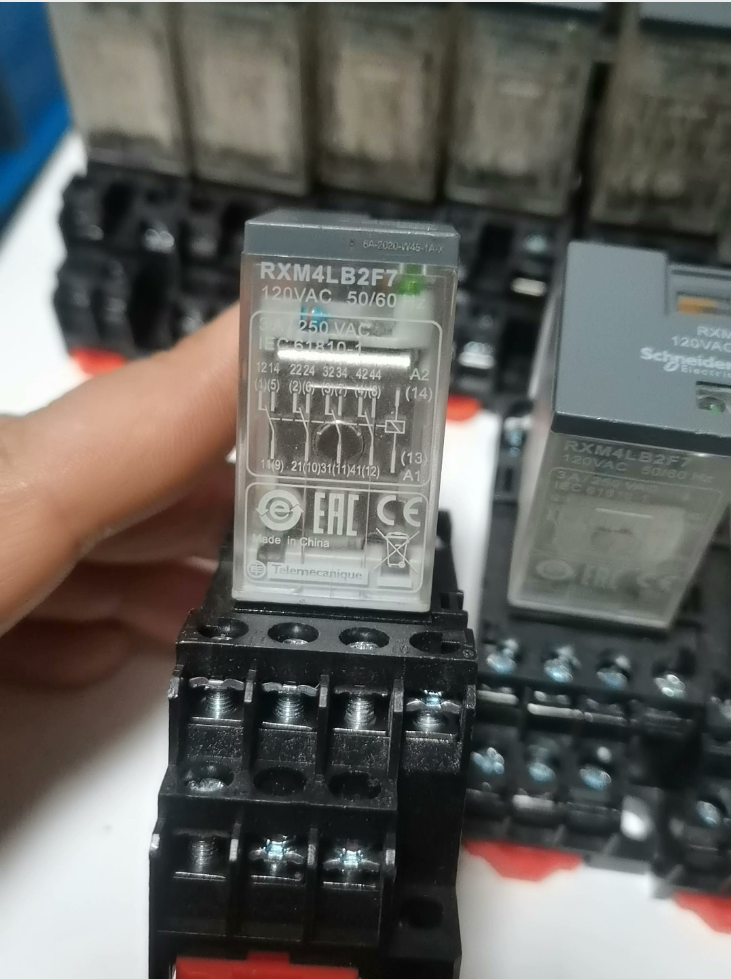
Relais intermédiaire: Transmettre des signaux, transporter un faible courant, servir de station de transfert de signal
Contacteur: Conduire des charges, transporter un courant élevé, moteurs de commande
- Comparaison intuitive
- Capacité de charge actuelle
Relais intermédiaire: Maximum 6 ~ 10A, uniquement pour les circuits à faible courant
Contacteur: 10Jusqu'à des milliers d'ampères, applicable aux équipements de haute puissance
- Application principale
Relais intermédiaire: Conversion de signal API, câblage multicircuit, verrouillage des circuits, extension des contacts
Contacteur: Contrôlez directement les charges haute puissance telles que les moteurs, pompes à eau, ventilateurs et tubes chauffants
- Différence de contact
Relais intermédiaire: Equipé uniquement de petits contacts sans distinction principal/auxiliaire, grande quantité de contacts
Contacteur: Composé de contacts principaux à fort courant et de contacts auxiliaires à faible courant; les contacts principaux sont spécialement conçus pour la transmission du courant de charge
- Performances d'extinction d'arc
Relais intermédiaire: Sans protection contre l'arc, incapable de briser un arc électrique puissant
Contacteur: Bouclier anti-arc intégré pour éteindre l'arc électrique pendant la mise hors tension et éviter l'épuisement des contacts
- Taille & Prix
Relais intermédiaire: Compact et peu coûteux, densement installé dans les armoires de commande
Contacteur: Plus grand en taille et plus cher
- Principe de fonctionnement de la bobine
Ils partagent le même principe de fonctionnement: La bobine à faible courant s'enclenche pour contrôler le contact marche-arrêt.
La seule différence réside dans la capacité de charge maximale des contacts..
- Règles pratiques de sélection
Utilisez des relais intermédiaires pour une conversion de signal de courant faible
Utiliser des contacteurs pour le contrôle start-stop des moteurs haute puissance
Ajoutez des relais intermédiaires pour étendre les contacts lorsque les contacts auxiliaires des contacteurs sont insuffisants
- Scénarios d'application typiques
Commutation de signal faible à l'intérieur des armoires de commande: Relais intermédiaires série RXM
Contrôle start-stop des moteurs 380V: Les contacteurs AC sont obligatoires