Contacteur,disjoncteur,capteur,Encodeur,API,Convertisseur

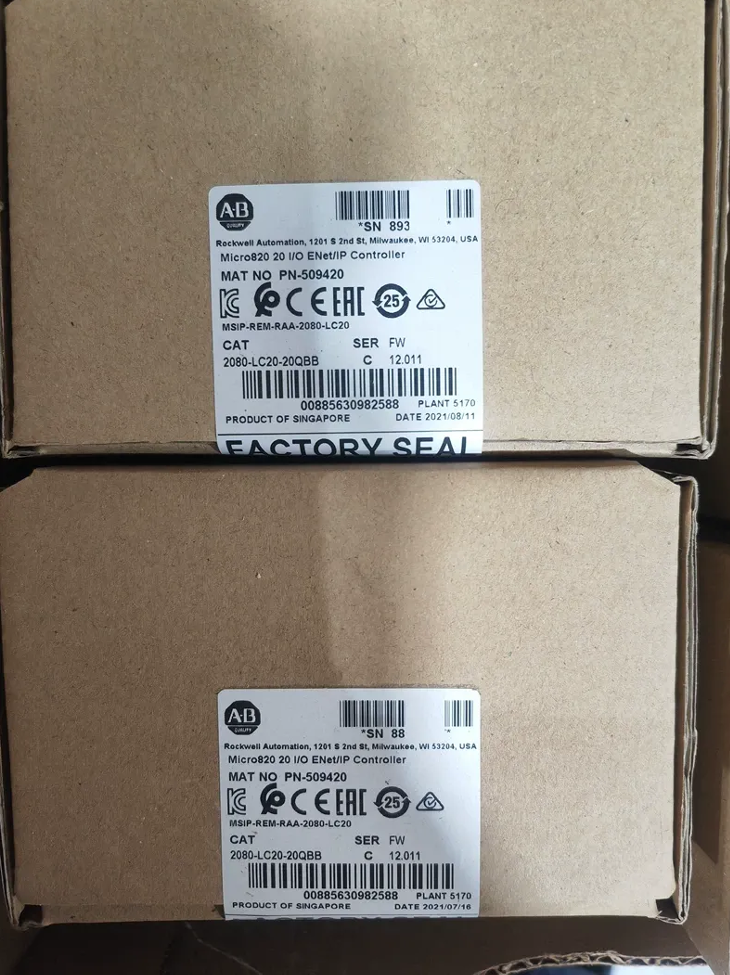

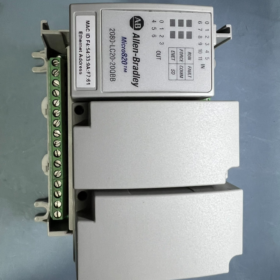
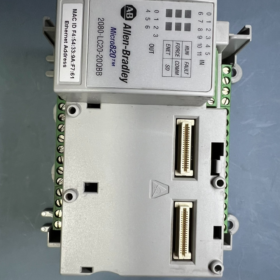
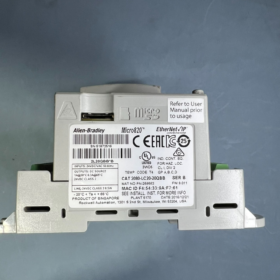
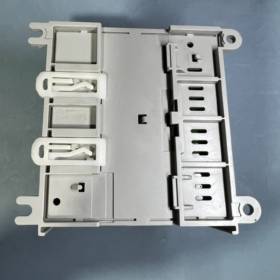
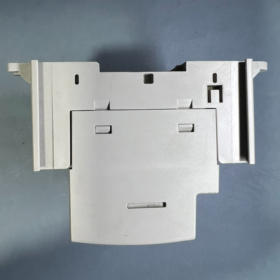
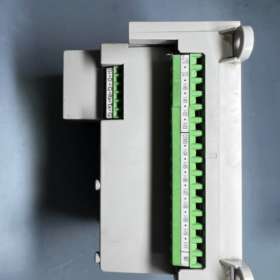
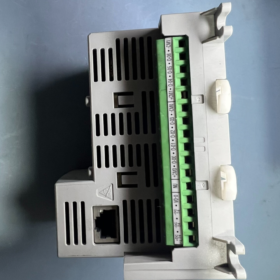
Répartition des codes de catalogue
| Segment | Définition |
| 2080 | Code de famille pour la série Micro800 |
| LC20 | Unité centrale Micro820 |
| 20 | Nombre total d'E/S natives: 20 points |
| Q | Type de sortie: Sortie transistorisée (NPN Naufrage) |
| B | Alimentation: 24Entrée VCC |
| B | Type d'entrée: 24Entrée numérique VCC |
Allocation d'E/S native (20 Points)
Entrées: 12-points d'entrées numériques DC24V
Bornes I-00~I-11, compatible naufrage/approvisionnement (configurable)
Sorties: 8-Sorties de transistor DC24V NPN
Bornes O-00~Ô-07, Type de transistor NPN. Les charges CA ne peuvent pas être pilotées directement.
⚠️ Distinction:
2080-LC20-20QBB = sortie transistor NPN
2080-LC20-20QBBR = Version sortie relais
Principales spécifications techniques
- Alimentation: 24 VCC (plage de fonctionnement:18~30 VCC)
- Mémoire du programme: 10Instructions K
- Mémoire variable: 10K octets
- Interfaces de communication
USB (port de programmation)
RS485 intégré (Modbus RTU Maître/Esclave)
- Capacité d'extension
✅ Prend en charge les modules enfichables Micro800 (E/S analogiques, RDT/TC, compteur à grande vitesse, modules série)
✅ Maximale 4 des modules enfichables peuvent être installés
- Fonctions à grande vitesse
4-compteur à grande vitesse de canal (HSC), maximum. 100kHz
4-Sortie de train d'impulsions de canal (PDF), maximum. 100kHz pour le contrôle de positionnement de base
- Évaluations environnementales
Température de fonctionnement: 0 ~ 55 ℃
Température de stockage: -40 ~ 85 ℃
Classe de protection: IP20, montage en armoire uniquement
Exigence logicielle
Logiciel de programmation: Atelier de composants connectés (CCW)
Version minimale prise en charge: CCW V8.0 et supérieur
Applications typiques
Petit matériel de convoyage, machines d'emballage, ventilateur & contrôle de la pompe, outillage automatisé personnalisé, Contrôle CVC, systèmes de positionnement de base pas à pas/servo.
Lignes directrices de sélection & Pièges courants
- Sortie transistor NPN descendant: Le fil négatif de charge se connecte à la borne de sortie du PLC; Les charges CA ne peuvent pas être pilotées directement. Utiliser préférentiellement les électrovannes DC24V.
- Pas de port Ethernet intégré! La communication Ethernet nécessite un module enfichable Ethernet supplémentaire (par exemple. 2080-SUR LE WEB).
- Les diodes de roue libre sont recommandées pour les charges inductives afin d'éviter les pannes de transistor causées par la force contre-électromotrice.
- Le Micro820 ne prend pas en charge les E/S distantes, seule extension de plug-in locale disponible.
Remplacements directs & Comparaison des séries
Même variante de relais de comptage d'E/S: 2080-LC20-20QBBR
Capacité d'E/S plus élevée: Mise à niveau vers Micro830 (2080-Série LC30)
Référence complète pour 2080-LC20-20QBB
(Câblage des bornes + Configuration Modbus RTU + Programme de prise de force + Dépannage + Code SH)
- Définition du terminal matériel & Guide de câblage
Modèle: Micro820 2080-LC20-20QBB
Alimentation: DC24V; DEPUIS:12-canal DC24V; FAIRE:8-Sortie de transistor à absorption NPN du canal
⚠️ Port série intégré: RS485/RS232 partagé sans isolation galvanique
1.1 Bornes d'alimentation (Alimentation principale du PLC)
| Étiquette de borne | Définition | Instructions de câblage |
| 0 | Entrée de puissance positive | Connectez-vous à DC24V + |
| 0 | Entrée de puissance négative | Connectez-vous à DC24V 0V/GND |
1.2 Bornes d'entrée numérique (12 DEPUIS: je-00 ~ I-11)
Borne commune: CM0
Câblage coulant (Le plus courant): CM0 connecté à DC24V+; Sortie du capteur NPN vers I-xx; capteur négatif à 0V
Approvisionnement en câblage: CM0 connecté au 0V; Sortie du capteur PNP vers I-xx; capteur positif à DC24V
je-00, je-01, je-02, je-03: Canaux de compteur à grande vitesse dédiés
Liste des terminaux AT:
je-00, je-01, je-02, je-03, je-04, je-05, je-06, je-07, je-08, je-09, I-10, I-11
1.3 Bornes de sortie numérique (8 FAIRE-00 ~ Ô-07, NPN)
Borne commune: -CM0
✅ Caractéristique de naufrage NPN: La borne O-xx se rapproche de 0 V lorsqu'elle est sous tension
Schéma de câblage standard:
+DC24V → Charge borne positive; Borne négative de charge → O-xx; Toutes les bornes -CM0 liées à DC24V 0V
Ô-00, Ô-01: Canaux de sortie d'impulsions PTO (grande vitesse)
La diode de roue libre doit être en parallèle inversée pour les charges inductives (électrovannes)
Liste des terminaux DO: Ô-00, Ô-01, Ô-02, Ô-03, Ô-04, Ô-05, Ô-06, Ô-07
1.4 Terminal série RS485/RS232 intégré (6-bornier à broches)
| Épingle | Signal | Fonction |
| 6 | SG | Terre de signal (terrain d'entente obligatoire) |
| 7 | TX/R1OUT | RS485-B / Émission RS232 |
| 8 | RX/R2IN | RS485-A / RS232 RXD |
Câblage RS485: Broche7(B) ↔ Borne de l'appareil B; Broche8(UN) ↔ Borne de l'appareil A; Terrain partagé Pin6
❗ Pas d'isolation galvanique sur ce port. Installer un répéteur isolé pour la communication longue distance.
- Configuration étape par étape du Modbus RTU CCW (Maître/esclave pris en charge)
Logiciel: Connected Components Workbench CCW V8.0 et versions ultérieures
Étape 1: Configuration matérielle du projet
- Créer un nouveau projet → Sélectionner le contrôleur 2080-LC20-20QBB
- Double-cliquez [Contrôleur] dans le volet de gauche pour ouvrir la page de configuration → Localiser [Port série]
- Sélection du pilote: Modbus RTU
Étape 2: Paramètres de communication (Valeurs par défaut recommandées)
| Paramètre | Valeur recommandée | Remarques |
| Débit en bauds | 19200 | Ajuster à 9600/38400 au besoin; les deux côtés doivent correspondre |
| Bits de données | 8 | Fixé |
| Bits d'arrêt | 1 | Fixé |
| Parité | Aucun | Pas de parité |
| Mode | RS485 | Faire correspondre le câblage du matériel |
| Rôle | Esclave / Maître | Sélectionner en fonction de l'architecture du système |
| Adresse de l'esclave | 1~247 | Valable uniquement en mode Esclave |
Étape 3: Cartographie des registres (Section critique)
Règle de mappage d'adresses Modbus pour Micro820
Bobines (0x adresses): Variables API BOOL
Entrées discrètes (1x adresses): État BOOL en lecture seule
Registres de détention (4x adresses): INT/DINT (Lire & Écrire, le plus largement utilisé)
Registres d'entrée (3x adresses): Valeurs INT en lecture seule
Remarque importante: La série Micro800 ne prend pas en charge le mappage automatique des balises pour Modbus. Utiliser des blocs fonctionnels pour les opérations de lecture/écriture principales:
`MODBUS_READ` / `MODBUS_WRITE`
- Contrôle de positionnement des impulsions de prise de force (Sortie d'impulsion O0/O1 pour moteur pas à pas/servo)
Attribution des canaux matériels
PDF0: Sortie d'impulsion → O-00; Signal de direction recommandé sur O-02
PDF1: Sortie d'impulsion → O-01; Signal de direction recommandé sur O-03
Fréquence de sortie maximale: 100kHz
Le type de sortie est NPN coulant. Le réglage de l'entrée d'impulsion du servomoteur doit être actif de bas niveau. / entrée descendante
Flux de travail de configuration CCW
- Configuration du contrôleur → Activer [Sortie d'impulsion (PDF0)]
- Définir la fréquence maximale: 100000 Hz; Temps d'accélération/décélération: 500MS
- Appeler le bloc fonctionnel de mouvement `PTO_RUN` dans le programme
Exemple de texte structuré: Positionnement relatif
⚠️ Limitation critique: Le Micro820 ne prend pas en charge la came électronique ou la synchronisation multi-axes; seul positionnement point à point de base disponible.
- Compteur à grande vitesse (HSC) Configuration (I0 ~ I3)
4 canaux HSC indépendants, prend en charge l'entrée monophasée & codeur en quadrature avec multiplication 4x
Modes de fonctionnement courants:
Mode0: Comptage monophasé
Mode4: Codeur en quadrature, 4x mode de multiplication de fréquence
- Câblage & Règles strictes de sélection (Évitement des risques)
- 2080-LC20-20QBB = sortie descendante NPN. Les charges CA ne peuvent pas être pilotées directement. Ajouter des relais intermédiaires pour les charges AC.
- Ne surchargez pas les sorties transistor en permanence: 0.3Un maximum par point (température ambiante 55℃)
- Port RS485 non isolé. Des erreurs de communication se produisent facilement dans les systèmes d'alimentation multi-terres; mettre en œuvre une mise à la terre partagée ou une isolation galvanique.
- Pas de port Ethernet natif. Installez le module enfichable 2080-EWEB si une connexion Ethernet est requise.
- Maximum 4 modules enfichables pris en charge. L'extension d'E/S distantes n'est pas disponible.
- Utiliser des câbles blindés pour le câblage des impulsions; éloigner les câbles d'alimentation des contacteurs et des onduleurs pour réduire les interférences.
- Référence du code SH pour l'importation & Déclaration en douane d'exportation
8537101100
Description: Contrôleur logique programmable (API)
⚠️ Référence uniquement. Confirmer la classification auprès des autorités douanières locales avant le dédouanement formel.
- Matrice de dépannage des pannes courantes
| Phénomène de défaut | Cause première | Solution |
| Pas de sortie d'impulsion PTO | Inadéquation du signal d'impulsion; Borne commune de sortie non connectée au 0V | Basculer le lecteur sur l'entrée descendante; Vérifier le câblage -CM0 |
| Communication Modbus intermittente | Masse de signal manquante; Longueur de câble excessive; Pas de résistance de terminaison | Connectez la broche SG aux deux extrémités; Ajouter 120 résistance de terminaison |
| Faux déclenchement des entrées numériques | Interférence du câble du capteur; Câblage CM0 incorrect | Déployer un câble blindé; Vérifier la configuration de réception/approvisionnement |
| L'automate redémarre à plusieurs reprises après la mise sous tension | Puissance nominale DC24V insuffisante, ondulation excessive | Remplacez l'alimentation par une capacité minimale de 3 A. |
- Référence du manuel officiel
Manuel d'utilisation: 2080-UM005E-FR-E (Manuel d'utilisation du contrôleur Micro820)
Allen‑Bradley 2080-LC20-20QBB (Micro820) Aperçu du contrôleur programmable
- Positionnement du produit
2080-LC20-20QBB est un automate intégré compact Allen‑Bradley Micro820 fabriqué par Rockwell Automation. Conçu pour les machines OEM autonomes et les petits systèmes d'automatisation complets. Il remplace les circuits de commande conventionnels construits avec des relais intermédiaires massifs. Equipé d'un numérique intégré & E/S analogiques et plusieurs ports de communication, Montable sur rail DIN. Marché cible: compact, solutions d'automatisation autonomes à faible coût.
Sommaire du catalogue
2080: Identifiant de la série Micro800
LC20: Plateforme de contrôleur Micro820
20: 20 points d'E/S natifs
Q: 24Approvisionnement en V CC (PNP) sortie numérique
BB: À bord 4 entrées analogiques +1 sortie analogique, Sortie d'impulsion de prise de force, Ethernet intégré
- Spécifications des E/S matérielles natives
- Entrées numériques:12-point DC24V (naufrage/approvisionnement configurable)
Acquisition de signaux: Capteurs photoélectriques, détecteurs de proximité, interrupteurs de fin de course, boutons poussoirs marche/arrêt, arrêt d'urgence, interrupteurs de verrouillage de porte
- Sorties numériques:7-sortie d'approvisionnement PNP DC24V
Piloter de petites électrovannes, voyants lumineux, relais intermédiaires (par exemple. MY2N-GS), bobines de contacteur
- Canaux analogiques intégrés (Avantage de base)
4 entrées analogiques: 0~10 V, 0~20mA, acquisition de la température de la thermistance prise en charge
1 sortie analogique: 0~10 V / 0~20mA, utilisé pour la régulation de la vitesse de l'onduleur et le contrôle des vannes modulantes
- Fonctions de contrôle de mouvement
Intégré 1 Sortie d'impulsion PTO/PWM du canal, capable de piloter des contrôleurs de moteur pas à pas pour le positionnement de points de base
- Capacité d'extension: 2 emplacements enfichables pour compteurs rapides, ports série et modules d'E/S supplémentaires
- Fonctions principales
3.1 Contrôle logique discret (Fonction de base)
Basé sur les signaux des capteurs et des boutons de commande, exécuter la séquence programmée, verrouillage, verrouillage mutuel et logique start-stop:
Démarrage/arrêt séquentiel des convoyeurs, cyclage automatique des cylindres, flux de travail automatiques des machines, jugement de boucle de sécurité et sortie d'alarme de défaut.
Peut être associé aux relais intermédiaires MY2N-GS pour piloter indirectement des charges haute puissance.
3.2 Contrôle de processus analogique (Avantage des canaux analogiques intégrés)
Recueillir la température, pression, signaux de niveau et de débit de liquide provenant des transducteurs
Fonction PID intégrée: Contrôle constant de la température, alimentation en eau à pression constante, régulation du volume d'air; Sortie analogique pour régler la vitesse du variateur et les vannes proportionnelles.
3.3 Traitement du signal à grande vitesse
Les compteurs à grande vitesse lisent les impulsions du codeur (vitesse & mesure de position); Les impulsions de prise de force mettent en œuvre un positionnement pas à pas de base.
3.4 Réseaux de communication
- Port Ethernet EtherNet/IP
Connectez les écrans tactiles HMI, Ordinateurs hôtes SCADA et autres automates Rockwell pour la surveillance à distance, accès aux paramètres et chargement/téléchargement du programme.
- RS232/RS485 (Port série non isolé)
Interface Modbus RTU maître/esclave pour connecter les onduleurs, instruments et capteurs tiers.
- Port de programmation USB: Connexion directe au PC pour le téléchargement du programme et le débogage en ligne.
3.5 Stockage des données, Recette & Gestion des journaux
Horloge temps réel RTC intégrée: Tâches chronométrées, horodatage pour la journalisation des erreurs
Emplacement pour carte MicroSD: Recettes de production en magasin, journaux d'exécution, enregistrements de défauts; sauvegarde du programme de support & restauration en un clic.
3.6 Extension de l'IHM
Prend en charge l'affichage de texte à distance externe 2080‑REMLCD, permettant la modification des paramètres et l'affichage des alarmes sans panneaux tactiles supplémentaires.
- Industries typiques & Équipement
- Machines d'emballage: Petits scellants, étiqueteuses, machines de remplissage, systèmes de convoyeurs de tri miniatures
- CVC & Traitement de l'eau: Petites stations de pompage, unités de traitement d'air, réservoirs d'eau à température constante, systèmes de dosage de produits chimiques
- Machines alimentaires & Équipement de cuisine centrale: Lignes de lavage, convoyeurs de matériaux, fours à température contrôlée, systèmes de contrôle des fumées
- Automatisation personnalisée: Outillage d'assemblage, bancs d'essais, petit matériel de transfert
- Commande auxiliaire pour machines-outils, lignes de transport de matériaux
- Matériel de laboratoire, petit équipement de vieillissement à température constante
- Logiciel de programmation
Logiciel de programmation: Atelier de composants connectés (CCW)
Langues prises en charge: Diagramme en échelle (LD), Schéma des blocs fonctionnels (FBD), Texte structuré (ST), conforme à la norme IEC61131‑3
- Limites des applications
✅ Convient pour: Machines autonomes avec E/S limitées, acquisition analogique/demande PID, Exigence de mise en réseau Ethernet, équipement OEM sensible aux coûts
❌ Ne convient pas aux: Synchronisation des servos multi-axes, lignes de production distribuées à grande échelle, E/S déportées massives, circuits de sécurité à haut niveau de sécurité (installer des relais de sécurité dédiés tels que G9SX pour les fonctions de sécurité)
Remarques sur le supplément
- La terminologie suit strictement les normes officielles des fiches techniques de Rockwell Automation, adapté aux documents d'appel d'offres à l'exportation, manuels d'équipement et catalogues de produits étrangers;
- Vocabulaire d'automatisation industrielle cohérent correspondant aux conventions d'ingénierie internationales;
- Si vous avez besoin d'une traduction russe ou d'une version condensée de la fiche technique, Je peux traiter davantage.
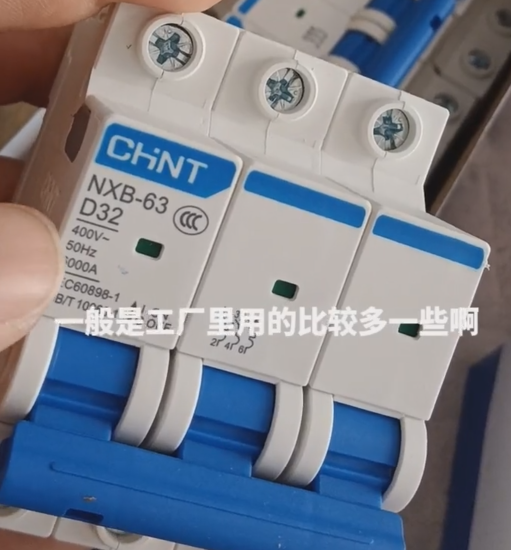
NH42-63-318x560.png "Commutateurs de transfert automatiques de type PC CHINT (ATS)NH42-63/4SZ")