Contacteur,disjoncteur,capteur,Encodeur,API,Convertisseur

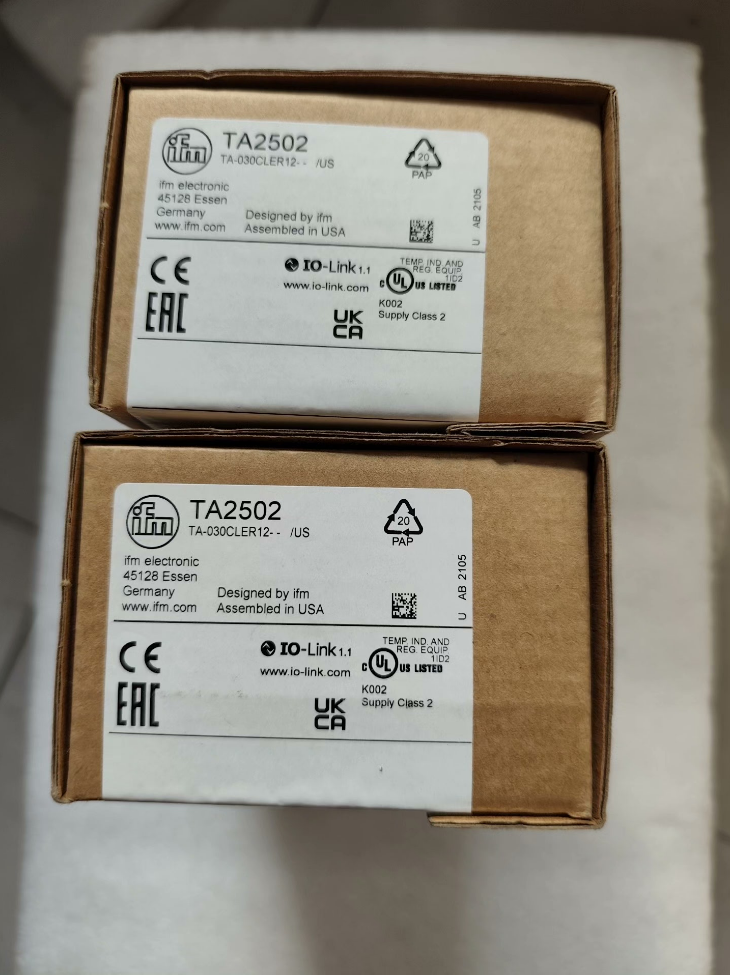

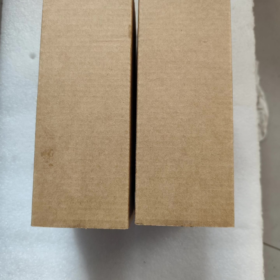
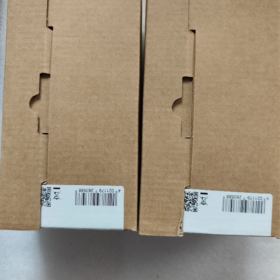
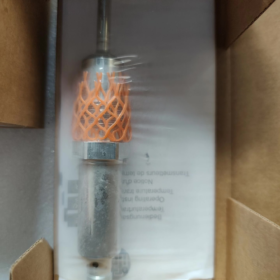
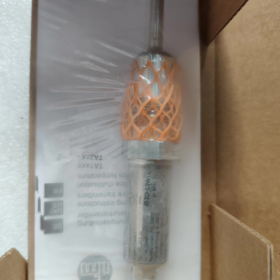
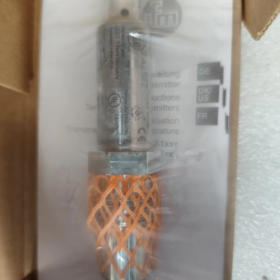
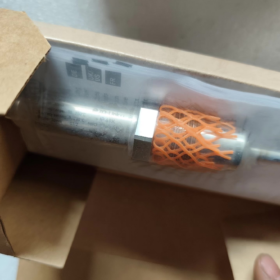
Désignation complète du modèle: PAREMENT-030CLER12—/NOUS
ifm IO-Link hygienic integrated capteur de température with built-in Class A Pt1000 element, widely used in food & industries des boissons.
✅ Model Code Explanation
PAREMENT: Temperature transmitter series
030: Immersion length EL = 30 mm
CL: Hygienic construction
E: 4…20 mA analogue output + IO-Link
R.: G1/2 cone sealing thread
12: M12 circular connector
📐 Key Technical Specifications
Measurement Performance
Sensing element: Pt1000, Class A per DIN EN60751
Plage de mesure: -50 ~ +200 °C; Factory default span: 0…200 °C, adjustable via IO-Link
Précision: ±0.3 K + 0.1%FS
Temps de réponse: T05<0.5 s; T09<2 s
Analogue output resolution: 0.04 K
Power-on delay: 2 s
Spécifications électriques
Fournir: DC 18…32 V
Sortir: 4~20mA + IO-Link V1.1 (2-wire multiplexed)
Max.. load resistance: 250 Ω @ DC18~19V; 300 Ω @ DC19~32V
Protection: Protection contre l'inversion de polarité, protection contre les courts-circuits, protection contre les surcharges
Ingress rating: IP67 / IP68 / IP69K, suitable for high-pressure washdown
Température ambiante: -25 ~ +80 °C
Mécanique & Process Properties
Connexion au processus: Filetage extérieur G1/2, cone sealing
Probe diameter: Φ6 mm; Immersion length EL=30 mm
Matériel: Wetted parts 1.4404 (316L) électropoli; Seal FKM
Max.. pression de travail: 160 bar (16 MPa), withstand vacuum down to -1000 mbar
Couple de serrage: 30~50 Nm
Poids: 180.5 g
🎯 Product Features
- Conception hygiénique: Dead-space free, electropolished 316L, compatible with CIP/SIP cleaning for food, pharmaceutique, dairy, beverage heat exchangers and pasteurization processes
- Communication IO-Link: Remote parameter modification, diagnostic, raw temperature reading; PLC access to sensor status and wire-break diagnostics
- Integrated transmitter with built-in Pt1000 element; no separate transmitter module required, réponse rapide
- Fully welded stainless steel housing, anti-condensation, excellent long-term stability
🧩 Series Selection Reference (TA25xx)
TA2502: Immersion length 30 mm
TA2512: Immersion length 50 mm
TA2532: Immersion length 100 mm
TA2542: Immersion length 150 mm
🛠️ Installation & Directives d'entretien
- Cone sealing design; sealing relies on cone-face compression, do not use PTFE tape. Torque must be strictly controlled at 30~50 Nm to avoid housing deformation
- The probe must be fully immersed in the medium for accurate measurement; avoid only touching the pipe wall
- IO-Link can rescale the 4~20mA range; parameters saved after power cycle. Wire-break diagnostic (fault signal below 4mA) disponible
- Washdown: High-pressure spray permitted (IP69K). Avoid heavy mechanical impact on probe
⚠️ Troubleshooting
Aucune sortie: Check DC18~32V supply, M12 pin assignment and reverse polarity protection
Drifting readings: Check probe fouling, installation position, medium flow rate; perform calibration
Output <4mA: RTD element broken / sensor damage; read diagnostic information via IO-Link
📦 Optional Accessories
G1/2 welding boss, hygienic adapter
Factory calibration certificate (facultatif)
📌 Alternative Reference
Alternative nationale: Hygienic G1/2 Pt1000 transmitter with 4~20mA+IO-Link, 316L electropolished, IP69K, immersion length 30mm. Key selection checkpoints: pressure rating, temps de réponse, wetted material.
IFM TA2502 Hygienic Temperature Transmitter|Installation Method
- Connexion au processus
Filetage extérieur G1/2 + cone face sealing (hygienic cone seal). Sealing is achieved by compression between the sensor taper and the internal taper of the welding boss; threads are not responsible for sealing.
Matching parts: Hygienic welding boss (G1/2 internal cone), PEEK seal ring E43911 (3A hygienic certified solution)
✅ Two types of mounting bosses
- Welding boss (most common for food/pharma CIP/SIP)
Weld the G1/2 hygienic boss onto pipe / tank wall first, polish weld seam, then install sensor. 3A compliant bosses have a leakage vent hole; medium will leak from the vent once seal fails for early warning.
- Facultatif: Thermowell
For highly corrosive media, high pressure or maintenance without shutdown. Install hygienic thermowell; sensor probe inserts into sleeve, sensor can be removed without depressurizing the process.
- Orientation de montage (Critical for Hygiene & Précision)
- Préféré: Horizontal side mounting or 45° upward inclined mounting on pipeline
Medium drains naturally, no liquid pooling on probe, no dead zones, meets CIP drain requirements.
- Prohibited: Vertical downward installation at pipe lowest point
Risk of material/liquid accumulation, incomplete cleaning, not compliant with 3A hygienic standards.
- Tank installation: Probe inclined downward, not vertically downwards.
- Débit moyen: Direct fluid flow towards the probe to improve response and reduce fouling.
Effective immersion length EL=30 mm. The entire sensing section must be fully submerged in the medium; wall-contact-only installation is invalid.
- Étapes d'installation mécanique
- Shutdown & depressurize, faire le ménage: Confirm pipeline pressure-free, clean cone surfaces of welding boss and sensor, enlever les bavures, weld slag and contaminants.
- Fit PEEK seal ring (E43911) between the cone faces.
- Hand pre-tighten: Screw in by hand until cone faces mate, do not force cross-threading.
- Torque wrench tightening: 30~50 Nm. Overtightening will crush cone face and permanently damage sensor. PTFE tape or thread locker are forbidden (threads do not seal; PTFE tape contaminates medium and creates hygiene dead zones).
- After tightening, the upper M12 connector can rotate freely for orientation (hexagon locks the cone seal, upper housing can be fine-tuned for convenient wiring).
- Pressure test for leakage before commissioning.
- Installation électrique (M12 4-pin A-coded connector, 2-wire 4~20mA + IO-Link multiplex)
Supply DC18~32V, 2-wire loop powered
M12 pin assignment:
Broche1: L+ (24V+)
Broche2: Non utilisé
Broche3: L/ 4~20mA return, IO-Link signal
Broche4: Non utilisé
Câble: M12 4-core straight / angled cable. Shielded cable recommended. Route separately from power cables to reduce interference.
Protection: Fully tighten M12 connector after wiring to maintain IP69K for high pressure washdown.
- Installation Limits & Remarques
- Vibration: Max permissible vibration 4g. Avoid mounting near pumps, compressors and high-vibration areas.
- Ambient temperature for transmitter head: -25~+80°C.
- Do not strike the Φ6 thin probe; bending will damage the internal Pt1000 element.
- CIP/SIP washdown: High-pressure spray allowed, avoid direct high-impact spray onto M12 connector.
- For disassembly and re-installation, inspect PEEK seal ring; remplacer si endommagé.
- Erreurs d'installation courantes
❌ Wrapping PTFE tape on threads → medium contamination, hygiene dead zones
❌ Over-torque tightening → cone face crushing, permanent damage
❌ Vertical downward mounting at pipe bottom → material accumulation, incomplete CIP cleaning
❌ Insufficient immersion, probe only touches pipe wall → large temperature reading error & dérive
❌ Signal cable routed together with power cable in same trunking → unstable 4~20mA signal
IFM TA2502 IO-Link Parameter Setting Procedure
TA2502 uses 2-wire multiplex IO-Link + 4~20mA. Parameters can be configured via ifm free software moneo|configure or PLC IO-Link master (AL series). No local buttons; all parameters are only editable via IO-Link.
- Hardware Wiring Preparation
- Supply DC18~32V, M12 4-pin A-coded
Broche1: L+ (24V+)
Broche3: L/ IO-Link signal (shared 2-wire)
- Sensor → IO-Link master (AL1102/AL1322/AL1402 etc.), master connected to PC or PLC
- Power on and wait for 2s power-on delay until sensor ready; set master port mode to IO-Link mode (not DI/DO)
- Software Preparation (moneo|configure, recommended for commissioning)
- Download free moneo|configure from ifm official website, install on Windows PC
- Set PC IP to same subnet as IO-Link master, connect master via Ethernet
- Scan devices, identify TA2502; IODD device description file loads automatically
IODD file can be imported offline for pre-configuration, write to sensor after online connection.
- Core Parameter Configuration (Most used: 4~20mA span rescaling)
Valeur par défaut: 4mA=0°C, 20mA=200°C. Hardware limit: -50 ~ +200°C, cannot exceed this range.
| Code de paramètre | Nom du paramètre | Description |
| ASP | Analog Start Point | Temperature value corresponding to 4mA |
| AEP | Analog End Point | Temperature value corresponding to 20mA |
| dAP | Damping | Filter time, 0~99.99s; ensemble 0 for fast response, higher value for noise suppression |
| Unité | Temperature Unit | °C / °F (default °C) |
| Fault mode | Fault Output Mode | Analogue current output upon sensor fault (default 21.5mA alarm) |
Operation Steps in moneo|configure
- Select TA2502 under the port, open parameter page
- Modify ASP (4mA), AEP (20mA), par exemple. ASP=20°C, AEP=120°C
- Set damping dAP: 0.5~1s recommended for pasteurization / dynamic process; 2~5s for static tank
- Verify Unit=°C
- Click Write to Device
- After writing, power cycle the sensor. Parameters are permanently saved inside sensor, retained after power loss.
⚠️Important: After ASP/AEP modification, 4~20mA analogue output scales accordingly. IO-Link raw temperature reading is unaffected; IO-Link reads true Pt1000 measured value.
- PLC IO-Link Master Configuration (TIA Portal etc.)
- Add IO-Link master module in PLC hardware catalog, assign IP address
- Set master port to IO-Link mode, scan and detect TA2502
- Import TA2502 IODD file, modify ASP/AEP, damping in device parameter page, download hardware configuration
- Read from PLC process data area:
Process data: Raw temperature value (16peu)
Status byte: Sensor diagnostic bits (rupture de fil, over-range, panne matérielle)
- IO-Link Diagnostic Reading (Dépannage)
Diagnostic data available real-time:
- Sensor identification: Modèle, serial number, firmware version
- Current measured temperature (raw Pt1000 reading, independent of 4~20mA scaling)
- Fault codes:
Element wire break: below 4mA (<3.8mA)
Over upper / lower range alarm
Internal hardware fault → analogue output jumps to 21.5mA
- Peak memory: Max. / min temperature record (resettable)
- Sauvegarde des paramètres & Sensor Replacement (Automatic Parameter Download)
- moneo|configure can save TA2502 parameter set as file
- After replacing faulty sensor with same model, import parameters in one click, no manual re-entry, ideal for fast line replacement in food production.
- Limites & Remarques
- ASP and AEP cannot exceed hardware range -50 ~ +200°C. AEP can be smaller than ASP (reverse span: 4mA for high temperature, 20mA for low temperature)
- Larger dAP gives slower response and stronger noise suppression; do not use large damping for dynamic pasteurization process
- IO-Link communication and 4~20mA share the same 2-wire loop. Communication reading does not affect analogue current output
- If only 4~20mA is required without IO-Link communication, switch master port to analogue mode. Sensor still outputs per saved ASP/AEP settings.
- Problèmes courants
Parameter write failure: Check master port in IO-Link mode, supply voltage ≥18V, M12 connector contact integrity
4~20mA unchanged after span modification: Sensor not power cycled after writing; or ASP/AEP set outside -50~200°C hardware limit
IO-Link temperature reading normal, but 4~20mA drifts: Check loop load resistance, max load 300Ω
NH42-63-318x560.png "Commutateurs de transfert automatiques de type PC CHINT (ATS)NH42-63/4SZ")