Contacteur,disjoncteur,onduleur solaire,compteur électrique,batteries solaires

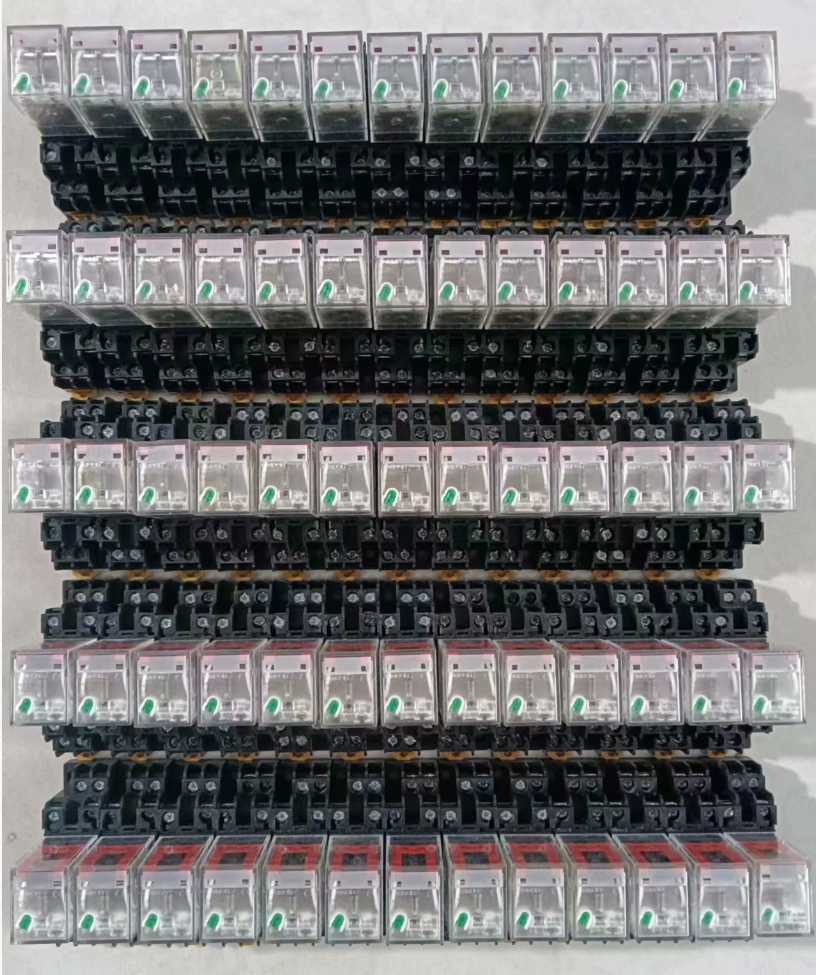

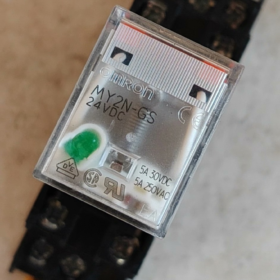
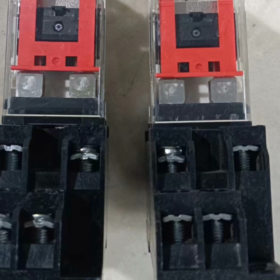
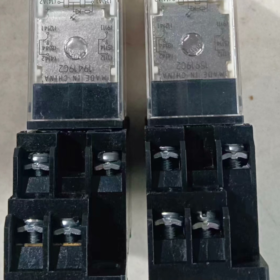
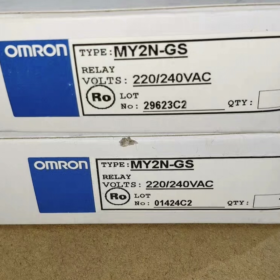
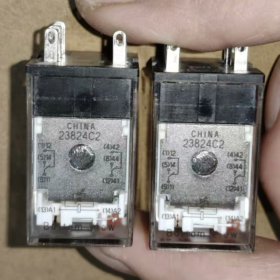
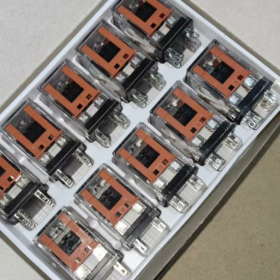
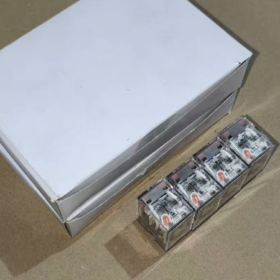
Le OMRON MY2N-GS AC220V is a 2-pole double-throw (DPDT) plug-in miniature intermediate relay from OMRON MY-GS series. It is the official upgraded replacement for the classic legacy model MY2N-J. Standard configurations include an LED operation indicator, mechanical status indicator and manual test locking lever. Adopting silver alloy contacts, it features high reliability, long service life and convenient wiring. Mainly used for PLC output signal amplification, load switching and circuit logic conversion, it is a universal fundamental component for industrial automation control cabinets.
- Répartition du code modèle
Full standard model: MY2N-GS AC220/240V
MY: Série de produits, general-purpose miniature power intermediate relay
2: Number of contact sets, 2 jeux de contacts inverseurs (DPDT, 2 Normalement ouvert + 2 Normalement fermé)
N: Standard plug-in terminals with built-in operation indicator
GS: Next-generation series (Generation Standard). It replaces the original MY2N-J series, is equipped with an additional locking lever, and delivers optimized contact durability and electrical performance.
AC220/240V: Rated coil voltage, AC 220~240V, compatible avec une alimentation 50/60 Hz.
Notes complémentaires
Most products available on the market are fitted with a locking lever by default (suffix -R), supporting manual testing and contact locking.
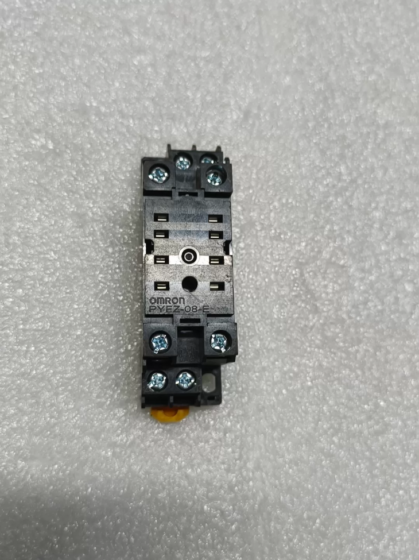
Matched standard 8-pin socket: Screw terminal type PYF08A, push-in terminal type PYF08A-PU.
- Principales spécifications techniques
| Catégorie | Caractéristiques |
| Configuration des contacts | 2 jeux de contacts inverseurs (DPDT, 2NON+2NC) |
| Rated Contact Current | 5UN (AC250V resistive load); 5UN (DC30V resistive load) |
| Matériel de contact | Alliage d'argent (AgSnO₂) |
| Tension nominale de la bobine | AC 220~240V, 50/60Hz |
| Consommation électrique de la bobine | Environ. 1.2~1.5 VA |
| Operate Time | ≤ 20 MS |
| Release Time | ≤ 20 MS |
| Durée de vie mécanique | ≥ 50 millions d'opérations |
| Durée de vie électrique | ≥ 100,000 opérations (under rated resistive load) |
| Tension de tenue diélectrique | 2kV CA / 1min (between coil and contacts) |
| Indication d'état | Red LED indicator (lights up when energized) + Mechanical indicator lever |
| Type de montage | Type de plug-in, used with matched standard socket |
| Number of Pins | 8 épingles |
| Température ambiante de fonctionnement | -40℃ ~ +70℃ (No condensation) |
| Protection contre la pénétration | IP40 (Relay body) |
| Certifications | CE, UL, ASC, VDE, CQC |
- Full Model List of the Same Series
4.1 Classified by Contact Sets
| Contact Sets | Pin Count | Modèle standard | Model with Locking Lever | Rated Contact Current |
| 2 contacts inverseurs (2NON+2NC) | 8 épingles | MY2N-GS | MY2N-GS-R | 5UN |
| 4 contacts inverseurs (4NON+4NC) | 14 épingles | MY4N-GS | MY4N-GS-R | 5UN |
4.2 Common Coil Voltage Ratings
The entire series supports the following standard voltages, distinguished only by voltage suffix:
CC: DC12V, DC24V, DC48V
CA: AC24V, AC110/120V, AC200/220V, AC220/240V
- Pin Assignment & Instructions de câblage
5.1 Définition des broches (Top view from the wiring side of the socket)
| Numéro de broche. | Fonction | Description |
| 13 (A1) | One end of coil | Connect to AC220V live wire |
| 14 (A2) | The other end of coil | Connect to AC220V neutral wire |
| 9 | Borne commune 1 (COM1) | Common pin for the 1st contact set |
| 1 | Normalement fermé 1 (NC1) | Conducts with Pin 9 when coil is de-energized |
| 5 | Normalement ouvert 1 (NON1) | Conducts with Pin 9 quand la bobine est sous tension |
| 12 | Borne commune 2 (COM2) | Common pin for the 2nd contact set |
| 4 | Normalement fermé 2 (NC2) | Conducts with Pin 12 when coil is de-energized |
| 8 | Normalement ouvert 2 (NO2) | Conducts with Pin 12 quand la bobine est sous tension |
5.2 Précautions de câblage
- The AC coil has no polarity requirement. A1 and A2 can be connected to live wire and neutral wire arbitrarily.
- Pour charges inductives (contacteurs, électrovannes), it is recommended to connect a surge suppressor (RC snubber circuit) in parallel to extend contact service life.
- Do not operate beyond the rated current. Use contactors for secondary switching of high-power loads.
- The locking lever can manually close the contacts, which is applied to power-off commissioning and circuit inspection.
- Applications typiques
Amplify PLC output signals to drive loads such as solenoid valves, contactors and indicator lights
Circuit logic conversion, level matching and signal isolation inside control cabinets
Start-stop control, signal relay and circuit expansion for automated equipment
Secondary circuit control and protection signal transmission in power distribution systems
- General Troubleshooting Matrix
| Phénomène de défaut | Cause première | Solutions étape par étape |
| Relay fails to operate and indicator stays off after power-on | 1. Abnormal supply voltage / Broken wiring | 1. Measure voltage between A1 and A2 to confirm normal AC220V supply |
| 2. Burned-out open coil | 2. Tester la résistance de la bobine; replace the relay if an open circuit is detected | |
| 3. Poor contact with socket | 3. Re-insert the relay and clean socket pins | |
| Indicator lights up but contacts have no output | 1. Welded or oxidized contacts with poor conduction | 1. Test contact continuity; replace the relay if contacts are damaged |
| 2. Broken wiring on load side | 2. Check wiring and integrity of the load circuit | |
| 3. Damaged contacts due to overload | 3. Verify load current; select a higher-rated model for overload conditions | |
| Contacts fail to release and stick together after power-off | 1. Contact welding caused by electric arc under heavy current | 1. Replace the relay and install surge suppression components |
| 2. Mechanical jam or failed return spring | 2. Inspect internal mechanism; replace the whole relay if mechanical jam occurs | |
| Abnormal buzzing noise during operation | 1. Incomplete armature attraction due to low voltage | 1. Adjust supply voltage to the rated range |
| 2. Oil or dust on core surface | 2. Remplacer le relais; do not disassemble the core manually | |
| Excessive heating or burnout of coil | 1. Overvoltage power supply | 1. Ensure supply voltage complies with rated value; overvoltage operation is prohibited |
| 2. Long-term high-frequency switching | 2. Reduce switching frequency or adopt solid state relays |
- Reference of Alternative Models
Original brand legacy replacement: MY2N-J AC220V (Fully pin-compatible, without locking lever)
Domestic alternatives: Chint NJX-13FW/2Z AC220V, Delixi CDZ9-52P AC220V
Imported equivalents: Schneider RXM2LB2P7, ABB CR-MX230AC2L, Phoenix Contact REL-MR-230AC/21
Troubleshooting Matrix for OMRON MY2N-GS AC220V 5A Relay
This model features 2 jeux de contacts inverseurs, 8-pin plug-in structure, LED operation indicator and locking lever. Below is the troubleshooting guide sorted by on-site inspection sequence (from simple to complex), covering faults caused by electrical, mechanical and installation issues.
| Phénomène de défaut | Cause première | Solutions étape par étape |
| No operation and red LED indicator off after power-on | 1. Fault in external power circuit: No voltage, câblage lâche, broken live/neutral wire | 1. Measure AC voltage between socket Pin 13(A1) and Pin 14(A2). Confirm voltage within AC220V±10%. Check upstream switches and terminals if no voltage is detected. |
| 2. Mauvais contact de la prise: Oxidized pins or loose connection between relay and socket | 2. Cut off power, pull out the relay, clean oxide on pins and socket terminals, then reinsert firmly. | |
| 3. Burned-out open coil: Overvoltage breakdown, insulation aging or surge impact | 3. Mesurer la résistance de la bobine. The normal resistance is approx. 12~15kΩ at 25℃. Replace the relay if open circuit or abnormal resistance occurs. | |
| 4. Locking lever stuck at release position (for -R version) | 4. Reset the top locking lever to normal position to eliminate mechanical jam. | |
| LED lights up but contacts have no output | 1. Wrong wiring for contact circuit: Mixed connection of common, NO and NC terminals | 1. Verify pin definition: COM terminals are Pin 9 and Pin 12; NO terminals are Pin 5 and Pin 8. Ensure no wrong connection to NC pins. |
| 2. Broken load circuit: No power for load or loose terminals | 2. Press the locking lever to manually close contacts and test continuity. If still open, inspect power and wiring on load side. | |
| 3. Burned or oxidized contacts caused by long-term overload and electric arc | 3. Replace the relay if contacts remain open due to burnout or oxidation after manual closing. | |
| 4. Internal mechanism jam: Coil pulls in normally but linkage fails to drive contacts | 4. Replace the relay if mechanical jam is found during manual operation. | |
| Contacts stay closed and cannot release after power-off | 1. Soudage par contact: Caused by overload, short circuit or electric arc without surge suppression for inductive loads | 1. Cut off power and confirm no voltage on coil. Reset locking lever and check if contacts open. |
| 2. Failed return spring: Elasticity attenuation due to frequent switching and high temperature | 2. Replace the relay immediately if contacts are still closed after reset. Welded contacts cannot be repaired for reuse. | |
| 3. Foreign matter jam: Dust or iron chips stuck inside armature or contact mechanism | 3. Ensure load current does not exceed 5A. Install RC surge suppressor for inductive loads. | |
| 4. Accidental lock of locking lever after manual test | 4. Clean surrounding dust and iron chips; replace the relay if mechanical jam cannot be fixed. | |
| Abnormal buzzing noise during operation | 1. Low supply voltage leads to incomplete core attraction and armature vibration | 1. Measure coil voltage and keep it within AC220V±10%. Check voltage drop in power circuit if voltage is low. |
| 2. Huile, dust or rust on core surface resulting in excessive magnetic gap | 2. Reinsert the relay fully and tighten fixing screws of socket and rail. | |
| 3. Broken short-circuit ring on core (unique fault of AC coil) | 3. Replace the relay if noise persists after cleaning core surface (damaged short-circuit ring or worn core). | |
| 4. Loose fit between relay, socket and DIN rail causing resonance | 4. Adjust mounting position to eliminate resonance gap. | |
| Excessive heating or black burnout of coil | 1. Severe overvoltage exceeding upper limit AC240V leading to coil overload | 1. Monitor supply voltage strictly; long-term overvoltage operation is forbidden. |
| 2. Excessively high switching frequency causes cumulative overheating beyond Class B insulation limit | 2. Limit switching frequency ≤ 20 fois par minute. Use solid state relay for high-frequency working conditions. | |
| 3. Poor heat dissipation under high ambient temperature accelerates insulation aging | 3. Improve heat dissipation inside cabinet. Keep away from heat-generating components such as inverters and contactors. Ambient temperature shall not exceed 70℃. | |
| 4. Insulation breakdown caused by overvoltage and surge | 4. Connect RC surge suppressor in parallel with coil to suppress transient overvoltage during power-off. | |
| Mauvais contact, intermittent signal | 1. Oxidation and dust on contact surface leading to high contact resistance | 1. Cut off power, pull out the relay, clean oxide on contacts and pins, then insert tightly. |
| 2. Too low load current cannot break through oxide layer (low-level signal circuit) | 2. Use gold-plated contact relay or properly increase circuit current for low-level signal applications. | |
| 3. Fatigue or oxidation of socket pins causing loose connection | 3. Replace matched PYF08A socket if pins lose elasticity or are severely oxidized. | |
| 4. Incomplete insertion of relay leading to mechanical intermittent contact | 4. Replace with a new relay if intermittent fault occurs frequently to prevent repeated oxidation. | |
| Abnormal brightness or flickering of indicator | 1. Unstable power supply with large voltage fluctuation | 1. Measure coil voltage and confirm stable power supply without severe fluctuation. |
| 2. Poor socket contact leading to intermittent coil power supply | 2. Reinsert the relay and clean pins to eliminate loose contact. | |
| 3. Aging and failure of current-limiting resistor for indicator | 3. Measure coil resistance if indicator malfunctions under stable voltage. Replace the relay immediately if inter-turn short circuit (faible résistance) is detected. | |
| 4. Coil inter-turn short circuit causing abnormal voltage division | 4. Temporary use is allowed if only indicator fails while contacts work normally. Batch replacement is recommended. |
Supplementary Troubleshooting Notes
- Inspection Priority: Follow the sequence: External power supply → Socket contact → Relay body. 80% of faults are caused by wiring and socket problems. Prioritize these checks to avoid unnecessary replacement.
- Règlements de sécurité: Comply with electrical safety standards during live tests. Cut off power before inspecting contacts and coils to prevent electric shock and short circuit.
- Service Life Reference: The rated electrical life is 100,000 operations under resistive load. The service life will decrease by more than 50% pour charges inductives. Regular replacement is recommended when the service limit is reached.
NH42-63-318x560.png "Commutateurs de transfert automatiques de type PC CHINT (ATS)NH42-63/4SZ")