Contacteur,disjoncteur,capteur,Encodeur,API,Convertisseur

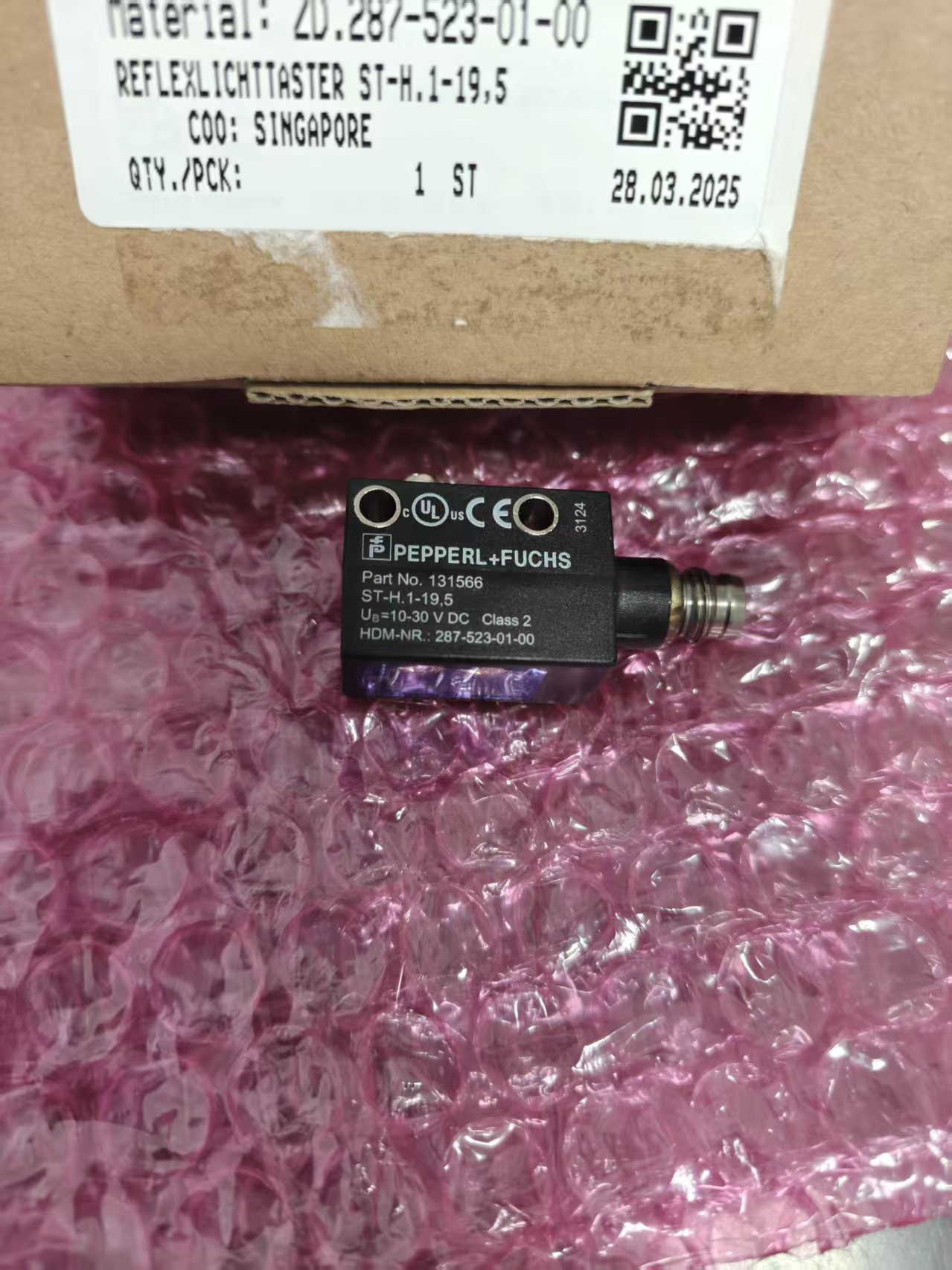

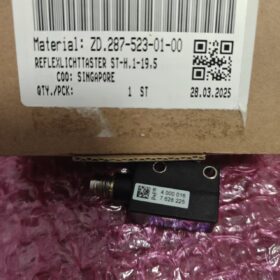
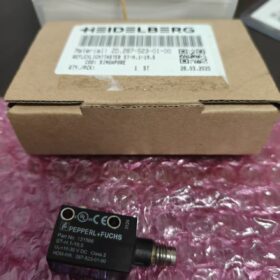
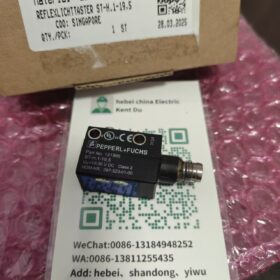
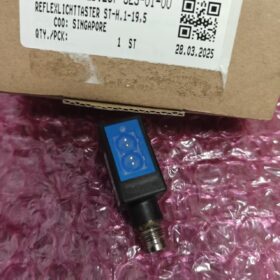
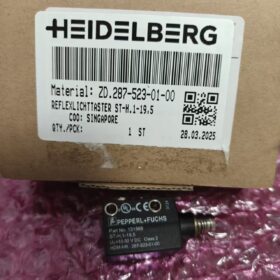
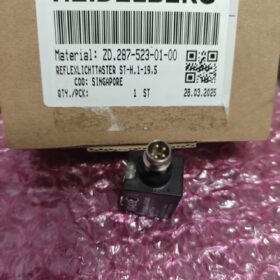
Désignations alternatives: HDM-NR-287-523-01-00 / Pièce OEM Heidelberg ZD.287-523-01-00
Informations de base
Pepperl+Fuchs Numéro de commande: 131566
Modèle interne P+F: ST-H.1-19,5
Numéro de pièce de la machine Heidelberg.: HDM-NR-287-523-01-00 (ZD.287-523-01-00)
Type de produit: Mode diffus capteur photoélectrique (cellule photoélectrique)
Application cible: Plieuse Heidelberg Stahlfolder, détection de présence de feuilles pour équipement d'impression. Variante personnalisée OEM uniquement; aucune fiche technique publique n'est disponible sur le site officiel de Pepperl+Fuchs.
Pays d'origine: Singapour
Poids: environ. 30 g
Électrique & Spécifications mécaniques
- Tension d'alimentation: 10…30 V CC
- Connexion: Connecteur mâle M12 broches
- Logement: Boîtier carré compact en plastique PBT avec deux trous de vis de montage
- Classe de protection: IP67
- Indicateurs: Double LED (pouvoir, état de commutation)
- Sortir: PNP, protégé contre les courts-circuits
- Température de fonctionnement: -25 … +55℃
Explication du code modèle
131566: Numéro de pièce OEM Pepperl+Fuchs
ST-H.1-19,5: Désignation interne de la série de capteurs
HDM-NR-287-523-01-00: Numéro de pièce spécifique à la machine Heidelberg, pas un modèle Pepperl+Fuchs; printed on printing-machine accessory labels.
Réparation & Notes d'approvisionnement
- This is a custom OEM sensor for printing-machine applications. Standard off-the-shelf Pepperl+Fuchs photoelectric sensors cannot be directly substituted. Light spot geometry, sensing range and output timing are custom-tuned for folding-machine operation.
- Second-hand unit inspection checklist:
M12 connector pins free of corrosion and pin-retraction damage
Optical lens free of scratches, ink and dirt contamination
Power LED illuminates upon power-on; output state toggles when tested with a reflective target
No short-circuit across supply and output pins
- Approvisionnement: Always specify Pepperl+Fuchs order number 131566. Heidelberg HDM-part numbers cannot be recognized by Pepperl+Fuchs distributors.
Affectation des broches (M12-4-pin male, view from connector face)
| Épingle | Signal |
| 1 | UB+ Power Positive (10-30 V CC) |
| 2 | Sortie de signal PNP |
| 3 | 0V GND |
| 4 | Non connecté |
Pepperl+Fuchs 131566 Documentation technique
Avis important: 131566 (ST-H.1-19,5) is a custom OEM-exclusive sensor for Heidelberg printing presses. Aucune fiche technique PDF originale n'est publiée par Pepperl+Fuchs. Ce document est compilé à partir de l'étiquetage des pièces physiques, Mesures sur le terrain des fournisseurs OEM et manuels des machines Heidelberg, et convient à l'entretien, approvisionnement, mise en service et validation des unités d'occasion.
Désignation alternative: HDM-NR-287-523-01-00 (Numéro de pièce Heidelberg, pas un modèle Pepperl+Fuchs)
1 Présentation du produit
| Article | Spécification |
| Numéro de commande Pepperl+Fuchs. | 131566 |
| Modèle interne | ST‑H.1‑19,5 |
| Numéro de pièce OEM Heidelberg. | HDM‑NR‑287‑523‑01‑00 (ZD.287‑523‑01‑00) |
| Type de produit | Capteur photoélectrique en mode diffus |
| Application cible | Plieuse Heidelberg Stahlfolder, détection de présence de feuille pour équipement d'impression |
| Source de lumière | LED infrarouge modulée |
| Connexion | Connecteur droit mâle M12‑4 broches |
| Matériau du boîtier | Plastique technique PBT |
| Classe de protection | IP67 |
| Pays d'origine | Singapour |
| Poids net | ≈30g |
2 Caractéristiques électriques
| Paramètre | Valeur | Remarques |
| Tension d'alimentation Ub | 10 … 30 V CC | CC, Alimentation de classe 2 |
| Type de sortie | Sortie PNP normalement ouverte | Protection contre les courts-circuits, protection contre l'inversion de polarité |
| Max.. Courant de charge de sortie | 100 mA | |
| Courant de repos | ≤25mA | |
| Chute de tension | ≤2,0 V | Etat de la sortie ON |
| Logique de commutation | Lumière allumée (sortie active lors de la réception de la lumière réfléchie) | Sortie hors tension lorsque la lumière réfléchie est bloquée par un matériau en feuille |
| Fréquence de commutation | ≈250Hz | Adapté à la détection de feuilles à grande vitesse dans les plieuses |
| Température de fonctionnement | -25 … +55℃ | Conditions ambiantes de l’imprimerie |
| Température de stockage | -40 … +70℃ |
Brochage M12-4 broches (mâle, vue depuis la face d'extrémité du connecteur)
| Épingle | Signal | Description |
| 1 | UB+ | Alimentation positive 10‑30VDC |
| 2 | DEHORS | Sortie de signal PNP |
| 3 | 0V/GND | Alimentation négative |
| 4 | CAROLINE DU NORD | Non connecté, laisser flotter |
Remarque sur le câblage: Ne câblez pas la broche 4; ne connectez pas la broche 4 à 0V, sinon un dysfonctionnement du capteur se produira.
3 Optique & Paramètres mécaniques
- Portée de détection: 0…19,5 mm (le suffixe 19,5 indique la distance de détection nominale)
- Tache lumineuse: Optique à petit point optimisée pour la détection de feuilles minces. Le remplacement direct par des capteurs photoélectriques commerciaux de gamme standard n'est pas autorisé.
- Montage: Deux trous de montage Φ3,2 mm intégrés dans le boîtier; Vis de montage M3, couple recommandé0,4-0,6N·m
- Housing Overall Dimensions: W14 mm × H31 mm × D22 mm
- Indicateurs LED:
LED verte: Power-supply status
LED jaune: Switching-status indicator (illuminates when reflected light is detected)
4 Normes & Certifications
CE-marked, compliant with EN 60947-5-2 for photoelectric sensors
No public UL file (OEM custom variant)
5 Installation & Commissioning Instructions
- Recommended mounting gap between sensor and sheet/reference surface: 8-16 mm. Avoid direct contact; do not exceed 19.5 mm maximum sensing distance.
- Optical-axis alignment: Lens must face the sheet-travel path. Keep lens surface clean; ink and dust accumulation will trigger false detection.
- No sensitivity-adjustment potentiometer: Parameters are factory-fixed; no on-site adjustment possible.
- Câblage: Use M12-4-pin female-cable assembly; connect pins 1-2-3 only, pin 4 unused.
6 Tableau de dépannage
| Symptôme de panne | Check Points |
| LED verte éteinte | Verify 10‑30 VDC at pin 1; continuity of pin 3 GND; Corrosion des broches M12 / dommages aux broches tordues |
| LED verte toujours allumée, la LED jaune ne s'allume jamais | Lentille entièrement recouverte d'encre; la distance de montage dépasse 19,5 mm; cible réfléchissante manquante; panne de LED interne |
| LED jaune allumée en permanence, aucune réponse aux feuilles de passage | Contamination des lentilles; axe optique mal aligné; court-circuit du transistor de sortie; interférence de réflexion d'arrière-plan provenant du châssis de la machine |
| Faux déclenchements sporadiques | Chute de tension d'alimentation excessive; mauvais blindage des câbles; débris de papier encreur sur l'objectif; distance d'installation hors de portée |
7 Approvisionnement & Notes critiques de remplacement
- Passez toujours vos commandes en utilisant le numéro de commande Pepperl+Fuchs. 131566. Les références pures à HDM-NR-287-523-01-00 ne seront pas reconnues par les partenaires de distribution de Pepperl+Fuchs.
- Il s'agit d'une pièce personnalisée exclusive Heidelberg OEM.. Série standard Pepperl+Fuchs (par exemple. RL31) diffèrent par la géométrie des points, seuil de commutation et comportement de synchronisation. La substitution directe provoque des erreurs de feuille manquante et de fausse détection et est déconseillée pour une utilisation sur presse à imprimer..
- Étapes de validation des unités d'occasion:
1) Inspectez les broches du connecteur M12 pour déceler tout dommage dû à l'oxydation ou à la rétraction des broches.
2) Vérifiez la lentille pour des fissures et des rayures profondes
3) Appliquer une alimentation 10-30VDC; Confirmez que la LED d'alimentation verte s'allume
4) Tenez du papier réfléchissant blanc devant l’objectif: la LED jaune s'allume. Retirer le papier: la LED jaune s'éteint
5) Mesurez la sortie de la broche 2 avec un multimètre; confirmer que le niveau PNP bascule correctement; pas de court-circuit interne.
8 Notes de sécurité
- Ne lavez pas agressivement la lentille du capteur avec des solvants puissants.; le revêtement optique sera dégradé. Nettoyer uniquement avec un chiffon non pelucheux.
- La sortie est de type source PNP; se connecte uniquement aux canaux d'entrée de haut niveau de l'API. Incompatible avec les entrées NPN-Sinking.
- Ne dépassez pas la tension d'alimentation maximale de 30 V CC.; des dommages permanents au circuit interne peuvent survenir.
Principe de fonctionnement des capteurs photoélectriques en mode diffus
Pepperl+Fuchs131566 est un capteur photoélectrique en mode diffus, avec émetteur et récepteur intégrés dans un seul boîtier.
Principe fondamental
Deux composants internes essentiels:
- Émetteur: LED infrarouge: Émet une lumière infrarouge modulée (la modulation supprime les faux déclenchements causés par l'éclairage ambiant de l'atelier et la lumière du soleil).
- Récepteur: Phototransistor / Photo-IC: Capture la lumière réfléchie par les cibles.
Séquence fonctionnelle:
- La LED infrarouge émet un faisceau lumineux vers l'extérieur.
- Le faisceau frappe la surface de l'objet cible (papier / pièce à usiner).
- La surface de l'objet reflète de manière diffuse une partie de la lumière incidente.
- Une partie de la lumière réfléchie retourne à la fenêtre du récepteur du capteur.
- La puce du récepteur détecte la lumière entrante → les circuits internes activent et basculent la sortie de commutation à semi-conducteurs (PNP / Changement de niveau NPN).
⚠️ Distinction avec les capteurs rétro-réfléchissants (plaque réflectrice séparée requise):
Mode diffus: Aucune plaque réflectrice requise. S'appuie sur la réflectance naturelle de la surface cible. Le modèle 131566 fonctionne de cette manière pour la détection de feuilles.
Rétro-réfléchissant: Capteur plus plaque réflectrice dédiée. La lumière rebondit sur le réflecteur; un objet interrompt le faisceau pour déclencher la commutation.
Deux logiques de commutation standard
- Lumière allumée: La sortie devient active lorsque la lumière réfléchie est reçue. Quand l'objet s'éloigne / bloque le chemin de la lumière de retour, la sortie se désexcite.
✅Pepperl+Fuchs131566: Lumière allumée. Lorsque la feuille entre dans la zone de détection, la feuille reflète la lumière infrarouge, La LED jaune s'allume et la sortie PNP devient élevée. Après le passage de la feuille, le signal de lumière réfléchie disparaît et la sortie se désactive.
- Sombre-ON: La sortie devient active lorsque le signal de retour de lumière est absent; la sortie se désactive à la réception de la lumière.
Facteurs d’influence clés (Causes profondes des défauts sur le terrain pour les installations de plieuses)
- Distance de détection
Chaque capteur a une plage de détection nominale définie. Pour 131566 plage maximale = 19,5 mm. La cible en dehors de cette distance produit une amplitude de lumière réfléchie insuffisante pour un déclenchement fiable.
- Couleur cible / Réflectivité
Le papier blanc offre une réflectivité élevée et un déclenchement fiable. Noir / les objets sombres et mats offrent une portée de détection efficace considérablement réduite.
- Géométrie des points lumineux
Les capteurs spéciaux pour l'impression OEM utilisent une optique à petit point pour la détection de feuilles étroites. Les capteurs commerciaux standards présentent de grandes tailles de points et peuvent se déclencher faussement à partir des réflexions de fond métalliques du châssis de la machine.. C'est la principale raison pour laquelle le 131566 ne peut pas être arbitrairement remplacé par des capteurs à usage général..
- Contamination des lentilles
L'encrassement par l'encre et la poussière bloque les chemins de lumière sortants et entrants et provoque une défaillance complète du capteur.; cela représente le mode de défaillance le plus courant dans les environnements d’imprimerie.
- Technologie de lumière modulée
L'émission est infrarouge modulée à haute fréquence. Les circuits du récepteur ne répondent qu'à cette fréquence de modulation spécifique. La lumière ambiante non modulée et les lampes d'atelier sont filtrées pour des performances anti-interférences..
Tableau comparatif de trois types de capteurs photoélectriques courants
| Type de capteur | Construction | Principe de fonctionnement | Applications typiques |
| Mode diffus (cette unité) | Émetteur & récepteur combiné dans un seul boîtier | Lumière réfléchie directement par l'objet cible | Détection de présence de feuille, surveillance de la présence de la pièce |
| Rétroréfléchissant | Capteur monocorps + plaque réflectrice externe | La lumière revient du réflecteur; un objet bloque le trajet du faisceau | Surveillance des passerelles, détection de blocage de bande transporteuse |
| Barrage (barrage) | Unité émettrice séparée et unité réceptrice séparée | L'émetteur projette le faisceau directement sur le récepteur; un objet interrompt le trajet du faisceau | Comptage d'objets, détection à longue portée |
Exemple d'application pratique pour Heidelberg Stahlfolder avec 131566
Le capteur est monté sur le chemin de transport des feuilles de la plieuse, écart de fonctionnement réglé à env. 8-16 mm du plan de la tôle.
Feuille passant dans la zone de détection: La feuille blanche réfléchit la lumière infrarouge vers le récepteur → la LED jaune s'allume; La sortie PNP devient élevée; feuille de registres de contrôle de la machine présente.
La feuille sort de la zone de détection: Seul le châssis de la machine en métal foncé est présent; l'amplitude de la lumière de retour tombe en dessous du seuil → la LED jaune s'éteint; la sortie se désexcite; la machine enregistre le départ des feuilles.
Scénarios d'application typiques pour les capteurs photoélectriques en mode diffus
Les capteurs photoélectriques en mode diffus intègrent l'émetteur et le récepteur dans un seul boîtier. Aucune plaque réflectrice ou unité de réception séparée appariée n'est requise. La détection repose sur la lumière réfléchie par les surfaces des objets cibles. Simple à monter, et parmi les catégories de capteurs les plus répandues dans le domaine de l'automatisation industrielle..
Appareil représentatif: Pepperl+Fuchs131566 (détection de feuilles pour plieuses Heidelberg)
1 Impression & Industrie de transformation du papier
- Détection de présence de feuille: Plieuses, découpeuses et chemins de papier pour presses à imprimer. Détecter l'arrivée des feuilles, conditions de feuille manquante, pré-avertissement des feuilles doubles et surveillance du bord arrière des feuilles. C'est l'application exacte de unit131566; les variantes à petit point sont spécialement conçues pour la détection sur papier fin.
- Détection de présence d'étiquette: Vérifier la position de l'étiquette et la rupture de la bande d'étiquette.
- Détection de fin de stock de rouleaux de papier: Détecter l'épuisement des bobines de papier de matière première.
Points faibles spécifiques à l’industrie: Encrassement des lentilles par l'encre et la poussière de papier; grande variation de réflectance entre les substrats noir et blanc. Préférez les capteurs de qualité OEM à seuil fixe et à petit point.
2 Manutention & Systèmes de lignes de convoyeurs
- Détection de l'arrivée des pièces: Systèmes de convoyeurs à courroie et à rouleaux. Détecter l'arrivée d'un carton ou d'une pièce au poste de travail pour déclencher les actionneurs, scanners et bouchons.
- Comptage d'articles: Générez des impulsions de commutation lorsque les objets passent devant le capteur pour le comptage du volume de production.
- Contrôle de présence au niveau du bac: Détecter la présence / absence de composants à l'intérieur des bacs et des alimentateurs pour alarmes de pièces manquantes.
- Surveillance de détection de bourrage: Identifier les conditions d'empilement de matériaux dans les goulottes de transfert.
3 Machines d'emballage
- Poche / détection de cartons: Confirmer l'alimentation du matériel d'emballage dans les stations de traitement; identification du paquet vide.
- Capuchon & contrôles de présence de composants: Machines de remplissage et de scellage; confirmer l'état du composant en place.
- Confirmation d'éjection des produits finis: Vérifier la sortie du produit fini des stations de traitement.
4 Machine-outil & Automatisation de l'assemblage
- Validation pièce dans montage: Chargement du robot / postes de déchargement; confirmer la mise en place correcte de la pièce.
- Détection de présence de petits composants: Détecter les ressorts, vis et pièces moulées en plastique.
- Alarme de niveau bas de trémie: Déclencher un avertissement lorsque le stock de composants de la trémie d'alimentation est faible.
5 Fabrication automobile
- Confirmation de composant dans le gabarit pour l'outillage d'assemblage de carrosserie.
- Détection de position du chariot de transfert.
- Comptage de lignes de transfert de composants.
6 Electronique grand public & Fabrication légère
- Détection de présence de cartes PCB et de boîtiers plastiques.
- Surveillance du passage d'objets sur la ligne de convoyeur.
- Vérification de la sortie du chargeur de petites pièces.
7 Levage-entreposage & Machines à usage général
- Détection simple de la position des fourches.
- Surveillance de présence d'objets pour les zones de portes de sécurité (variantes sélectionnées).
Critères de sélection du capteur photoélectrique en mode diffus & Limites des applications (Focus ingénierie)
- Forte dépendance à la couleur de l'objet cible
De couleur claire / les surfaces blanches offrent une réflectance élevée et une distance de détection efficace étendue. Les cibles noires et mates réduisent considérablement la distance de détection utilisable; la plage réelle peut chuter à seulement 30 à 50 % de la valeur nominale.
- Sensibilité à la réflexion de fond
Les surfaces arrière métalliques brillantes peuvent produire un faux déclenchement. Pour de tels déploiements, spécifiez la suppression de petits points ou d'arrière-plan (BGS) capteurs en mode diffus.
Pepperl+Fuchs131566 met en œuvre une optique à petit point pour minimiser les interférences des cadres métalliques des machines à plier au sein des assemblages mécaniques à jeu restreint.
- Plage de détection absolue limitée
Les capteurs à mode diffus standard couvrent généralement des dizaines à des centaines de millimètres. Pour la détection longue distance, sélectionnez les configurations de capteurs rétroréfléchissants ou barrage.
- Mauvaises performances avec des objectifs transparents
Les substrats en verre et en couches minces transparentes ne peuvent pas être détectés de manière fiable par les capteurs à mode diffus standard. Utiliser des modèles de capteurs dédiés à la détection d’objets transparents.
Tableau de comparaison rapide: Mode diffus / Suppression d'arrière-plan / Rétro-réfléchissant / Barrage
| Type de capteur | Caractéristiques clés | Cas d'utilisation typique |
| Mode diffus standard | Fonctionne sur la réflectance de la surface cible; rentable; vulnérable aux interférences de réflexion de fond | Pièce générale & détection de feuille (Modèle131566) |
| Suppression de l'arrière-plan (BGS) mode diffus | Rejette électroniquement les réflexions de la surface d'arrière-plan; insensible aux variations de couleur de fond | Cibles situées à proximité de cadres métalliques; pièces à usiner avec profils à hauteur variable |
| Rétroréfléchissant | Nécessite une plaque réflectrice dédiée; capacité de détection à longue portée | Surveillance des interruptions de faisceau par goulotte et porte |
| Barrage (barrage) | Paire émetteur-récepteur physiquement séparée; plage de détection maximale disponible | Détection longue distance, inspection d'objets transparents |


NH42-63-318x560.png "Commutateurs de transfert automatiques de type PC CHINT (ATS)NH42-63/4SZ")