Contattore,interruttore automatico,sensore,Codificatore,PLC,Convertitore

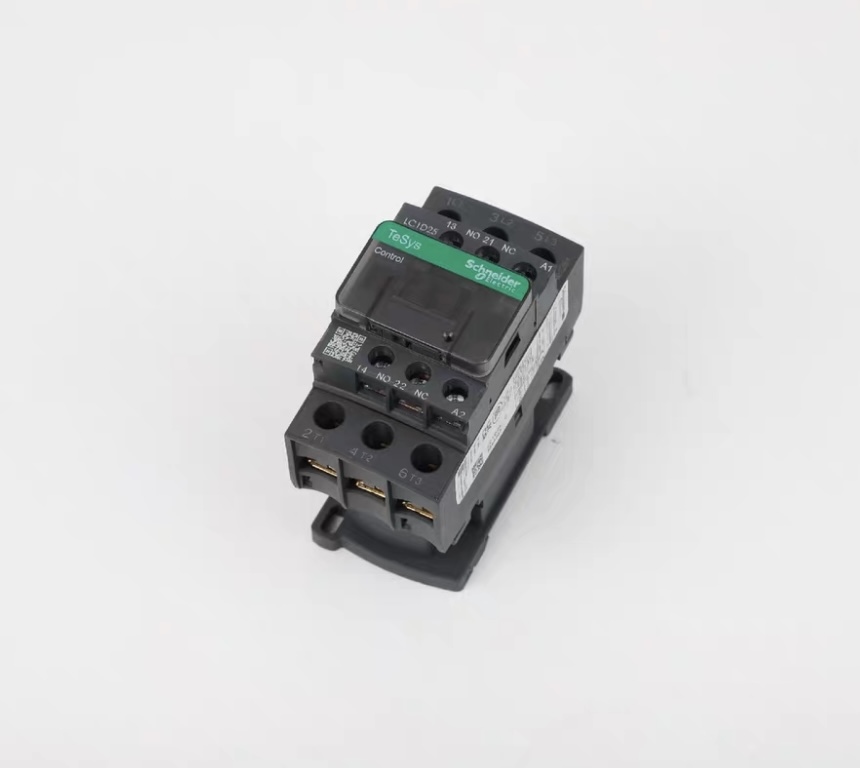


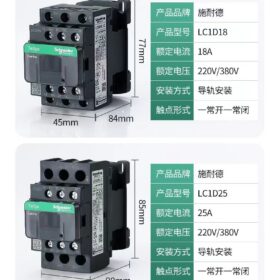
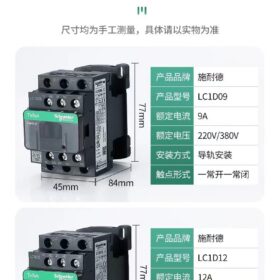
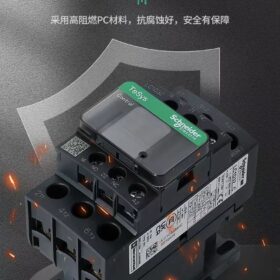
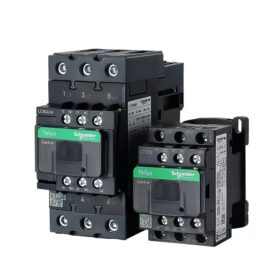
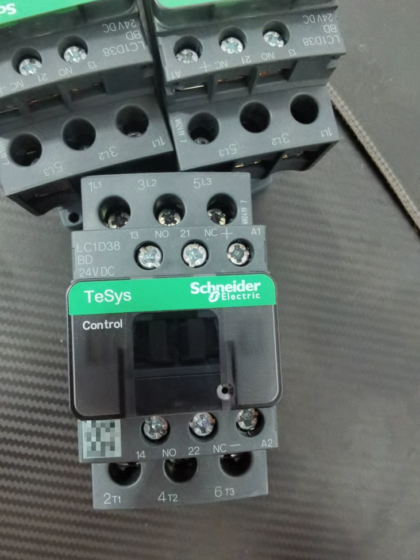
IL Contattore Schneider LC1D95 è un dispositivo comunemente utilizzato nel campo del controllo elettrico industriale. Di seguito vengono presentati i parametri di base, caratteristiche del prodotto, and application scope:
Parametri di baseSchneider BMH0702P17A2A
Corrente nominale
– Nella categoria di utilizzo AC-3, la corrente operativa nominale è 95A, e la corrente di riscaldamento convenzionale può raggiungere 125 A.
Tensione nominaleSchneider-MCCB-NSX250F-4P-250A
– Adatto per circuiti con corrente alternata di 50Hz o 60Hz. La tensione di isolamento nominale è 690 V, la tensione operativa nominale può raggiungere fino a 660 V, e la tensione di controllo della bobina solitamente ha più opzioni, such as AC 380V, 110V, ecc.
Contatti ausiliariPrezzo degli interruttori automatici Schneider
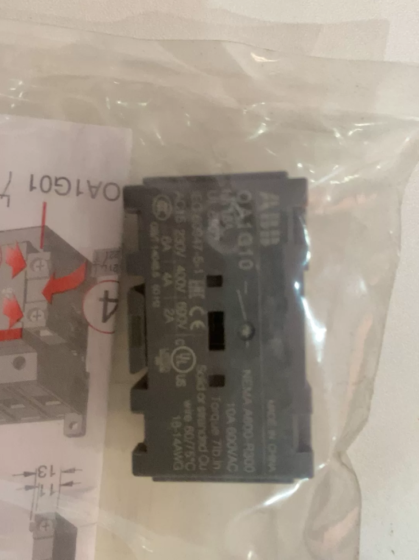
– Generally comes with 1 normalmente aperto (NO) E 1 normalmente chiuso (NC) contatto ausiliario, in grado di soddisfare le esigenze di diverse logiche di controllo. The number of auxiliary contacts can be increased by installing an auxiliary contact group, con una espansione massima di 6 contatti.
Caratteristiche del prodottoInterruttori automatici CC serie NB1-63DC di Chint Prezzo
Lunga durata
– Vita meccanica fino a 20 milioni di volte, e vita elettrica fino a 2 milioni di volte, consentendo un funzionamento stabile per lungo tempo, riducendo la frequenza di sostituzione, e riducendo i costi di manutenzione.
Forte adattabilitàPrezzo dei relè termici di sovraccarico serie Chint NXR
– Trattato con “TH” protezione, it can be used normally in humid and hot environments. Quando la tensione di controllo della bobina oscilla tra 70%-120% o Uc, it does not affect the normal operation of the product, mostrando una forte adattabilità della tensione.
Buona versatilitàPrezzo del dispositivo di protezione da sovratensione CHINT
– Dotato di bobina universale 50Hz-60Hz, it can adapt to power supply environments with different frequencies. Il prodotto è conforme a molteplici standard internazionali, such as IEC/EN 60947-4-1, GB14048.4, ecc., con forte versatilità e intercambiabilità.
Design modulare
– Moduli come contatti ausiliari, on/off delay contacts, and mechanical locks can be attached to the product body, facilitating users to combine them according to actual needs. It can also be easily combined into reversible contactors, star-delta starters, ecc., per soddisfare diverse esigenze di controllo.
Installazione conveniente
– Can be installed via panel mounting or DIN rail mounting. I terminali di cablaggio sono di tipo IP20 salvadita, with good safety, e supporta più metodi di cablaggio, such as screw connection, terminali a molla, Terminali Everlink, ecc.
Principio di funzionamento
The LC1D95 contactor is mainly composed of an electromagnetic system, a contact system, un sistema di estinzione dell'arco, ecc. When the coil of the electromagnetic system is energized, genera un campo magnetico, attirando l'armatura ad agire, changing the states of the main contacts and auxiliary contacts of the contact system, thereby realizing the switching on or off of the circuit. Quando i contatti interrompono il circuito, the arc extinguishing system ensures reliable extinguishing of the generated arc, riducendo i danni da arco ai contatti.
Ambito di applicazione
Controllo motorio
– Comunemente utilizzato per controllare vari tipi di motori, come i motori asincroni trifase, ecc., per ottenere l'avvio remoto, fermandosi, controllo della rotazione avanti e indietro dei motori. It can also be used in conjunction with thermal relays to provide overload protection for motors.
Sistemi di Automazione Industriale
– Nei campi delle linee di produzione di automazione industriale, attrezzature meccaniche, ecc., it can be used to control the on/off of various electrical equipment to realize the control and monitoring of automated production processes, come il controllo del funzionamento dei nastri trasportatori, l'apertura e la chiusura delle valvole, ecc.
Sistemi di distribuzione dell'energia
– Nei sistemi di distribuzione dell'energia, it can be used to switch on and off circuits to achieve power distribution and control. Per esempio, come componente di controllo principale nelle scatole di distribuzione e nei quadri, controlla e protegge il potere dei diversi rami.
Precauzioni
Note sulla selezione
– Quando si seleziona il modello, è necessario scegliere il modello e le specifiche del contattore appropriati in base alla corrente di carico effettiva, voltaggio, usage environment, e altri fattori per garantire che possa soddisfare le esigenze delle applicazioni pratiche.
Requisiti di installazione
– Prestare attenzione alla planarità e alla perpendicolarità della posizione di installazione per evitare vibrazioni o allentamenti del contattore durante il funzionamento. Allo stesso tempo, garantire un cablaggio stabile per evitare connessioni virtuali, che potrebbero causare problemi come riscaldamento o scarso contatto.
Manutenzione
– Ispezionare e sottoporre a manutenzione regolarmente il contattore, pulire la polvere e gli ossidi sulla superficie di contatto, e verificare lo stato di usura dei contatti. If severe wear is found, replace the contacts in a timely manner to ensure the performance and reliability of the contactor.
Working Principle of Schneider LC1D95 Contactor
The working principle of the Schneider LC1D95 contactor realizes the on/off control of the circuit and arc protection through the collaborative effect of the electromagnetic system, sistema di contatto, and arc extinguishing system. The details are as follows:
- Componenti principali
- Sistema elettromagnetico
– Includes the coil, nucleo di ferro (nucleo di ferro statico), and armature (nucleo mobile di ferro), serving as the power source of the contactor.
- Sistema di contatto
Contatti principali: Used to switch on or off the main circuit, Generalmente 3 pairs of normally open contacts, made of silver alloy with good electrical conductivity and wear resistance.
Contatti ausiliari: Used for control circuits (such as PLC signal feedback, controllo dell'interblocco), including NO/NC contacts (predefinito 1 NO + 1 NC, espandibile).
- Sistema di estinzione dell'arco
– Adopts a grid-type arc extinguishing structure composed of metal grids, used to quickly extinguish the arc generated when the contacts are disconnected.
- Analysis of the Working Process
1. When the Coil is Energized (Circuit On)
Electromagnetic Suction: After the coil is connected to the rated voltage (such as AC 380V, 110V, ecc.), an electromagnetic field is generated, and the static iron core attracts the armature.
Contact Action: The armature moves toward the static iron core against the counterforce of the spring, driving the main contacts and auxiliary contacts to act synchronously:
– The main contacts change from “aprire” A “Chiuso”, switching on the main circuit (such as the motor power supply circuit).
– The auxiliary NO contacts close, and the NC contacts open, realizing signal transmission in the control circuit (such as indicator light on, interlock logic triggering).
- When the Coil is De-energized (Circuit Off)
Electromagnetic Disappearance: Dopo che la bobina è stata diseccitata, il campo magnetico scompare, and the armature is released under the action of the return spring.
Contact Reset: The main contacts and auxiliary contacts return to their initial states:
– The main contacts change from “Chiuso” A “aprire”, cutting off the main circuit.
– The auxiliary contacts reset (NESSUN contatto aperto, NC contacts close), and the control circuit signal is interrupted.
III. Principio di estinzione dell'arco
When the main contacts break a large current (such as during motor start/stop), a high-temperature arc is generated between the contacts. The arc extinguishing system extinguishes the arc through the following mechanisms:
- Arc Entry into the Grid: The arc enters the gap of the metal grid under the action of electromagnetic force and thermal airflow.
- Arc Segmentation and Cooling: The grid divides the long arc into multiple short arcs, while absorbing the arc heat, rapidly reducing the arc temperature, accelerating ion recombination, and finally extinguishing the arc to protect the contacts from ablation.
- Key Characteristics and Working Logic
Adattabilità della tensione: When the coil control voltage fluctuates within the range of 70%-120% del valore nominale, it can still reliably suck in and release, avoiding contact jitter or misoperation caused by voltage fluctuations.
Vita meccanica ed elettrica: The mechanical life reaches 20 milioni di volte (armature suction/release cycles), and the electrical life reaches 2 milioni di volte (main contact on/off of large current), relying on the stability of the electromagnetic system and the efficiency of the arc extinguishing system.
Espansione modulare: By adding auxiliary contacts, moduli di ritardo, ecc., it can flexibly adapt to complex control logics (come l'avviamento stella-triangolo, controllo reversibile), but the core of the working principle still relies on electromagnetic-driven contact action.
Conclusione
The Schneider LC1D95 contactor is essentially an “electromagnetically driven switching element”. Through the conversion of electrical-magnetic-mechanical actions, it realizes the on/off control of the main circuit. Allo stesso tempo, it uses an arc extinguishing system to ensure safety when breaking large currents. Its design balances reliability, durabilità, and expandability in industrial scenarios.




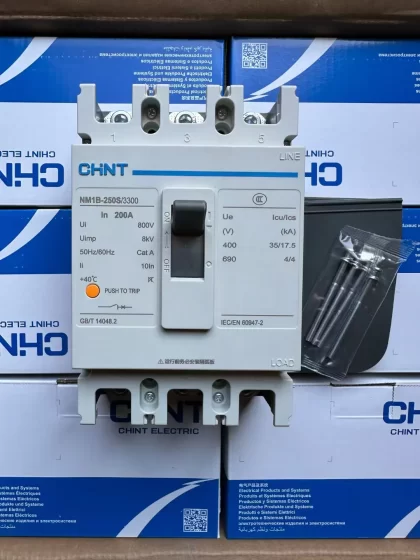
NH42-63-318x560.png "Commutatori automatici di tipo PC CHINT (ATS)NH42-63/4SZ")