Contactor,circuit breaker,sensor,Encoder,PLC,Converter




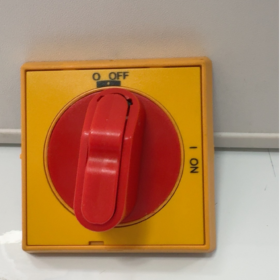
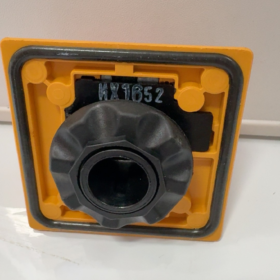
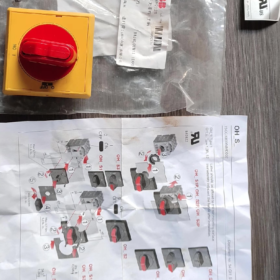
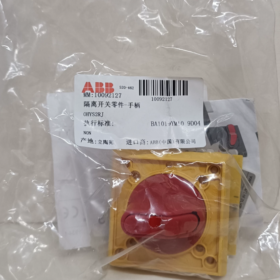

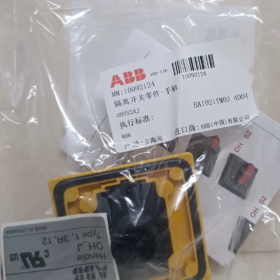
Product category: Disconnector auxiliary contact module (OHYS series), compatible with ABB OT-series disconnectors. OHYS2AJ is an auxiliary contact accessory with 2 Normally-Open (NO) contacts.
Model Code Explanation
OHYS: Series code for ABB disconnector auxiliary contacts
2: Number of contact pairs: 2 pairs
A: Contact form: NO (Normally-Open)
J: Mounting type, side-mounted, fitted onto the side of the disconnector body (not front-fitted)
✅ OHYS2AJ = 2NO side-mounted auxiliary contact
Key Specifications
- Contact configuration: 2 × Normally-Open (NO), no Normally-Closed (NC) contacts
- Compatible main device: ABB OT disconnectors OT16…OT125 series
- Mounting position: Right-hand side of the switch. Maximum 2 OHYS modules per disconnector.
- Rated electrical ratings
AC-15: 230V / 6A; 400V / 3A
DC-13: 24V / 3A; 110V / 0.6A; 220V /0.3A
- Application purpose: Position feedback, PLC signal acquisition, cabinet door interlock and indication, circuit status signal output
- Mechanical service life: ≥ 100 000 operations
- Notice: Not for main power circuit; for signal auxiliary circuit only
Confusable Models in the Same Series
| Model | Contact Configuration | Mounting |
| OHYS2AJ | 2NO | Side‑mounted |
| OHYS2BJ | 2NC | Side‑mounted |
| OHYS11AJ | 1NO+1NC | Side‑mounted |
| OHYS2AU | 2NO | Front‑mounted |
Installation Guidelines
- Snap-fit into the side slot of OT16-OT125 disconnector; tool-free clip-on installation.
- Auxiliary contact status synchronizes strictly with switch ON/OFF positions.
- Maximum 2 side-mounted OHYS modules per disconnector. For more signals, use front-mounted OHYSxxAU.
Domestic Replacement References
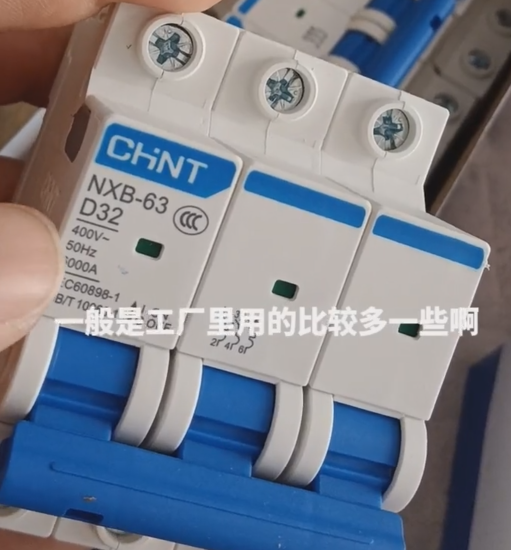
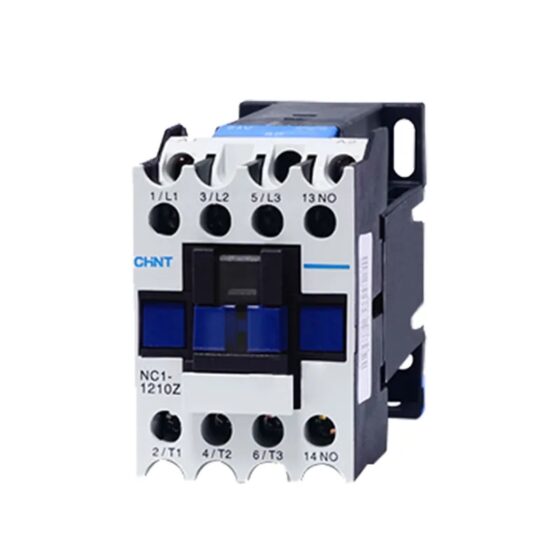
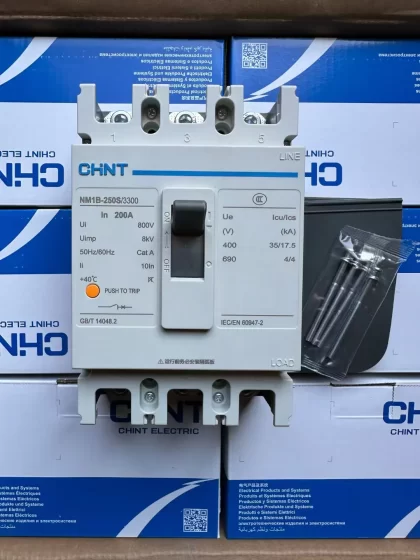
Chint: NH42-AH 2NO side-mounted auxiliary contact
Delixi: HGL compatible side-mounted 2NO auxiliary contact
Replacement note: Verify mounting dimensions and travel matching; prioritize checking the disconnector base slot geometry.
Common Application Scenarios
Disconnector position feedback in power cabinets, motor cabinet power-OFF status upload to PLC, fire-linkage signals, cabinet door indicator circuits.
Main Application Scenarios of ABB OHYS2AJ (2NO Side-Mounted Auxiliary Contact)
Compatible with ABB OT16-OT125 disconnectors. 2-channel passive dry contacts for signal circuits only; do not connect to main power circuits. Mechanically follows the ON/OFF action of the disconnector.
- PLC / DCS Remote Status Acquisition (Most Common)
- Upload main-disconnector status in low-voltage cabinets to PLC: When the disconnector closes, OHYS2AJ contacts close and send a 24 V signal to DI modules; contacts open when disconnector opens to report power-OFF status.
- Maintenance switch signal for motor control cabinets: When local disconnector is switched OFF, PLC recognizes maintenance status and blocks motor start-up to achieve maintenance safety interlock.
- Centralized monitoring of multi-circuit power positions for complete plants, assembly lines and MCC (Motor Control Center).
- Local Indicator Light Circuits
- Cabinet-internal / door-mounted power-ON indicator: Contacts conduct when disconnector closes to light “Power ON” lamp; lamp turns off when disconnector opens.
- Dual independent indication: Two isolated NO contacts can drive cabinet-door indicator and internal signal separately.
- Safety Interlock Logic
- Cabinet-door interlock: Output signal when disconnector is closed to prevent opening live cabinet doors (electromagnetic lock circuit); cabinet unlocks when disconnector opens.
- Fire-fighting linkage: Fire-alarm system reads disconnector position for power-cut-off logic validation.
- Equipment interlock: Mutual power interlock between two devices; closing of one disconnector inhibits energization of the other.
- Typical Industry Applications
- Machine tools, packaging machinery, conveyor systems: Main-power disconnector provides power-state feedback to prevent unintended start-up during maintenance.
- Low-voltage switchgear, MCC cabinets: Disconnector position signals fed to SCADA monitoring back-end.
- PV combiner boxes, energy-storage cabinets: Disconnector position signals sent to inverter for protection logic evaluation.
- HVAC, water-pump & fan control cabinets: Maintenance disconnector feeds repair-mode status to control system.
- Port, hoisting and construction-equipment electrical cabinets: Safety-switch position feedback for on-site servicing.
- Design & Selection Notes
- OHYS2AJ provides 2 NO contacts only, no NC contacts. For simultaneous ONand OFF-state feedback select `OHYS11AJ` (1NO+1NC).
- Maximum 2 OHYSxxJ side-mounted modules per OT disconnector. Use front-mounted OHYSxxAU for extra signal channels.
- Low contact rating: AC-15: 230V/6A, DC-13:24V/3A; signal-only, strictly prohibited for main circuits.
- Passive dry-contact output; external 24 V power supply required on PLC side.
- Unsuitable Use-Cases
Fault / alarm signal generation (module only reflects mechanical position; cannot detect overload or short-circuit).
Simultaneous opposite ON/OFF signal outputs (no NC contacts available).
High-current load circuits.
Engineering Application Cases for ABB OT Disconnector OHYS-Series Auxiliary Contacts
Covered models: OHYS2AJ (2NO side-mounted), OHYS11AJ (1NO+1NC side-mounted), OHYS2AU (2NO front-mounted). All are passive dry-contact signal feedback accessories compatible with OT16-OT125 disconnectors.
Case 1: MCC Motor Control Center Cabinet (Factory LV Distribution Room)
Configuration: OT63 disconnector + OHYS2AJ (2NO side-mounted auxiliary contact)
Circuit: Disconnector serves as maintenance disconnect point for individual motor feeder circuit.
Wiring: One NO channel to PLC-DI for disconnector ON-status upload; second NO channel to cabinet-door “Power ON” indicator lamp.
Logic:
- When disconnector is opened, PLC receives signal and locks motor in maintenance inhibit state.
- When closed, indicator lamp illuminates and motor start-up is permitted by PLC.
Design consideration: Only ON-position feedback required; use OHYS2AJ. Select OHYS11AJ if both ON and OFF status must be reported.
Site benefit: Side-mounting saves front-of-cabinet space; clip-on fast installation for high-density MCC cabinets.
Case 2: Cabinet-Door Electromagnetic-Lock Safety Interlock (Machine-Tools / Assembly Lines)
Configuration: OT100 disconnector + OHYS11AJ (1NO+1NC)
Purpose: Main-power disconnector implements live-chamber door-opening prohibition interlock.
Wiring: NO contact drives electromagnetic-lock coil. When disconnector closes, NO closes and energizes lock to secure cabinet door against opening under voltage; disconnector opens → NO opens → lock de-energizes for service access.
⚠️ OHYS2AJ cannot be used here: it has only NO contacts and cannot capture OFF-state. Use OHYS11AJ (1NO+1NC).
Safety value: Prevents personnel exposure to live parts; complies with machinery-safety requirements.
Case 3: Commercial & Industrial PV Grid-Tie Cabinet
Configuration: OT80 disconnector + OHYS2AJ
Scenario: AC output-side disconnector of grid-tied inverter.
Wiring: Two NO dry-contact channels: one to inverter controller for external disconnector ON confirmation; second channel to SCADA for remote disconnector-status visualization.
Logic: Disconnector open → inverter receives signal and blocks grid-tied output; back-end SCADA updates icon status for remote operational awareness.
Selection rationale: Only closed-position confirmation needed; OHYS2AJ offers cost advantage.
Case 4: Water-Pump & Fan Control Cabinet (HVAC, Waste-Water Plants)
Configuration: OT40 disconnector + OHYS2AJ
Application: Local maintenance disconnector for circulating pumps and exhaust fans.
Signal assignment:
- First NO channel to PLC: power-ON confirmation enabling pump operation.
- Second NO channel to DCS for remote status transmission.
Process logic: Operator opens disconnector for maintenance; PLC inhibits both local and remote pump start-up to avoid accidental actuation.
Case 5: Multi-Signal Expansion on Single Disconnector
Configuration: OT125 disconnector fitted with two OHYS2AJ side-mounted modules
Hardware limit: Maximum 2 side-mounted OHYSxxJ modules per OT disconnector.
Four NO-contact allocation:
- 2 channels for PLC input;
- 1 channel for local indicator lamp;
- 1 channel for third-party fire-protection monitoring system.
When side slots are fully occupied, add front-mounted OHYSxxAU to expand I/O capacity combining side + front accessories.
Case 6: Energy-Storage PCS Grid-Tie Cabinet
Configuration: OT100 disconnector + OHYS11AJ
Requirement: EMS energy-management system needs both ONand OFF-position information.
NO signal: PCS grid-tied operation enable.
NC signal: Reports maintenance OFF-state; EMS blocks charge-discharge functions.
Important: Safety logic for energy-storage requires dual-state feedback; OHYS2AJ is not suitable.
Quick Engineering Selection Reference
| Application Requirement | Recommended Model | Remarks |
| 2‑channel ON‑position feedback only | OHYS2AJ (2NO side‑mounted) | Cost‑effective; widely used in MCC and PV systems |
| Need both ON and OFF status signals | OHYS11AJ (1NO+1NC side‑mounted) | Preferred for door interlocks and energy‑safety circuits |
| Side slots exhausted; add auxiliary contacts | OHYS2AU (2NO front‑mounted) | Front installation, no side‑slot consumption |
Common Engineering Pitfalls
- OHYS2AJ has no NC contacts. Do not misapply for cabinet-door interlock or energy-storage safety circuits.
- Auxiliary contacts are passive dry-contacts; external 24 V supply must be provided on PLC side; no power source inside module.
- Limited contact rating AC-15:230V/6A; strictly for signal circuits only, never main power circuits.
- OHYS2AJ is incompatible with OT160 and larger disconnectors; select dedicated accessories for high-frame OT devices.
Operating Principle of ABB OHYS-Series Auxiliary Contacts (based on OHYS2AJ)
OHYS are mechanical passive auxiliary contacts. No coil and no internal power supply. Operate purely by mechanical coupling with OT disconnector shaft; output dry-contact signals representing mechanical handle position only. They do NOT sense current, faults or electric arcs.
- Mechanical Coupling Principle
- Rotation of OT disconnector operating handle drives main shaft through 90° rotation to close / open main-power contacts.
- OHYS2AJ clips onto disconnector side; internal drive lever engages shaft cam profile and rotates synchronously with main shaft.
- Main-shaft rotation actuates OHYS internal lever, deflecting miniature silver-contact spring assemblies to switch contact states.
- Galvanic isolation between auxiliary-contact circuit and main power circuit: only mechanical linkage exists, no electrical connection.
Timing characteristic: Auxiliary-contact state changes only after main power contacts complete mechanical travel. Prevents false “closed” signals before main contacts are fully seated.
- Contact Action Logic for OHYS2AJ (2NO)
Two independent Normally-Open dry-contact channels inside OHYS2AJ:
Disconnector OFF: Lever unloaded; both NO contacts remain open; no continuity across terminals.
Disconnector ON: Shaft actuates internal lever compressing contact springs; both NO contacts close simultaneously establishing passive continuity.
⚠️ OHYS2AJ contains no NC contacts. Select OHYS11AJ (1NO+1NC) if OFF-position closed signal is required.
Action Comparison for OHYS11AJ (1NO+1NC)
ON position: NO closes, NC opens
OFF position: NO opens, NC closes
Complementary contact states for simultaneous ONand OFF-position reporting.
- Electrical Principle (Passive Dry-Contact)
The module itself is a mechanically-actuated switch element without power supply:
- External secondary power source (DC24V / AC230V) is wired via PLC-DI, indicator or solenoid load to OHYS terminals.
- Disconnector closes → contacts conduct → circuit energized → external device receives ON signal.
- Disconnector opens → contacts interrupt → circuit de-energized → signal removed.
Contact capacity limited: AC-15 230V/6A; DC-13 24V/3A. For secondary signal circuits only; forbidden for main power paths.
- Key Technical Characteristics
- Pure mechanical follow-up: Actuation driven by manual handle movement; auxiliary contacts switch whenever handle reaches mechanical ON/OFF position.
- Represents mechanical position only: If main contacts are burned or have poor contact, auxiliary contacts still follow handle position. Cannot verify actual presence of voltage on main circuit.
- Multi-module expansion: Up to two side-mounted OHYSxxJ units; additional channels by stacking front-mounted OHYSxxAU.
- Galvanic separation: Auxiliary circuits are insulated from main power circuit, avoiding cross-coupling between high-power and control systems.
- Principle-Related Engineering Misconceptions
- ❌ Myth: Auxiliary contacts can detect live voltage.
✅ Reality: Reacts only to handle position; reports “closed” even if upstream main circuit is de-energized.
- ❌ Myth: OHYS2AJ can deliver both ON and OFF opposing signals.
✅ Reality: Two NO channels open simultaneously at OFF state; use NC-equipped variant for OFF-state signal.
- ❌ Myth: Auxiliary contacts can directly drive high-power loads.
✅ Reality: Low-power signal contacts; intermediate relay required for heavy loads.
Simple Analogy
Comparable to a magnetic door-contact switch: Door closed (disconnector ON) → switch conducts; door open (disconnector OFF) → switch opens. It detects mechanical position, not whether there is voltage behind the door.


NH42-63-318x560.png "CHINT PC-type automatic transfer switches (ATS)NH42-63/4SZ")