Contactor,circuit breaker,sensor,Encoder,PLC,Converter

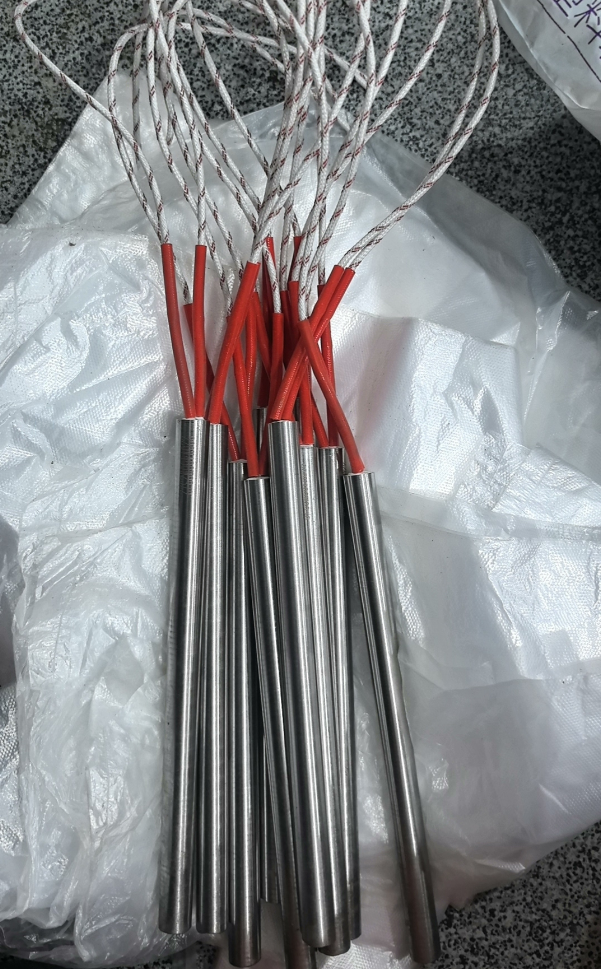

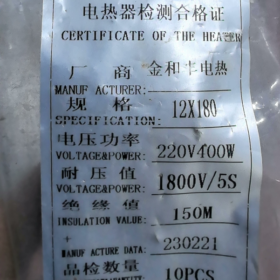
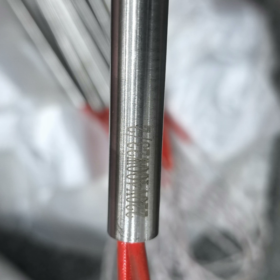
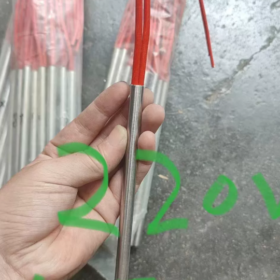
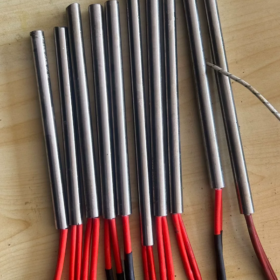
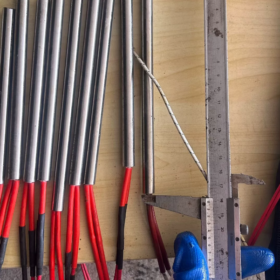
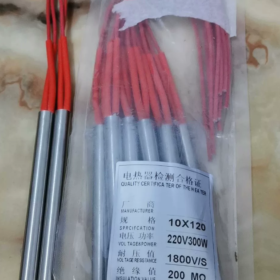
When ordering customized single-end cartridge heaters for molds, please provide all the following parameters in one go, so we can offer an accurate quotation.
- Mandatory Core Parameters
- Tube Diameter (Outer Diameter)
e.g.: 6mm / 8mm / 10mm / 12mm / 16mm / 20mm, etc.
- Total Length
Overall length including heating section + cold section (Unit: mm)
- Effective Heating Length
Length of the actual heating zone; the cold end does not generate heat.
- Operating Voltage
Common options: 220V / 380V / 110V / 24V / 36V
- Rated Power
e.g.: 300W / 500W / 800W / 1KW / 2KW, etc.
If power is unknown, provide: heating medium, target temperature, and heating-up time for factory calculation.
- Lead Wire Type / Lead Wire Length
Direct lead wire: silicone wire / Teflon wire, specify length
With terminal posts / junction box
Single-end wire outlet direction
- Sheath Material
Common options:
Stainless Steel 304 (standard molds, ≤450℃)
Stainless Steel 321 (medium-high temperature, ≤600℃)
Stainless Steel 310S (high-temperature molds, ≤800℃)
Incoloy (ultra-high temperature, corrosion resistant)
- Common Custom Structural Parameters (Optional)
- With or Without Retaining Plate / Locating Plate
Provide diameter, thickness and position of the plate.
- With or Without Thread
e.g.: M8 / M10 / M12 / M14 / M16 / M20
Provide thread length and position.
- Sealing Type
Ordinary adhesive sealing
High-temperature sealing
Waterproof / moisture-proof sealing
- Application Environment
Mold heating (plastic mold / die-casting mold)
Dry heating
Liquid heating
Temperature requirement: maximum operating temperature
- Tolerance Requirements
Diameter tolerance, length tolerance, and fitting requirements.
III. Optional Parameters for Extended Service Life
Internal heating wire material (NiCr 2080 / FeCrAl)
Magnesium oxide grade (standard / high-temperature high-density)
With or without tube reduction and annealing treatment
With or without thermocouple hole (can be built-in K-type thermocouple)
For mold applications, the simplest standard specification format is as follows:
> Single-end cartridge heater, diameter Φ10mm, total length 200mm, heating length 150mm, 220V 600W, 304 material, 150mm silicone lead wire, with retaining plate.
Need me to generate a ready-to-send standard parameter text based on your mold dimensions?
Single-End Cartridge Heater (Single-End Heater / Cartridge Heater)
A single-end mold cartridge heater is a tubular electric heating element with wiring only at one end, mainly used for efficient heating in confined spaces or complex molds. It is widely applied in injection molding, die-casting, plastic molding and other industrial fields.
- Core Structure & Working Principle
| Component | Material & Function |
| Metal Sheath | SS304 (≤500℃), SS321 (≤600℃), SS310S (≤800℃), provides mechanical protection and heat conduction |
| Heating Element | NiCr alloy (2080) or FeCrAl alloy wire, generates Joule heat when energized |
| Insulation Filling | High-purity magnesium oxide powder (density ≥2.8g/cm³), insulation + high-efficiency heat transfer, compacted by tube reduction |
| Lead Wire | High-temperature resistant wire (silicone / Teflon), single-end outlet for easy wiring and fixing |
Working Principle: Electric current passes through the resistance wire to generate heat, which is transferred through magnesium oxide powder to the metal sheath and then to the mold, achieving precise temperature control.
- Key Features & Advantages
- Small size, high power density: Power per unit area up to 2.5–50W/cm², ideal for rapid heating
- High thermal efficiency (≥90%): Concentrated heating, fast thermal response, steep temperature rise curve
- Easy installation: Single-end wiring design, insertable into mold holes, adaptable to complex structures
- High durability: Fully sealed structure, shockproof and corrosion-resistant, service life up to 5,000–10,000 hours
- Flexible customization: Customizable diameter, length, power, shape (U-type / threaded / flanged)
III. Specification Table
| Parameter | Common Specifications | Notes |
| Diameter (D) | Micro: 2–5mm | Commonly 6mm, 8mm, 10mm, 12mm |
| Standard: 6–25mm | ||
| Imperial: 1/4″–1″ | ||
| Length (L) | 20–2000mm | Customizable, including heating and cold sections |
| Voltage | 12V / 24V / 36V / 110V / 220V / 380V | 220V for small/medium equipment, 380V for large equipment |
| Power | 50W–10kW | Calculated by surface load: W=π×D×L×w/cm² |
| Surface Load | Standard: 1–3W/cm² | 1–3W/cm² for plastic molds, 5–15W/cm² for metal molds |
| High-temperature: 3–6W/cm² | ||
| Special: 6–15W/cm² | ||
| Operating Temp | SS304: ≤500℃ | Special materials available for over 1000℃ |
| SS321: ≤600℃ | ||
| SS310S: ≤800℃ |
- Applications
- Plastic Molds: Injection / blow molding / extrusion molds, 200–400℃, improves molding quality
- Die-Casting Molds: Zinc / aluminum / magnesium alloy die-casting, requires rapid heating and high-temperature resistance
- Hot Runner Systems: Ensures uniform melt flow, increases production efficiency
- Other Industries: Medical equipment, laboratory instruments, chemical reactors, sealing machinery, etc.
- Selection & Power Calculation Guide
- Core Power Formula
- P = (M × cp × ΔT) / t + Qloss
M: Mold weight (kg)
cp: Specific heat of steel (≈470 J/kg·K)
ΔT: Temperature difference (℃)
t: Heating time (s)
Qloss: Heat loss (≈10–30% of total power)
- Surface Load Reference
| Heating Medium | Recommended Surface Load | Notes |
| Dry heating in air | 0.5–1.5W/cm³ | Ensure sufficient heat dissipation |
| Liquid heating | 2–4W/cm³ | Flow rate affects heat dissipation |
| Metal molds | 5–15W/cm² | Higher when contact is excellent |
| Plastic molds | 1–3W/cm² | Avoid local overheating and deformation |
- Dimension Matching Rules
Fit between heater and mold hole: H7/g6 or H7/f7 for tight contact
Effective heating length must cover the heating zone; cold end extends outside for wiring
Reserve 0.1–0.2mm for thermal expansion to prevent jamming
- Installation & Maintenance
Installation Steps
- Ensure verticality and smoothness of mold holes to avoid scratching the heater surface
- Clean holes and apply thermal grease / thermal adhesive to improve efficiency by 30–50%
- Insert gently, avoid heavy knocking
- Insulate wiring terminals properly, keep away from high-temperature areas
- Use with temperature controller, recommended fluctuation ±1℃
Maintenance & Replacement
- Operate only after cooling to room temperature to prevent burns
- Regularly clean carbon deposits / scale with fine sandpaper
- Inspect lead wire insulation, replace if damaged
- Replace heater if uneven heating or power drop occurs
VII. Common Issues & Solutions
| Problem | Cause | Solution |
| Heater burnout | Excess power density / poor heat dissipation | Reduce surface load / improve heat transfer / increase cooling |
| Uneven heating | Poor contact / improper hole design | Reinstall with thermal grease / optimize hole layout |
| Electric leakage | MgO damp / insulation damage | Replace heater / enhance sealing / avoid moisture |
| Short service life | Frequent on/off / large temperature fluctuation | Optimize temperature control / use high-temperature materials |
Single-end cartridge heaters are the preferred heating solution for modern industrial molds due to their high power density, fast response and flexible installation.
Selection should consider mold material, target temperature, heating time, accurate power and surface load calculation. Proper installation and temperature control greatly improve productivity and product quality.
Need me to calculate total required power, recommend diameter / length / quantity and surface load based on your mold material, weight, target temperature and heating time? Just provide these parameters.


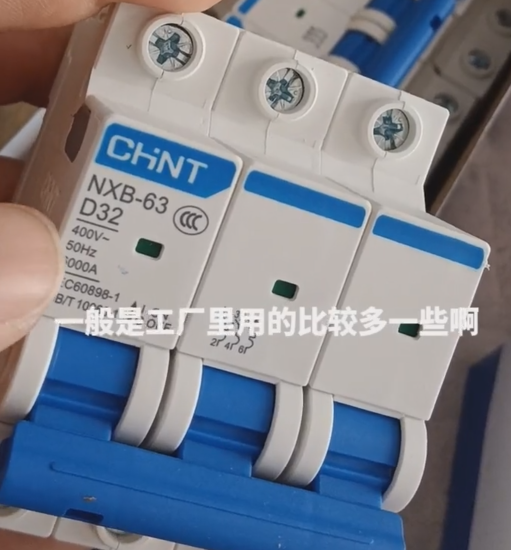
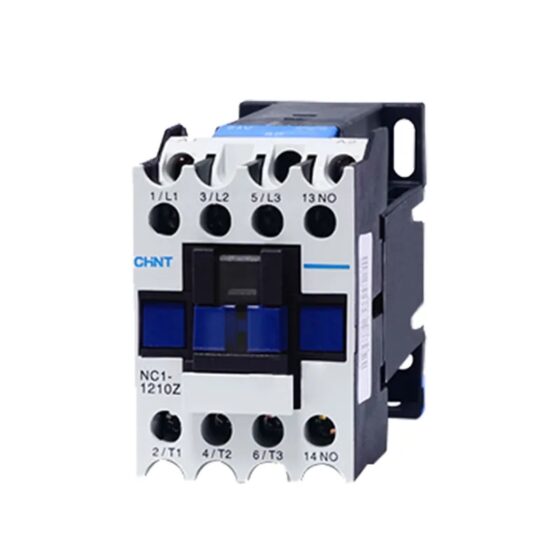
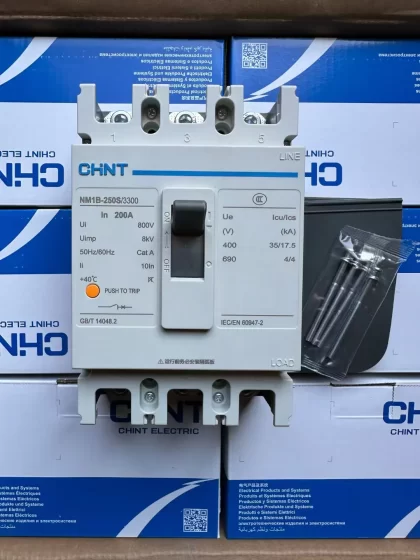
NH42-63-318x560.png "CHINT PC-type automatic transfer switches (ATS)NH42-63/4SZ")