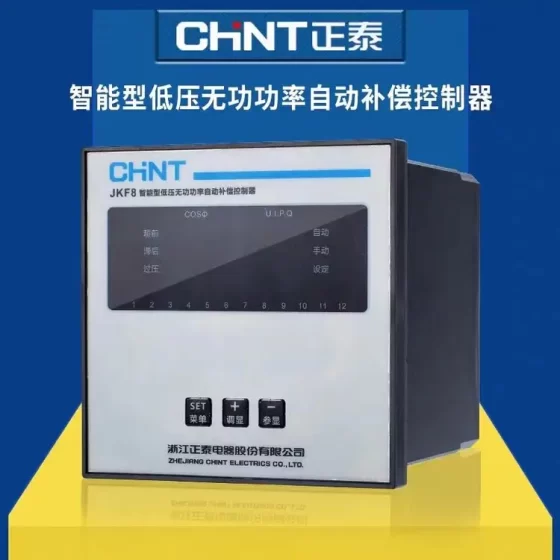
Contactor,circuit breaker,sensor,Encoder,PLC,Converter





Positioning: Modicon M221 series compact integrated PLC, 24VDC power supply, 40-point I/O, PNP transistor output, built-in Ethernet port
✅ Model Code Definition
TM221: Modicon M221 series compact PLC
C: Integrated controller body
E: Built-in Ethernet
40: Total 40 I/O points
T: Transistor output (PNP type, suitable for servo/stepper drive)
📋 Core I/O Specifications
Power supply: DC24V (20.4~28.8V)
Digital Input: 24 points DC24V, source/sink compatible; 4 high-speed inputs
Digital Output: 16 points PNP transistor DC24V, max. 0.5A per channel; 2 high-speed pulse outputs (for stepper/servo drive)
Built-in analog input: 2AI 0~10V, 10-bit resolution
Total I/O: 40 on-board I/O points, expandable with TM3 series modules
Local expansion: up to 7 TM3 modules
Remote expansion: up to 14 TM3 modules
📶 Communication Interfaces
- Ethernet Port: Modbus TCP, connectable to HMI, SCADA, variable frequency drives
- Serial port RS232/RS485: Modbus RTU
- Mini-USB: Program download & debugging
- SD card slot: Program backup, firmware upgrade, data logging
- On-board Run/Stop toggle switch; BR2032 battery for retentive registers
⚙️ Electrical & Mechanical Data
No-load power consumption: 4.9W; Max. 17W with full expansion modules
Expansion bus power supply: 5V/0.52A; 24V/0.3A
Mounting: DIN rail mount; Removable screw terminals
Programming software: EcoStruxure Machine Expert Basic (formerly SoMachine Basic), compliant with IEC61131-3 (LD, ST, FBD, etc.)
🎯 Typical Applications
Small standalone automation: packaging machinery, conveyor lines, injection molding auxiliary equipment, small machine tools, HVAC control cabinets, applications requiring pulse servo control plus Ethernet networking.
Selection note: sibling model TM221CE40R is relay output, no high-speed pulse support, for ordinary contactor loads only.
🧩 Accessories & Replacement Options
- Expansion modules: TM3DI, TM3DO, TM3AI, TM3AQ digital/analog modules
- Spare parts: BR2032 battery, SD card, TM3 terminal blocks
- Performance upgrade alternative: M241 (higher performance, more communication interfaces); Same-series replacement: TM221CE40R (relay version)
- Legacy model replacement: Replaces TWIDO series TWDLCAE40DRF
⚠️ General Notes & Troubleshooting
- PNP transistor output: Only for DC24V loads, AC loads are prohibited; Short circuit on output points will easily burn the channel
- High-speed pulse: Only 2 on-board high-speed outputs, limited pulse frequency. External pulse module recommended for high-power servo
- Ethernet: Early firmware versions have occasional disconnection issues; firmware upgrade recommended; shielded cable preferred
- Battery: Only retains retentive registers, program stored in Flash, program will not be lost after power failure; Flat battery only causes loss of retentive variables
- Terminals: Power off before disassembly; Shielded cable for analog input to reduce interference
📌 Selection Comparison Table
| Model | I/O | Output Type | Ethernet | Pulse Output |
| TM221CE40T | 40 | PNP Transistor | Yes | 2-channel high-speed pulse |
| TM221CE40R | 40 | Relay | Yes | None |
EcoStruxure Machine Expert Basic (formerly SoMachine Basic) Program Migration Guidelines
Applicable to TM221CE40T. Four migration scenarios: ① Old SoMachine Basic project → EcoStruxure Machine Expert Basic; ② Legacy Twido program → M221; ③ Program clone/download between identical M221 PLCs; ④ Cross-hardware M221 migration (e.g. TM221CE40R to TM221CE40T)
- Software Version Migration (.smbp Project Upgrade)
- File Compatibility: EcoStruxure Machine Expert Basic can directly open `.smbp` projects from SoMachine Basic with automatic conversion, no manual script conversion required. Conversion report will be generated after opening; prioritize warnings and errors in the report.
- Version Recommendation
Upgrade old SoMachine Basic to v1.6 SP2 or higher before migration. Projects from older versions risk loss of variables and communication macros during conversion.
Software version ≥ firmware version. PLC firmware must be upgraded to match software version, otherwise download will report firmware incompatibility.
- Post-conversion Checklist
Variable table: Check retentive variables, system words %SW, system bits %S mapping; some legacy macro variables will be renamed.
Communication macros: Modbus RTU/TCP macros, some legacy macros will be replaced by new library components, parameters need re-verification.
Program editor: LD ladder and ST structured text are mostly lossless; a small number of legacy FBD blocks will trigger warnings.
- Migrate Legacy Twido (TWIDO) Program to TM221CE40T (Key Section)
Twido (TWDLCAE40DRF) migration workflow: TwidoSuite → export `.xpr/.xar/.twd` → open & import directly in EcoStruxure Machine Expert Basic
⚠️ Twido program cannot be downloaded directly into M221; software conversion is mandatory.
Frequent Pitfalls for Twido Migration
- I/O address mapping difference: Twido and M221 use different I/O address systems. I/O allocation must be fully rechecked after conversion, especially analog channels.
- Serial communication: Twido serial port parameters and Modbus timing differ from M221 RS485/RS232. Baud rate, parity and slave address need reconfiguration; communication macros require manual correction, imported macros cannot run directly.
- High-speed Pulse (PTO): Twido pulse instructions are not fully compatible with M221 PTO function blocks, this is the most critical point for TM221CE40T migration:
M221 CPU only has 2 on-board PTO pulse outputs;
Pulse frequency, acceleration/deceleration, homing and limit logic must be retested after migration; legacy Twido pulse macros will be replaced and some parameters lost.
- System Words %SW: Twido system registers have different definitions compared with M221 %SW, do not reuse directly.
- Timer/Counter: Difference in resolution and refresh cycle; power-down and retentive behavior need validation.
- M221 Intra-platform Migration (Same Model / Different M221 CPU)
Scenario A: Download Project from PC to TM221CE40T
- Hardware configuration: Controller model in project must be set to `TM221CE40T`; If original project is for TM221CE40R, switching model will trigger PTO block errors (relay CPU has no high-speed output hardware). Either remove pulse logic or change target hardware.
- Expansion modules: TM3 module configuration, module sequence and model must match physical hardware on site, or PLC will report hardware mismatch fault.
- Download channels: MiniUSB, Ethernet, SD card image download.
Upload restriction: If read protection is enabled on original project, program upload from PLC is blocked; only SD card recovery works.
Scenario B: SD Card Clone Migration (Batch Program Copy including Firmware)
For batch replication on multiple identical TM221CE40T units
- SD card requirement: FAT32 formatted, card name must NOT be DATA (DATA reserved for data logging).
- Two operation modes:
Mode1: Power PLC to STOP state, insert SD card; PLC automatically clones program + firmware to SD card; cloning is slow under RUN status.
Mode2: Create Controller Image in software on PC, write image file to SD card, firmware can be bundled optionally.
- SD card restore procedure: Power off and insert card → power on for automatic flashing → SD LED off → power off, remove card and restart PLC.
Important: SD clone erases existing program in target PLC; fault logs and real-time variables will NOT be cloned. Password-protected programs cannot be cloned.
- PTO Motion Program Migration (TM221CE40T Exclusive Focus)
2 on-board high-speed pulses are core feature of this transistor model; migration errors will lead to servo failure:
- After migration of legacy pulse logic, verify: Pulse output addresses %PTO0, %PTO1; pulse mode (Pulse+Direction / Dual-pulse).
- Pulse parameters: Max frequency, acceleration/deceleration, soft limit, home signal; parameters are prone to missing after migration and must be reconfirmed.
- Hardware: PNP output, AC loads forbidden on external wiring; short circuit prohibited on pulse terminals.
- Limitation: M221 on-board PTO only supports point-to-point positioning, no multi-axis interpolation. If legacy logic contains multi-axis interpolation, M221 cannot fulfill it; M241 is required instead.
- Communication Program Migration (Modbus TCP / Modbus RTU)
- Modbus TCP: M221 built-in Ethernet, IP address, subnet mask and gateway are stored independently in PLC hardware configuration, not in project variables. Downloading project will overwrite PLC IP with project configured value, site original IP will be lost.
- Modbus RTU (RS485):
Serial terminals and hardware flow control differ from Twido;
For Modbus read/write blocks imported from legacy project, increase timeout and inter-frame gap to mitigate communication loss caused by interference.
- HMI integration: Export `.smpb` variable file for Vijeo Designer variable linking; Watch Big/Little-Endian order for double words, this is the most common issue for HMI/SCADA communication.
- Variable & Power-down Retention Migration
- Retentive variables: Program stored in Flash, no loss after power cycle; retentive registers maintained by on-board BR2032 battery. Dead battery only loses retentive variables, program remains intact.
- Pre-migration: Export variable table and compare after migration; confirm which variables are marked retentive.
- Application protection: Read/write protection in project properties. Once read protection enabled, program upload from PLC is impossible; SD card image recovery only. Blank password locks software connection, SD card flashing required to clear protection.
- Standard Migration Test Procedure
- Compile: Zero errors, resolve warnings (communication, PTO, system word warnings prioritized).
- Offline simulation: Run logic in EcoStruxure Machine Expert Basic built-in simulator first.
- Before hardware download: Switch PLC to STOP; backup original PLC program (SD clone preferred).
- Download: After download, verify hardware configuration, confirm all TM3 modules are recognized normally.
- Stepwise test: I/O point test → Modbus communication → PTO pulse/servo positioning → Power-down retention test.
- Long-term stability: Upgrade PLC firmware to stable release to fix known occasional Ethernet disconnection bug in old firmware.
- Common Migration Fault List
| Symptom | Root Cause | Solution |
| Download: Hardware mismatch | Project PLC model inconsistent with physical unit, or TM3 module configuration mismatch | Change controller model in project, verify TM3 module list |
| PTO function block error | Target PLC is relay output type (TM221CE40R), no PTO hardware | Replace hardware with TM221CE40T or remove redundant PTO logic |
| Cannot upload program | Read protection enabled in project | Recover program via SD card image |
| Unstable Modbus communication | Incorrect serial parameters, inter-frame gap, missing termination resistor; Twido timing incompatibility | Adjust communication timeout, check shield cable and termination resistor |
| SD card clone failed | SD not FAT32, volume name DATA, password protected program | Replace SD card, remove project protection before cloning |
Deliverables Before & After Migration
- Pre-migration: Original project backup, PLC program upload backup, SD full image, I/O list, variable table, communication parameter sheet, servo parameters.
- Post-migration: Conversion report, new source project, exported variable list, test log, firmware version record.
Optional items I can provide separately:
- Twido to M221 PTO sample code (ST or LD)
- Full I/O and %SW system register list for TM221CE40T
- SD card clone operation document for field engineers
Modicon M221 (TM221) Full CPU Model List
Model Code Definition
TM221C: Standard integrated CPU; E = Built-in Ethernet; No E = Without Ethernet
Number: Total I/O points (16/24/40)
R: Relay output; T: PNP transistor (supports PTO high-speed pulse); U: NPN transistor
TM221M: Book-style slim M221, side DIN rail mount; ME = with Ethernet
All C/M CPUs come with 2 built-in AI 0~10V, 10-bit
- Standard Integrated TM221C (Without Ethernet)
| Model | Total I/O | DI | DO | Output Type | Power Supply | Remarks |
| TM221C16R | 16 | 9 | 7 | Relay | AC100~240V | No pulse |
| TM221C16T | 16 | 9 | 7 | PNP Transistor | DC24V | 2ch PTO |
| TM221C16U | 16 | 9 | 7 | NPN Transistor | DC24V | 2ch PTO |
| TM221C24R | 24 | 14 | 10 | Relay | AC100~240V | No pulse |
| TM221C24T | 24 | 14 | 10 | PNP Transistor | DC24V | 2ch PTO |
| TM221C24U | 24 | 14 | 10 | NPN Transistor | DC24V | 2ch PTO |
| TM221C40R | 40 | 24 | 16 | Relay | AC100~240V | No pulse |
| TM221C40T | 40 | 24 | 16 | PNP Transistor | DC24V | 2ch PTO, non-Ethernet version of your model |
| TM221C40U | 40 | 24 | 16 | NPN Transistor | DC24V | 2ch PTO |
- Standard Integrated TM221CE (Built-in Ethernet, TM221CE40T belongs here)
| Model | Total I/O | DI | DO | Output Type | Power Supply | Remarks |
| TM221CE16R | 16 | 9 | 7 | Relay | AC100~240V | No pulse, Modbus TCP |
| TM221CE16T | 16 | 9 | 7 | PNP Transistor | DC24V | 2ch PTO |
| TM221CE16U | 16 | 9 | 7 | NPN Transistor | DC24V | 2ch PTO |
| TM221CE24R | 24 | 14 | 10 | Relay | AC100~240V | No pulse |
| TM221CE24T | 24 | 14 | 10 | PNP Transistor | DC24V | 2ch PTO |
| TM221CE24U | 24 | 14 | 10 | NPN Transistor | DC24V | 2ch PTO |
| TM221CE40R | 40 | 24 | 16 | Relay | AC100~240V | No pulse |
| TM221CE40T | 40 | 24 | 16 | PNP Transistor | DC24V | 2ch PTO, popular servo model |
| TM221CE40U | 40 | 24 | 16 | NPN Transistor | DC24V | 2ch PTO |
- Book-style TM221M / TM221ME (Slim compact, side DIN rail)
| Model | Total I/O | DI | DO | Output Type | Power Supply | Remarks |
| TM221M16R | 16 | 9 | 7 | Relay | AC100~240V | No Ethernet |
| TM221M16T | 16 | 9 | 7 | PNP Transistor | DC24V | No Ethernet, 2ch PTO |
| TM221M16U | 16 | 9 | 7 | NPN Transistor | DC24V | No Ethernet, 2ch PTO |
| TM221ME16R | 16 | 9 | 7 | Relay | AC100~240V | With Ethernet |
| TM221ME16T | 16 | 9 | 7 | PNP Transistor | DC24V | With Ethernet, 2ch PTO |
| TM221ME16U | 16 | 9 | 7 | NPN Transistor | DC24V | With Ethernet, 2ch PTO |
| TM221M32TK | 32 | 18 | 14 | PNP Transistor | DC24V | No Ethernet, 4 high-speed pulse |
| TM221ME32TK | 32 | 18 | 14 | PNP Transistor | DC24V | With Ethernet, Only M221 CPU with 4 on-board pulse axes |
- M221 Compatible TM3 Expansion Modules (Works for all M221 CPUs)
Max.7 TM3 local modules; Max.14 TM3 remote bus modules
- Digital Input: TM3DI8, TM3DI16
- Digital Output: TM3DO8R, TM3DO8T, TM3DO16T
- Mixed I/O: TM3DM8R, TM3DM24R
- Analog: TM3AI2H, TM3AI4, TM3AQ2, TM3AQ4
- RTD/Thermocouple: TM3TI2, TM3TI4
- Communication module: TM3RS485BD (serial expansion board)
- M221 Optional Accessories
Battery: BR2032 (for retentive registers)
SD Card: Schneider dedicated SD card (program image backup, firmware upgrade)
Special function plug-in card: TMC2PACK01 packaging card / TMC2HOIS01 hoist dedicated card
Terminals, cover, DIN rail clips
- Quick Selection Guidelines
- Servo/stepper pulse required: Suffix T/U; R relay models have no PTO hardware, cannot drive pulse-type servo drives
- Ethernet networking required: CE / ME models; C / M no Ethernet
- 4-axis pulse requirement: Only TM221ME32TK / TM221M32TK, all other M221 CPUs support maximum 2 PTO channels
- Output polarity: T=PNP (most common for domestic DC24V servo, TM221CE40T is this type); U=NPN


NH42-63-318x560.png "CHINT PC-type automatic transfer switches (ATS)NH42-63/4SZ")