contactor,cortacircuitos,sensor,Codificador,SOCIEDAD ANÓNIMA,Convertidor

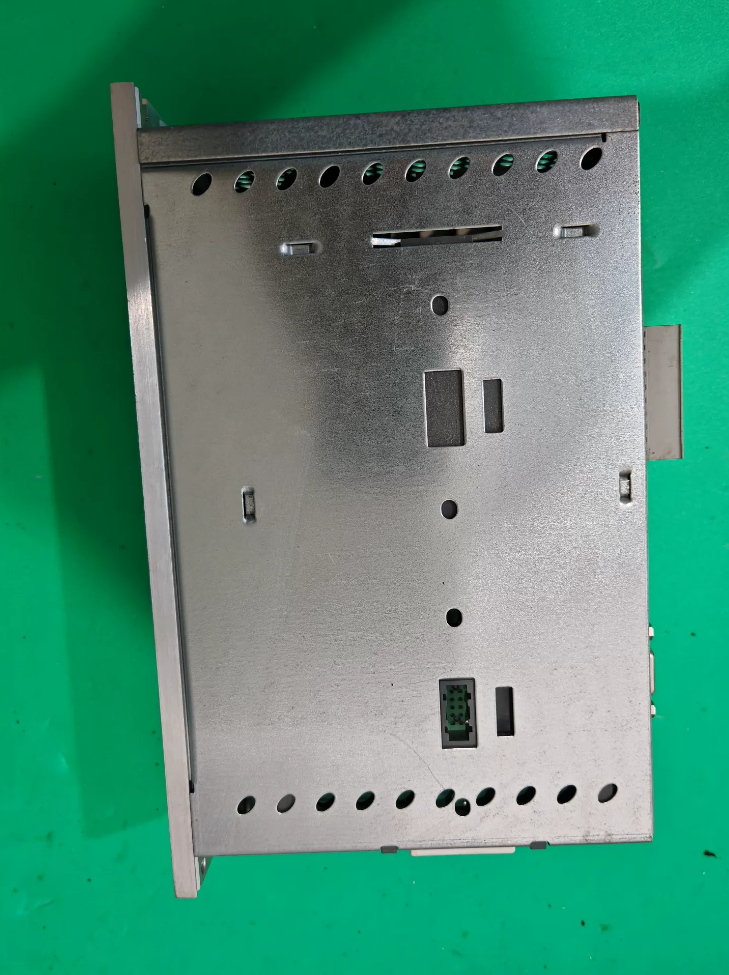

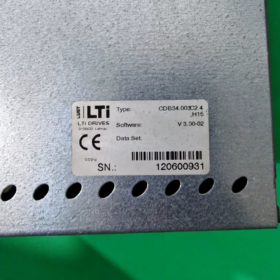
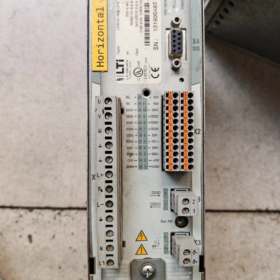
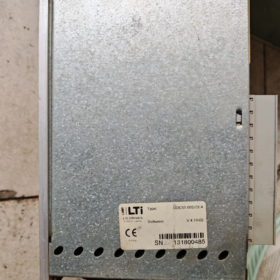
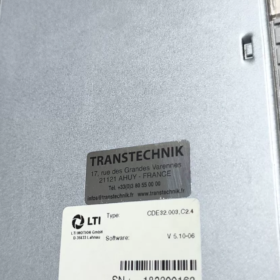
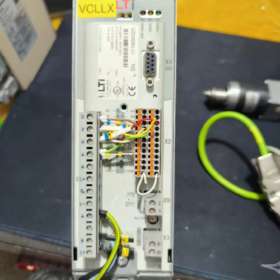
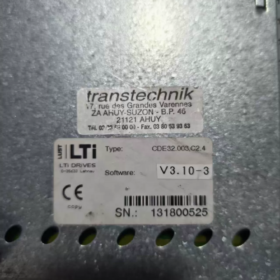
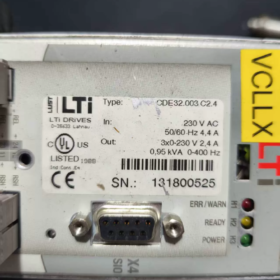
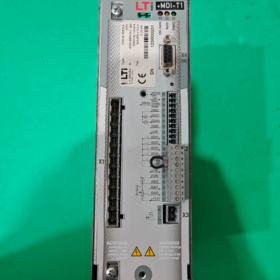
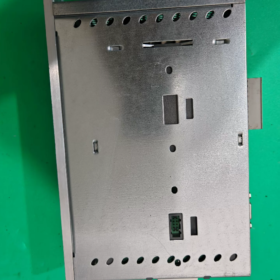
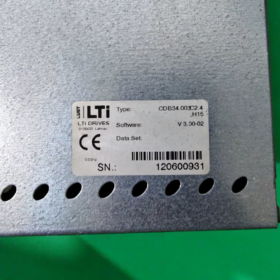
Estado: EOLEndofLife. LA LUJURIA fue adquirida por CUIDADO; Suministro OEM discontinuado. Sólo usado / de segunda mano / Unidades renovadas disponibles en el mercado..
- Decodificación de código modelo
`CDE32.003.C2.4`
| Segmento | Definición |
| CDE | Serie: Serie posservo CDE3000, posicionamiento servoaccionamiento; apoya la posición / velocidad / modos de control de par |
| 32 | Clase de voltaje: 3×230VCA; 34 significa clase 400V |
| 3 | Código de corriente de salida nominal: 3 Un continuo, 6 un pico |
| do | Revisión de hardware C |
| 2 | Interfaz del codificador: EnDat2.2 |
| 4 | Versión de firmware V2.4; sufijo .PC1 = Tarjeta opcional Profibus‑DP (no incluido en la unidad base CDE32.003.C2.4) |
Referencia del pedido: `1021.0003.x` (código de pedido base para la serie CDE32.003)
- Especificaciones eléctricas clave
| Artículo | Parámetro |
| Fuente de alimentación principal | 3‑fase 208‑230 VCA, 50-60Hz |
| controlar el poder | 24 Alimentación externa VCC |
| Corriente de salida continua | 3 Brazos |
| Corriente de salida máxima | 6 A (duración limitada por la curva de sobrecarga) |
| Potencia de motor compatible | 0.25-0,75kW, 230 Servomotores síncronos V LUST |
| Modos de control | Posición (posicionamiento a bordo), bucle de velocidad, bucle de torsión |
| Codificador | EnDat2.2 (Hardware C2.4); TTL incremental opcional en otras variantes de hardware |
| E/S | Entradas digitales / salidas, punto de ajuste analógico ±10V; Bloque de terminales de control X2 |
| Salida del freno del motor | Terminal X9, 24 Accionamiento por freno de motor en V con vigilancia de rotura de cable |
Condiciones ambientales
Temperatura de funcionamiento: 0 ~ +45°C (instalación de armario con ventilación forzada; reducción de potencia por encima de 40°C)
Almacenamiento / temperatura de transporte: −25 ~ +70°C
Humedad: 590 %RH, no se permite la condensación
Montaje: Montaje en carril DIN dentro del gabinete; IP20
Dimensiones mecánicas (CDE32 carcasa pequeña)
Ancho 55 mm × Alto 215 mm × Profundidad 150 mm; clips de carril DIN preinstalados.
- Descripción general de la interfaz
- X1: 3entrada de alimentación principal de fase L1/L2/L3, Terminales de resistencia de freno DCbus
- X2: Controlar E/S (E/S digitales, punto de ajuste analógico, permitir, salida de relé de falla)
- X6: Salida de potencia del motor U/V/W, Tierra protectora de PE
- X7: Puerto del codificador EnDat
- X9: 24 V salida freno motor; requiere suministro externo de 24 V, Detección de rotura de cable incluida.
- KP200: Interfaz de teclado portátil para acceso a parámetros y lectura de fallas
Software de puesta en marcha: Administrador de unidades (herramienta LUST heredada; soporte nativo para Windows XP / 7; modo de compatibilidad requerido para Win10).
- Referencia rápida de códigos de error (Serie CDE3000)
| Mostrar | Descripción de la falla | Causas fundamentales típicas |
| CPU electrónica | UPC / fallo de hardware del firmware | Daños en la placa principal, corrupción de parámetros, Fallo de RAM |
| E‑OC | sobrecorriente | Cortocircuito del motor, falla a tierra, fallo de la etapa de potencia, rotura del aislamiento del motor |
| APAGADO | Subtensión del bus de CC | 3-pérdida de fase de entrada de fase, tensión de alimentación principal insuficiente |
| E‑OTI | Sobrecalentamiento del variador | Mala disipación del calor, falla del ventilador, temperatura ambiente excesiva |
| E-OTM | Sobretemperatura del motor | Circuito abierto del termistor del motor, sobrecarga del motor |
| E‑PLS | Fallo del codificador | Error de comunicación EnDat, cable dañado, falla del hardware del codificador |
| E‑CAN | Fallo del bus CAN | Falta una resistencia de terminación de 120 Ω, cortocircuito del autobús |
Código de parpadeo del LED rojo H1: El número de parpadeos indica el grupo de fallos.; Información completa sobre fallos legible mediante el teclado KP200..
- Opciones de reemplazo (Importante: No hay reemplazo compatible con pintopin dropin; hardware, El cableado y el software deben modificarse por completo.)
Conclusión: No existe una alternativa plugandplay. Dos estrategias: retención de equipos mediante reparación; o actualización completa del sistema.
Estrategia1: Retención basada en reparación de la máquina existente
Fuente utilizada / segunda mano CDE32.003.C2.4. Riesgos: disponibilidad limitada, envejecimiento de los componentes. Se recomienda inspección del tablero de potencia y renovación del capacitor..
Verifique la versión del firmware y el tipo de codificador (EnDat2.2) Para combinar con el motor existente.
Estrategia2: Actualización completa (sucesor de KEBA & 3servos de terceros)
- Serie KEBA KeDriveD3 (herencia técnica de LUST): Requiere nuevos planos eléctricos., reconfiguración del codificador. Los archivos de proyecto de DriveManager no se pueden importar directamente.
- 3candidatos del tercer partido: Schneider Lexium28, B&R ACOPOSmicro, Siemens S210.
nota critica: El motor original utiliza codificador EnDat2.2. El nuevo variador debe admitir la interfaz EnDat para reutilizar el motor existente.
Advertencias sobre errores de selección
- ❌ Nunca reemplace CDE32 (230 clase V) con CDE34 (400 clase V); La falta de coincidencia de voltaje destruirá el motor..
- ❌ El sufijo C2.4 indica hardware EnDat; no puede sustituir directamente C1.x (Codificador incremental TTL) variantes; el hardware del codificador es incompatible.
- Los archivos de proyecto heredados de DriveManager no se pueden importar a KEBA KeDrive; devolución completa obligatoria.
- Campos de aplicación típicos
Maquinaria textil, maquinas de imprimir, equipo de embalaje
Ejes auxiliares para máquinas herramienta, mesas de posicionamiento
Maquinaria para trabajar la madera; Se encuentra principalmente en equipos importados heredados..
- Contenido del paquete estándar
Servoaccionamiento CDE32.003.C2.4 ×1
Clips de montaje en carril DIN preinstalados
Artículos NO incluidos, debe pedirse por separado: teclado KP200, Tarjeta opcional ProfibusDP PC1, cables codificadores, cables de alimentación, resistencia de frenado externa.
Servomotores síncronos LUST originales compatibles
Hardware de la unidad: C2=Interfaz de codificador absoluto EnDat2.2; conducir continuo 3A, pico6A; 3×Suministro de 230 VCA.
Restricciones duras: El motor debe ser un servo síncrono de bobinado de 230 V con EnDat2.2 (una sola vuelta / multivuelta). Corriente continua del motor ≤3A, pico ≤6A. Rango de potencia: 0.250.75 kilovatios. 400 Los motores de bobinado no son compatibles. Motores con codificador incremental TTL (para unidades de hardware C1) No puede funcionar directamente con esta unidad..
Familias de motores originales LS, LSM, LSML (LUJURIA / LTI) son todos EOL. Sólo usado / unidades renovadas disponibles.
- Lista de motores compatibles con OEM (EnDat2.2, 230 V)
| Modelo de motor | Potencia nominal | Par nominal | Velocidad nominal | Corriente nominal | Observaciones |
| LS‑07‑030‑2N‑000 | 250 W. | 0.8 Nuevo Méjico | 3000 rpm | 1.4 A | Brida pequeña, sin freno, EnDat2.2 |
| LS‑07‑050‑2N‑000 | 400 W. | 1.27 Nuevo Méjico | 3000 rpm | 2.1 A | Sin freno; Sufijo de variante de freno‑B000 |
| LS‑08‑075‑2N‑000 | 750 W. | 2.39 Nuevo Méjico | 3000 rpm | 2.8 A | Potencia máxima compatible. No se permite el funcionamiento continuo a plena carga; reducción requerida. |
| LSML‑07‑030‑4N‑000 | 250 W. | 0.8 Nuevo Méjico | 4500 rpm | 1.5 A | Alta velocidad y baja inercia; para ejes rápidos en textil / embalaje |
| LSML‑07‑050‑4N‑000 | 400 W. | 1.27 Nuevo Méjico | 4500 rpm | 2.2 A | Alta velocidad sin freno;-B4N = freno de mantenimiento de 24 V |
| LSMM‑08‑075‑2N‑000 | 750 W. | 2.4 Nuevo Méjico | 3000 rpm | 2.9 A | Inercia media, 80 brida mm; ejes auxiliares de máquina herramienta |
Ejemplo de desglose del código de modelo `LS070502NB000`
- `LS`: servo síncrono de inercia estándar; `LSML`: alta velocidad de baja inercia; `LSMM`: inercia media
- `07 / 08`: código de brida (07 =70mm; 08 =80mm)
- `030 / 050 / 075`: potencia ×10W (075 =750W)
- `2`=3000rpm; `4`=4500rpm
- `N`=codificador EnDat2.2; `I`=codificador incremental TTL (NO para este disco)
- `B`=freno de parada integrado de 24 V; noB = sin frenos.
- Condiciones de contorno eléctrico (Reglas estrictas de selección)
- Límite actual: Corriente RMS continua del motor ≤3A; corriente máxima del motor ≤6A. 750 W es el límite superior de potencia; Evite el funcionamiento continuo a plena carga., aplicar reducción de potencia.
- Coincidencia obligatoria del codificador: El hardware X7 es EnDat2.2. El sufijo del codificador del motor debe ser 2N /4N. Los motores incrementales Isuffix TTL conectados al X7 activan la falla del codificador EPLS.
- Tensión del devanado: Debe ser un devanado de 230V. 400 Motores de bobinado estrictamente prohibidos en CDE32; la excitación no puede funcionar correctamente.
- accionamiento de freno: El freno de retención de 24 V integrado en el motor se conecta a X9. X9 requiere suministro externo independiente de 24 V; la unidad no genera energía de freno. Vigilancia de rotura de cable activa.
- Sensor de temperatura del motor: Se puede conectar un termistor PTC integrado para monitoreo en el lado del variador, desencadena sobretemperatura del motor EOTM.
- 3Requisitos de compatibilidad de motores de terceros
CDE32.003.C2.4 puede accionar motores síncronos de imán permanente de terceros solo si se cumplen todas las condiciones:
- Bobinado del motor 3×230VAC; corriente de fase continua ≤3A.
- Comentario: Heidenhain EnDat2.2, Distribución de pines DSub15 que coincide con la especificación del cable LUST.
- Todos los parámetros del motor deben ingresarse manualmente en DriveManager.: resistencia del estator, inductancia del eje d/q, recuento de pares de polos, continuo / corriente pico, atrásEMF Ke. Sin base de datos de motor precargada; sin autorreconocimiento.
⚠️ Riesgo: El ajuste incorrecto de motores de terceros provoca una sobrecorriente en el EOC, Oscilación del eje o mala precisión de posicionamiento.. Prefiero LS original / Motores serie LSML.
- Fallos comunes relacionados con discrepancias
| Código de falla | Fenómeno | Causa principal |
| E‑PLS | Alarma del codificador | Motor equipado con TTL‑I en lugar de EnDat‑N; daño del cable; discrepancia en la distribución de pines |
| E‑OC activado | Sobrecorriente inmediata al habilitar | 400 Motor de bobinado en V conectado; cortocircuito del devanado del motor; par de polos incorrecto / parámetros de inductancia |
| Alarma de sobretemperatura del motor E‑OTM | Motor físicamente frío | Falta cableado del termistor PTC; sobrecarga mecánica del motor |
| Par insuficiente / velocidad máxima baja | La corriente nominal del motor supera la clasificación de 3 A del variador; configuración incorrecta de back-EMF |
- Rutas de actualización del sistema MotorDrive (cuando falla el motor original)
- Ruta de reparación: Fuente usada motor LSxxxxx2N /4N. Verificar el estado del codificador EnDat2.2, comprobar la corriente nominal, resintonizar a través de DriveManager.
- Ruta de reemplazo del sistema completo: Accionamiento KEBA KeDriveD3 más motor síncrono KEBA; o servo de terceros. Coincidir con las dimensiones originales de la brida mecánica y del eje..
Nota: Los parámetros del motor DriveManager existentes no se pueden importar a una nueva plataforma; se requiere una recalibración completa.
- Cableado asociado
- Cable de alimentación del motor: Cable de alimentación LUSTspec U/V/W/PE que incluye conductores de retroalimentación de temperatura PTC.
- Cable codificador: Cable EnDat2.2 DSub15 dedicado con doble blindaje. NO reutilice los cables del codificador incremental TTL.
- Conductores de freno integrados en el cable de alimentación., enrutado a X9.
LUJURIA CDE3000 (CDE32.003.C2.4) Tabla completa de códigos de error
Notas:
- Conteo de parpadeos del LED rojo H1 = número del grupo de falla principal. Códigos de subfallo detallados legibles a través de KP200 o DriveManager.
- Restablecimiento de fallas: ciclo de energía; o presione y mantenga presionada la tecla STOP KP200 ≥3 s; o reconocimiento de fallo de software.
- Muchas fallas llevan subcódigos almacenados en el parámetro `ERPAR`, lea en DriveManager para un diagnóstico preciso.
- Válido para CDE32 / familias CDE34. Para CDE32.003.C2.4 (EnDat2.2) preste especial atención a EPLS.
- Tabla de fallas principal (Conteo de parpadeos H1 / pantalla KP200)
| Parpadea | Mostrar | Nombre de falla | Descripción | Causa principal & Recurso |
| 1 | CPU electrónica | UPC / Fallo del procesador | Hardware del controlador / anomalía del firmware | ① Reinicio del ciclo de energía. ② La recurrencia indica una falla en la placa principal; reemplazar el tablero de control. |
| 2 | E-APAGADO | Disparo por subtensión del bus de CC | Tensión del bus de CC por debajo del umbral | ① Pérdida de fase de entrada trifásica / voltaje de suministro bajo. ② Fusible del circuito principal quemado. Breve ocurrencia normal durante el apagado. |
| 3 | E‑OC | Disparo por sobrecorriente | Violación del límite de corriente de salida; protección de hardware o software | Subcódigos: 19sobrecorriente de software; 34fast Ixt sobrecorriente; 35cortocircuito de autoprueba de encendido; 41sobrecorriente de etapa de potencia de hardware. |
| Compruebe si hay cortocircuito U/V‑W, falla a tierra del motor, daño al módulo de potencia, Parámetros incorrectos del motor., daño del cable. | ||||
| 4 | E‑OV | DC‑Bus Over‑Voltage Trip | DC‑bus overvoltage from regenerative energy | ① Mains over‑voltage. ② Excessively steep deceleration ramp. ③ Missing / damaged braking resistor. Fit brake resistor; ampliar el tiempo de desaceleración. |
| 5 | E‑OLM | Motor I²t Overload Protection | Motor thermal‑model overload timeout | Atasco mecánico; carga excesiva; high acceleration rates. Verify motor parameters; reduce mechanical load; inspect mechanics. |
| 6 | E‑OLI | Drive I²t Overload Protection | Power‑stage thermal overload timeout | Continuous operation above rated capacity. Apply derating; verify power sizing; improve cabinet cooling. |
| 7 | E-OTM | Motor Over‑Temperature Fault | PTC thermistor trigger | ① Broken / mis‑wired PTC circuit. ② Genuine motor thermal overload. Check actual motor temperature and X2 PTC wiring. |
| 8 | E‑OTI | Drive Over‑Temperature Fault | Heatsink / internal PCB overtemperature. Subcódigos 31 sobretemperatura del disipador de calor; 32exceso de temperatura del gabinete interno. | Mala ventilación del gabinete; falla del ventilador; ambiente > 45ºC. Eliminación de la reducción del flujo de aire; reducir la temperatura del recinto. |
| 9 | E‑PLS | Codificador / Fallo de suma de comprobación de retroalimentación | Señal de retroalimentación no válida, fallo de comunicación del codificador, error de comprobación de posición | Alarma de alta frecuencia para la variante C2.4 EnDat2.2. |
| Comprobar daños en el cable del codificador X7, mala conexión a tierra del blindaje, clavijas D‑Sub‑15 dobladas, falla del hardware del codificador. Nunca conecte cables incrementales TTL al puerto EnDat. | ||||
| 10 | E‑PAR | Error de parámetro | Parámetro fuera de límites, fallo de inicialización; ID de parámetro defectuoso almacenado en ERPAR | Descarga de parámetros corrupta; configuraciones fuera de rango. Restaurar los valores predeterminados de fábrica; recargar el conjunto de parámetros del motor válido. |
| 11 | E‑EEP | Fallo de almacenamiento EEPROM | Error de lectura y escritura de memoria no volátil | Reinicio del ciclo de energía. La falla repetitiva indica daños en el hardware del chip EEPROM en la placa base. |
| 12 | E‑CAN | Fallo del bus CAN | Fallo de comunicación CANopen; Los subcódigos cubren Bus-Off, error de latido del corazón, Excepciones DOP | Faltan resistencias de terminación de 120 Ω en los extremos del bus; cortocircuito del autobús; ID de nodo en conflicto; discrepancia en la velocidad de baudios; cable defectuoso. |
| 13 | EPOPEYA | Fallo de posicionamiento | Fallo del controlador de posición a bordo; desbordamiento de la posición objetivo; Se superó el umbral de error de seguimiento | Agarrotamiento mecánico; ganancias de servo mal ajustadas; Umbral de error de seguimiento demasiado bajo. Inspeccionar la mecánica y los parámetros del bucle de posición/velocidad. |
| 14 | E‑PLC | Fallo del secuenciador integrado | Error de tiempo de ejecución de macro de usuario; desbordamiento de pila, división por cero, error de sintaxis | Inspeccionar código de macro PLC personalizado. Borrar programa de usuario; restaurar el conjunto de macros de fábrica. Leer el subcódigo del número de línea de falla en DriveManager. |
| 15 | E‑BR | Fallo de la unidad de freno | Fallo interno del chopper de freno; cortocircuito de la resistencia de freno / circuito abierto | Valor óhmico de la resistencia de freno incorrecto; circuito abierto de resistencia; daños en la placa de potencia del freno. Verificar las especificaciones de resistencia. |
| 16 | E‑EXT | Entrada de falla externa | Señal de fallo externo en el terminal X2 (Lógica configurada por el parámetro 524.) | Señal de fallo afirmada por un equipo externo. Inspeccionar el cableado del bucle de falla externo y la configuración de parámetros. |
- Definiciones de subcódigos ERPAR seleccionadas
COE (Sobrecorriente) Subcódigos
19: Protección de sobrecorriente de software
34: Sobrecarga rápida de Ixt (condición de cortocircuito de baja frecuencia)
35: Cortocircuito detectado durante la autoprueba de encendido
41: Sobrecorriente en la etapa de potencia del hardware
Subcódigos EOTI
31: Sobretemperatura del disipador de calor
32: Provocar sobretemperatura en la cámara interna
Subcódigos seleccionados de ECAN
31: Estado de bus apagado
39: Fallo en la monitorización de latidos del corazón
40: ID de nodo CAN no válido
42: Error de supervisión de sincronización de PDO
Subcódigos seleccionados de EPAR
5: Desbordamiento de descarga de parámetros
6: Fallo de inicialización de la tabla de parámetros
7: Error al guardar parámetros
8: Fallo de lectura de parámetros
47: Error de inicialización del parámetro de protección del motor.
100123: Fallos de inicialización del módulo de control. (bucle actual, bucle de velocidad, bucle de posición, interfaz del codificador)
- Advertencias (ADVERTIR: sin viaje en auto; solo bit de estado)
WARNOLM: Preaviso de sobrecarga del motor (umbral previo al viaje)
WARNOLI: Preaviso de sobrecarga del variador
WARNOTM: Preaviso de temperatura del motor
WARNOTI: Preaviso de temperatura de conducción
Las advertencias no desactivan powerstage; leer bits de estado en DriveManager / PLC para carga proactiva / inspección de condiciones de enfriamiento.
- Solución de problemas de alta frecuencia para CDE32.003.C2.4 (EnDat2.2)
- EPLS (falla más común)
Síntomas: Alarma al encender O disparos aleatorios en tiempo de ejecución.
Causas: Cable X7 EnDat dañado; pines DSub15 doblados; Motor TTLencoder conectado al hardware C2; falla del hardware del codificador; mala conexión a tierra.
Prohibición: Never insert TTL incrementalencoder cables into EnDat port.
- EOC on enable
Verify motor winding is 230 V class (400 V windings forbidden). Check motorparameter entry (recuento de pares de polos, stator d/q inductance).
- Frequent EOFF undervoltage trips
CDE32 requires full 3phase 230 V supply. Confirm L1L2L3 are all connected; no phaseloss.
- EOTM alarm while motor is physically cool
Check X2 PTC thermistor wiring. If motor has no PTC sensor, disable PTC monitoring in parameters.
- General FaultHandling Workflow
- Record panel fault code. If possible connect DriveManager and capture faultlog plus ERPAR subcode.
- Poweroff; disconnect motor powercable and encodercable to isolate whether fault originates from drive, cable or motor.
- Measure motor insulation resistance, PTC resistance, and brakeresistor ohmic value.
- Restore factory parameters; reload valid OEM motorparameterset; volver a sintonizar currentloop y speedloop.
- Fallos relacionados con el hardware (ECUPU, subcódigo de hardware EOC): reparar o reemplazar la unidad de transmisión.
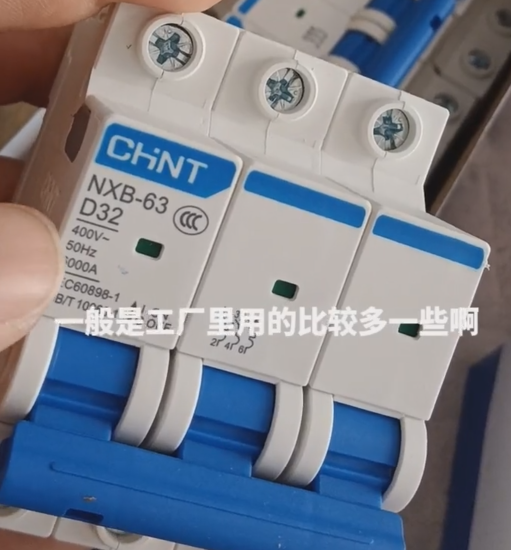
NH42-63-318x560.png "Interruptores de transferencia automática tipo PC CHINT (ATS)NH42-63/4SZ")