contactor,cortacircuitos,sensor,Codificador,SOCIEDAD ANÓNIMA,Convertidor

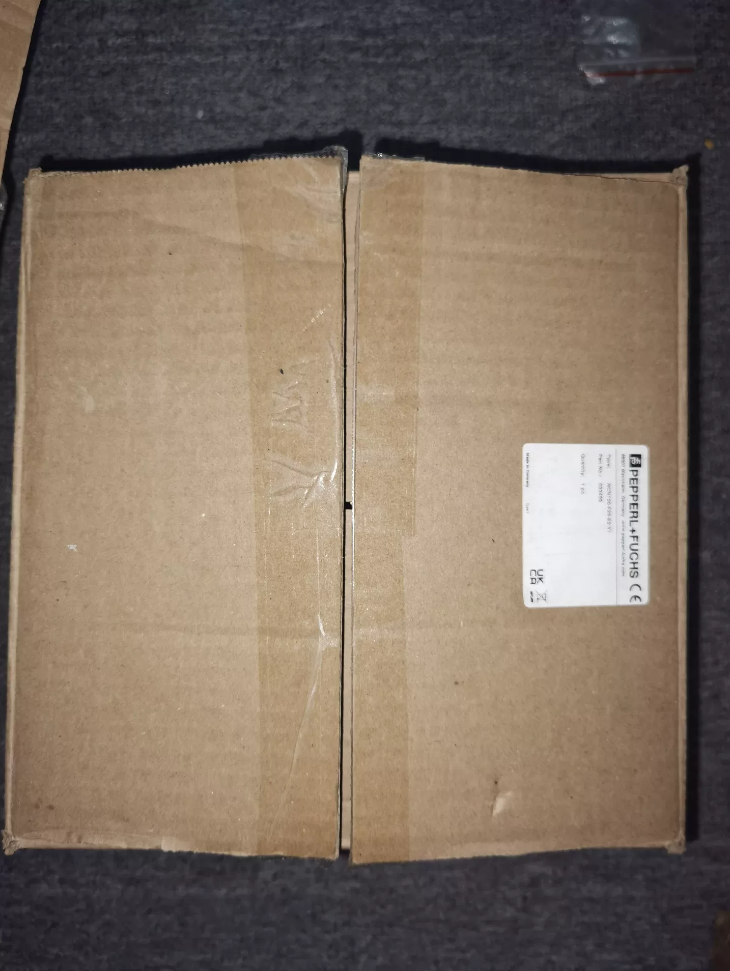

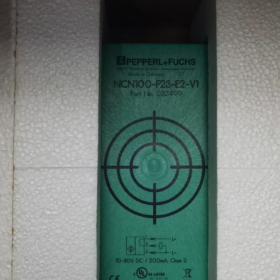
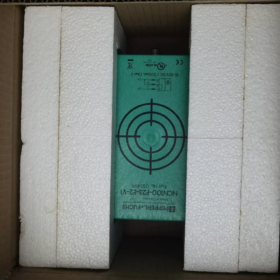


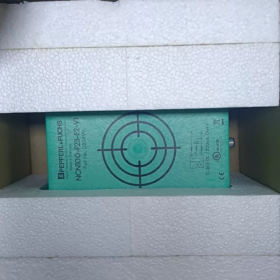
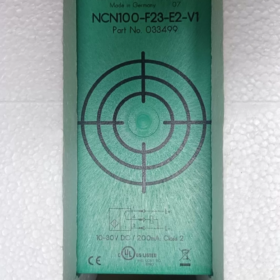
Producto: F23 Series Square Sensor de proximidad inductivo | Número de artículo.: 033499
✅ Model Code Definition
norte: Inductive sensor
CN: Non-flush mounting
100: Rated sensing distance 100 milímetros
F23: Large square housing series
E2: 3-wire DC PNP normally open (NO)
V1: Conector M12 de 4 pines
📋 Core Electrical Specifications
| Parámetro | Especificación |
| Rated sensing distance Sn | 100 milímetros (non-flush) |
| Usable operating distance Sa | 0…81 mm |
| Actual working range Sr | 90…110 mm |
| Producción | PNPNO, 3-wire DC |
| Tensión de alimentación | corriente continua 10 … 30 V |
| máx.. corriente de carga | 200 mamá |
| Frecuencia de conmutación | 10 Hz |
| Histéresis | Típico 8% |
| Protección | Protección contra polaridad inversa, pulsed short-circuit protection |
| Caída de voltaje (Estado encendido) | ≤3 V, typical 1.9V@200mA |
| No-load current | ≤20 mA |
| Power-up ready delay | ≤90 ms |
| Indicator LEDs | Green = Power; Yellow = Switching action |
Metal Reduction Factors (Critical for Selection)
304 acero inoxidable: 1.0 (no reduction)
Latón: 0.47
Aluminio: 0.37
Cobre: 0.35
The effective sensing distance will decrease significantly for aluminum/copper targets. Factor calculation is mandatory during selection.
🧱 Mechanical & Datos ambientales
Alojamiento: ABS plastic, aluminum base
Shape: Square large housing, fixed by mounting holes
Conexión: M12×1 male 4-pin connector
1: BN Brown DC+
2: WH White
3: BU Blue DC-
4: BK Black Signal output
Temperatura de funcionamiento: -25 ~ +70 ℃
Temperatura de almacenamiento: -40 ~ +85 ℃
Certificaciones: cULus, CE
⚙️ Typical Applications
Long-range metal detection for:
Position limit of overhead cranes
Large material presence detection
Trolley positioning in warehousing logistics
Metal target detection for heavy machinery
Nota: Switching frequency only 10Hz, not suitable for high-speed moving targets.
🛠️ Installation Guidelines
- Non-flush mounting. Sensing face shall NOT be embedded in metal; sufficient metal clearance must be reserved around the sensing surface.
- Stainless steel target plate is recommended. For aluminum/copper targets, use larger target size or reduce installation distance.
- Power-up initialization delay up to 90ms. PLC program shall account for this to avoid false triggering at startup.
- Use matched M12 connector. Shielded cable is recommended to reduce interference from frequency converters.
🔁 Replacement & Piezas de repuesto
Misma serie: NCN100-F23-E0-V1 (NPN NO version)
Domestic replacement guideline: Square long-range inductive sensor, PNPNO, 100mm non-flush, conector M12. Nota: Reduction factors vary widely for domestic long-distance sensors, on-site testing required.
📌 Customs HS Code
85365019 (Other switching devices)
⚠️ Troubleshooting Checklist
- LED verde apagado: Sin fuente de alimentación o polaridad invertida
- Green LED on, yellow LED never triggers: Target too far / aluminum/copper target with heavy reduction / insufficient target area
- Yellow LED flickering: Cortocircuito, overload or cable insulation damage
- falso disparo: Large nearby metal mass or electromagnetic interference (VFD)
Typical Application Cases of Pepperl+Fuchs NCN100-F23-E2-V1
Core selection premise: 100mm ultra-long sensing distance, non-flush, PNPNO, switching frequency only 10Hz. Suitable for low-speed position limit / presence detection, not for high-speed counting. Clasificación IP67, -25~ 70 ℃, suitable for dusty, humid heavy-duty environments.
Caso 1: End Limit for Bridge Crane / Overhead Crane Trolley (Más común)
Industria: Metalurgia, steel warehouse, heavy-duty workshop cranes
Solución:
The sensor is mounted on the side of the crane rail. A stainless steel target plate is fitted at the end of the trolley. When the trolley approaches the rail end within the 81mm reliable operating distance, the sensor sends a PNP signal to PLC to trigger deceleration and emergency stop protection, preventing rail overtravel.
Ventajas: Long sensing distance allows flexible installation space. M12 connector enables quick replacement under heavy vibration; IP67 withstands dust and cooling water splashes.
Notas:
- Low trolley travel speed matches 10Hz switching frequency.
- Stainless steel target plate preferred. For aluminum targets, calculate distance using reduction factor.
- Keep large steel structures away from the sensing face to prevent false triggering.
Caso 2: Horizontal Rough Positioning for AS/RS Stacker Cranes in Automated Warehouses
Industria: Intelligent warehousing, almacenamiento en frío
Solución:
NCN100-F23-E2-V1 sensors are installed in segments along the stacker travel rail. When the stacker’s metal baffle passes the sensor, it provides a rough position presence signal, working together with encoders for position calibration.
Función: Confirm the stacker arrives at the storage location and trigger deceleration. Avoid failure of photoelectric sensors caused by dust and moisture.
Limitación: Only rough positioning, not high-precision positioning; provides digital presence signal only, no distance measurement.
Caso 3: Station Presence Detection for Heavy-Duty AGVs
Industria: Factory heavy-load AGVs, mining material transfer vehicles
Solución:
Sensors are mounted at ground stations, and metal target blocks are fitted on AGV side panels. When AGV enters the station and the target enters sensing range, the sensor outputs a presence signal for PLC to lock wheels and start loading/unloading.
Ventajas: Long sensing distance permits larger docking tolerance and lowers navigation accuracy requirements. Resists workshop dust and oil contamination, more stable than photoelectric sensors.
Restricción: Not for high-speed AGVs. 10Hz switching frequency may cause missed detection for fast-moving targets.
Caso 4: Presence Detection for Heavy Transfer Trolleys in Steel & Cement Plants
Industria: Metalurgia, cemento, sintering plants
Solución:
Sensors are mounted rail-side for sintering trolleys and steel billet transfer trolleys. The sensor detects when the trolley metal baffle arrives at unloading / loading station.
Condiciones de funcionamiento: High radiant heat, heavy dust and strong vibration. Sensor operating temperature -25~70℃ meets requirements. Large metal targets ensure stable detection.
Commissioning tip: Mass steel structures exist on site, metal clearance must be reserved to avoid constant false triggering by background metal.
Caso 5: Position Monitoring for Large Hydraulic/Pneumatic Heavy-Duty Gates & Flaps
Industria: Wastewater treatment, mining silo gates
Solución:
One NCN100-F23-E2-V1 is fitted at fully-open and fully-closed positions of silo discharge gates respectively, to detect arrival of the metal actuator baffle. Position feedback is sent to PLC to confirm gate status and interlock upstream/downstream belt conveyors.
Características: Slow gate movement perfectly matches low switching frequency. Remote sensor installation keeps it away from sediment and material impact.
Caso 6: Trolley Limit Protection for Gantry Cranes in Container & Steel Yards
Industria: Puertos, steel logistics yards
Solución: Sensor used for travel limit protection of gantry crane trolley. Detects trolley approaching metal end stop to trigger pre-deceleration as secondary safety limit.
Observación: It is only a position switch, NOT a SIL safety rated sensor. Cannot be used as sole safety protection; mechanical limit switch is recommended as backup.
📌 General Application Notes (Aplicable a todos los casos)
- Target material reduction: Stainless steel target factor =1.0; aluminum =0.37. Effective distance drops greatly for aluminum targets, must be calculated in selection.
- Movement speed constraint: Max switching frequency 10Hz. Only for limit and presence confirmation; strictly prohibited for high-speed counting.
- Instalación: Non-flush mounting. Sensing face cannot be embedded into metal. Adequate metal clearance around sensor.
- Power-up delay: Up to 90ms initialization time. PLC logic needs power-up delay to prevent false signals on startup.
- Target plate size: Target area cannot be too small. Target must fully cover the sensor sensing face, otherwise unstable detection occurs.
🔎 Application Quick Selection Table
| Guión | Recomendación | Brief Reason |
| Overhead / gantry crane trolley limit | ✅ Highly recommended | Baja velocidad, larga distancia, polvo pesado & vibración |
| AS/RS stacker rough positioning | ✅ Recomendado | Alternative to easily contaminated photoelectric sensors |
| Workpiece counting on high-speed conveyor | ❌ Not recommended | Insufficient switching frequency, detección perdida |
| Long-range detection of aluminum workpieces | ⚠️ Use with caution | Low reduction factor reduces effective sensing distance |
| High-precision position measurement | ❌ Not recommended | Digital switch output only, no analog distance value |
Working Principle of Inductive Proximity Sensors
Principio fundamental: Alternating Magnetic Field + Eddy Current Effect in Metal Conductors
Inductive proximity sensors detect metal objects only. Non-metals (plástico, madera, vaso, goma) cannot be sensed.
Internal Components
- LC Oscillator Circuit (Bobina + Condensador): Generates high-frequency alternating electromagnetic field radiating outward from the sensing face after power-on.
- Demodulation & Comparator Circuit: Monitors oscillation amplitude variation
- Output Driver Circuit: Salida de transistores (PNP / PNP)
- Fuente de alimentación, indicator LEDs
Complete Operating Sequence
- After sensor power-up, the LC circuit starts oscillation. The coil emits high-frequency alternating magnetic field.
- No metal target present: Little energy loss in magnetic field, oscillation is maintained. Circuit judges no target, output stays in original state.
- Metal target enters magnetic sensing zone: Alternating magnetic field penetrates metal surface and induces eddy current inside metal via electromagnetic induction.
- Eddy current generates reverse magnetic field counteracting the original coil field → energy of oscillator circuit is consumed and oscillation amplitude attenuates.
- The detection circuit detects amplitude drop below threshold, confirms metal presence and toggles transistor output (NO contact closes / Se abre el contacto NC), meanwhile the switching LED lights up.
- Metal moves out of sensing zone: Eddy current disappears, magnetic field recovers and oscillation resumes, sensor output resets.
Resumen de una frase: Coil generates alternating magnetic field; metal creates eddy current to consume magnetic energy; circuit identifies energy change and outputs switch signal.
Características clave (Referencing NCN100-F23-E2-V1)
- Distancia de detección & Material Reduction
Eddy current strength depends on metal conductivity and permeability:
Ferromagnetic metals (acero, acero inoxidable): Strong eddy current, long sensing distance (reduction factor≈1)
Aluminio, cobre: Non-ferromagnetic, weaker eddy current, effective sensing distance greatly reduced (Alabama:0.37, Cu:0.35, matching previous parameters)
- Flush / Non-Flush Mounting
Flush: Can be embedded into metal base; magnetic field concentrated on front face; shorter sensing range
Non-flush (NCN100 is this type): Cannot be embedded in metal; magnetic field diverges wider, longer sensing distance, but side metal may cause false triggering
- Frecuencia de conmutación
Time is required for magnetic field build-up and eddy current decay, hence maximum response frequency. NCN100 only 10Hz, not for fast-moving workpieces.
- Histéresis
Trigger distance on approach is larger than reset distance on departure. Objetivo: prevent signal chattering caused by mechanical vibration.
Simple Comparison vs Photoelectric Sensors
Inductive: Metal-only detection. Immune to dust, moisture and oil. Long-range models cost higher and subject to material reduction.
Fotoeléctrico: Detects metal and non-metal. Prone to failure when lens contaminated by dust or water mist.
Suplemento
⚠️ Inductive proximity sensors are NOT distance measuring sensors. They only provide a binary signal indicating whether metal enters the threshold distance, no numerical distance output.
NH42-63-318x560.png "Interruptores de transferencia automática tipo PC CHINT (ATS)NH42-63/4SZ")