contactor,cortacircuitos,sensor,Codificador,SOCIEDAD ANÓNIMA,Convertidor

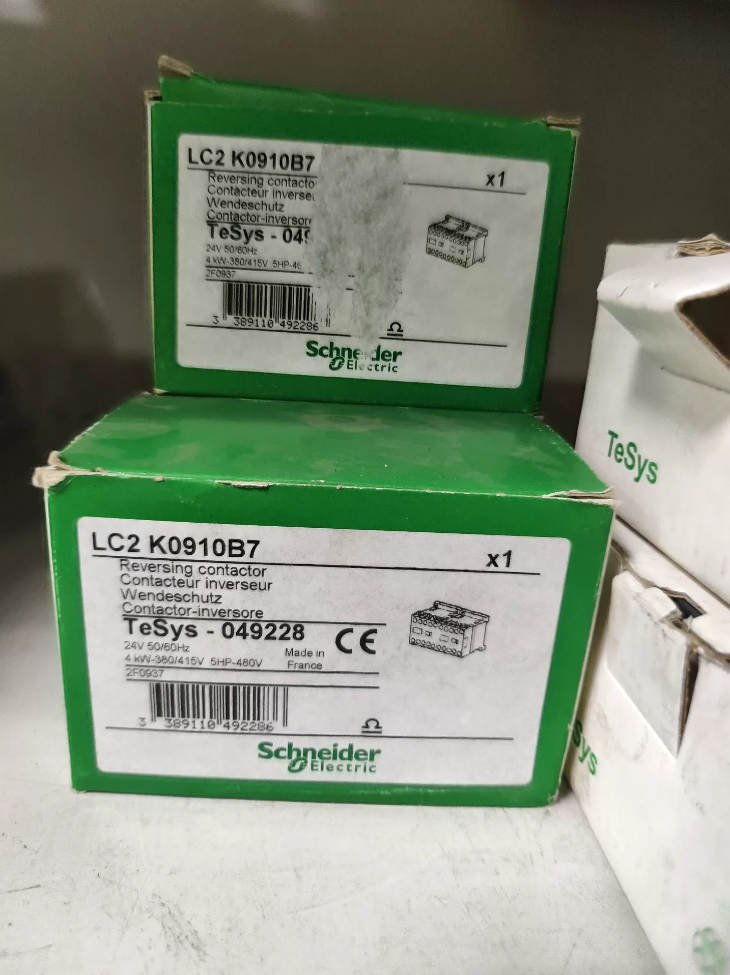

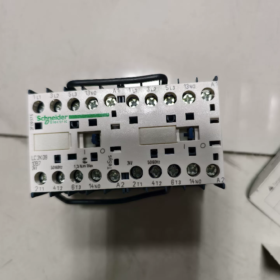
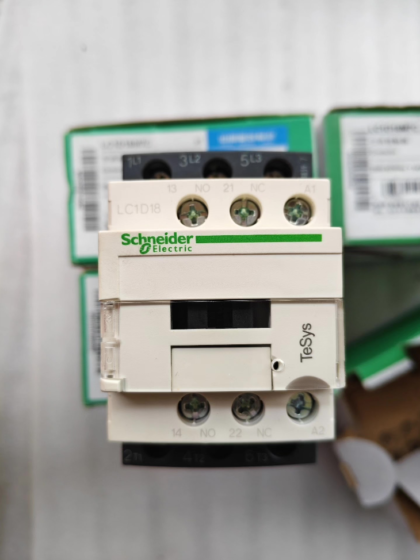
Producto: TeSys-K 3-contactor inversor de polos, fabricado en francia, equipado con enclavamiento mecánico incorporado y barra colectora de potencia de inversión premontada
Decodificación de modelos
LC2K: Serie de contactores inversores (LC1K significa contactor único; LC2K = grupo inversor premontado de dos contactores)
09: Corriente operativa nominal AC-3 9A
01: Configuración de contactos auxiliares 1 Normalmente cerrado (1CAROLINA DEL NORTE)
B7: Voltaje de la bobina AC24V, 50/60Hz
Especificaciones eléctricas básicas
| Artículo | Parámetro |
| Polos del circuito principal | 3P-3NO |
| Corriente operativa AC-3 | 9A |
| Potencia nominal del motor | 2.2kilovatios(230V) / 4kilovatios(380-415V) |
| Tensión máxima del circuito principal | 690V y |
| Bobina | CA 24 V 50/60 Hz.; Irrupción 30VA, Retención 4.5VA |
| Contacto auxiliar | 1NC instantáneo |
| Corriente térmica convencional Ith | 20A |
| Categoría de utilización | AC‑3, AC-3e, AC-4, AC‑1 |
| Entrelazar | Enclavamiento mecánico incorporado |
| Conexión de terminales | Terminales de tornillo, 0.75-Conductor de 4 mm²; Par de torsión 0,8‑1,3 N·m |
| Montaje | Carril DIN35 / Montaje en placa con tornillos. |
| Dimensión general | Ancho 90 × Alto 58 × Fondo 57 mm, Peso 0,39 kg |
| Resistencia mecánica | 5 millones de ciclos; Resistencia eléctrica 1,3 millones de ciclos (AC‑3) |
| Temperatura ambiente de funcionamiento | -25~+50 ℃ |
| Certificaciones | CCC, UL, CE, CAO |
Escenarios de aplicación
Control de avance/retroceso del motor trifásico (transportadores, cabrestantes, rodillos, actuadores de válvula). El embarrado de inversión de fase viene premontado de fábrica., no se requiere cambio de fase manual para el cableado del circuito principal. El enclavamiento eléctrico se implementará como protección secundaria..
Modelos de referencia similares
LC2K0910B7: Bobina AC24V, auxiliar 1NO (Normalmente abierto)
LC2K0901M7: 1Contacto auxiliar NC, bobina AC220V
LC2K0901F7: 1Contacto auxiliar NC, bobina AC110V
Selección & Notas de sustitución
- LC2K es una unidad reversible completa. No monte dos contactores LC1K separados manualmente, ya que faltan la barra colectora de inversión y el enclavamiento mecánico correspondiente instalados de fábrica.
- Para alternativa doméstica: verificar parámetros: 9A, bobina de 24V CA, 1Contacto auxiliar NC, Enclavamiento mecánico integrado para operación inversa..
- Puntos de inspección de repuestos: Mida la resistencia de ambas bobinas.; comprobar el bloqueo mecánico para detectar atascos; inspeccionar los contactos principales para la ablación; verificar el par de apriete del terminal.
Nota: LC2K0901B7 es un modelo importado. El stock local suele ser limitado y los plazos de entrega son prolongados..
Schneider LC2K0901B7 (Contactor inversor TeSys-K) Manual de instalación
Este manual está compilado de acuerdo con la hoja de instrucciones original de Schneider., para el modelo LC2K0901B7, 3PAG, 9y AC-3, 1Contacto auxiliar NC, Bobina AC24V 50-60Hz, enclavamiento mecánico incorporado y barra colectora de potencia de inversión premontada.
⚠️Requisito previo de seguridad: La instalación y el cableado solo deben ser realizados por electricistas calificados.. Desconecte completamente la fuente de alimentación aguas arriba antes de cualquier trabajo.. Grado de protección IP20. El dispositivo debe instalarse dentro de un armario eléctrico cerrado., La operación al aire libre está prohibida..
Tabla de contenido
- Descripción general del producto
- Resumen de especificaciones técnicas
- Condiciones ambientales & Montaje mecánico
- Instrucciones de cableado eléctrico
- Par de terminales & Especificaciones de cables
- Circuito de control & Requisitos de enclavamiento obligatorios
- Lista de verificación previa al encendido
- Procedimiento de puesta en servicio
- Mantenimiento & Solución de problemas
- Formas de obtener el manual original en PDF
- Descripción general del producto
LC2K0901B7 es un contactor de inversión de avance-retroceso de motor preensamblado de fábrica, assembled from two LC1K contactors plus integrated mechanical interlock and pre-fitted reversing power busbar. Two-phase swap is completed inside factory busbar; manual phase swapping on main circuit is NOT required.
Contactos principales: 3 Normalmente abierto; Contacto auxiliar: 1 Normalmente cerrado (1CAROLINA DEL NORTE) contacto instantáneo
Bobina: CA 24 V 50/60 Hz.; Irrupción 30VA, Hold-in 4.5VA
AC-3 9A; Rated motor power 4kW@400V; 2.2kW@230V
Montaje: Montaje en carril DIN35 / Montaje en placa con tornillos.
Dimensión: W90mm × H58mm × D57mm, Peso 0,39 kg
- Installation Ambient Conditions
- Temperatura ambiente de funcionamiento: -25°C ~ +50 °C; Storage temperature -50~+80℃
- Altitud: No derating ≤2000 m; derating is required above 2000 m
- Ambiente: Free of explosive dust and corrosive gas, bien ventilado; evitar la luz solar directa.
- Cabinet installation: Maintain ≥10 mm clearance top and bottom for heat dissipation. Side-by-side compact mounting is permitted; extra clearance is required for high-temperature environment.
- Vibración & choque: Complies with IEC60068-2-6. Keep away from heavy-vibration equipment inside cabinet.
- Montaje mecánico
3.1 Montaje en carril DIN (privilegiado)
- Hook bottom latches of contactor onto DIN35 rail.
- Presione hacia abajo el cuerpo del contactor hasta que los pestillos hagan clic y se bloqueen firmemente..
- Eliminación: Haga palanca en el pestillo inferior con un destornillador de punta plana, levante el contactor hacia arriba.
3.2 Montaje en placa con tornillos.
Utilice tornillos M3/M4 a través de los orificios de montaje en la carcasa.. No apriete demasiado para evitar que se agriete la carcasa de plástico.. La base de montaje debe ser plana y sin distorsiones..
Orientación de montaje: Instalación vertical con terminales hacia arriba. Está prohibido el montaje horizontal o al revés., lo que acortará la vida útil mecánica.
- Instrucciones de cableado eléctrico
Para contactor inversor integrado LC2K: La barra colectora de potencia de inversión viene instalada de fábrica.. NO lo desmontes. El desmontaje puede causar riesgo de cortocircuito durante la conmutación directa/inversa.
Terminales del circuito principal
L1, L2, L3: Entrada de alimentación trifásica
T1, T2, T3: Conectar al motor trifásico U, V, W.
Importante: NO intercambie fases en el lado T. La inversión de fase se realiza mediante barra colectora interna premontada.. Re-swapping phases on output side will result in identical rotation direction for both forward and reverse commands.
Terminales de bobina
A1, A2: Coil of forward contactor (CA 24V)
A1, A2: Coil of reverse contactor (CA 24V)
Strictly apply AC24V coil voltage. Applying 220V will burn coil instantly. Allowable coil operating voltage range: 0.8~1.15×Uc, es decir. 19.2V-27.6VAC.
Auxiliary contact terminals
13-14: 1NC normally-closed auxiliary contact, used for control-circuit interlock and status feedback.
- Par de terminales & Especificaciones de cables
Screw-clamp terminals, Phillips No.2 / 6 mm flat-blade screwdriver
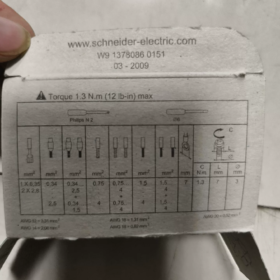
Par de apriete: 0.8-1.3 Nuevo Méjico. Over-tightening cracks plastic terminal base; insufficient torque causes overheating.
Compatible conductors:
Solid single-core: 1.5-4 mm²
Flexible without ferrule: 0.75-4 mm²
Flexible with cable ferrule: 0.34-2.5 mm²
-longitud de pelado: 5-6 milímetros. Exposed bare copper must not touch adjacent terminals to prevent phase-to-phase short-circuit.
- Control-circuit & Requisitos de enclavamiento obligatorios
⚠️This unit is equipped with mechanical interlock only. El enclavamiento mecánico no puede eliminar por completo el riesgo de cierre simultáneo de ambos contactores.. El enclavamiento eléctrico a través de contactos auxiliares en el circuito de control secundario es OBLIGATORIO, De lo contrario, puede producirse un cortocircuito trifásico catastrófico..
- Enclavamiento mecánico: El mecanismo mecánico interno permite físicamente que solo se cierre un contactor a la vez.. Aún existe el riesgo de fallas causadas por atascos.
- Cableado de enclavamiento eléctrico: Contacto auxiliar serie NC del contactor directo al circuito de bobina inversa; contacto auxiliar serie NC del contactor inverso en el circuito de la bobina directa.
- Controlar el suministro: CA 24V. Circuitos de bobina A1/A2 y A1’/A2′ estan aislados; evitar una conexión común incorrecta.
- Configuración recomendada: Instale un relé de sobrecarga térmica para protección contra sobrecarga del motor.; protección contra cortocircuitos aguas arriba mediante fusible gG de 25 A.
- Lista de verificación completa previa al encendido
- control mecanico: Accionar manualmente el mecanismo de operación del contactor. El enclavamiento mecánico funcionará correctamente.; No debe ser posible el cierre manual simultáneo de ambos contactores.; El funcionamiento debe ser suave y sin atascos..
- Inspección de cableado: Todos los terminales apretados a 0,8-1,3 N·m; sin hilos de alambre sueltos ni cobre desnudo expuesto; Barra colectora de inversión premontada intacta y sin daños..
- Verificación de bobina: Confirme que el voltaje de control sea AC24V para evitar daños por sobrevoltaje.
- prueba de circuito: Verificación del multímetro para el cableado de enclavamiento eléctrico correcto; sin cortocircuito entre L1-L2-L3 en el circuito principal.
- Lado del motor: Resistencia de aislamiento del motor normal, cableado del motor correcto.
- Puesta en servicio
- Desconectar la carga del motor; energice sólo el circuito de control AC24V.
- Activar comandos de avance y retroceso por separado: Sólo se activará un contactor a la vez.; función de enclavamiento válida. No debe producirse una entrada simultánea.
- Desenergizar, reconectar el motor. Reenergícese y pruebe hacia adelante / dirección de rotación inversa.
- Observar el estado de ejecución: Sin ruidos anormales ni sobrecalentamiento en los terminales.
Frecuencia máxima de funcionamiento: 3600 operaciones por hora. Reducción de potencia para ciclos frecuentes de avance-retroceso.
- Mantenimiento & Solución de problemas
| Fenómeno de falla | Puntos de solución de problemas |
| Bobina energizada, El contactor se niega a entrar. | Mida el voltaje de la bobina AC24V; inspeccionar el cableado A1/A2; comprobar atascos mecánicos; medir la resistencia de la bobina |
| El contactor se activa pero el motor no funciona | Verifique los terminales de entrada/salida del circuito principal flojos o dañados; inspeccionar la ablación por contacto |
| Disparo instantáneo al arrancar | Confirme que la barra colectora de inversión esté intacta; verificar que exista un enclavamiento eléctrico; comprobar el riesgo de conducción simultánea entre fases |
| Ruido de funcionamiento fuerte | Verifique la desviación de voltaje de la bobina; resonancia del gabinete; suciedad en la cara del núcleo de la armadura |
Referencia de vida útil: Resistencia mecánica 5 millones de ciclos.; Resistencia eléctrica 1,3 millones de ciclos en condiciones AC-3.
Mantenimiento periódico: Vuelva a apretar el par de terminales; inspeccionar la ablación por contacto; eliminar la acumulación de polvo.
- Acceso al manual original en PDF
- Visite el sitio web oficial de Schneider y busque LC2K0901B7. Descargue la hoja de instrucciones del contactor LC2-K en la sección de documentación del producto.
- Busque el contactor inversor TeSys-K en el centro de descargas de Schneider China.
Nota: LC2K0901B7 es importado. El manual impreso en papel está en su mayoría solo en inglés sin la versión completa en chino. Este manual compilado sigue estrictamente las especificaciones originales de Schneider..
Fallas comunes de los contactores Schneider (Aplicable a la serie TeSys-K LC2K, también para LC1D, LC1N, etc.)
Categorías de falla: No lograr entrar; abandono instantáneo después del pull-in; activado pero sin salida del circuito principal; zumbido; ablación por contacto; quemado de la bobina; Fallas únicas del contactor inversor, con guía de solución de problemas.
- Bobina energizada, El contactor no se activa por completo.
- No hay voltaje o voltaje insuficiente en el circuito de control
Fenómeno: Tensión nominal de la bobina no medida en A1-A2; tensión de funcionamiento por debajo 80% de tensión nominal de la bobina.
Causa principal: Suministro de control defectuoso, contacto de pulsador/enclavamiento roto, cableado suelto.
Para unidad de inversión LC2K: Distinguir bobina directa A1/A2 y bobina inversa A1’/A2’; Evite medir terminales incorrectos.
- Bobina quemada en circuito abierto
Resistencia medida de la bobina infinita; bobina visiblemente quemada de negro.
Desencadenantes: Suministro de alto voltaje incorrecto (p.ej. alimentando 220V a una bobina de 24V), sobretensión sostenida, envejecimiento a alta temperatura.
- Atasco mecánico
Restos extraños o fragmentos de plástico dentro del mecanismo; montaje en carril DIN sesgado; Bloqueo mecánico atascado del contactor inversor.
El accionamiento manual del mecanismo se siente pesado y no puede alcanzar la posición cerrada.
- Mal contacto del contacto de enclavamiento auxiliar NC (fallo de alta frecuencia en unidades de inversión LC2K)
El contacto auxiliar de enclavamiento oxidado interrumpe la ruta de suministro de energía de la bobina.
- Bobina energizada, abandono instantáneo / charlando después del pull-in
- Tensión de bobina insuficiente: Gran caída de voltaje causada por cables de control largos; voltaje por debajo 85% La UE produce una fuerza de sujeción de armadura insuficiente.
- Suciedad, Contaminación por óxido o aceite en las superficies de contacto del núcleo de la armadura.: La separación del circuito magnético aumenta, fuerza de sujeción insuficiente, parloteo repetido.
- Conexiones del circuito de control flojas, voltaje intermitente.
- Específico LC2K: Enclavamiento mecánico medio atascado, El recorrido incompleto del mecanismo provoca la caída..
- El contactor se activa normalmente, pero el motor no funciona (sin salida en el circuito principal)
- Terminales del circuito principal flojos y sobrecalentados: Un par de torsión insuficiente provoca oxidación térmica; el voltaje sin carga puede leerse normal, El voltaje colapsa bajo carga..
- ablación / contactos principales desconectados: Fuerte corriente de irrupción, El ciclo frecuente crea contactos carbonizados picados con alta resistencia al contacto..
- Fase abierta en el suministro upstream: Fusible fundido o polo del interruptor automático aguas arriba dañado.
Recordatorio LC2K: La barra colectora de inversión premontada suelta o separada conduce a la fase abierta. Nunca retire la barra colectora instalada en fábrica..
- fuerte zumbido / zumbido durante el funcionamiento
- Contaminación de polvo y grasa en las superficies de contacto del núcleo, cierre magnético incompleto, Zumbido típico de un contactor de CA.
- Tensión de la bobina demasiado alta o demasiado baja.
- Anillo de cortocircuito roto en el núcleo del inducido: Ruido severo, el reemplazo del contactor es obligatorio.
- Resonancia del gabinete o montaje en riel DIN suelto.
- soldadura por contacto (condición peligrosa)
Después del apagado, los contactos principales siguen en marcha, el motor no puede parar; En el caso de contactores inversores, esto conduce directamente a un cortocircuito entre fases..
Causas fundamentales:
- Sobrecarga, sobrecorriente de cortocircuito; trotar frecuentemente / inversión frecuente que excede el límite de frecuencia de operación (Servicio AC-4).
- Un voltaje de bobina insuficiente provoca rebote de contacto y soldadura por arco.
- Clasificación de contactor de tamaño insuficiente.
Riesgo crítico para LC2K: Depender únicamente del enclavamiento mecánico sin enclavamiento eléctrico, El cierre simultáneo de ambos contactores crea un cortocircuito y soldadura de contactos..
- bobina quemada
- Voltaje aplicado incorrecto: La alimentación de 220 VCA a la bobina B7 de 24 VCA quema la bobina instantáneamente.
- Sobretensión sostenida por encima 115% tensión nominal de la bobina.
- Mecanismo atascado, la armadura no puede cerrar; La bobina permanece en una corriente de entrada alta y se quema rápidamente..
- Temperatura ambiente excesiva del gabinete y mala disipación del calor.
- Fallos únicos del contactor inversor LC2K (avance-retroceso)
- No se puede cambiar la dirección de rotación: El enclavamiento mecánico atascado bloquea el funcionamiento de un contactor.
- Trabajos hacia adelante, invertir sin salida (o viceversa): aflojado / barra colectora de inversión premontada y separada, o ablación de contactos principales en una unidad.
- Tropezar inmediatamente al cambiar de dirección: ① Se eliminó la barra colectora de inversión de fábrica; ② Falta un enclavamiento eléctrico que provoca la activación simultánea de ambos contactores.
- Contactos auxiliares dañados: Fallo de la señal de retroalimentación y pérdida de la función de enclavamiento eléctrico..
- Calentamiento excesivo
- Torque terminal inadecuado: El par insuficiente provoca un sobrecalentamiento flojo; base terminal de plástico agrietada por exceso de torsión.
- Sección de cable insuficiente.
- Contactos envejecidos con alta resistencia de contacto..
- Alta temperatura del gabinete, mala disipación de calor con dispositivos adyacentes densamente empaquetados.
Flujo de trabajo rápido para la solución de problemas de campo
- Apagar, Accione manualmente el mecanismo del contactor para comprobar si hay atascos mecánicos..
- Medición de encendido del voltaje de funcionamiento real de la bobina.
- Medición de la resistencia de la bobina al apagar para juzgar la integridad de la bobina.
- Con contactor enchufado, Mida el voltaje trifásico de entrada a salida en el circuito principal para ubicar el terminal. / defectos de contacto.
- Para unidades reversibles: Inspeccionar el bloqueo mecánico, cableado de enclavamiento eléctrico e integridad física de la barra colectora de inversión preensamblada.
Recomendaciones preventivas
- Para contactor inversor LC2K: El enclavamiento mecánico no es suficiente protección de seguridad; Se debe implementar un enclavamiento eléctrico..
- Siga estrictamente el par especificado para apretar los terminales..
- Reduzca la clasificación del contactor para aplicaciones de inversión frecuente AC-4 de servicio pesado.
- Mantener la ventilación del gabinete; realizar la eliminación periódica del polvo.
Contactor de activación normal, Pero no hay salida del circuito principal (Energía presente pero sin voltaje de carga)
Fenómeno: Bobina energizada, acción de tracción audible, El indicador de estado muestra el estado cerrado.; sin embargo, no aparece voltaje en el lado de carga y el motor no puede funcionar. La descripción se aplica al contactor inversor LC2K0901B7 y a los contactores de CA de uso general.
- Terminal & Fallos de cableado (Causa in situ más frecuente)
- Tornillos del circuito principal mal apretados, lo que provoca una conexión de cable floja
Los tornillos parecen apretados pero los conductores no están bien sujetos. La alta resistencia de contacto provoca una caída de tensión bajo carga.
Par especificado para terminales LC2K: 0.8-1.3 Nuevo Méjico. Demasiado bajo → sobrecalentamiento flojo; demasiado alto → carcasa de plástico agrietada.
Síntoma: El voltaje puede leerse normal en condiciones sin carga., pero desaparece tan pronto como se aplica la carga; Los terminales muestran decoloración debido al calor..
- Longitud de pelado de cables insuficiente, Hebras de cables sueltas que no están completamente sujetas dentro del terminal.; conductores flexibles sin casquillos de cable.
- Fallo específico de LC2K: aflojado, barra colectora de inversión premontada desprendida o fracturada. Se producen daños si se desmonta la barra colectora, resultando en fase abierta. ⚠️ No retire la barra de inversión montada de fábrica.
- Fallo interno del contacto principal
- ablación, contactos principales desgastados u oxidados con pérdida de conducción
El mecanismo completa el recorrido mecánico completo., Sin embargo, los contactos principales picados y cubiertos de carbón no pueden establecer la conducción eléctrica..
Método de medición: En condiciones de apagado, Mantenga manualmente el contactor en posición cerrada.; medir la resistencia L-T para cada polo con un multímetro. La lectura normal está cerca de 0Ω; cientos de ohmios o resistencia infinita indican contactos dañados.
Desencadenantes: Arranques y paradas frecuentes, jogging ac-4, sobretensiones de cortocircuito, condición de fin de vida eléctrica.
La inspección visual puede no mostrar daños obvios mientras las superficies de contacto internas estén quemadas..
- Desplazamiento mecánico del conjunto de contactos.: La armadura alcanza la posición cerrada, pero los contactos principales no están completamente comprimidos.
- Fallos en el suministro aguas arriba (Fácilmente diagnosticado erróneamente como falla del contactor)
- Fusible monofásico fundido o un polo defectuoso en el interruptor automático aguas arriba. Falta la fase de entrada antes de llegar al contactor.
-Prioridad de resolución de problemas: Primero mida el voltaje trifásico en los terminales de entrada del contactor L1/L2/L3 para confirmar la integridad del suministro..
- Relé de sobrecarga térmica aguas arriba disparado interrumpiendo la ruta de alimentación principal.
- Condiciones específicas del contactor inversor LC2K
- Sólo una dirección de rotación muerta (adelante ok / invertir sin salida, o opuesto): Inspeccione la barra colectora de inversión y los contactos principales de la unidad de contactor correspondiente..
- Enclavamiento mecánico parcialmente atascado: La armadura parece cerrada, sin embargo, los contactos principales no están completamente presionados internamente.
Secuencia de solución de problemas en el sitio
- Paso 1: Medir la tensión de entrada trifásica L1, L2, L3 en terminales de entrada del contactor
Confirmar suministro trifásico completo, eliminar la fase abierta aguas arriba.
- Paso 2: Con contactor mantenido enganchado, medir la tensión del lado de salida T1, T2, T3
Si el voltaje de entrada es normal mientras cierta fase de salida indica cero → la falla se encuentra dentro del contactor (terminales / contactos / barra colectora de inversión).
- Operación segura de apagado: Mantenga cerrado el contactor manualmente; medir la resistencia L1-T1, L2-T2, L3-T3 con óhmetro
Normal: Conducción casi nula;
Resistencia infinita: Contactos que no conducen;
Alta resistencia: Contactos ablacionados o terminales sueltos.
- Comprobar el apriete de los terminales; inspeccionar la integridad física de la barra colectora de inversión preensamblada (LC2K).
Distinguir dos fenómenos similares
- ✅ Contactor de tracción, sin salida de circuito principal: Fallo cubierto arriba.
- ❌ El contactor habla repetidamente y no puede permanecer cerrado: Causado por voltaje insuficiente de la bobina o caras del núcleo contaminadas, modo de falla diferente.
Acciones correctivas
Terminales sueltos: Vuelva a apretar al par especificado; Colocar casquillos para cables para conductores flexibles..
Contactos eliminados o barra colectora de inversión dañada: NO lime ni pula los contactos; reemplace el conjunto del contactor directamente. El pulido acelera la degradación del contacto.
Para unidad de inversión LC2K: No desmonte la barra colectora de potencia de inversión suministrada de fábrica..




NH42-63-318x560.png "Interruptores de transferencia automática tipo PC CHINT (ATS)NH42-63/4SZ")